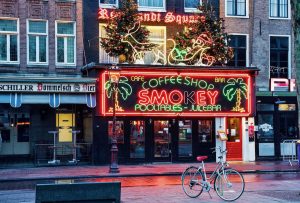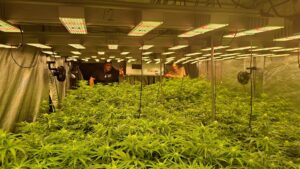
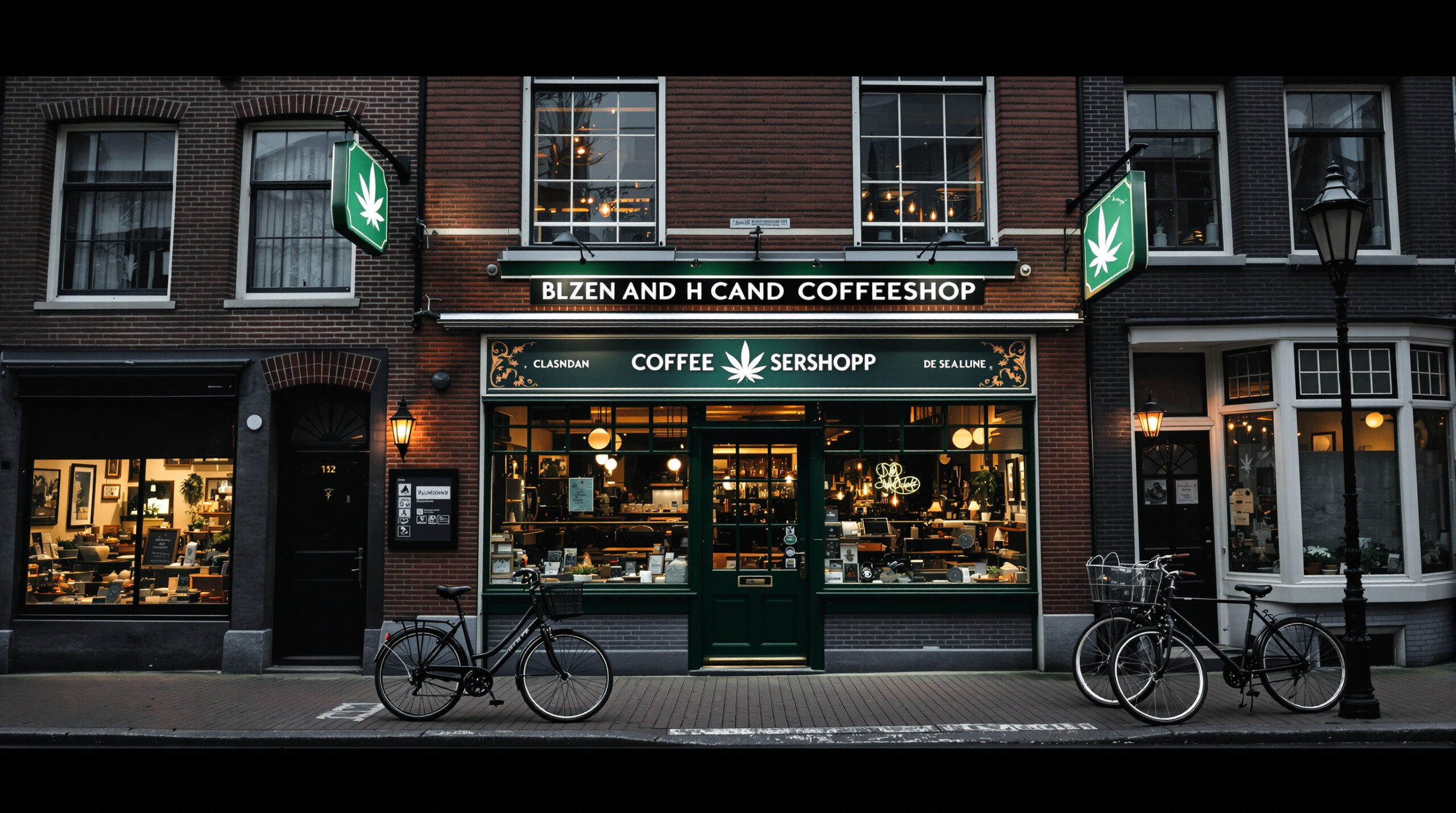
Coffeeshops, literally translated as coffee houses, are inseparable from Dutch culture. Today, there are various theories about the origin of the term in the Netherlands. The most common theory is that meeting places where cannabis was consumed and increasingly also sold were officially registered as coffee houses or tea houses. It thus served as camouflage and gradually developed into a counter-movement that significantly shaped today’s liberal cannabis policy.
📑 Inhaltsverzeichnis
The Early Beginnings in a Gray Zone
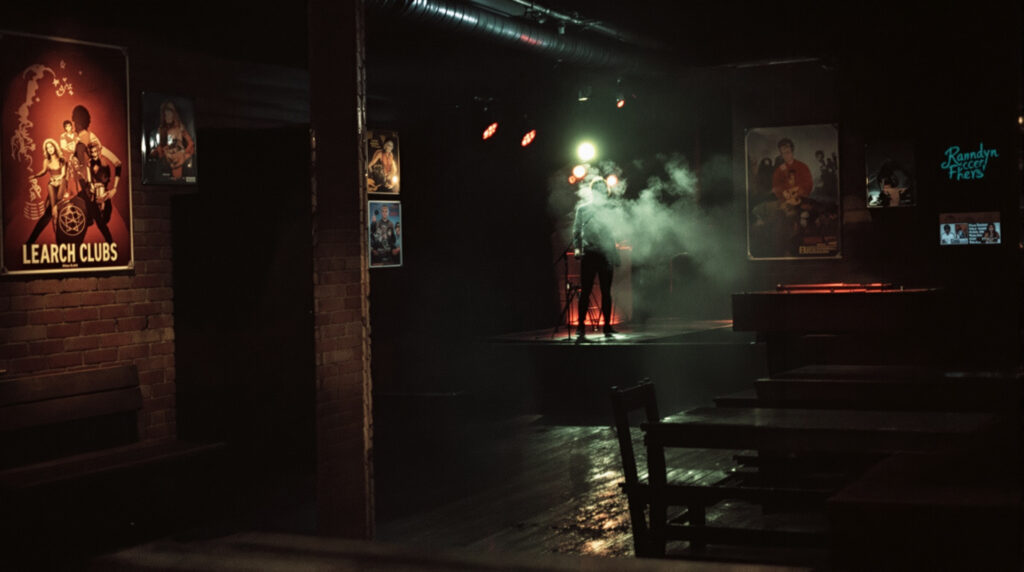
In fact, it is nowadays impossible to say with certainty which coffeeshop was the first in the Netherlands. The term „coffeeshop“ is also a relatively broad concept, so several shops claim to have been the first. Even before soft drugs were officially tolerated in the Netherlands, the first predecessors of modern coffeeshops emerged. These were meeting places where cannabis was tolerated at least in a gray zone.
The presumed first such predecessor of modern coffeeshops was the Sarasani. This was founded in 1968 in the basement of a harbor building in Utrecht. Originally, it was a youth meeting place where concerts also took place on weekends. In 1968, soft drugs were still not tolerated in the Netherlands either, yet they were consumed and sold nonetheless. Holly Hasenbos, the owner of the Sarasani, repeatedly sold cannabis there and regularly came into conflict with police. However, even back then, cannabis offenses were minor violations, so usually no more than a few days in custody were imposed. During raids, much of the cannabis stored there for sale was never found, as it was hidden in a pool with alligators. Hasenbos was shot by police during a traffic stop in 1984. After his death, a family member took over management. The Sarasani operated as a legal coffeeshop until 2007, but then had to close because the shop had sold several kilos of cannabis to a German.


Also legendary in Dutch cannabis culture is the Lowlands Weed Company. Founded in 1969 by Kees Hoekert and Jasper Grootveld, it was a houseboat where hemp was grown. They sold cuttings for one guilder to customers. The goal was to educate people about the plant and the prejudices associated with it. On the boat, one could meet like-minded people and smoke cannabis, essentially a type of coffeeshop. Ironically, this boat was located directly across from a police station, so problems arose regularly. There were several court hearings, but they always ended in acquittals. Through their demonstrative activities, Hoekert and Grootveld are now regarded as pioneers in the development of a liberal drug policy in the Netherlands.
Coffeeshops Before Decriminalization
In the Netherlands, a protest movement increasingly formed against the existing legal situation, so the first coffeeshops were already opening before the sale was tolerated by lawmakers. Although in 1972 the sale of cannabis was still illegal, Wernard Bruining opened a shop called Mellow Yellow in Amsterdam in an abandoned bakery, with the goal of selling cannabis there. He was inspired by the tea house culture of the 1920s in the USA, which were basically also coffeeshops. The name „Mellow Yellow“ was an allusion to a contemporary urban legend that suggested it was possible to get high by smoking banana peels. This oldest coffeeshop remained in operation until 2017 and ultimately had to close because it was too close to a school.
Another early coffeeshop was The Bulldog. This shop was founded in 1975 by Henk de Fries in a former brothel. However, Henk de Fries was already selling cannabis at festivals from 1970 onwards, so there are different views about who really was the first to start cannabis sales. The Bulldog is now a coffeeshop chain with five locations.
Beginning of Toleration Policy in 1976
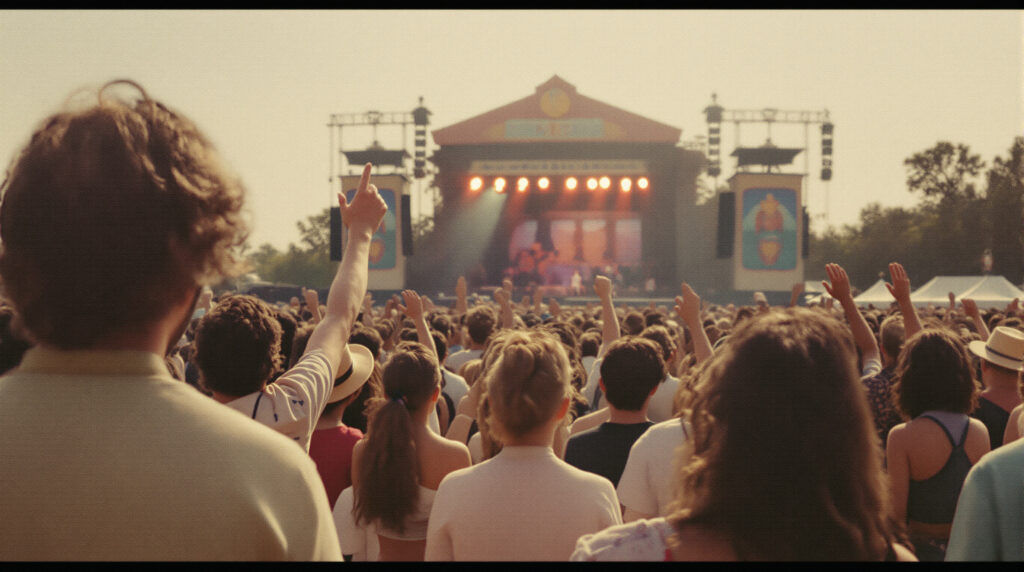
To a certain degree, cannabis had been overlooked for about a decade, which made it possible to operate coffeeshops in a gray zone. An important milestone in liberal drug policy already occurred in June 1970 at the Holland Pop Festival in Rotterdam. At this festival, undercover investigators were deployed to pursue cannabis consumers. However, as it turned out, everything apparently proceeded peacefully. The investigators subsequently decided not to charge consumers and small dealers. This is still considered one of the most important milestones toward a tolerance policy. Shaped by the hippie movement, this subculture spread increasingly, but apparently caused no violent crime.
However, official decriminalization took time. It was not until 1976 that the sale of small amounts of cannabis was officially tolerated by law. The goal of this reform was to redefine police priorities. Voices calling for cannabis consumers to no longer be prosecuted grew louder. Possession of up to 30 grams was no longer prosecuted. The sales quantity at that time was also 30 grams. Sales to teenagers from age 16 were permitted. The common Dutch term at that time was „gedogen„, which means: it is actually prohibited, but is not prosecuted. This legal approach, also known as toleration policy, however brought a problem that persists to this day—the back door problem. This means that sales in the coffeeshop are legal, but the cannabis itself comes from illegal sources and thus brings all the problems of a black market with it.
The first officially licensed and tolerated coffeeshop is considered to be Rusland. Although it also opened in 1975, shortly before decriminalization, it is often referred to as the first licensed shop. This Amsterdam-based shop remains active to this day. Also legendary and long a fixture of Dutch coffeeshop culture is La Tertulia in Amsterdam. This family business, operating since 1983, combines a unique atmosphere with convivial socializing and cannabis consumption to this day.
Peak in the Early 1990s and First Tightening
Due to the toleration of cannabis, the number of coffeeshops steadily increased. In addition to cannabis, other products referred to as „soft drugs“ were tolerated. Various other psychoactive plants and especially magic mushrooms became popular coffeeshop products. Estimates suggest that in the first half of the 1990s there were about 1,500 coffeeshops. However, from 1995 onwards, increasingly strict regulations led to a steady decline.
In the 1995 legislative amendment, it was decided to raise the sales age to 18 years and to sell only 5 grams of cannabis per person per day. In 2008, the sale of magic mushrooms was banned. Until then, fresh mushrooms were legally available. However, magic truffles have remained legal to this day. These contain the same active ingredient as mushrooms and only need to be dosed higher.
From 2011 onwards, sales to tourists became an increasingly contentious issue. The Dutch government planned to sell cannabis exclusively to residents who possess a valid ID, a so-called Wietpass. However, implementation failed due to resistance from many cities and municipalities. Even in 2021, there was an attempt to restrict sales to residents with a Wietpass, but implementation failed because a majority in the city parliament spoke out against it. In recent times, there are again repeated attempts to restrict access for tourists. Due to increasingly more restrictions such as distance rules to certain facilities, the number of coffeeshops has drastically declined to this day. Currently, there are an estimated just under 600 shops.
On the Way to Complete Legalization
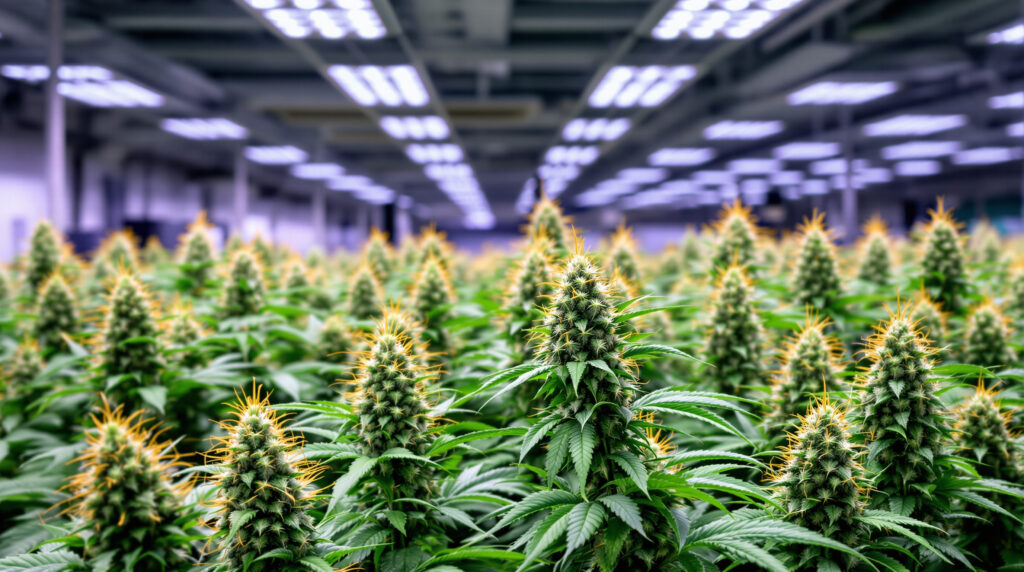
Due to the back door problem that persists to this day, the Netherlands have increasingly pursued a different path since 2023. More and more coffeeshops are selling legal cannabis grown in the Netherlands. This pilot project could achieve complete legalization with quality assurance in the foreseeable future, comparable to German regional pilot projects of pillar 2.
Frequently Asked Questions About Coffeeshops in the Netherlands
When were coffeeshops legalized in the Netherlands?
There was never true legalization; in 1976, the Netherlands introduced the so-called toleration policy („gedogen“). Sales of up to 30 grams of cannabis remained formally illegal but were no longer prosecuted. In 1995, the sales quantity was reduced to 5 grams per person per day.
Which coffeeshop was the first in the Netherlands?
The Sarasani in Utrecht (1968) is considered the oldest predecessor; Rusland in Amsterdam is listed as the first licensed coffeeshop after 1976. However, Mellow Yellow (1972) and The Bulldog (1975), both in Amsterdam, became better known. Multiple shops claim pioneer status for themselves.
How many coffeeshops exist in the Netherlands today?
Currently, there are still around 600 coffeeshops; in the mid-1990s there were about 1,500. The decline is linked to distance rules from schools, municipal restrictions, and structural change. Also, Dutch cannabis cultivation is declining, which additionally affects the supply situation for shops.
Can tourists still buy cannabis in coffeeshops in 2026?
Basically yes; the Wietpass (sales only to residents) discussed since 2011 was never implemented nationwide because cities like Amsterdam opposed it. However, individual municipalities are restricting tourist access, and a new substance class ban in the Netherlands has additionally affected synthetic substances in the coffeeshop assortment since 2025.
What is the back door problem in Dutch coffeeshops?
Warst du schon einmal in einem niederländischen Coffeeshop?
Sales in the coffeeshop are tolerated, but cultivation and wholesale behind it are illegal; the cannabis thus comes from the black market. This discrepancy is called the back door problem. The pilot project running since 2023 with legal cultivation is meant to solve precisely this problem, similar to the planned German model regions of CanG pillar 2.

Branchen-Update
News, Analysen und Reportagen — mehrmals im Monat direkt in dein Postfach.
Folge uns