Frankfurt’s drug policy office has published a guide to private home cultivation. Three legal warnings from it are currently circulating, and they hit the mark. However, the reasoning circulating online is based on a regulation that doesn’t exist. We’ve checked the paragraphs.
📑 Inhaltsverzeichnis
On August 31, 2026, the drug policy office of the City of Frankfurt am Main released a 20-page brochure titled „Safer Grow.“ It addresses adults who are taking advantage of the home cultivation option permitted since April 2024, and covers mold, fire hazard, odor, pets, children, and legal boundaries. The office explicitly states that the brochure is not intended to encourage cannabis cultivation or consumption, and prefaces the text with the statement that there is no safe consumption of cannabis.
Noteworthy is the fact that a municipal authority publishes something like this at all. The federal government provides little practical guidance on home cultivation, despite having legalized it. A city is filling this gap here.


The practical section, and an obligation many don’t know about

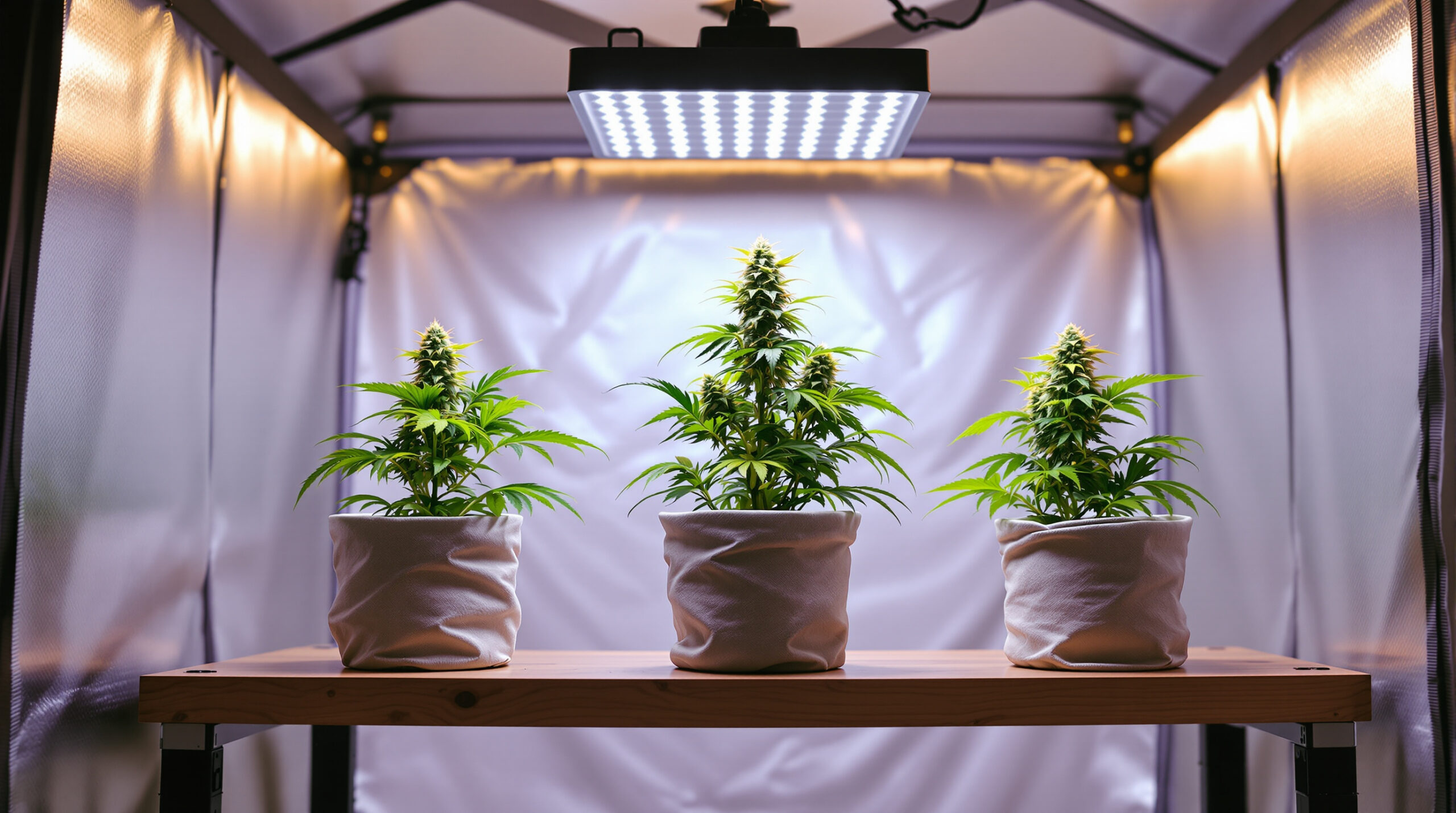
The health and safety recommendations are the uncontroversial part. Adequate ventilation and humidity control to prevent mold, no improvised lamp constructions and no overloaded outlets to prevent fire hazards, early coordination with neighbors regarding odor, and caution with pets, for whom cannabis is toxic. How serious the mold issue is can be seen in our article on Aspergillus, a dangerous mold in cannabis, and how to avoid mistakes during harvest is covered in our guide to harvesting, drying, and curing.
One point is more than good advice, and it is rarely named for what it is. Section 10 of the Cannabis Consumption Act requires that cannabis and propagation material be protected at the place of residence through appropriate measures and safety precautions against access by third parties, in particular by children and adolescents. This is not a recommendation, but a legal obligation. Anyone who leaves their plants openly on the balcony or stores the harvest in the kitchen cabinet may not be fulfilling it.
First warning: No cookies, oils, or hashish from your own harvest
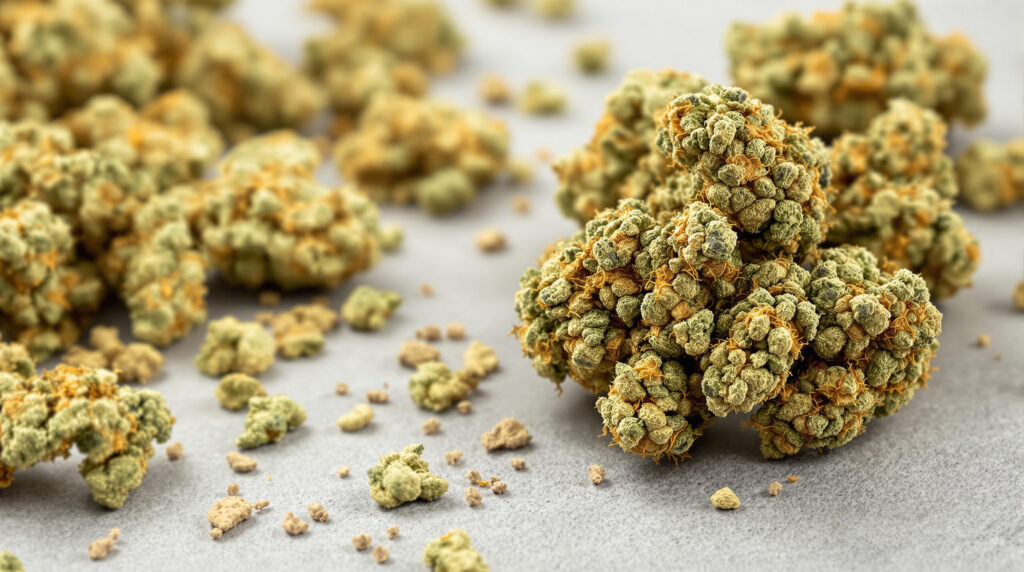
This is the statement currently receiving the most attention, and as a result, it’s correct. However, the reasoning is different from what appears on many advice websites.
The explanation being widely circulated is that Section 2, Paragraph 6 of the Cannabis Consumption Act defines processing as treatment into a product that is no longer cannabis. We’ve checked this reference. Section 2, Paragraph 6 regulates the authority of customs officials to seize goods. No definition of processing is found there, and it doesn’t appear anywhere in Section 2 either.
The argument also doesn’t hold up factually, because it has it exactly backwards. Section 1, Number 8 explicitly includes „preparations of all aforementioned substances“ under cannabis, and Number 5 defines hashish as the separated resin of the cannabis plant. So a cookie with cannabis butter or a piece of hashish doesn’t fall outside the definition of cannabis—it falls within it.
The prohibition instead results from a simpler chain:
- Section 2, Paragraph 1, Number 3 prohibits the manufacture of cannabis.
- Section 2, Paragraph 3 exempts only three things from the prohibitions: possession under Section 3, private home cultivation under Section 9, and collective cultivation in cultivation associations. Manufacturing is not included in this list.
- Section 34, Paragraph 1, Number 3 makes manufacturing punishable by imprisonment of up to three years or a fine.
- For oils and extracts, Section 2, Paragraph 2 additionally applies, which specifically prohibits the extraction of cannabinoids from the cannabis plant. The only exception is CBD extraction. This is punishable under Section 34, Paragraph 1, Number 13.
Permission for home cultivation thus covers cultivation and possession, but not further processing. Anyone who presses hashish from three legally cultivated plants or prepares a THC oil leaves the permitted area, regardless of whether everything is intended for personal use. The law does not distinguish based on purpose in this regard.
Exactly where the boundary lies is not yet clear, and one should be cautious here. The term „manufacturing“ is not defined in the Cannabis Consumption Act; Section 1 contains definitions for marijuana, hashish, cuttings, and other terms, but not for manufacturing. Drying and grinding one’s own harvest are necessary consequences of permitted cultivation, otherwise the permission would be pointless. Separating the resin or extracting goes beyond that. Between these poles are cases for which no established case law is known to us.
Second warning: The cutting counts once it’s planted
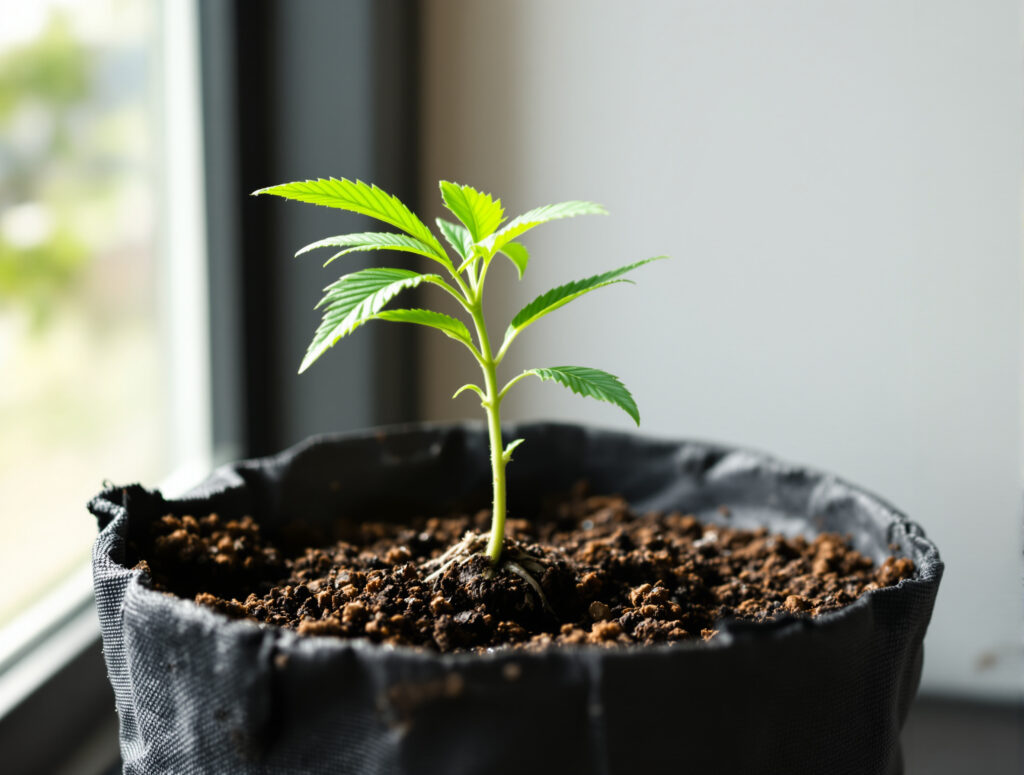
This statement is the best documented of the three, because there is now a ruling from a higher court on it.
The initial situation is initially favorable for growers. Section 1, Number 6 defines cuttings as young plants or plant shoots intended for cultivation that have no flowers or fruit. Section 1, Number 8, Letter c explicitly excludes propagation material—seeds and cuttings—from the definition of cannabis. A cutting is therefore legally not cannabis.
However, the limit in Section 9 is „no more than three cannabis plants at the same time,“ which raises the question of when a cutting becomes a plant. The Bavarian Supreme State Court answered it in a ruling of February 2, 2026, case number 206 StRR 315/25. According to this, a cutting becomes a seedling when planted, which no longer counts as propagation material. In the decided case, it was not a plant shoot but an already well-rooted plant in a pot.
In practical terms, this means: The widespread idea that small plants without flowers are still cuttings and therefore don’t count is wrong. Once planted and rooted, the plant counts toward the three permitted. Four plants in pots are four plants, even if one of them is two weeks old. Anyone starting new plants should not plant the next generation in parallel with three mature plants. Where to legally obtain cuttings and seeds is something we’ve compiled elsewhere.
Third warning: Watering someone else’s plants
Restraint is warranted here, more so than the current circulation of this warning suggests.
The brochure itself formulates in the conditional mood that even watering someone else’s cannabis plant could be punishable. In its circulation, this quickly becomes a statement that it is prohibited. That’s a difference that matters.
There is no explicit regulation on this. The reasoning behind it is understandable: Section 9 allows private home cultivation for certain people at their residence or habitual place of stay, and Section 2, Paragraph 3 ties the exemption from the cultivation ban to exactly this permission. If you care for someone else’s plants, you are not cultivating within the scope of your own permission. Whether this results in criminal liability in any given case depends on the assessment of participation, and this question is not definitively settled.
For everyday life in shared housing, the message remains useful, only with the right tone: It’s not a given that you maintain your roommate’s plants while they’re on vacation. If you want to be precise about it, don’t do it. If you need reliable advice for your situation, you’ll only get it from a lawyer.
What remains
All three warnings in the brochure withstand scrutiny—two with clear legal basis, the third as a plausible interpretation. The guide is therefore more thorough than much of what circulates on the subject, and this applies explicitly in comparison to some commercial legal advisors as well.
What can be well observed in this case is the hardening along the way. The authority’s „could be punishable“ becomes „is prohibited“ in circulation, and a legal situation that emerges from three sections becomes a single, incorrectly cited reference. Neither makes things clearer, only sharper-sounding. Anyone who wants to be on the safe side with home cultivation is better advised by the three permitted plants, abstention from further processing, and a locked cabinet than by any prohibition list from secondhand sources.
The brochure is available free for download on the City of Frankfurt am Main’s website and can also be ordered in print from Frankfurt residents through the drug policy office.
Note: This article reflects the status as of September 3, 2026 and is not legal or health advice. We have checked the mentioned provisions in the official text of the law and named the cited ruling from the Bavarian Supreme State Court; the assessment of a specific individual case may differ and belongs in the hands of a lawyer. The information about the content of the brochure is based on the publication by the Frankfurt drug policy office and reporting on it.
Wusstest du, dass Haschisch oder Öl aus der Ernte strafbar ist?
Sources: Brochure „Safer Grow“ by the drug policy office of the City of Frankfurt am Main of August 31, 2026; Cannabis Consumption Act, Sections 1, 2, 3, 9, 10, and 34 as published on gesetze-im-internet.de; Bavarian Supreme State Court, ruling of February 2, 2026, case number 206 StRR 315/25; reporting by t-online on the brochure; own reporting.






Branchen-Update
News, Analysen und Reportagen — mehrmals im Monat direkt in dein Postfach.
Folge uns