Survey of Agricultural Operations in Northern Germany
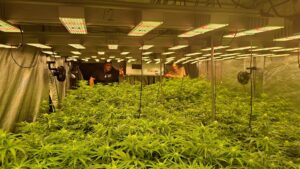
A total of 14 agricultural operations in Northern Germany were surveyed as part of the study, primarily located in Lower Saxony and North Rhine-Westphalia. Half of the farms managed agricultural land of less than 100 hectares. Most farmers engaged in hemp cultivation alongside other forms of agriculture, such as livestock farming. Six of the surveyed operations reported being new to the hemp sector. Only four farms had been active in this field for more than six years.
📑 Inhaltsverzeichnis
Operating Cost Efficiency and Environmental Sustainability
The surveyed farmers confirmed minimal pesticide use in hemp cultivation. One farmer compared this to winter grain production: while pesticide costs average approximately €350 per hectare for winter grain, hemp cultivation requires no such expenditure. Industrial hemp has very low pest susceptibility and effectively suppresses weeds.
Fertilizer requirements are also significantly lower compared to other commercial crops. This approach not only reduces operating costs but also diminishes environmental burden. Additionally, hemp offers highly diversified revenue streams, presenting strong market potential with appropriate political support. Beyond fibers and seeds, CBD products play a particularly important role.


Strong Integration into Crop Rotation
The benefits of hemp within crop rotation systems were especially highlighted. Hemp possesses excellent pre-crop effects: for example, sugar beet yields can increase when cultivated after hemp. Hemp also proved valuable for subsequent crops. Wheat grown after summer hemp consistently achieved strong yields. The minimal chemical input additionally benefits soil health and subsequent crop performance. However, hemp does have specific soil requirements. Even slight drainage issues or soil compaction can substantially reduce yields.
Financial Risks from THC Limits and Market Conditions
Despite numerous advantages, farmers face considerable challenges. The most significant problem cited was comparatively high seed costs combined with associated crop failure risks. Hemp seed costs are substantially higher than wheat or sugar beet, reducing overall profitability. Another limiting factor is the permissible THC threshold of 0.3%. Like all plants, hemp naturally exhibits fluctuations in cannabinoid content. In extreme cases, elevated THC levels can result in losing up to 50% of projected yields, making cultivation economically unviable.
Adding to these concerns is unstable market conditions: farmers report weak contract security with buyers. Without fixed purchase agreements, an entire season’s effort can prove fruitless. Specialized equipment investment is also frequently unprofitable. For such investments to be justified, at least 200 hectares of hemp processing would be required. Given uncertain yields, this is rarely defensible. From a financial perspective, industrial hemp cultivation often remains a zero-sum proposition.
Social Acceptance Still Has Room for Growth
From a societal perspective, distinguishing between the stigmatized term „drug“ and industrial hemp remains a major challenge. As one farmer aptly noted, many people initially assume „drugs are being grown“ here. These ideological associations lead to poor acceptance. However, when explained that this is non-psychoactive industrial hemp and people are educated about the plant’s potential, both acceptance and interest increase significantly. Notably, younger people show considerably more openness toward hemp than older generations.
Sources
- Study on opportunities and challenges in industrial hemp cultivation:
https://www.sciencedirect.com/science/article/pii/S0301479725020936









Sollte der Anbau von Nutzhanf in Deutschland stärker gefördert werden?
Branchen-Update
News, Analysen und Reportagen — mehrmals im Monat direkt in dein Postfach.
Folge uns