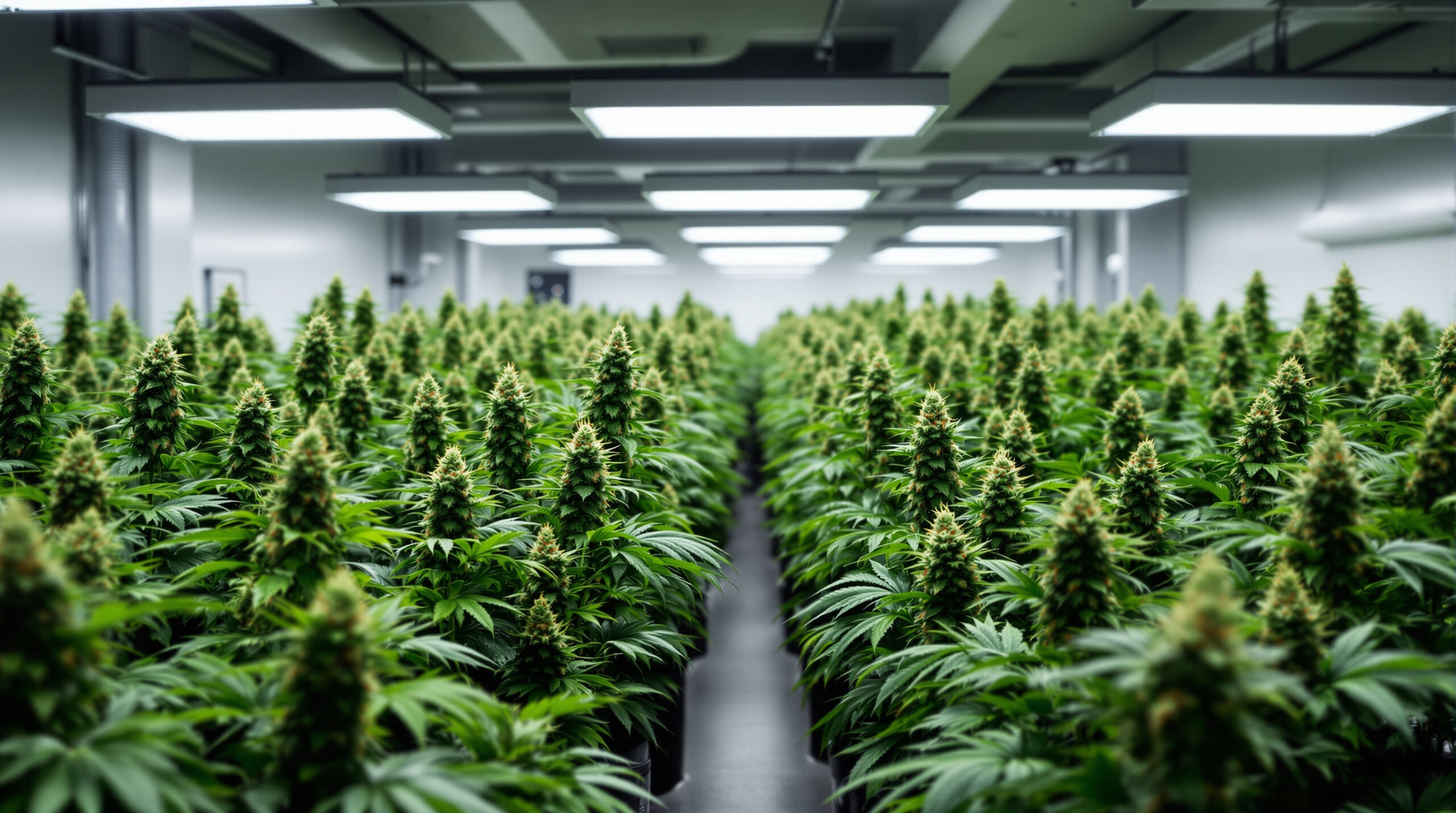
Hamburg has released preliminary figures on its cannabis cultivation clubs, and the results are remarkably unremarkable. Seventeen clubs now hold permits under the Consumption Cannabis Act. In that time, only a single violation has been documented, and it concerned advertising rather than cultivation itself.
📑 Inhaltsverzeichnis
For a city where the launch of cultivation clubs was anything but smooth, this represents modest but significant news. The debate over the Consumption Cannabis Act continues to be dominated by hypothetical concerns rather than actual enforcement data.
17 Permits, One Known Violation
Hamburg’s responsible authorities report largely cooperative collaboration with the clubs. Inspections have proceeded without major infractions to date. The single documented violation relates to the strict advertising ban that applies to cultivation clubs. From the regulator’s perspective, the vast majority of clubs take their legal obligations seriously.


This bears mentioning because the catalog of obligations is extensive. Cultivation clubs must verify age identification, document distribution quantities, maintain security and quality standards, and submit to regular official inspections. Anyone dismissing these requirements as mere formalities has not been following developments over recent months. Hamburg’s Interior Authority specifically published a penalty catalog for the Consumption Cannabis Act, and the city maintains a publicly accessible list of authorized clubs.
From Conflict to Routine
Hamburg’s path began rocky. We reported early on a Hamburg cultivation club that failed due to bureaucratic inconsistency. Applicants complained of shifting requirements, lengthy processing times, and unclear standards. That friction appears to have smoothed out on both sides.
Authorities have developed routine in their review process; clubs have developed routine in meeting requirements. According to officials, many cultivation clubs now operate regularly or are preparing their next growing cycle. That’s the real story behind the number 17. The question is no longer whether a club can operate at all, but rather about harvest cycles and distribution logistics. Our overview of CSC management with software, accounting, and compliance illustrates how demanding this daily operation is.
Hamburg and Hesse Show the Same Pattern
Hamburg’s figures are not isolated. Just days ago, we reported that Hesse has approved 21 cultivation clubs, with 15 already growing. Two German states with very different political leanings reach similar conclusions. The clubs operate largely in compliance with regulations, and the feared enforcement vacuum has not materialized.
This is remarkable because the political debate long ran the other direction. Critics warned of uncontrollable structures, and as far back as 2022, discussion held that cannabis legalization would be no picnic. How quickly numbers become political ammunition has been evident elsewhere, such as when false figures circulated in Berlin regarding the AfD.
What the Report Doesn’t Answer
Despite the positive news, Hamburg’s report remains thin. It lacks solid data on membership numbers, distributed quantities, and how many applications remain pending. Without these figures, it’s impossible to assess what share cultivation clubs represent in actual supply.
A single advertising violation is also not proof of widespread compliance. It could equally suggest that inspection density is low. As long as German states fail to publish enforcement data uniformly and regularly, such reports remain snapshots in time. For the upcoming legal evaluation, the opposite would be far more useful.
Frequently Asked Questions
How many cultivation clubs operate in Hamburg?
Currently, 17 cultivation clubs in Hamburg hold permits under the Consumption Cannabis Act. The city maintains a publicly accessible list of authorized clubs that is updated regularly as new permits are issued.
What violation was documented in Hamburg?
A violation of the advertising ban was recorded. Cultivation clubs are prohibited from advertising either themselves or cannabis. Violations of this requirement can be penalized according to the Interior Authority’s penalty catalog.
What do authorities inspect at a cultivation club?
Inspectors verify age control procedures, documentation of distribution quantities, security of growing areas, and compliance with quality standards. Additional checks cover advertising restrictions and youth protection requirements. Inspections occur regularly and sometimes without notice.
Are Hamburg’s figures applicable to other German states?
Only to a limited extent, as states issue permits according to their own administrative procedures and publish varying amounts of data. The situation in Hesse shows a similar picture with 21 approved clubs and few infractions. A nationwide comparison will only be possible once all states report enforcement data uniformly.
Does this report mean legalization is working?
It demonstrates that administrative enforcement for cultivation clubs is functioning. Violation statistics reveal little about the black market, supply adequacy, or youth protection. That requires scientific evaluation of the law and solid quantitative data.
Sources: Hanfjournal, Hamburg Authority for Justice and Consumer Protection, Hamburg Authority for Internal Affairs and Sports (Penalty Catalog for the Consumption Cannabis Act).



Überrascht dich, dass es in Hamburg nur einen Verstoß gab?
Branchen-Update
News, Analysen und Reportagen — mehrmals im Monat direkt in dein Postfach.
Folge uns