
What the LiBBY Study Investigated in Cannabis and Dementia

A US-American research team has demonstrated for the first time in a large controlled trial that a combination of THC and CBD can significantly reduce agitation in people with advanced dementia. The results of the so-called LiBBY Study were presented in mid-July 2026 at the International Alzheimer’s Conference in London. For cannabis medicine, this represents an important signal, as agitation is considered particularly difficult to treat in dementia.
📑 Inhaltsverzeichnis
The LiBBY Study (Life’s end Benefits of cannaBidiol and tetrahYdrocannabinol) enrolled 120 patients with Alzheimer’s disease or another form of dementia. All participants were in an advanced stage of disease, were eligible for hospice care, and suffered from severe agitation. The study was randomized and placebo-controlled—considered a high methodological standard.
One group received an oral preparation of purified THC and CBD over twelve weeks, while the other group received a placebo. The daily dose was 8 mg THC and 400 mg CBD, reduced by half in the first week. Ten medical centers conducted study visits directly in patients‘ homes or care facilities. The project was financed, among others, by the US National Institutes of Health and the Alzheimer’s Association. That cannabinoids can fundamentally intervene in dementia pathology has been the subject of research for some time, as our overview of plant-based compounds in Alzheimer’s and dementia and earlier questions about whether cannabinoids help in dementia demonstrate.


Significantly Less Agitation After Two Weeks

To measure agitation, the team used the Cohen-Mansfield Agitation Inventory, an established instrument with 29 criteria. Already after two weeks, the value in the cannabis group fell on average 6.27 points more than in the placebo group. This difference remained clearly measurable even after twelve weeks.
Even more illustrative is the overall clinical assessment by treating physicians. After two weeks, 83.9 percent of the cannabis group showed improvement, compared to 30.5 percent in the placebo group. After twelve weeks, the proportion was 87.2 percent versus 23.6 percent. Study lead Jacobo Mintzer described a response rate unlike anything seen before in dementia studies.
Tolerability is crucial for evaluation. The rate of side effects differed little between both groups, at 46.7 versus 42.4 percent. Adverse events were primarily infections and gastrointestinal complaints, which are common in this severely ill patient population anyway.
Why These Results Are Relevant for International Practice
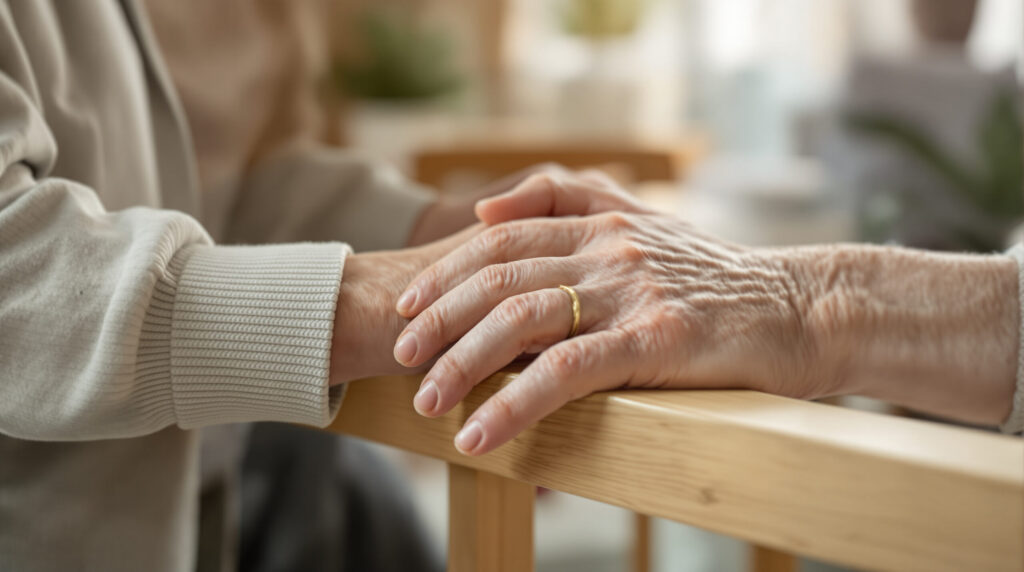
Agitation and aggression rank among the most distressing symptoms of advanced dementia, both for affected individuals and for family members and caregivers. In clinical practice, antipsychotics are often used to manage these symptoms, despite being associated with increased risk of stroke and mortality in dementia patients. A better-tolerated alternative would therefore represent genuine progress.
In countries where medical cannabis is available, the number of patients continues to grow. While the specific preparation used in the study is not approved everywhere, physicians can prescribe THC and CBD-containing medications on a case-by-case basis in many jurisdictions. How cannabis works in older adults and what risks to consider are important questions explored in literature on cannabis for seniors. The market is also responding to this aging demographic, as hemp products for seniors demonstrate.
Assessment and Open Questions
Despite the optimism, a sober perspective is warranted. The study explicitly examined people at life’s end. The results cannot be readily transferred to early dementia stages. Additionally, the analysis has so far only been presented at a conference and has not yet been peer-reviewed in a scientific journal. Further studies will be necessary before this becomes a broad clinical recommendation. What is clear, however, is that the evidence base for cannabinoids in neurological diseases is growing, as earlier investigations into CBD in Alzheimer’s suggest.
Frequently Asked Questions
Can cannabis reduce agitation in dementia?
The LiBBY Study provides the first strong evidence from a large controlled investigation. A combination of THC and CBD reduced agitation in advanced dementia significantly more than placebo. However, further studies are needed before general treatment recommendations can be made.
What doses of THC and CBD were used in the study?
Participants received 8 mg THC and 400 mg CBD daily as an oral preparation. In the first week, the dose was initially halved, then increased to full strength. Treatment continued for a total of twelve weeks.
Is this cannabis preparation widely available?
The specific study preparation is not approved in all jurisdictions. However, physicians can prescribe THC and CBD-containing medications on an individual basis in countries where medical cannabis is available.
Was the treatment well-tolerated?
Side effects were barely different from the placebo group. Adverse events were primarily infections and gastrointestinal complaints, which are common in this severely ill population regardless.
Who conducted the LiBBY Study?
Researchers from the Medical University of South Carolina and Georgetown University were responsible, working within the NIH-supported Alzheimer’s Clinical Trial Consortium. Results were presented in July 2026 at the Alzheimer’s Association International Conference in London.
Sollte Cannabis bei Demenz als Alternative zu Antipsychotika zugelassen werden?
Sources: Georgetown University (Press Release, July 2026), Alzheimer’s Association International Conference 2026, Cannabis Health News, News-Medical.











Branchen-Update
News, Analysen und Reportagen — mehrmals im Monat direkt in dein Postfach.
Folge uns