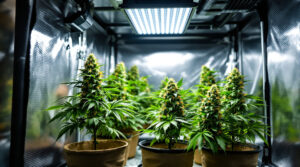
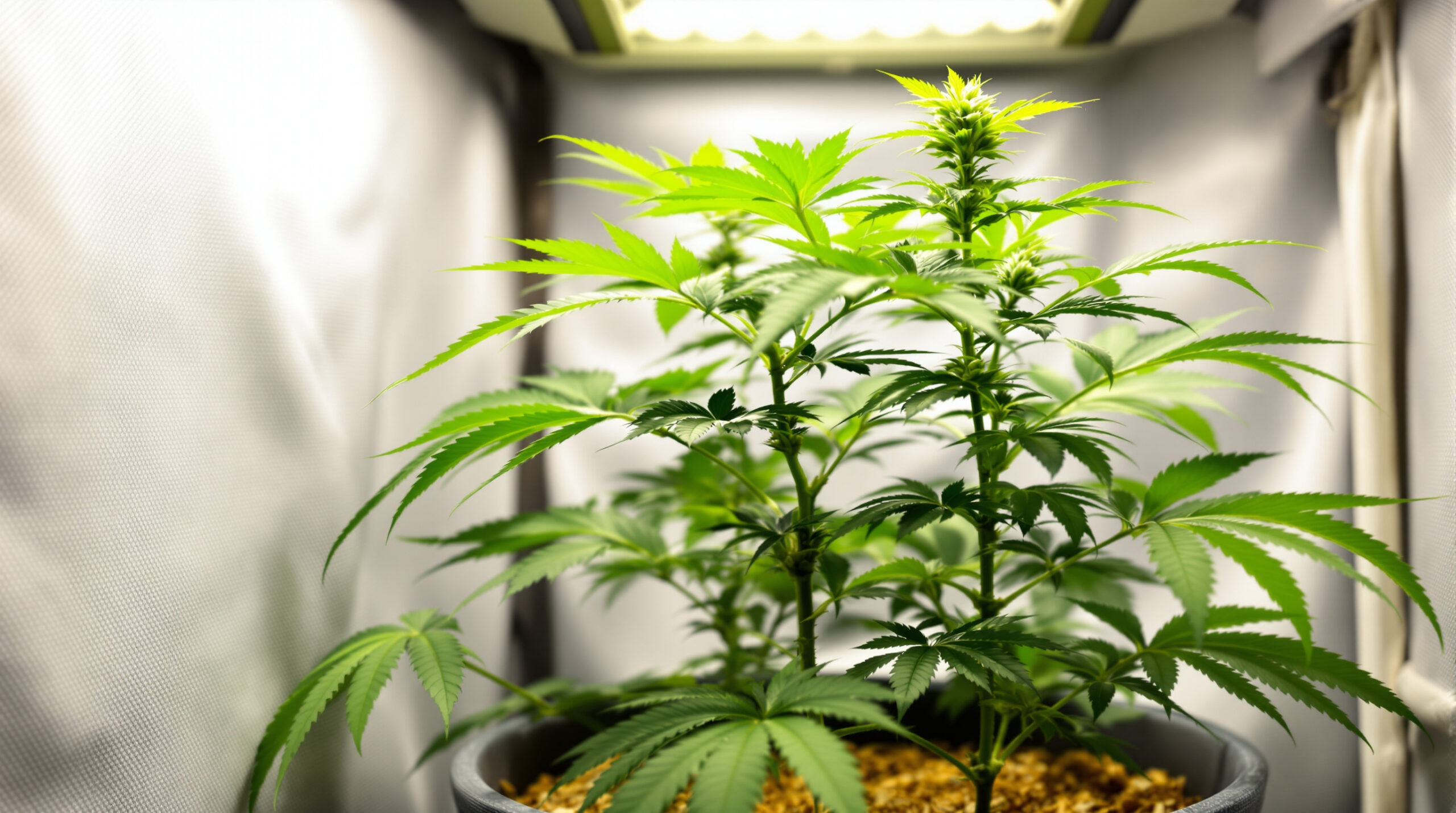
Between seedling and flowering lies the phase that determines the later yield. In the vegetative phase, the cannabis plant builds the framework that it must support during flowering. This includes the roots, the stem, the leaf mass, and above all the number of shoot tips from which flowers will later develop. Those who switch to flowering too early will harvest from too few sites. Those who wait too long will struggle in the grow box with plants growing into the light.
📑 Inhaltsverzeichnis
- What actually happens during the vegetative phase
- How long the vegetative phase lasts in cannabis
- Light during the growth phase: 18/6 as the standard
- Nutrients and root space: nitrogen leads, EC value limits
- Climate: temperature, humidity, and VPD
- Training during the vegetative phase: topping, LST, and the final intervention
- Timing the transition to flowering correctly
- Frequently asked questions
- 💬 Fragen? Frag den Hanf-Buddy!
The growth phase is therefore not a waiting room before the actual harvest, but the section with the greatest creative scope. Light, nutrients, pot volume, and training directly affect the plant’s structure here. This overview shows how long the vegetative phase lasts in cannabis, which values have proven effective, and how to recognize the right moment for the switch.
What actually happens during the vegetative phase
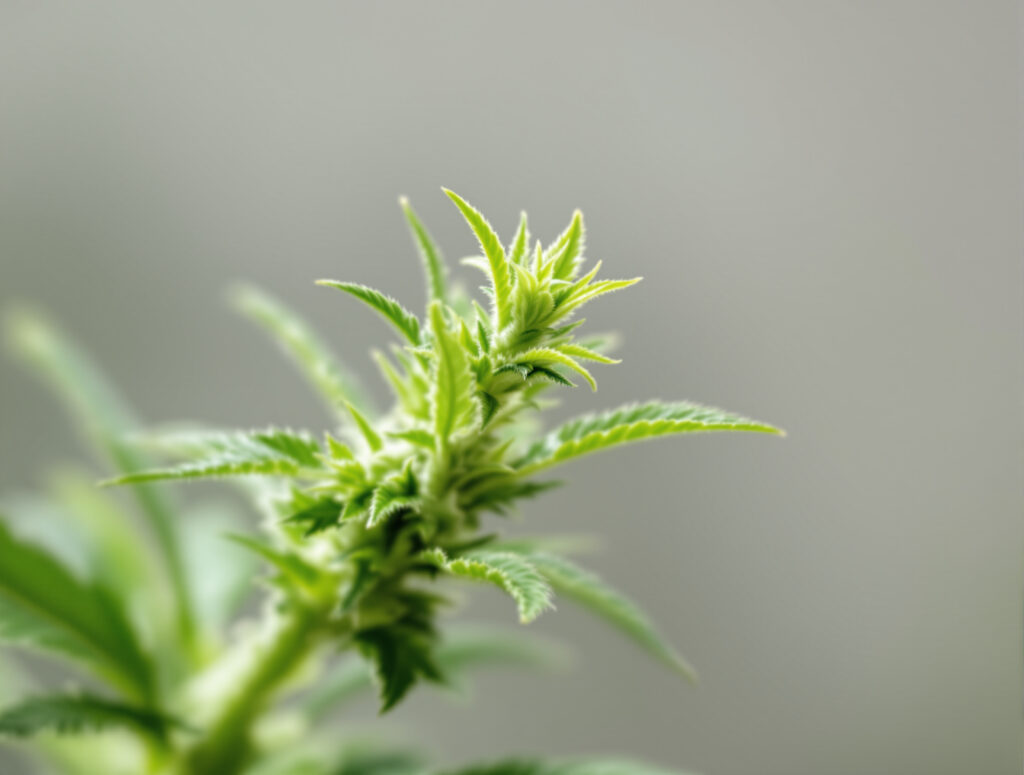
The vegetative phase begins once the seedling phase is complete. This typically occurs about two to three weeks after germination, when the plant has formed its first true, fingered leaves. From this point on, the plant’s priorities shift. It no longer invests its energy in mere survival, but in building mass.


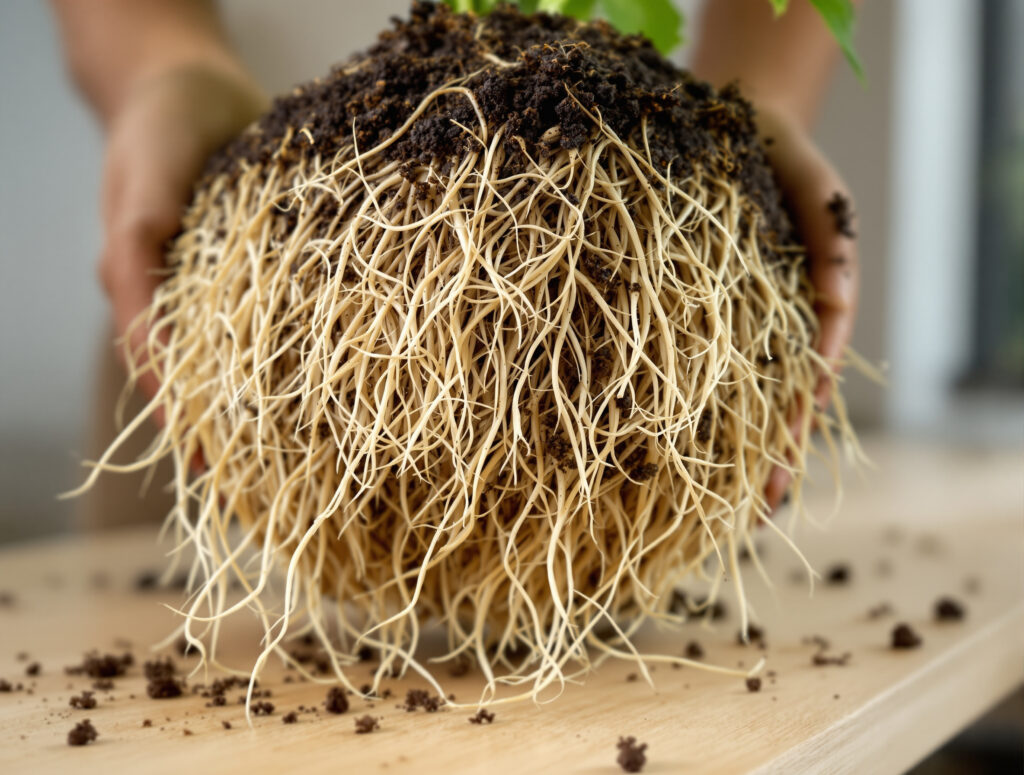
This becomes visible at the nodes, the points where lateral shoots form. With each new node, two potential shoot tips emerge. Invisible but equally important, root growth happens in parallel. A root ball that evenly penetrates the pot is the prerequisite for the plant to absorb enough water and nutrients during flowering.
With photoperiodic varieties, light duration alone maintains this state. As long as the dark period remains shorter than about twelve hours, the plant stays in vegetative growth. Autoflowering varieties ignore this signal and switch to flowering on a genetically predetermined schedule. This difference determines how much control over the duration of the growth phase actually exists.
How long the vegetative phase lasts in cannabis
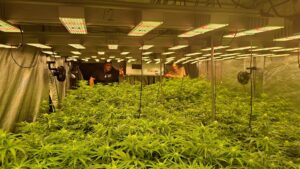
For photoperiodic varieties in indoor cultivation, the typical range is three to eight weeks. Within this frame, the grower decides when to stop. Short vegetative phases of three to four weeks suit Sea-of-Green setups with many small plants. Six to eight weeks make sense when few plants should grow large and wide, such as in a ScrOG net.
Autoflowering varieties remain vegetative for only about two to four weeks. After that, flowering begins regardless of how developed the plant is. If someone slows an autoflower during this time, such as through a pot that’s too small or nutrient deficiency, they won’t make up for that lag later. The calculation shifts anyway in outdoor growing. There, vegetative growth in photoperiodic varieties lasts from transplanting in spring through late summer, because only the shortening days trigger flowering.
A simple rule of thumb has proven useful as a guide. After switching to 12/12, a plant stretches to about double or triple its height depending on genetics. Those aiming for a final height of about 120 centimeters should switch at around 40 centimeters. This calculation is more important than any blanket weekly estimate, because it accounts for the actual height of the grow box.
Light during the growth phase: 18/6 as the standard
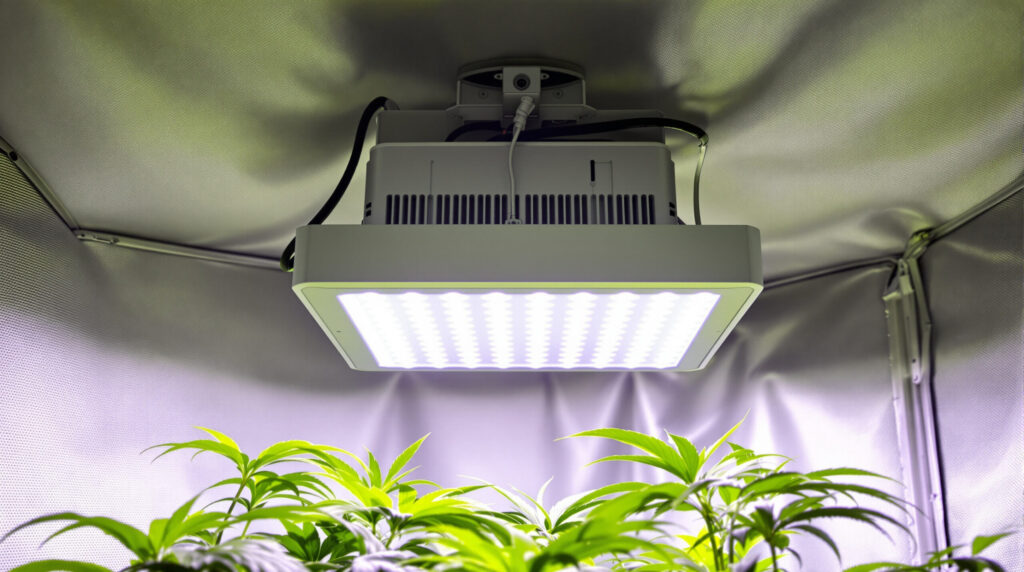
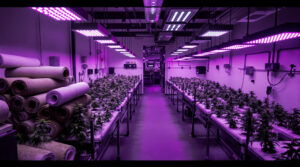
The most common light cycle during the vegetative phase is 18/6, meaning 18 hours of light and 6 hours of darkness. It reliably keeps the plant in growth while still allowing a rest period in which roots remain active. Some growers use 20/4 instead, achieving a slightly higher daily light sum. The gain is real but modest and comes at the cost of higher electricity bills.
Most practitioners advise against continuous 24-hour light. The yield increase is minimal, the risk of stress symptoms rises, and a timer failure goes unnoticed longer. More decisive is the other limit. Once the dark period exceeds twelve hours, a photoperiodic plant interprets this as a fall signal and begins pre-flowering.
More important than the sheer number of hours is light intensity at the leaf. During the vegetative phase, a sensible PPFD range is about 300 to 600 micromoles per square meter per second. Those who control this value through lamp distance rather than lighting duration work more efficiently. Our guide to indoor cultivation provides a detailed explanation of these parameters.
Nutrients and root space: nitrogen leads, EC value limits
During the growth phase, nitrogen plays the lead role. It’s found in every leaf and every new shoot, which is why growth fertilizers with names like Grow or Vega are formulated with significantly higher nitrogen content. Typical NPK ratios are around 7-3-5 or 10-5-5. Pre-fertilized soils carry the plant through the first two to three weeks without any addition, which is why early fertilizer applications often do more harm than good.
Dosage increases slowly, controlled via the EC value of the nutrient solution. Overfertilization ranks second after waterlogging as the most common beginner mistake in this phase, because an overloaded substrate blocks the uptake of individual elements. Burnt leaf tips and dark green, claw-like curved foliage are the typical warning signs. The opposite case, uniform yellowing of lower leaves, indicates a genuine deficiency, as described in the article on nitrogen deficiency in cannabis.
The second lever is root space. Repotting occurs as soon as the old pots are root-bound, recognizable by roots in the drainage holes. Those who miss this moment slow growth without visible reason. For a plant going through a six to eight-week vegetative phase, a final pot of around 11 to 18 liters is a solid size. Smaller containers work but require more frequent watering and tolerate mistakes less well.
Climate: temperature, humidity, and VPD
Cannabis grows vegetatively best at temperatures between roughly 22 and 28 degrees during the light phase. Relative humidity can be comparatively high during this time, typically 60 to 70 percent. Young plants with small root systems still take some water through their leaves and are therefore sensitive to overly dry air.
More meaningful than either individual value is their interaction, expressed in VPD. For the vegetative phase, a range of about 0.8 to 1.2 kilopascals is considered favorable. As long as the value stays within this window, the plant transpires evenly and transports nutrients from root to top in the process. Our article on VPD in cannabis explains what’s behind the parameter and how to control it in practice.
Training during the vegetative phase: topping, LST, and the final intervention
Training techniques belong exclusively in the growth phase because the plant still has time to recover here. Topping removes the main shoot tip so that one dominant shoot becomes two equal ones. This makes sense at about four to six nodes when enough leaf mass exists for quick recovery. After cutting, the plant usually pauses for several days before growing noticeably bushier.
Low Stress Training works without cutting. The shoots are gently bent down until a flat, even canopy forms. This method costs no recovery time and is therefore the first choice for autoflowering varieties whose short vegetative phase allows little buffer for stress. For photoperiodic plants, both techniques can be combined, often supplemented with a net that holds shoots on one level.
The last major intervention should occur roughly one to two weeks before switching to 12/12. Topping right before flowering sends the plant stressed into the crucial phase and wastes yield. The same applies to extensive defoliation, which should be applied sparingly in late vegetative phase.
Timing the transition to flowering correctly
Switching to twelve hours of light and twelve hours of uninterrupted darkness ends the vegetative phase. But this doesn’t end growth. Over the next two to three weeks, the plant stretches significantly more, more so in sativa-dominant varieties than in compact indica genetics. Those who don’t account for this stretch will find the top flowers too close to the light later. How to limit excessive vertical growth is a separate topic.
A plant is ready for the switch when it has several well-developed nodes, the pot is root-bound, and it displays lush, undamaged foliage. If there’s currently a nutrient problem or pests, a week’s delay is worthwhile, because such issues are much harder to correct during flowering. A detailed decision aid for this moment is provided in the article about when to send hemp into flowering.
Planning the vegetative phase becomes even more important with careful consideration of timing from seed to harvest. For a comprehensive overview of the entire process, check our article on the cannabis growth miracle.
Frequently asked questions
How long should the vegetative phase last in cannabis?
For photoperiodic varieties, three to eight weeks are typical. The exact duration depends on the desired final size, pot volume, and grow box height. Autoflowering varieties remain vegetative for only about two to four weeks because they switch to flowering on a fixed genetic schedule.
What light cycle is correct during the growth phase?
18 hours of light and 6 hours of darkness is the proven standard. A 20/4 cycle provides somewhat more light sum and thus tends toward faster growth, but costs more electricity. The only hard limit is the dark period, because from about twelve hours of darkness photoperiodic plants initiate flowering.
How do I know the plant is ready for flowering?
A reliable indicator is height. The plant should have reached about one-third to half of the planned final height, because it stretches significantly more after the switch. Add to this several sturdy nodes, a root-bound pot, and healthy foliage without acute deficiency symptoms.
How much fertilizer does cannabis need during the vegetative phase?
The plant primarily needs nitrogen at this time, with nitrogen-heavy ratios like 7-3-5 or 10-5-5 being typical. In pre-fertilized soil, the contained nutrients usually last two to three weeks. After that, dosage is increased gradually and controlled via EC value. When in doubt, slight underfertilization is better than overfertilization.
Can I extend the vegetative phase?
Wie lange lässt du deine Pflanzen in der Vegetationsphase?
With photoperiodic varieties, this is easily possible as long as the light cycle remains at 18/6. Practical limits are set by pot volume, box height, and the plant’s space requirements. Mother plants are kept permanently in a vegetative state using exactly this principle. With autoflowering varieties, extension doesn’t work because they enter flowering regardless of light.






Branchen-Update
News, Analysen und Reportagen — mehrmals im Monat direkt in dein Postfach.
Folge uns