When the lower leaves of a cannabis plant shift from vibrant green to pale yellow, a nitrogen deficiency is often the culprit. Nitrogen is the engine of vegetative growth, and a deficit noticeably slows the plant down. Those who correctly interpret the symptoms early can take corrective action before yield and vitality suffer. This guide shows you how to recognize nitrogen deficiency in cannabis, how to distinguish it from similar problems, and how to address it step by step.
📑 Inhaltsverzeichnis
- What is nitrogen deficiency in cannabis?
- Recognizing nitrogen deficiency: typical symptoms
- Why the lower leaves yellow first
- Causes: underfeeding, wrong pH, and depleted substrate
- Fixing nitrogen deficiency in cannabis: step by step
- Distinguishing deficiency from excess and lockout
- Nitrogen in the flowering phase: less is more
- Frequently asked questions
- 💬 Fragen? Frag den Hanf-Buddy!
What is nitrogen deficiency in cannabis?
Nitrogen is one of the three most important macronutrients and appears first in every fertilizer’s NPK ratio. The plant needs it to produce chlorophyll, proteins, and new cells. Without it, the cannabis plant cannot produce enough green leaf pigment. Learn more about the fundamental function of this nutrient in our article on nitrogen as a growth factor.
A true deficiency develops when the plant receives insufficient nitrogen over several weeks. The demand is especially high during the vegetative phase, since the plant is then producing new shoots and leaves daily. It is precisely during this time that a deficiency has the greatest impact.


Recognizing nitrogen deficiency: typical symptoms
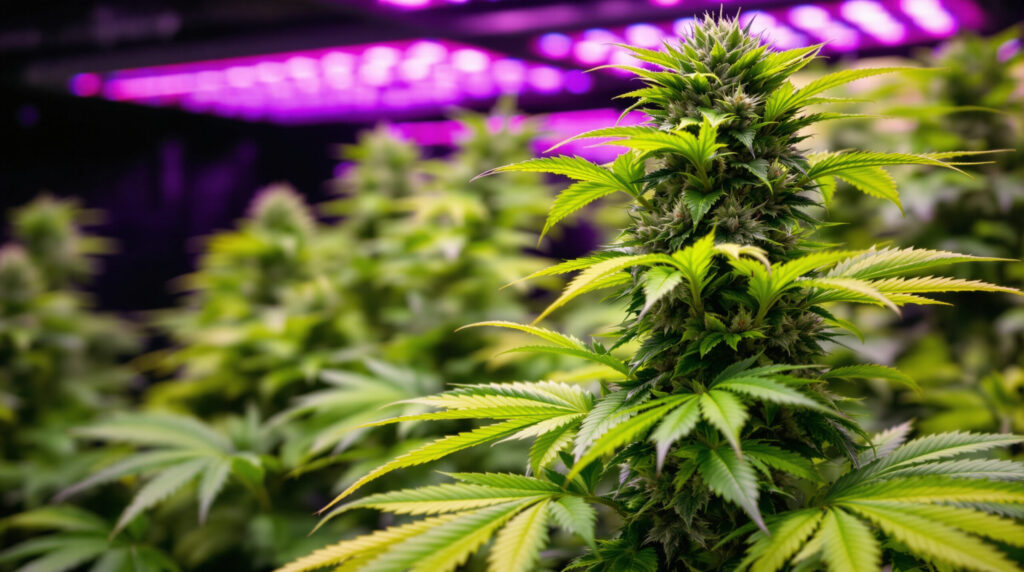
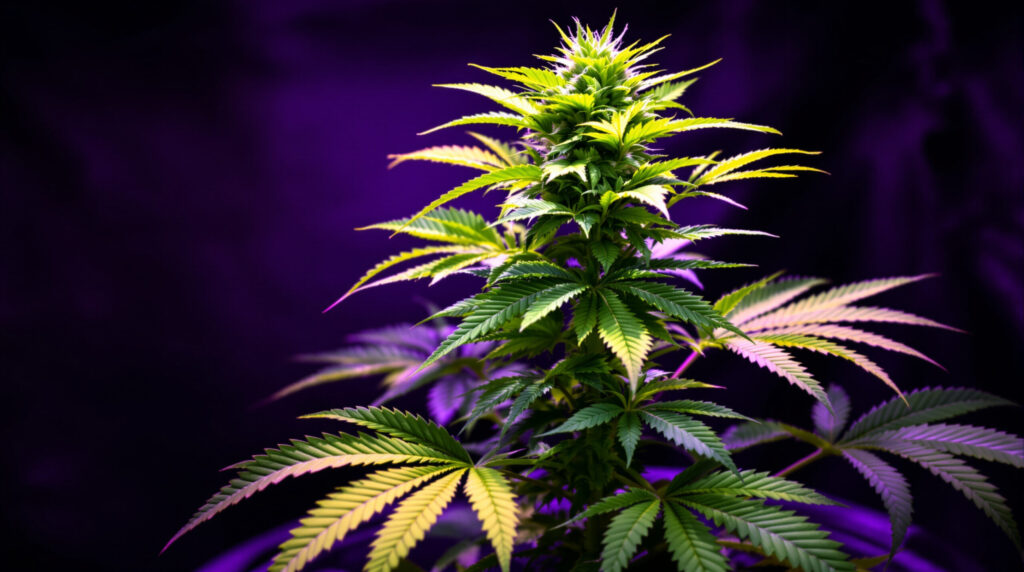
The classic sign of nitrogen deficiency in cannabis is yellowing of the lower, older leaves. They first lose their rich green color and become light green, then yellow. Subsequently, they become soft, curl slightly, and eventually fall off on their own. The yellow gradually moves upward through the plant from bottom to top.
Beyond discoloration, there are other indicators. Overall growth slows down, and new shoots remain small and narrow. The plant looks pale and weak overall rather than sturdy and dark green. When these signs appear together on the lower branches, nitrogen deficiency is very likely. For a systematic overview of all nutrients, check out our guide on how to diagnose nutrient deficiency.
Why the lower leaves yellow first
Nitrogen is a so-called mobile nutrient. This means the plant can relocate it within its tissues. When supply becomes scarce, it pulls the available nitrogen from the old, lower leaves and transports it upward to the young shoots. There it ensures photosynthesis and continued growth.
The sacrificed lower leaves are left without chlorophyll and yellow. This exact pattern—yellow leaves at the bottom with still-green tips—is the most reliable identifying feature. In deficiencies of immobile nutrients, symptoms instead appear first on young upper leaves. The direction of yellowing tells you which direction to look. This is a crucial diagnostic tool.
Causes: underfeeding, wrong pH, and depleted substrate
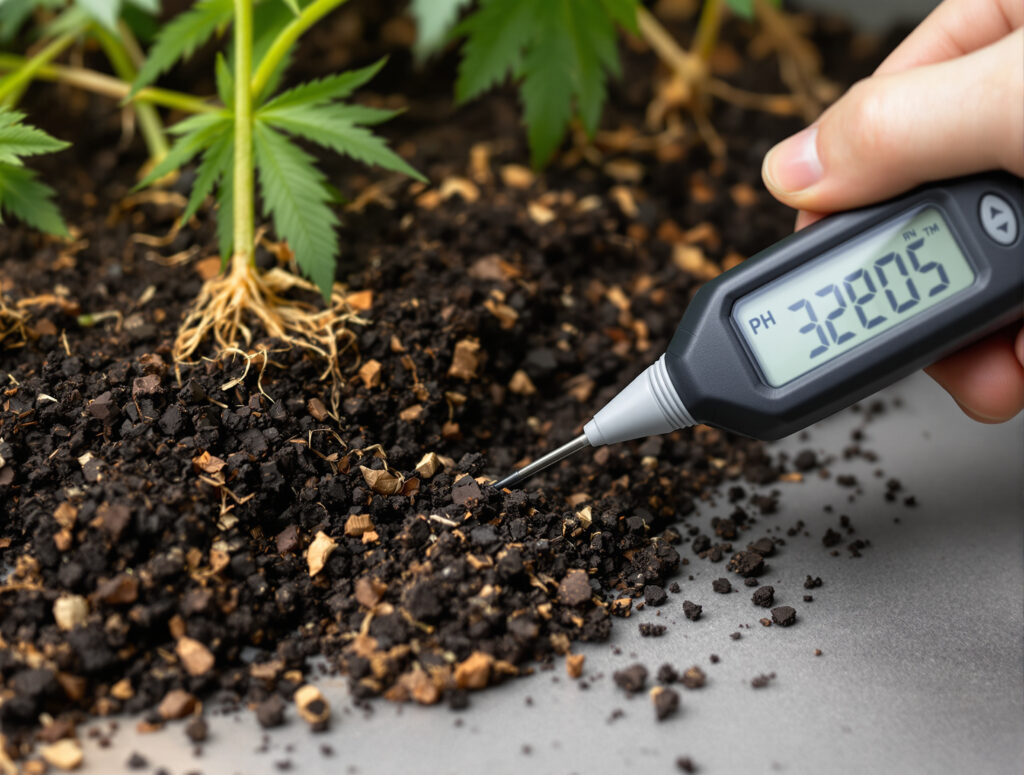
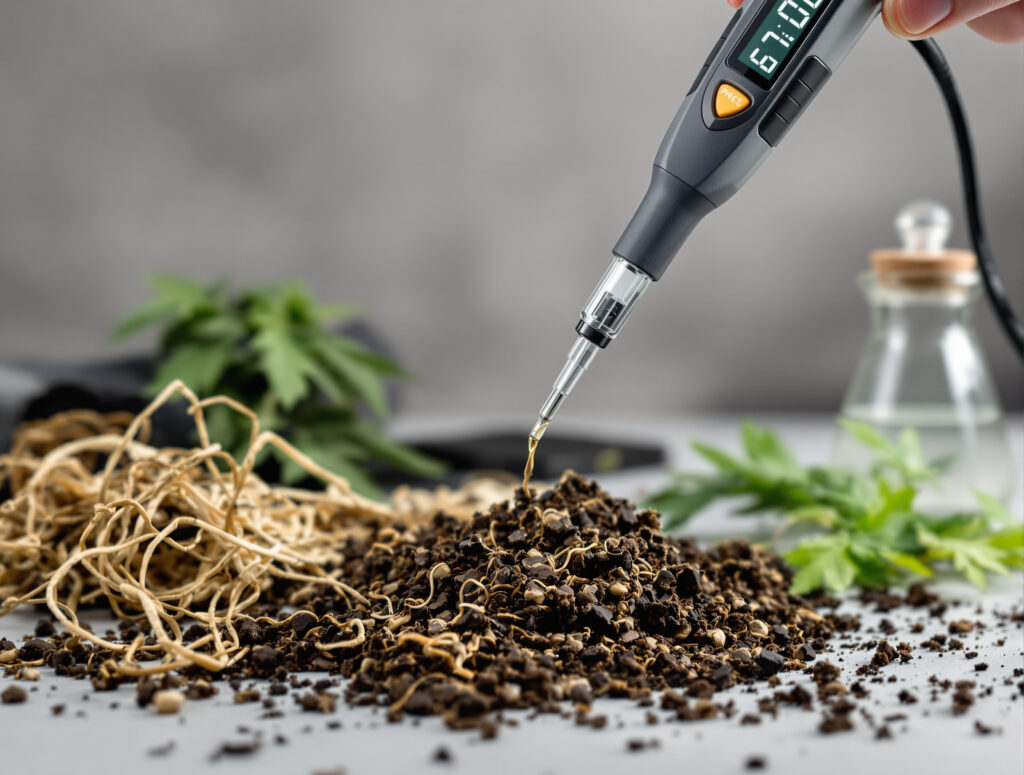
The most common cause is simple underfeeding. Using too little fertilizer during the growth phase or using a nutrient-poor substrate without supplemental feeding drives the plant into deficiency. Additionally, heavily depleted soil after several weeks eventually fails to deliver enough nitrogen.
A second, often overlooked cause is an incorrect pH in the root zone. If it falls outside the optimal window, the plant cannot absorb the available nitrogen, even though enough is present in the substrate. This effect is called nutrient lockout and deceptively resembles a true deficiency. In soil, pH should be between 6.0 and 6.5; in hydroponics, slightly lower. Frequent heavy watering can also leach nitrogen from the substrate. For more on the role of soil and fertilizer overall, explore our article on cannabis soil and fertilizer.
Fixing nitrogen deficiency in cannabis: step by step
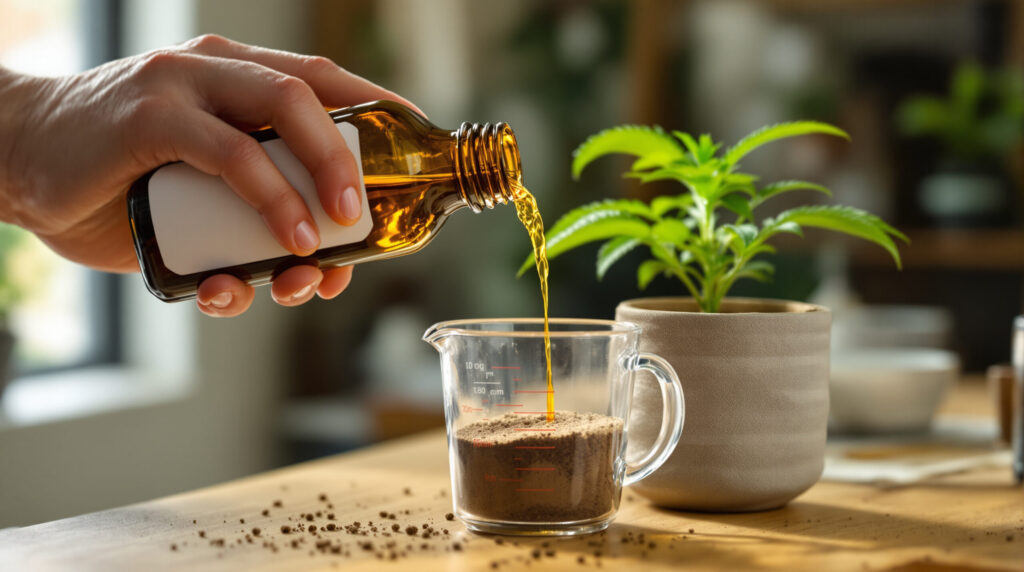
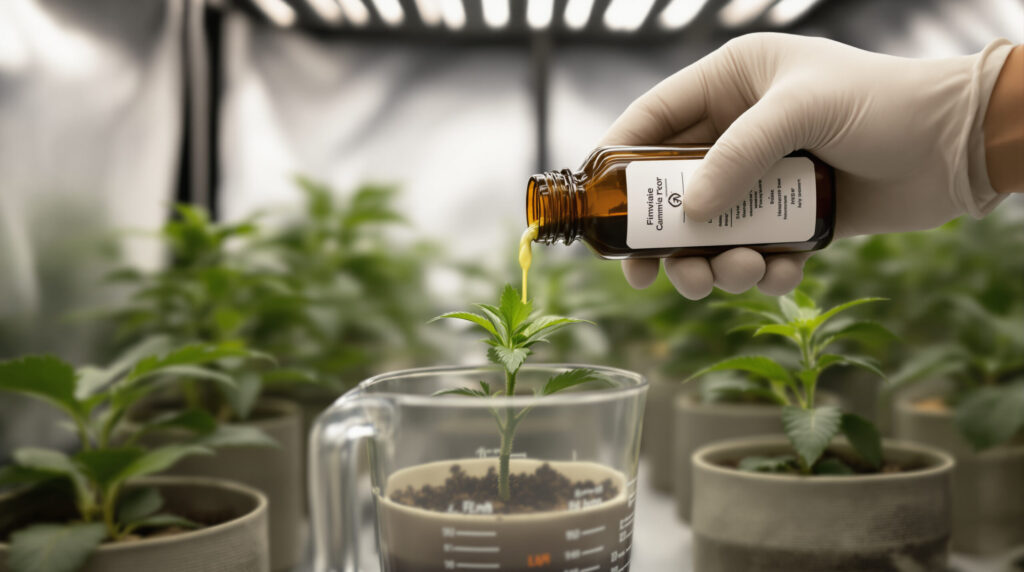
Before fertilizing, always measure the pH of both water and substrate first. If it’s off, correct it and observe the plant for a few days. Often a suspected deficiency resolves itself simply through proper pH adjustment. Only when the pH is correct and symptoms persist is there a true nitrogen deficiency.
For a confirmed deficiency, apply nitrogen-rich vegetative fertilizer, ideally starting at half strength to avoid overfertilizing. In organic growing, instead work nitrogen-rich components like compost, worm castings, or guano into the soil. These work more gently but require two to three weeks for soil organisms to convert them into plant-available forms. New shoots are the best indicator. If they show vigorous green growth again after three to seven days, treatment was successful. Already yellowed lower leaves will not recover and should be removed.
Distinguishing deficiency from excess and lockout
Nitrogen excess is the opposite and looks completely different. Here the leaves become very dark green, appear glossy and thick, and the leaf tips curl downward. Growers call this look the claw. In this case, stop nitrogen application and flush the substrate with pH-balanced water so the plant can use up its reserves.
pH-induced lockout, meanwhile, mimics a deficiency even though nutrients are present. This is why pH measurement always comes first in diagnosis. If the yellowing doesn’t match either of these patterns, another cause like pest infestation or root problems could be behind it. Our article on major diseases in hemp plants provides an overview.
Nitrogen in the flowering phase: less is more
What matters is looking at the right growth stage. In flowering, nitrogen demand intentionally decreases because the plant now directs its energy into flowers, terpenes, and resin rather than new leaves. Slight yellowing of the lowest leaves toward the end of flowering is therefore normal and no cause for concern.
Excess nitrogen in flowering is actually harmful. It can disrupt bud formation and lead to looser, less aromatic flowers. So if you see yellow lower leaves late in flowering, don’t automatically add more fertilizer. During the vegetative phase, however, a deficiency should be taken seriously and corrected promptly.
Frequently asked questions
How do I recognize nitrogen deficiency in cannabis?
The clearest sign is yellow lower leaves while the top remains green. Yellowing starts at the bottom and gradually moves upward. Additionally, growth slows, and the entire plant looks pale rather than sturdy dark green.
How long does recovery take?
After correcting pH and fertilization, mild deficiency usually shows improvement within three to seven days. This is visible in new growth that regains vibrant green color. Already yellowed old leaves will not green up again.
Why should I check pH before fertilizing?
Incorrect pH blocks nitrogen uptake and thereby mimics a deficiency. If you fertilize on top of that, you risk overfertilizing. In soil, pH should be between 6.0 and 6.5 so roots can actually absorb the available nitrogen.
Are yellow leaves in flowering always nitrogen deficiency?
No. Late in flowering, nitrogen demand decreases, and mild yellowing of the lowest leaves is normal. Only when yellowing appears early and across large areas should you look more closely and check other symptoms.
Can I fix nitrogen deficiency organically?
Hattest du schon mal Stickstoffmangel bei deinen Pflanzen?
Yes. Compost, worm castings, or guano provide nitrogen naturally. They work more slowly, however, because soil organisms need two to three weeks to break them down. For acute deficiency, liquid organic vegetative fertilizer works faster.






Branchen-Update
News, Analysen und Reportagen — mehrmals im Monat direkt in dein Postfach.
Folge uns