In Penig, Saxony, a playground is supposed to prevent what the state has already approved. The city council voted in favor of a playground in Markersdorf, a district of the city in Mittelsachsen County. There, a Dresden-based association wants to grow cannabis and distribute it to its members. The tactic is not new: in the Bavarian town of Aschheim, a mini-playground blocked a cannabis social club in 2025. But the situation in Penig is different—the playground came after the approval.
📑 Inhaltsverzeichnis
Growing Association in Markersdorf: What We Know So Far
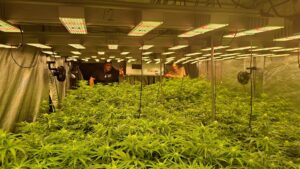
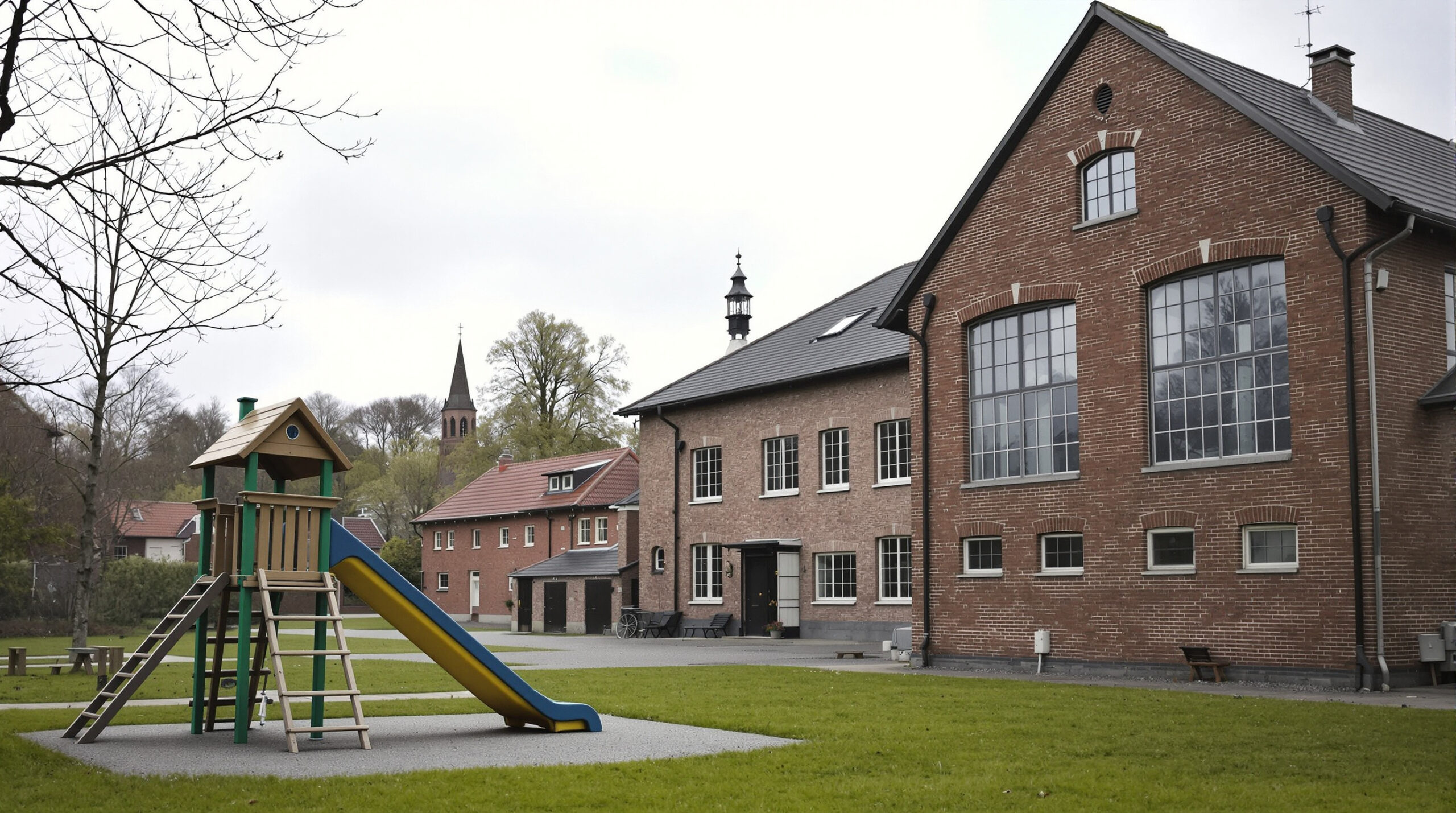
According to reports in the Freie Presse, the growing association plans cultivation and distribution in a former factory hall in Markersdorf, directly next to the church. When plans became public in late July, residents were surprised. Signatures were collected against the project. Mayor André Wolf announced in August that the administration would look for ways to respect the will of citizens.
In late August, resident Andreas Schmidt set up a small playground structure for younger children in front of the church. He and his neighbors hoped this would stop the planned distribution site. Meanwhile, the state approved cultivation and distribution in the hall. According to the Freie Presse, renovations are proceeding at full speed. In mid-September, the Penig city council voted in favor of a playground in the immediate vicinity.


The 200-Meter Rule in the Cannabis Consumption Act
Behind this idea lies a provision in Germany’s Cannabis Consumption Act (KCanG). According to § 12 Abs. 1 Nr. 6 KCanG, a license for a growing association must be denied if its enclosed property is located within 200 meters of the entrance area of schools, children’s facilities, youth centers, or children’s playgrounds. In other words, creating a playground before approval can potentially stop a project.
In Markersdorf, however, the playground came too late. The rule is a precondition for issuing a license. An already-issued license does not automatically expire just because a playground is later built nearby. An important clue comes from § 15 KCanG, which lists grounds for license revocation—such as repeated violations of quantity limits or an unused license. A subsequently built playground is not among them.
For all other cases, § 15 Abs. 2 KCanG refers to the Administrative Procedure Act. There, revocation due to subsequently occurring facts is generally provided for, but it requires that public interest would be endangered without the revocation. Additionally, the affected party may be entitled to compensation for their reliance on the license. Whether a deliberately constructed playground clears this hurdle would have to be decided by a court in a dispute. No court decision on this exists yet.
What the Playground Actually Accomplishes
The playground would have a direct impact primarily on consumption. § 5 Abs. 2 KCanG prohibits public consumption on children’s playgrounds and within their line of sight—meaning up to 100 meters from the entrance area. Within the growing association itself and in its line of sight, consumption is already prohibited. This changes little about the operation of the facility itself.
The Freie Presse criticized the decision as mere symbolism, commenting that a minimally budgeted playground hardly seems well thought out. The German Hemp Association summed up the situation in its video news from September 18: Playground versus growing association, for now 0:1.
Context: Municipalities Seek Leverage Against Growing Associations
The comparison with Aschheim makes the difference clear. There, the playground was in place before the license was decided, and approval was denied. In Penig, the state has already made its decision. Where states or municipalities are skeptical of growing associations, the dispute often shifts to secondary battlegrounds. In Bavaria, it is primarily building law, as the CSC Monitor on building law hurdles and the lawsuit by the Hemp Association and CSC Inntal demonstrate. Municipal political disputes over cannabis have a long history, as evidenced by the early push for a pilot project in Münster.
How the situation of growing associations has developed overall in Saxony is shown in our analysis of cannabis clubs in Saxony, which documents a clear divide between cities and rural regions. An overview of all states is provided by our state-by-state comparison of CSC licenses. How courts interpret the KCanG in detail is shown by, for example, the decision of the Bavarian Court of Appeal on personal use versus commercial quantities.
For growing associations still searching for a location, this case is a warning. As long as the license has not been issued, a new playground can still derail a project. An early dialogue with the municipality and residents is therefore not a formality. In Markersdorf, residents learned of the plans quite late, according to their own account.
Frequently Asked Questions
What distance must a growing association maintain from playgrounds?
The enclosed property must not be located within 200 meters of the entrance area of children’s playgrounds, schools, or children’s and youth facilities. Otherwise, the license must be denied under § 12 Abs. 1 Nr. 6 KCanG.
Can a new playground revoke an already-issued license?
Not automatically. The KCanG does not list a subsequently built playground as a grounds for revocation. Revocation is only possible under the Administrative Procedure Act, which requires endangerment to the public interest. A court would have to decide this in a dispute.
Can you consume cannabis near a playground?
Not publicly. Consumption is prohibited on children’s playgrounds and within their line of sight, defined as up to 100 meters from the entrance area.
Who approves growing associations?
The state authorities are responsible. Each state decides which agency handles this. The local municipality does not issue the license, but can exert influence through building regulations or the use of its own property.
Sollten Städte Spielplätze nutzen dürfen, um Cannabis-Clubs zu verhindern?
Sources: Freie Presse, reports from 07/29, 08/21, 08/27, and 09/16/2026, and commentary from 09/16/2026 (Rochlitz local edition); German Hemp Association, DHV-News #522 (09/18/2026); Cannabis Consumption Act, §§ 5, 12, and 15, gesetze-im-internet.de.







Branchen-Update
News, Analysen und Reportagen — mehrmals im Monat direkt in dein Postfach.
Folge uns