Advertisement. This article was produced in paid cooperation with Smitzbilla.
📑 Inhaltsverzeichnis
- Schmitz Billa
- The Plant, For Twenty-Five Years
- The Eye of a Paint Technician
- Where He Stops Selling
- Design First, Material Behind
- Every Piece Goes Through His Hands
- What Comes Next
- Schmitz Billa
- The Plant, For Twenty-Five Years
- The Eye of a Paint Technician
- Where He Stops Selling
- Design First, Material Behind
- Every Piece Goes Through His Hands
- What Comes Next
- 💬 Fragen? Frag den Hanf-Buddy!
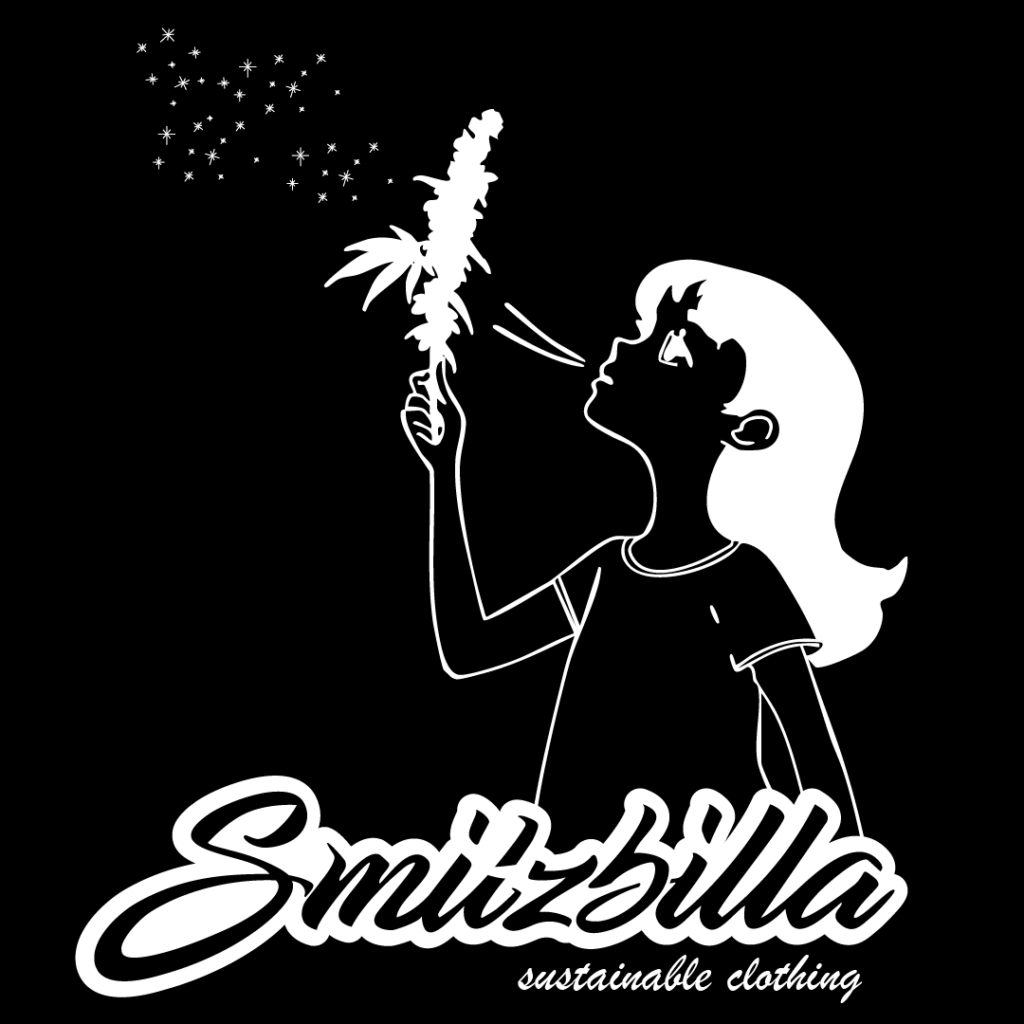
On one of the logos, a girl blows pollen from a hemp flower into the wind. Those who know the story behind it see not marketing, but a gravestone. How a Cologne seamstress’s nickname became a streetwear label that wears hemp without looking eco-conscious.
Schmitz Billa
Marc Bonk’s mother was born in Cologne-Lindenthal with the maiden name Schmitz. In her family and circle of friends, she was called „Schmitz Billa.“ She was a trained seamstress; textiles accompanied her throughout her life, and for a time she ran her own ironing service from home.


Her son drew ever since he could hold a pen, and later took up graffiti. This sparked an idea that occupied both of them for years: a small shop where they would sell modern clothing that he designed. It never came to pass.
She loved dandelions, especially the image of seeds being carried away by the wind. She repeatedly applied this comparison to situations in life. When she died, her son designed an image for her gravestone showing her blowing on a dandelion.
„One of today’s Smitzbilla logos is based on that and reminds me of her. On it, a girl blows male hemp pollen into the wind rather than dandelion seeds. That way, my mother lives on not just in the name, but also in the story and design of the brand.“
Marc Bonk
The Plant, For Twenty-Five Years
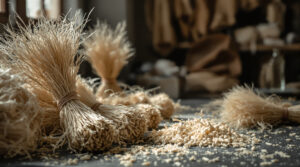
Hemp has been part of Bonk’s life for over 25 years, and not just as a textile fiber. What interests him is the breadth of applications: fibers, woody core, seeds, leaves, and flowers each have their own uses. This range is rarely found in agricultural crops.
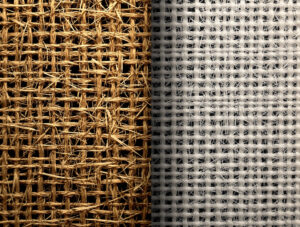
For clothing, the fiber counts. It is robust and durable, and today it can be processed into fabrics that have nothing to do with the old image. We broke down how hemp and cotton differ as raw materials in our comparison of the two natural fibers. Yet this image persists stubbornly: scratchy, coarse, health food store material.
„When you hold a modern, high-quality hemp fabric in your hand today, you quickly realize that this image is long outdated.“
Marc Bonk
Bonk also points to the antimicrobial properties of hemp fibers, which can reduce the development of unpleasant odors. The industry frequently cites this property; however, solid studies specifically for processed and repeatedly washed textile fibers are scarce. Notably, Bonk himself uses cautious language and speaks of possible reduction rather than guaranteed effectiveness.
The Eye of a Paint Technician
Bonk is a trained paint technician and works on sustainable composite materials in which natural fibers serve as reinforcement. He therefore views hemp not just as a fashion material, but as a substance. That explains why fabric weights, mixing ratios, and processing methods play a larger role for him than for many labels advertising the same raw material.
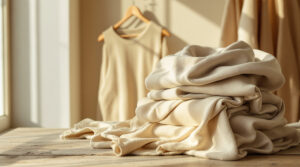
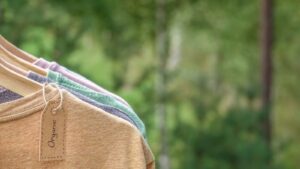
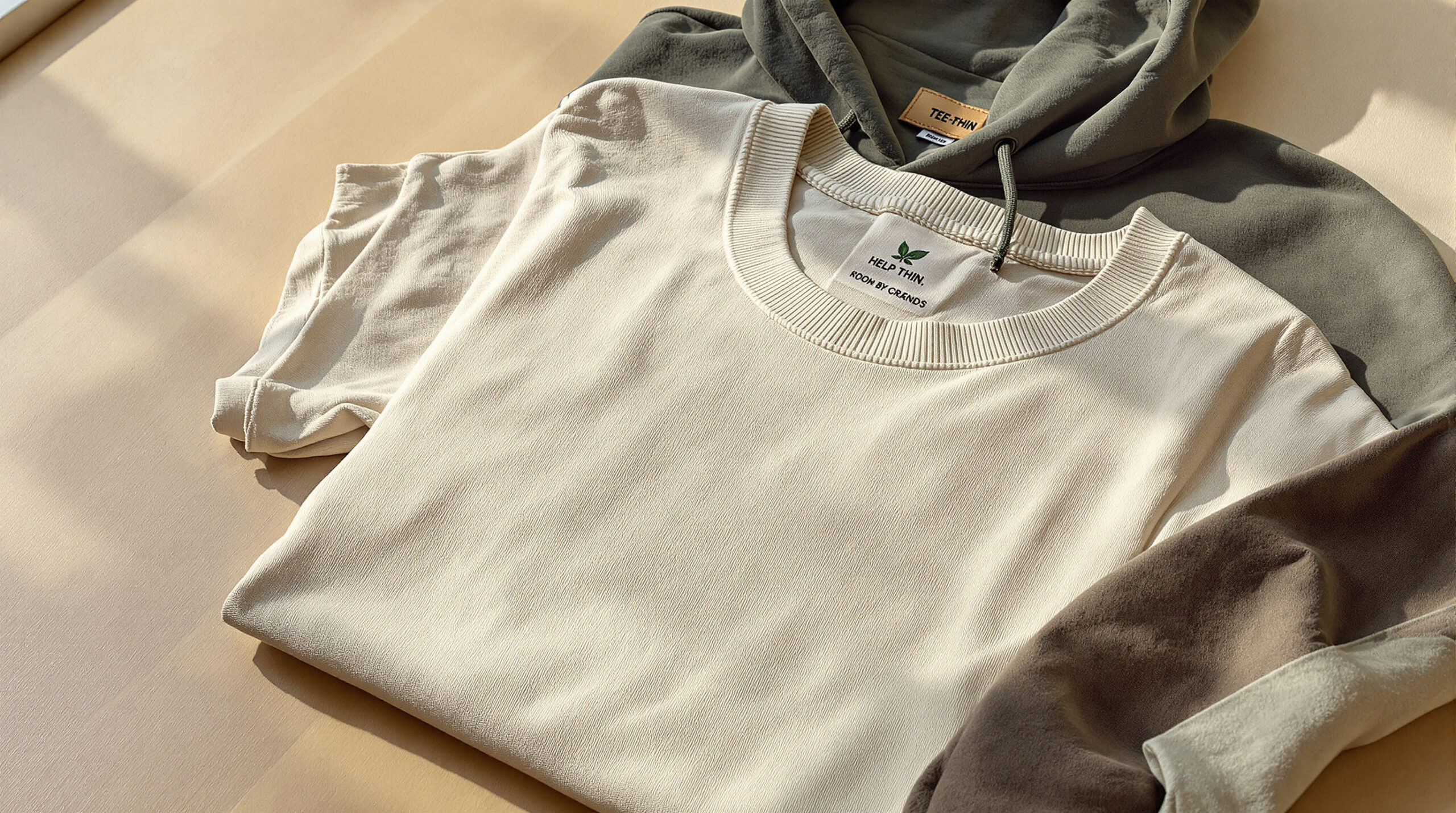
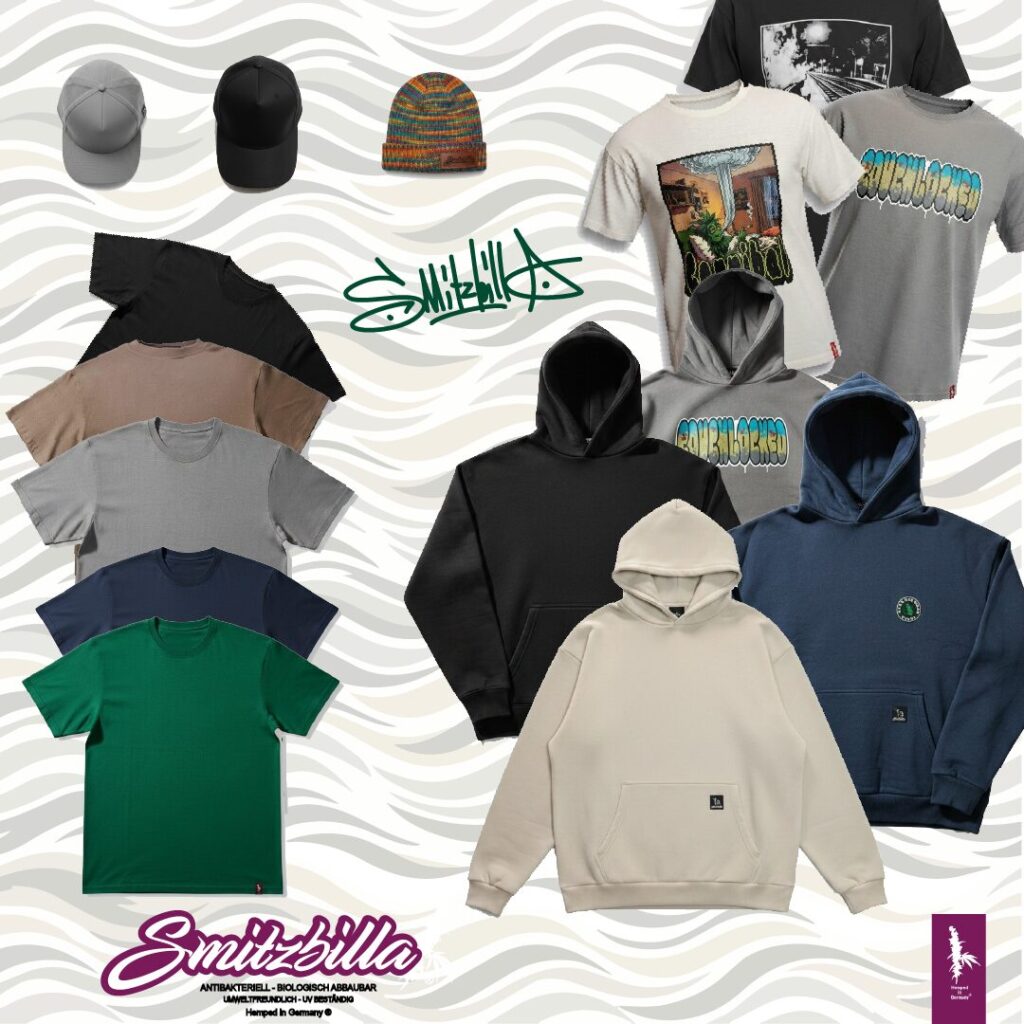
In concrete terms: the lighter T-shirt consists of 55 percent hemp and 45 percent organic cotton at 190 grams per square meter; the heavier variant uses the same mix at 230 grams. The hoodies combine 80 percent organic cotton with 20 percent hemp at 350 grams; the caps are made from pure hemp.
Where He Stops Selling
More interesting than what Bonk says about sustainability is what he doesn’t say. Hemp grows quickly, yields abundant biomass, and in cultivation requires relatively little crop protection; its dense growth suppresses weeds. Then comes a sentence you rarely read in this industry:
„At the same time, I don’t want to market hemp wholesale as a miracle plant. Here too, cultivation, processing, transport, and the production of the finished product all play a role.“
Marc Bonk
When it comes to water consumption, he deliberately avoids citing figures because actual consumption depends on the growing region, irrigation method, and processing. This is remarkable restraint: the catchy liter comparisons between hemp and cotton have circulated for years, usually without indicating what they’re based on.
He names one point that can be substantiated: natural fibers don’t release persistent microplastics when washed. That synthetic textiles release substantial amounts of microfibers during washing is well-documented, for instance in the study by Napper and Thompson in Marine Pollution Bulletin (DOI: 10.1016/j.marpolbul.2016.09.025).
His strongest argument is actually different and requires no life cycle assessment: a garment that lasts longer needs to be replaced less often. Durability is the part of sustainability that can’t be argued away, and it also depends on how a garment is cared for. What hemp fabrics need when washing and drying is covered in our care guide.
Design First, Material Behind
Graffiti, music, and streetwear have accompanied Bonk for much of his life, and he sees no contradiction between subculture and sustainable materials. Sustainability should not be its own style that appeals to only a particular target group.
„Ideally, someone buys a Smitzbilla shirt first because they like the design and it feels good, and then discovers that behind the garment is also a thoughtful material concept.“
Marc Bonk
The designs rarely come spontaneously. An idea often sits in his head for weeks or months, develops further, loses details and gains new ones, until it reaches a point where it feels finished. Until then, he says, he can struggle with an idea for quite a while. External pressure works surprisingly well: a trade show with a fixed date leaves no time to carry a design around for months.
Smitzbilla therefore has no fixed design style. The range spans from graffiti and street art to music and pop culture to classical art, and that’s intentional.
Every Piece Goes Through His Hands
Development happens in Germany, production with partners in Europe and Asia, finishing and quality control take place again in Germany. According to the label, the main supplier is GOTS and Fairtrade certified; OEKO-TEX standards are observed for dyes. A separate certification for Smitzbilla is in progress.
A word on how to categorize these seals: GOTS covers ecological and social criteria along the textile chain, Fairtrade targets trading conditions and prices, OEKO-TEX tests textiles for harmful substances. The three examine different things, and none automatically covers the others. A label naming them individually rather than blanketly writing „certified“ is a good sign.
Before production runs, Bonk tests fabrics and samples himself: material, fabric weight, processing, seams, dimensions, fit, wearing comfort. After production, the goods come to him.
„Right now, every single piece really does go through my hands again, from checking the print or embroidery to packing the order. If a piece doesn’t meet my standards, it gets sorted out.“
Marc Bonk
Here too, he sticks to what he can substantiate. As a small label, he cannot personally monitor every step of an international supply chain, so he relies on certified partners and is working to expand transparency and certification further. This honesty is not a given in an industry that loves to talk about complete traceability.
What Comes Next
Sweatpants and underwear are planned—two product categories where hemp’s material properties really shine. Recently an industrial embroidery machine was installed; initial tests are underway, allowing refinements to be implemented in-house even in small quantities.
A growing segment is business with companies. Smitzbilla already works with Cannabis Social Clubs, specialty shops, and other businesses, supplying textiles with individual refinishing. Bonk’s reasoning is straightforward: if you’re already having merchandise produced for members or customers in the cannabis and hemp sector, you might as well choose hemp textiles.
Trade shows and direct contact remain important to him, for a practical reason: with hemp textiles, there’s a big difference in actually touching the fabric. Many people simply have different material in mind.
The label can be found in its own webshop at smitzbilla.de and on Instagram at @smitzbilla, where Bonk also shows development work, including things that don’t work out along the way. We’ve compiled other brands with a similar approach in our overview of sustainable hemp clothing labels.
Note: Information on material composition, certifications, and production steps comes from the label and has not been verified on-site by us. Statements on environmental properties of fibers refer to general properties of the raw material, not to a life cycle assessment of individual products.
Advertisement. This article was produced in paid cooperation with Smitzbilla.
On one of the logos, a girl blows pollen from a hemp flower into the wind. Those who know the story behind it see not marketing, but a gravestone. How a Cologne seamstress’s nickname became a streetwear label that wears hemp without looking eco-conscious.
Schmitz Billa
Marc Bonk’s mother was born in Cologne-Lindenthal with the maiden name Schmitz. In her family and circle of friends, she was called „Schmitz Billa.“ She was a trained seamstress; textiles accompanied her throughout her life, and for a time she ran her own ironing service from home.
Her son drew ever since he could hold a pen, and later took up graffiti. This sparked an idea that occupied both of them for years: a small shop where they would sell modern clothing that he designed. It never came to pass.
She loved dandelions, especially the image of seeds being carried away by the wind. She repeatedly applied this comparison to situations in life. When she died, her son designed an image for her gravestone showing her blowing on a dandelion.
„One of today’s Smitzbilla logos is based on that and reminds me of her. On it, a girl blows male hemp pollen into the wind rather than dandelion seeds. That way, my mother lives on not just in the name, but also in the story and design of the brand.“
Marc Bonk
The Plant, For Twenty-Five Years
Hemp has been part of Bonk’s life for over 25 years, and not just as a textile fiber. What interests him is the breadth of applications: fibers, woody core, seeds, leaves, and flowers each have their own uses. This range is rarely found in agricultural crops.
For clothing, the fiber counts. It is robust and durable, and today it can be processed into fabrics that have nothing to do with the old image. We broke down how hemp and cotton differ as raw materials in our comparison of the two natural fibers. Yet this image persists stubbornly: scratchy, coarse, health food store material.
„When you hold a modern, high-quality hemp fabric in your hand today, you quickly realize that this image is long outdated.“
Marc Bonk
Bonk also points to the antimicrobial properties of hemp fibers, which can reduce the development of unpleasant odors. The industry frequently cites this property; however, solid studies specifically for processed and repeatedly washed textile fibers are scarce. Notably, Bonk himself uses cautious language and speaks of possible reduction rather than guaranteed effectiveness.
The Eye of a Paint Technician
Bonk is a trained paint technician and works on sustainable composite materials in which natural fibers serve as reinforcement. He therefore views hemp not just as a fashion material, but as a substance. That explains why fabric weights, mixing ratios, and processing methods play a larger role for him than for many labels advertising the same raw material.
In concrete terms: the lighter T-shirt consists of 55 percent hemp and 45 percent organic cotton at 190 grams per square meter; the heavier variant uses the same mix at 230 grams. The hoodies combine 80 percent organic cotton with 20 percent hemp at 350 grams; the caps are made from pure hemp.
Where He Stops Selling
More interesting than what Bonk says about sustainability is what he doesn’t say. Hemp grows quickly, yields abundant biomass, and in cultivation requires relatively little crop protection; its dense growth suppresses weeds. Then comes a sentence you rarely read in this industry:
„At the same time, I don’t want to market hemp wholesale as a miracle plant. Here too, cultivation, processing, transport, and the production of the finished product all play a role.“
Marc Bonk
When it comes to water consumption, he deliberately avoids citing figures because actual consumption depends on the growing region, irrigation method, and processing. This is remarkable restraint: the catchy liter comparisons between hemp and cotton have circulated for years, usually without indicating what they’re based on.
He names one point that can be substantiated: natural fibers don’t release persistent microplastics when washed. That synthetic textiles release substantial amounts of microfibers during washing is well-documented, for instance in the study by Napper and Thompson in Marine Pollution Bulletin (DOI: 10.1016/j.marpolbul.2016.09.025).
His strongest argument is actually different and requires no life cycle assessment: a garment that lasts longer needs to be replaced less often. Durability is the part of sustainability that can’t be argued away, and it also depends on how a garment is cared for. What hemp fabrics need when washing and drying is covered in our care guide.
Design First, Material Behind
Graffiti, music, and streetwear have accompanied Bonk for much of his life, and he sees no contradiction between subculture and sustainable materials. Sustainability should not be its own style that appeals to only a particular target group.
„Ideally, someone buys a Smitzbilla shirt first because they like the design and it feels good, and then discovers that behind the garment is also a thoughtful material concept.“
Marc Bonk
The designs rarely come spontaneously. An idea often sits in his head for weeks or months, develops further, loses details and gains new ones, until it reaches a point where it feels finished. Until then, he says, he can struggle with an idea for quite a while. External pressure works surprisingly well: a trade show with a fixed date leaves no time to carry a design around for months.
Smitzbilla therefore has no fixed design style. The range spans from graffiti and street art to music and pop culture to classical art, and that’s intentional.
Every Piece Goes Through His Hands
Development happens in Germany, production with partners in Europe and Asia, finishing and quality control take place again in Germany. According to the label, the main supplier is GOTS and Fairtrade certified; OEKO-TEX standards are observed for dyes. A separate certification for Smitzbilla is in progress.
A word on how to categorize these seals: GOTS covers ecological and social criteria along the textile chain, Fairtrade targets trading conditions and prices, OEKO-TEX tests textiles for harmful substances. The three examine different things, and none automatically covers the others. A label naming them individually rather than blanketly writing „certified“ is a good sign.
Before production runs, Bonk tests fabrics and samples himself: material, fabric weight, processing, seams, dimensions, fit, wearing comfort. After production, the goods come to him.
„Right now, every single piece really does go through my hands again, from checking the print or embroidery to packing the order. If a piece doesn’t meet my standards, it gets sorted out.“
Marc Bonk
Here too, he sticks to what he can substantiate. As a small label, he cannot personally monitor every step of an international supply chain, so he relies on certified partners and is working to expand transparency and certification further. This honesty is not a given in an industry that loves to talk about complete traceability.
What Comes Next
Sweatpants and underwear are planned—two product categories where hemp’s material properties really shine. Recently an industrial embroidery machine was installed; initial tests are underway, allowing refinements to be implemented in-house even in small quantities.
A growing segment is business with companies. Smitzbilla already works with Cannabis Social Clubs, specialty shops, and other businesses, supplying textiles with individual refinishing. Bonk’s reasoning is straightforward: if you’re already having merchandise produced for members or customers in the cannabis and hemp sector, you might as well choose hemp textiles.
Trade shows and direct contact remain important to him, for a practical reason: with hemp textiles, there’s a big difference in actually touching the fabric. Many people simply have different material in mind.
The label can be found in its own webshop at smitzbilla.de and on Instagram at @smitzbilla, where Bonk also shows development work, including things that don’t work out along the way. We’ve compiled other brands with a similar approach in our overview of sustainable hemp clothing labels.
Hast du schon einmal Kleidung aus Hanf getragen?
Note: Information on material composition, certifications, and production steps comes from the label and has not been verified on-site by us. Statements on environmental properties of fibers refer to general properties of the raw material, not to a life cycle assessment of individual products.


Branchen-Update
News, Analysen und Reportagen — mehrmals im Monat direkt in dein Postfach.
Folge uns