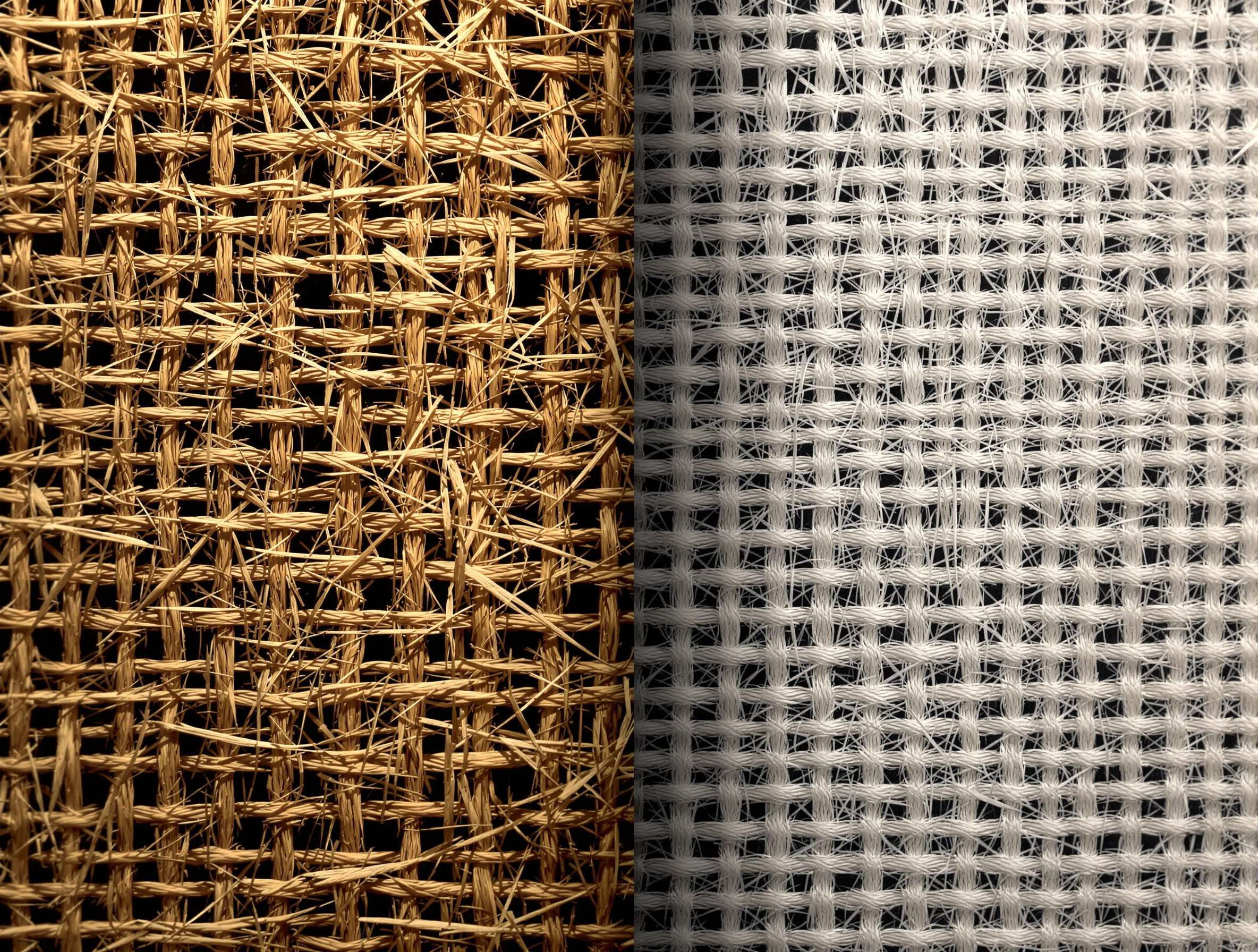
Whoever chooses between hemp and cotton today is deciding far more than just a fiber question. Behind the comparison of these two natural fibers lie different cultivation cultures, opposing water balances, and two very different industrial histories. While cotton has dominated the global textile market for over a century, hemp has experienced a renaissance in recent years due to European cannabis policy, a trend that has also reached the textile sector.
📑 Inhaltsverzeichnis
- Hemp vs. Cotton: Cultivation, Water, and Pesticides in Direct Comparison
- Fiber Quality, Tensile Strength, and Wear Comfort: Where Are the Real Differences?
- UV Protection, Antibacterial Properties, and Moisture Management
- Price, Availability, and Market: Why Hemp T-Shirts Cost More
- Care, Durability, and Recycling: Which Fiber Lasts Longer?
- Frequently Asked Questions
- 💬 Fragen? Frag den Hanf-Buddy!
This comparison objectively categorizes the most important properties, cultivation conditions, and market data. It shows in which disciplines hemp clearly leads, where cotton retains technical advantages, and which fiber is suited for which application. Anyone who wants to buy or manufacture hemp textiles should understand the differences, because they directly determine price, wear comfort, and environmental impact.
Hemp vs. Cotton: Cultivation, Water, and Pesticides in Direct Comparison
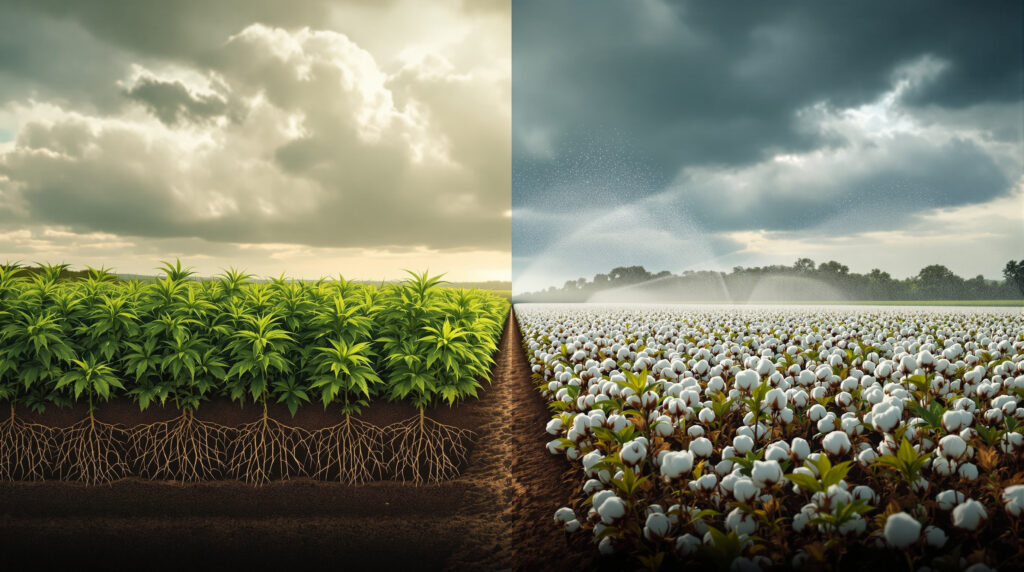
The biggest difference between the two natural fibers doesn’t begin at the loom, but in the field. Conventional cotton grows predominantly in hot, dry cultivation regions such as Uzbekistan, India, Pakistan, and the southern United States. Per kilogram of fiber, sources cite between 3,000 and 11,000 liters of water, with higher values accounting for the complete life cycle including finishing. Cotton requires at least 750 millimeters of rainfall or irrigation water per growing season, which in many cultivation regions can only be achieved through river diversions and groundwater extraction.


Hemp is comparatively modest in comparison. Studies indicate water requirements of 1,000 to 2,500 liters per kilogram of fiber. In temperate climates like Central Europe, the plant covers much of its needs with naturally occurring precipitation. This saves irrigation infrastructure, protects groundwater, and avoids salinization problems typical of irrigation regions in cotton-growing countries.
The comparison is even more striking when it comes to pesticides and insecticides. Cotton occupies around four percent of the world’s arable land, yet according to the UN Food and Agriculture Organization, it consumes around ten percent of all pesticides used globally and approximately 22 percent of all insecticides. Hemp grown in fields typically requires no plant protection agents because the plant has deep roots, quickly shades the soil, and has few relevant pests. Hemp also requires significantly less fertilizer, as it leaves part of its biomass as mulch on the field after harvest.
This cultivation difference is the decisive lever for the environmental balance. Anyone comparing hemp and cotton only at the end product overlooks the largest environmental cost block, which already exists before the first fiber processing. For those wanting to dive deeper into cultivation aspects, the comprehensive industrial hemp guide provides the most important figures for industrial hemp cultivation in Europe.
Fiber Quality, Tensile Strength, and Wear Comfort: Where Are the Real Differences?
Cotton is a seed hair fiber, hemp is a bast fiber. This fundamental botanical difference shapes all subsequent properties. Cotton is naturally fine, short, and soft, with fiber fineness typically ranging between 1.1 and 2.3 decitex. It can be easily processed on conventional ring-spinning and rotor-spinning machines and immediately produces the familiar soft wear comfort of t-shirts and bed linens.
Hemp provides long, thick, and very strong stem fibers. In its untreated form, classic hemp fabric feels firm and slightly rough, similar to coarse linen. This is precisely why hemp was historically used for sails, ropes, and sturdy workwear, such as the famous goldpan pants that later became jeans. In tensile strength and wet strength, hemp outperforms cotton—a property that secures its firm place in the outdoor and workwear segment.
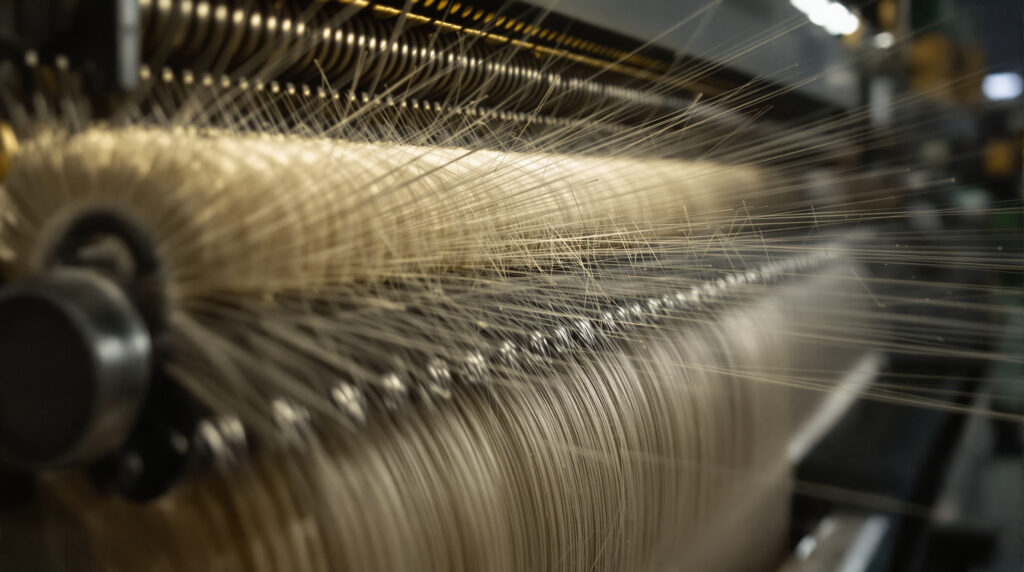
For hemp to compete with cotton in modern textile production, it undergoes a process called cottonization. In this process, the long bast fibers are enzymatically or mechanically broken down into shorter, finer sections that can be processed on existing cotton spinning machines. This significantly lowers the investment barrier for spinning mills, as no separate hemp mill is needed. The technology of hemp processing from field to yarn describes the individual steps in detail.
For wear comfort, a simple rule of thumb applies. Pure, unwashed hemp fabric is stiffer than cotton and becomes softer with each wash. Hemp-cotton blend fabrics combine both strengths and are today the standard for everyday hemp clothing. Experience shows that shirts, t-shirts, and pants made from hemp or hemp blends last two to three times longer than comparable cotton garments, which puts the higher purchase price in perspective over the garment’s lifetime.
UV Protection, Antibacterial Properties, and Moisture Management
Three functional properties are particularly driving the hemp hype in the textile sector. According to several studies, hemp fibers absorb significantly more UV radiation than cotton. Values up to 90 percent are cited, while cotton and linen achieve 30 to 60 percent depending on weave and density. These figures depend heavily on weave structure and material density and do not replace a certified UV standard certificate, but they do indicate a clear trend.
Hemp’s antibacterial action works primarily through its natural hollow fiber structure and residual lignin and phenolic compounds. In practice, this means that hemp socks or hemp shirts remain odor-neutral longer than pure cotton. In the outdoor and trekking sector, this is the deciding sales point for many manufacturers because less washing is required and the garment’s lifespan increases.
Hemp also shows strengths in moisture management. The fiber absorbs moisture quickly and releases it just as rapidly, keeping the fabric comfortably dry on the skin. Cotton also becomes saturated, but holds moisture longer in the fabric, which in summer and during sports leads more quickly to damp clothing. This creates clear advantages for hemp in sports and functional clothing, provided the fiber is spun finely enough.
Price, Availability, and Market: Why Hemp T-Shirts Cost More
If hemp has so many advantages, one might ask why hemp textiles are more expensive in retail than cotton. The answer lies in economies of scale. Cotton is grown worldwide on approximately 30 million hectares and processed in large industrial spinning mills. Hemp reaches only a fraction of this area globally; in Europe, France leads hemp cultivation with over 20,000 hectares, followed by smaller operations in Italy, Poland, Lithuania, and Germany.
German industrial hemp cultivation reached a record 7,100 hectares in 2024 but fell to approximately 5,274 hectares in 2025. 496 farms were cultivating it most recently. The decline is attributable to economic pressure on processors, a difficult market environment, and regulatory uncertainty surrounding THC limits. The global industrial hemp market is estimated at approximately 13.86 billion U.S. dollars for 2026, with the fiber segment accounting for roughly one-third of that.
Processing accounts for most of the impact on the end consumer price. With European spinning and weaving, the pure fiber cost increases by another 20 to 40 percent compared to Chinese processing. Buying a hemp t-shirt manufactured in Europe means paying not only for the fiber but for the rebuilding of an entire European value chain. Sustainable fashion from hemp details these market dynamics.
On the cultivation side, research projects are working in parallel on finer hemp varieties. So-called winter hemp, which is sown in autumn and harvested in spring, produces significantly finer stems and thus fibers that approach linen or even cotton more closely. The article on winter hemp cultivation describes the process and its market significance. Over the medium term, such variety improvements should further narrow the price gap with cotton.
Care, Durability, and Recycling: Which Fiber Lasts Longer?
Hemp textiles are generally easy to care for. Washing at 30 to 40 degrees is recommended, and avoiding the dryer extends the lifespan. Pure hemp fabric can withstand 60 degrees for robust items like bed linens or jeans. Cotton is somewhat more tolerant in this regard because it lacks bast fiber structure and responds less critically to heat. With hemp-cotton blends, care follows the more delicate component, or if in doubt, the cotton.
In terms of durability, hemp shows its industrial past. Tensile strength is higher, the fiber resists abrasion less quickly, and the fabric maintains its shape longer. Anyone who has worn a hemp shirt for five years in weekly use knows the difference. On the recycling side, both fibers perform similarly well technically because both have a pure cellulose base. Homogeneous hemp fabrics can be composted and are biodegradable, provided no synthetic blends or coatings were used.
For those wanting to systematically translate the comparison to their own wardrobe, the complete guide to hemp textiles offers purchasing advice with blend ratios and care instructions. As a starting point, a hemp-cotton blend shirt with 55 percent hemp content is recommended as an introduction, as it remains soft enough for everyday wear while taking advantage of hemp’s ecological benefits.
Frequently Asked Questions
Is hemp really more sustainable than cotton?
In the core disciplines of water consumption, pesticide use, and fertilizer requirements, hemp clearly outperforms conventional cotton. Organic cotton narrows the gap on pesticides but remains inferior in water consumption. A blanket statement depends on the country of origin and processing, but overall, hemp scores better in virtually all lifecycle assessment studies.
Why does hemp clothing feel harder than cotton at first?
This is due to fiber structure. Hemp is a bast fiber with longer, coarser elements than cotton. After several washes, the fiber bundles break up and the fabric becomes noticeably softer. Those seeking an entry point should choose hemp-cotton blends or cottonized hemp.
Does a hemp t-shirt really last longer than a cotton one?
In practice, well-made hemp shirts last two to three times longer than pure cotton shirts in a comparable price range. Yarn thickness, weave, and seam quality are decisive. With hemp-cotton blends starting at around 40 percent hemp content, the effect is already clearly noticeable.
Why are hemp textiles more expensive than cotton textiles?
The main reason is smaller economies of scale. Cotton is grown on approximately 30 million hectares worldwide, while hemp is grown on only a fraction of that. Additionally, building up European processing capacity requires substantial investment. With European spinning and weaving, fabric prices increase by 20 to 40 percent compared to Asian processing.
Is hemp suitable for athletic wear?
Yes, hemp transports moisture away from the skin faster than cotton and remains odor-neutral longer due to its antibacterial fiber structure. For high-performance sports, hemp blends with merino or Tencel are typically used to further optimize wear comfort.
Can hemp replace cotton in the global textile industry?
Achtest du beim Kleidungskauf auf die verwendete Naturfaser?
Not in the short term, as availability and processing capacity are lacking. Long-term, a significant shift is possible. Variety improvements such as winter hemp, a growing European processing sector, and increasing pressure on cotton’s water consumption all support a growing share of hemp in the mass market.

Branchen-Update
News, Analysen und Reportagen — mehrmals im Monat direkt in dein Postfach.
Folge uns