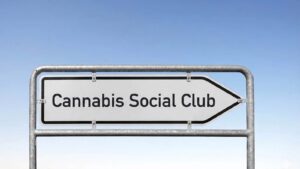
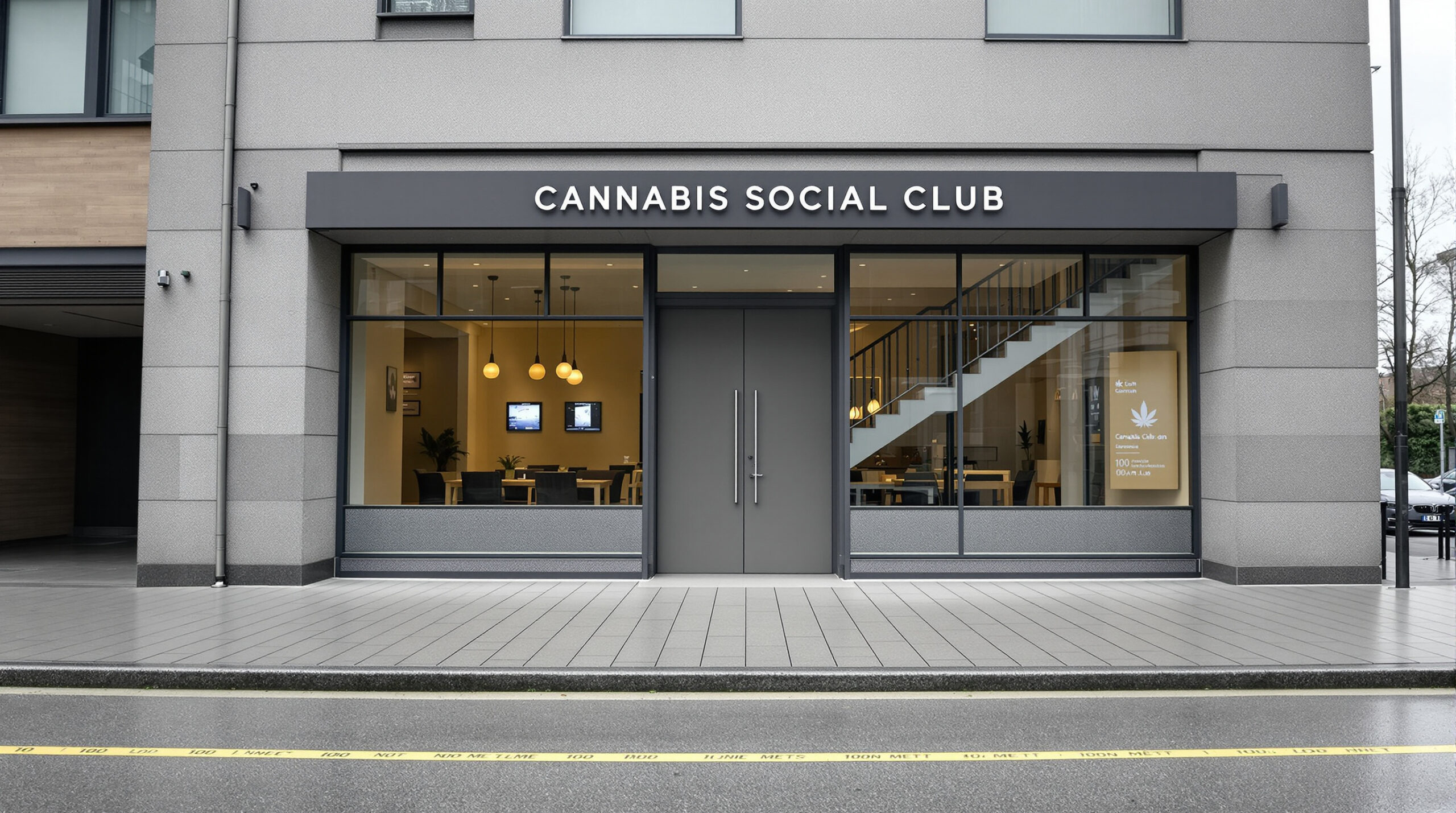
Anyone who picks up cannabis from a German cultivation association cannot consume it there. The ban doesn’t end at the association’s door either, but extends up to 100 meters beyond the entrance area. The scientific evaluation of the Cannabis Consumption Act now explicitly calls this rule into question.
📑 Inhaltsverzeichnis
What Section 5 KCanG literally prescribes
The consumption ban is outlined in Section 5 of the Cannabis Consumption Act and consists of three parts. Subsection 1 prohibits consumption in the immediate presence of minors. Subsection 3 prohibits it in military areas of the German Armed Forces. The practically significant part is Subsection 2, which prohibits public consumption in six locations.
- in schools and within their sight lines
- on children’s playgrounds and within their sight lines
- in children’s and youth facilities and within their sight lines
- in publicly accessible sports facilities and within their sight lines
- in pedestrian zones between 7 and 8 p.m.
- within the enclosed property of cultivation associations and within their sight lines
The sixth provision is the surprising one. Schools, playgrounds, and sports facilities are places where children and adolescents are regularly found. A cultivation association is the opposite. According to the law, it may only admit adults and must verify age and membership with each distribution. Nevertheless, the legislator placed this exact facility on the same list.


The 100-meter boundary is an upper limit, not a restricted zone
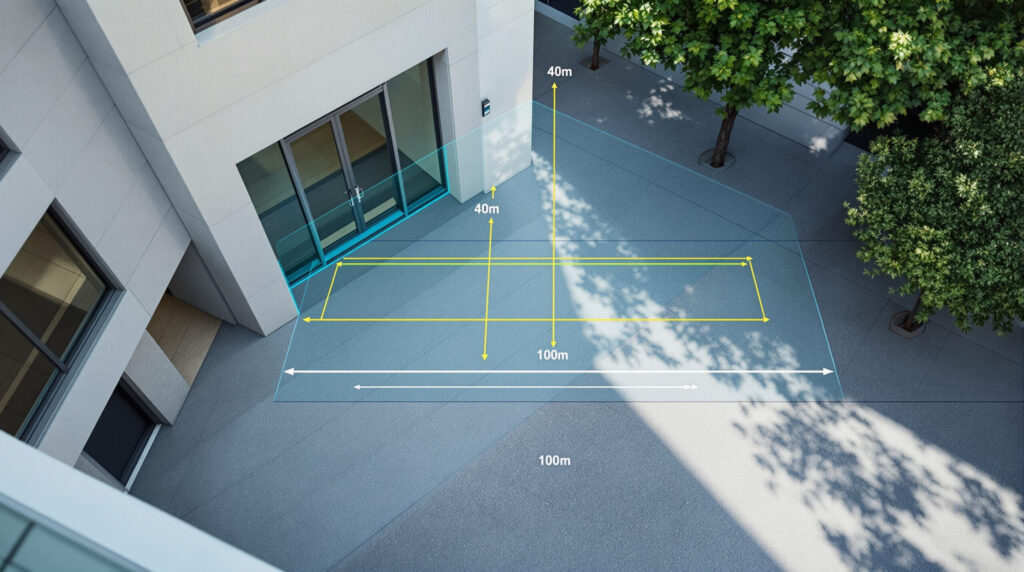
The second sentence of the subsection defines what sight line means. At a distance of more than 100 meters from the entrance area of the facilities mentioned, it no longer applies. This sentence applies to provisions 1 through 4 and 6, including cultivation associations. Pedestrian zones from provision 5 are exempt; there only the time of day matters.
The direction of this definition is important. The 100 meters are not a rigid restricted zone, but rather an upper limit for the concept of sight line. Someone standing 40 meters away behind a building wall is not within sight line despite the short distance. Conversely, the protected area ends at 101 meters in any case. This creates a rule that hardly anyone can reliably assess.
A violation is not without consequences. Section 36, Subsection 1, Number 4 of the law classifies consumption contrary to Section 5 as an administrative offense. According to Subsection 2 of the same provision, this offense falls into the higher fine category, with a framework extending up to 30,000 euros. This is a theoretical maximum that no administrative authority will impose for a joint. However, it shows the weight class in which the legislator has placed the prohibited zones. Our overview of the Cannabis Act 2026 shows how the legal situation has developed overall.
Why the rule removes control from the associations

The Federal Association of Cannabis Cultivation Associations counted 455 permits nationwide in calendar week 33, as our CSC Monitor documents. In Lower Saxony alone, the hundredth permit was issued in August. With each new association, the rule becomes everyday reality for more people.
The association premises are the only place in the legal market where any control takes place at all. There age is verified, membership is demonstrated, and the required product information sheet is provided. Consumption then takes place at some other location where no one is watching. The law thus moves the very activity it intended to monitor out of the only controlled environment. Our article on cannabis in clubs and venues shows how unclear the situation is outside the associations.
A look at Spain provides a counterexample. There, the association premises are traditionally precisely the consumption site, and that’s exactly where the legal dispute centers. In Barcelona, proceedings are currently underway against nearly all Cannabis Social Clubs. The German approach avoids this conflict, but it does so at the cost of consumption without any oversight.
What the evaluation recommends to the legislator

Section 43 of the Cannabis Consumption Act mandates a scientific evaluation. It is being conducted under the name EKOCAN on behalf of the Federal Ministry of Health, involving the University Medical Center Hamburg-Eppendorf, the University of Tübingen, and the University Medical Center Düsseldorf. The team submitted the second interim report on April 1, 2026, with participation from the Federal Criminal Police Office. The final report is scheduled for April 1, 2028.
The assessment of the cultivation associations is sobering. By October 31, 2025, only 366 associations had been approved. With approximately 5.3 million consumers, this would allow at most 3.5 percent to become members at all. Researchers therefore recommend reviewing the restrictive framework conditions for approval. In the same context, they explicitly state that the consumption ban in cultivation associations could also be subject to review.
The overarching goal of such an amendment to the Cannabis Consumption Act could be to enable all adult consumers to become members of a cultivation association.
Also noteworthy is what the respondents themselves say. In 30 individual interviews with young adult consumers, participants considered the prohibited zones theoretically sensible. However, they stated they had already adhered to such boundaries before the law took effect. They rated enforcement as inadequate because they perceive no control. Simultaneously, it became apparent that respondents lack sufficient information about the prohibited zones.
How realistic a change is currently
In the short term, little suggests a correction. The legislator is occupied with the Medical Cannabis Act, whose amendment remains under review in the health committee. An amendment to the Cannabis Consumption Act is not on the agenda. The drug policy commissioner Hendrik Streeck has indeed called for corrections to the Cannabis Act, but his priorities lie elsewhere.
For the associations, this means planning security in the uncomfortable variant. Until an amendment, the legal situation remains unchanged, and anyone who allows members to consume on their own grounds risks fine proceedings. The evaluation’s recommendation is an argument, but not yet law.
Frequently asked questions
Can I consume cannabis at my cultivation association?
No. Section 5, Subsection 2, Number 6 of the Cannabis Consumption Act prohibits consumption within the enclosed property of the cultivation association. The ban applies to the entire association premises, including a courtyard or terrace. The law does not provide for an exception for enclosed spaces.
How far do I need to be from the cultivation association?
The determining factor is the sight line to the entrance. At a distance of more than 100 meters, it no longer applies under the law in any case. Closer to the building, it depends on whether the entrance is actually visible. To be safe, maintain the full 100 meters.
What does a violation of the consumption ban cost?
The violation is an administrative offense under Section 36, Subsection 1, Number 4 of the Cannabis Consumption Act. The statutory fine range extends up to 30,000 euros. In practice, the states‘ fine schedules are significantly lower, with the responsible authority determining the exact amount on a case-by-case basis.
Does the ban also apply to vaporizers and edibles?
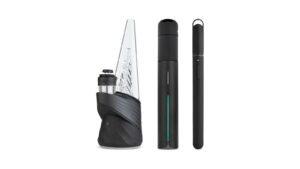
The law speaks generally of cannabis consumption and names no specific consumption method. Thus the ban covers smoking as well as vaporizing. Consumption of cannabis-containing edibles also falls under it, even though nothing is seen or smelled in the process.
Who enforces the consumption prohibition zones?
The police and administrative authorities of the states and municipalities are responsible. However, the evaluation shows that respondents perceive hardly any controls in practice. Enforcement is considered one of the weakest points of the entire regulatory framework.
Sollte der Konsum direkt in Anbauvereinigungen erlaubt werden?
Sources: Cannabis Consumption Act (KCanG), Sections 5, 36 and 43, official version via gesetze-im-internet.de. Manthey, Kalke, Kraus et al.: Evaluation of the Cannabis Consumption Act (EKOCAN), 2nd Interim Report from April 1, 2026, University Medical Center Hamburg-Eppendorf. Federal Ministry of Health, Announcement of the second evaluation of cannabis partial legalization. Hanfjournal, article from August 25, 2026.






Branchen-Update
News, Analysen und Reportagen — mehrmals im Monat direkt in dein Postfach.
Folge uns