
What Italy’s Cassation Court Decided on Hemp Flowers
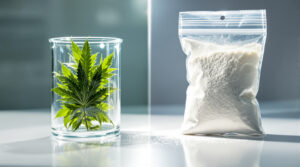
The fourth criminal section of the Corte di Cassazione reviewed a case where a lower court had refused to return confiscated hemp flowers. What makes this case remarkable is the starting point: expert witnesses commissioned by the prosecutor themselves concluded that the seized material could not produce psychoactive effects. Yet the court retained the merchandise anyway, relying solely on the new legal framework.
📑 Inhaltsverzeichnis
- What Italy’s Cassation Court Decided on Hemp Flowers
- How Italy’s Hemp Flower Ban Came About in 2025
- 730 Kilograms Returned: The Practice Before Courts
- Constitutional Court and European Court of Justice to Decide
- What This Case Means for German-Speaking Markets
- Frequently Asked Questions
- 💬 Fragen? Frag den Hanf-Buddy!
This automatic approach is precisely what the Cassation Court rejected. According to the ruling, a prohibition tied to plant category membership does not replace proof of actual danger in individual cases. The judges demand concrete examination rather than blanket presumption. In practice, this means investigative authorities must now demonstrate why the specific confiscated flowers are actually capable of producing intoxication.
How Italy’s Hemp Flower Ban Came About in 2025
The conflict stems from Article 18 of Legislative Decree 48/2025, which the Giorgia Meloni government introduced in April 2025 as a security decree. The article removed hemp flowers from the protection of Italy’s industrial hemp law and subjected them to narcotics law. This overnight destroyed the business foundation for an industry that had relied on its own agricultural statute since 2016. We documented this shift when Italy classified CBD as a controlled substance.


The dispute itself was hardly new. Years earlier, the Supreme Health Council had recommended a sales ban, and political resistance to an industrial hemp flower ban accompanied each stage of the process. The economic dimension also has deep roots—from questions about how Italy covers its medical cannabis demand through imports to cases where legal hemp was censored on platforms. The sector has fought for legal certainty in Italy for years.
730 Kilograms Returned: The Practice Before Courts
The trade association Canapa Sativa Italia now counts 18 proceedings in which courts have ordered the return of seized goods. Combined, this involves at least 730 kilograms of hemp flowers. This figure describes the core problem better than any abstract debate. A ban that repeatedly fails in court primarily produces economic damage to operators whose merchandise sits in evidence storage for months.
For affected companies, timing is critical. Hemp flowers are a perishable agricultural product. Even successful return after six months does not compensate for lost revenue, and companies initially bear the costs of proceedings. The Cassation Court’s ruling at least shifts the burden of proof back to the investigative authorities.
Constitutional Court and European Court of Justice to Decide
The dispute is far from over, as two larger proceedings run in parallel. Three Italian judges have referred preliminary questions to the Constitutional Court regarding the flower ban. The public hearing is scheduled for October 21. If the court declares the decree wholly or partly unconstitutional, the legal basis for the seizures would disappear.
Additionally, a case is pending before the Court of Justice of the European Union. It concerns whether Italian restrictions comply with Common Agricultural Policy law. Industrial hemp is a crop governed by EU law, and free movement of goods within the internal market is a weighty argument against national unilateral action. A judgment from Luxembourg would have effects far beyond Italy.
What This Case Means for German-Speaking Markets
The pattern is familiar from German-speaking countries. Here too, authorities have repeatedly attempted to drive CBD flowers from the market using narcotics or food law as a detour, and courts later corrected this practice. The Italian case demonstrates how robust a prohibition must be when it encompasses an entire product category. Without proof of actual intoxicating effects, it remains vulnerable to legal challenge.
For importers and retailers, the EU level is particularly significant. If Luxembourg decides that a member state cannot simply remove hemp flowers from agricultural regulations, it changes the negotiating position in every comparable national dispute. Until then, the situation in Italy remains what it has been since April 2025: unclear, but increasingly shifting in the industry’s favor.
Frequently Asked Questions
Are hemp flowers legal in Italy now?
No. The ban from Legislative Decree 48/2025 remains in effect. The Cassation Court merely decided that seizures do not automatically stand. Authorities must demonstrate in individual cases that the seized product actually produces intoxicating effects.
What exactly does Ruling No. 25539/2026 state?
The fourth criminal section clarified that mere membership in a prohibited product category does not replace examination of actual effects. In the underlying case, even the prosecutor’s own expert witnesses had ruled out psychoactive effects. The refusal to return the merchandise was therefore unjustifiable.
When will Italy’s Constitutional Court decide?
The public hearing on the preliminary questions from three judges is scheduled for October 21. A ruling typically follows several weeks later. If it comes out against the decree, the basis for previous seizures would disappear.
What role does the European Court of Justice play?
A proceeding is pending at the ECJ concerning whether Italy’s restrictions comply with Common Agricultural Policy law. Industrial hemp is a crop governed by EU law. A ruling would therefore have signaling effect for all member states that have enacted their own flower bans.
Does this ruling affect German or Austrian retailers?
Not directly, since it applies Italian law. However, anyone supplying to or sourcing from Italy benefits from the improved return practices. The case is also indirectly relevant because it demonstrates what evidentiary burden authorities bear when enforcing a category-based prohibition.
Sources: HempToday, Corte di Cassazione (Ruling No. 25539/2026), Canapa Sativa Italia, Legislative Decree 48/2025.





Sollten Hanfblüten ohne THC-Nachweis beschlagnahmt werden dürfen?
Branchen-Update
News, Analysen und Reportagen — mehrmals im Monat direkt in dein Postfach.