At the end of its third year of operation, Cannabis Social Club Dortmund e. V. has presented an unusually detailed balance sheet: 54.2 kilograms of cannabis in 3,721 distributions, 92 lab-tested batches, and not a single sample rejected. Figures like these from inside a cultivation association are rare. They are revealing, but they are the club’s own figures, and the club has already corrected them once, one day after publication.
📑 Inhaltsverzeichnis
- The Cultivation Association by the Numbers: Harvest, Distribution, Members
- Lab Testing in Cannabis Social Clubs: What „No Failed Tests“ Actually Means
- Black Market and Age Structure: Survey Without Transparency on Methodology
- What Dortmund’s Figures Mean for Cannabis Act Evaluation
- Frequently Asked Questions
- 💬 Fragen? Frag den Hanf-Buddy!
The Cultivation Association by the Numbers: Harvest, Distribution, Members
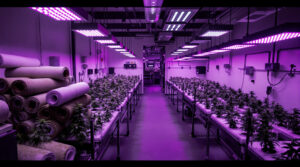
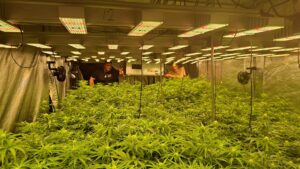
The association was founded on September 5, 2023, even before the Cannabis Consumption Act came into force. In November 2024, it became the first club in Dortmund to receive authorization from the Arnsberg regional government. The first harvest followed in April 2025, with first distributions in May. Since then, the club reports cultivating 1,445 plants across 80 harvests. The 75 completed harvests yielded 65.9 kilograms of flowers and 1.3 kilograms of hashish, with five harvests still drying.
The initial press release from October 20 stated a harvest yield of 64.5 kilograms. On October 21, the club corrected this figure to 65.9 kilograms and provided more detailed breakdowns of distribution quantities. Several media outlets had already published the earlier numbers. We rely here on the corrected version.


Since its founding, the club has admitted 298 people and currently has 240 members. In September 2026, 156 of them collected cannabis, averaging 21.9 grams. This is just under half the legal monthly limit of 50 grams—nobody exceeded it. Notably consistent: since May 2025, the average amount per collecting member has remained steady at around 21 grams. Simultaneously, an increasing proportion of members collect nothing in any given month.
Lab Testing in Cannabis Social Clubs: What „No Failed Tests“ Actually Means
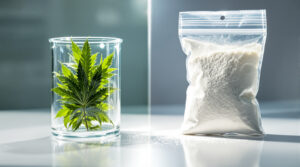
According to the club, the cannabinoid content of each batch is determined in an independent laboratory before distribution, totaling 92 batches across 101 analyses so far. The corrected statement clarifies an important point: testing for heavy metals, microbes, and mycotoxins only began before distribution in February 2026, sometimes pooling multiple harvests in single samples. Batches distributed earlier were tested retroactively using retained samples.
This qualifies the headline without undermining it. For early batches, contamination testing was a retrospective control rather than pre-release approval. The statement doesn’t reveal which laboratory conducted testing, what threshold values were applied, or how many harvests shared a pooled sample. This question has recently occupied German courts: the Würzburg Administrative Court set limits on Bavaria’s approach to custom threshold values and special requirements for cultivation associations.
Black Market and Age Structure: Survey Without Transparency on Methodology
Nearly 96 percent of members reported in an internal club survey that they source their cannabis primarily through the club. According to their own statements, 95 percent have no further contact with the black market. The club does not disclose how many members participated or how questions were framed. These figures reflect how club members perceive their own supply situation—they are not an impact measurement for the Cannabis Consumption Act.
The age structure is striking. The average member age is 45 years; just over one in five members is older than 55, with only three percent younger than 25. This aligns with what larger surveys suggest: a study of 35,957 respondents found no consumption surge following the Cannabis Act. Cultivation associations appear to attract existing adult consumers rather than new, younger users.
What Dortmund’s Figures Mean for Cannabis Act Evaluation
Reliable club data so far comes primarily from government authorities. Hamburg published control assessments for 17 cultivation associations, and Saxony analyzed distribution quantities from 29 associations. In Saxony-Anhalt, by contrast, the responsible state office doesn’t collect harvest and distribution data at all. The different conditions become apparent in the case of a Bavarian club that relocated its cultivation to Thuringia.
A club’s self-published report cannot replace independent evaluation. However, it demonstrates which metrics a cultivation association can reasonably provide: harvest volumes, per-member distribution, lab results, and age structure. Anyone seeking to politically assess this model would need exactly this data, collected comparably across more than one association. That Cannabis Social Clubs are also becoming subjects of international research is demonstrated by a count of 294 clubs in Chile.
Frequently Asked Questions
How much cannabis has CSC Dortmund distributed?
According to club figures, 54.2 kilograms across 3,721 distributions since May 2025. Across 75 completed harvests, members cultivated 65.9 kilograms of flowers and 1.3 kilograms of hashish.
How much does a typical member collect monthly?
In September 2026, 156 of 240 members collected an average of 21.9 grams. This is just under half the legal maximum of 50 grams per month for adults over 21.
Were all batches tested for contaminants?
According to the club, cannabinoid content is determined for each batch before distribution. Testing for heavy metals, microbes, and mycotoxins only began in February 2026 before distribution, sometimes using pooled samples. Earlier batches were tested retroactively using retained samples.
Are the black market claims representative?
No. They come from an internal member survey whose participation rate and methodology are not published. They reflect members‘ self-assessment, not measured black market displacement.
Sources: Cannabis Social Club Dortmund e.V., press release „Three Years of Cannabis Social Club Dortmund: The Report“ from October 20, 2026, corrected October 21, 2026; Hanfjournal, October 21, 2026.


Würdest du einem Cannabis Social Club beitreten?
Branchen-Update
News, Analysen und Reportagen — mehrmals im Monat direkt in dein Postfach.
Folge uns