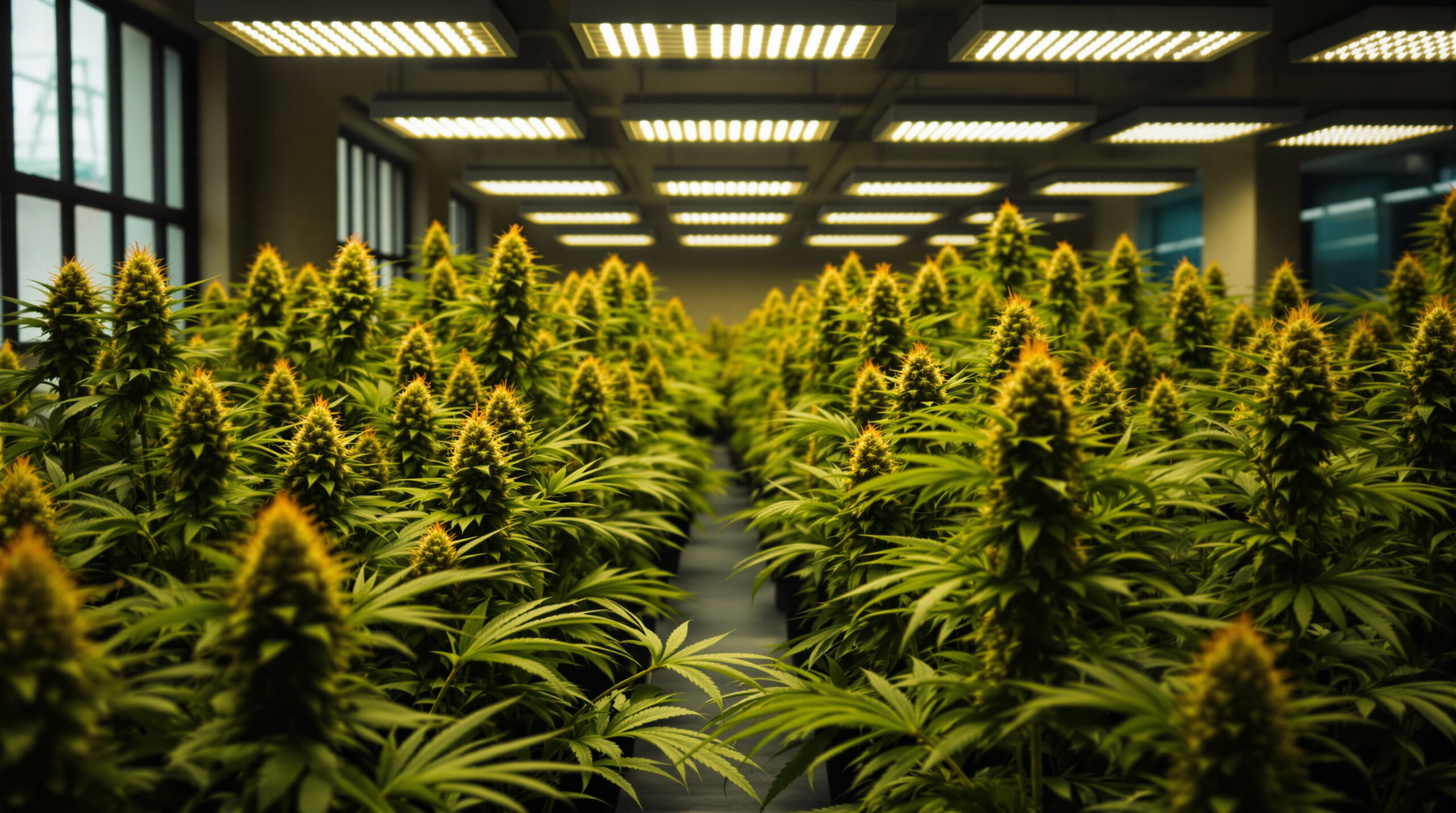
Chile now has 294 registered cannabis social clubs, yet nearly two-thirds of them are located in the capital region. That’s the finding of a study published in mid-September in the Journal of Cannabis Research. It provides the first reliable data on the geographic distribution of these associations in a Global South country and raises a question that’s also being debated in Germany: who actually has access to a club nearby?
📑 Inhaltsverzeichnis
What the Study Examined About Chilean Cannabis Social Clubs
A research team led by Claudio Pardo-Villarroel from Universidad Católica de Temuco documented all clubs registered as organizations between 2015 and 2024. Their database drew on official administrative registers, supplementary online research, and census data. The analysis was conducted at the municipal level—significantly more granular than previous overviews.
The authors describe their approach as quantitative, non-experimental, and exploratory-descriptive. The work counts and maps the data rather than explaining underlying causes. Importantly, only formally registered associations are included. Groups cultivating cannabis collectively without official registration don’t appear in these figures.


In Chile, these clubs operate in a legal gray zone. They position themselves as nonprofit associations of adults who cultivate cannabis collectively and distribute it among members, often with a medical focus. How precarious this status is became evident recently with a major police operation against a Chilean patient organization.
Santiago Dominates: 198 of 294 Clubs in the Capital Region
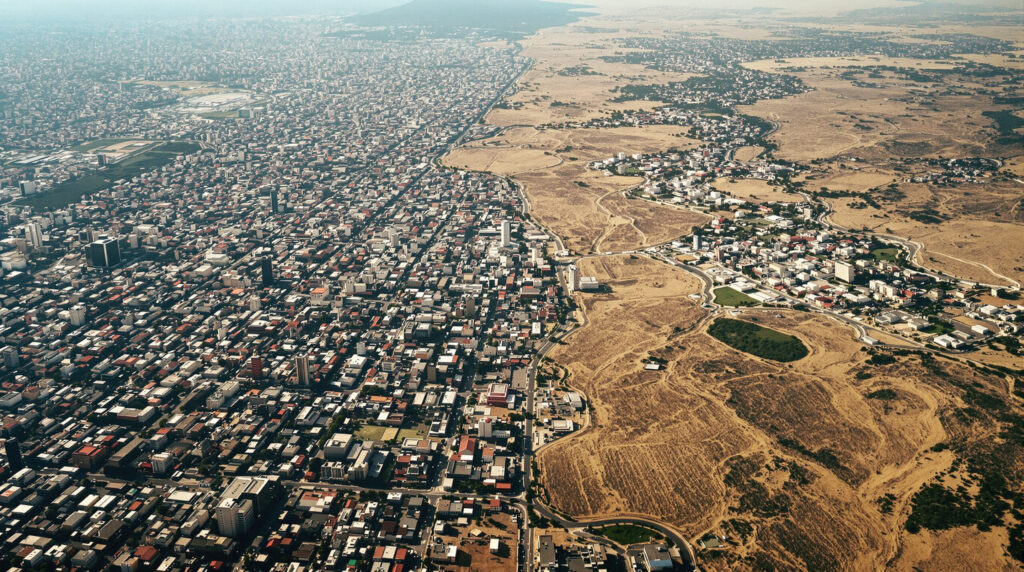
The central finding is concentration. 67.3 percent of all registrations fall within the Metropolitan Region around Santiago—198 clubs in total. According to reports on the study, within the capital itself, the municipality of Santiago leads with 74 clubs, followed by the affluent Las Condes with 61.
Outside the capital, numbers drop sharply. Valparaíso has 16 clubs, while La Araucanía and Los Lagos each have 12, and the Atacama region has just two. Only 71 of Chile’s 345 municipalities have even one registered club—just 20.6 percent. A secondary pattern repeats the first at a smaller scale: within regions, clubs cluster around regional capitals.
When adjusted for population size, the picture shifts somewhat. The sparsely populated Aysén region reaches 6.1 clubs per 100,000 residents aged 15 and over, while the national average is 1.9. This doesn’t fundamentally change the core finding: formalized clubs emerge primarily in high-income urban areas with larger populations.
Record Registrations Following 2023 Legal Changes
The registration trend shows growth over time, though not uniformly. In 2015, just one club was registered; by 2018, there were 36. The following years saw fluctuations that the study connects to political and social upheaval in Chile. In 2023 and 2024 combined, 100 new registrations were added—71 in 2024 alone.
This spike coincides temporally with Law No. 21.575, enacted in 2023, which among other changes adjusted rules for personal and medical cultivation. The research team suspects that increased legal certainty encouraged existing groups to register formally. However, a purely descriptive analysis cannot confirm this causal link, and the study itself carefully avoids overreaching conclusions.
What’s striking is what this growth did not achieve. The new clubs didn’t fill gaps on the map; instead, they reinforced existing concentrations. The club model has a longer history in the region, as our archive piece on Uruguay’s sales launch and our overview of cannabis legalization in South America demonstrate.
What This Means for the Cultivation Association Debate in Germany

The legal frameworks in Chile and Germany are not directly comparable. In Germany, cultivation associations require official authorization under the Cannabis Consumption Act, while Chile lacks such a regulatory framework. However, the underlying question is comparable: how evenly will the association model reach across a territory? In Germany, it remains unclear how equitably cannabis clubs will be distributed geographically. Even the question of how many cannabis clubs exist in Germany produces conflicting figures.
Our analysis of cultivation associations in Saxony revealed an urban-rural divide, and regulations from individual German states further complicate the picture—as evidenced by the Würzburg Administrative Court ruling on Bavaria’s special requirements. The Chilean study offers no answers to Germany’s specific situation, but it provides a useful methodology: registering associations at municipal level and correlating them with population figures. Germany currently lacks such a comprehensive mapping.
The researchers recommend regulations and spatial planning that explicitly prioritize equitable access. According to reports on the study, this includes establishing a national club registry. Since 2025, Chile has had a draft law that would formally recognize collective cultivation. Whether it advances under the new political climate remains to be seen.
Frequently Asked Questions
How many cannabis social clubs are there in Chile?
The study counts 294 clubs formally registered between 2015 and 2024. This figure doesn’t include unregistered groups. The actual number of collective cultivation groups could therefore be higher.
Are cannabis social clubs legal in Chile?
Chile has no specific legal framework for these clubs. The associations operate as nonprofit organizations in a legal gray zone, typically citing members‘ medical needs. A draft law from 2025 would, for the first time, formally recognize collective cultivation.
Why are most clubs concentrated around Santiago?
The study describes the pattern but doesn’t fully explain it. The authors see it as reflecting Chile’s well-documented centralization, visible across many sectors. Formal associations are more likely to emerge in high-income urban areas.
Can these findings be applied to Germany?
The figures cannot be directly transferred because the legal contexts differ fundamentally. However, the methodology—measuring club distribution at municipal level—is transferable. Germany currently lacks a comprehensive national analysis of cultivation association distribution.
How reliable is this study?
The work was published in a peer-reviewed journal and is openly accessible. Its approach is purely descriptive and relies on official registration data. This means it cannot establish causal relationships—for example, the actual impact of the 2023 legal changes remains uncertain based on this methodology.
Wie wichtig ist dir ein Cannabis Social Club in der Nähe?
Source: Pardo-Villarroel C. et al., Cannabis Social Clubs in Chile: Spatiotemporal Dynamics and Centre-Periphery Inequalities in the Global South, Journal of Cannabis Research, September 15, 2026, DOI 10.1186/s42238-026-00502-z.







Branchen-Update
News, Analysen und Reportagen — mehrmals im Monat direkt in dein Postfach.
Folge uns