
Neutrophils Instead of Cytokines: A New Target in Rheumatoid Arthritis

Rheumatoid arthritis is a chronic inflammatory autoimmune disease affecting approximately 800,000 people in Germany. Established therapies typically block individual signaling molecules like TNF-α or interleukin-6 through biologic drugs. Israeli researchers took a different approach, investigating whether CBG could directly influence neutrophilic granulocytes. These white blood cells migrate into joints during acute inflammatory flare-ups and release large quantities of pro-inflammatory cytokines.
📑 Inhaltsverzeichnis
„Currently, no therapy specifically targets neutrophils,“ write the study authors. This is precisely the gap they aim to fill with cannabigerol. The non-psychoactive cannabinoid significantly reduced the production of key cytokines TNF-α and interleukin-6 in human neutrophils in their experiments. This means CBG does not attack a single signaling molecule but dampens the inflammation factory itself.
Laboratory Results: 98 Percent Reduction in IL-6

The preclinical experimental design combined two approaches. Researchers isolated neutrophils from human blood and treated them with cannabigerol. They also administered the cannabinoid to laboratory mice with artificially induced rheumatoid arthritis. Results were consistent in both models.


In isolated human cells, CBG reduced interleukin-6 release by 98 percent and interleukin-1β by 60 percent. Equally significant: the cannabinoid made neutrophils less responsive to inflammatory signals. They migrated less frequently toward inflammation sites, interrupting the damaging cycle of cell infiltration and tissue destruction.
In the joints of treated mice, the chemokine MCP-1 decreased by 22 percent and interleukin-1β by 38 percent. The animals showed better arthritis scores, lost less weight, and developed milder disease than untreated control groups. This finding aligns with previous research on anti-inflammatory properties of various cannabinoids.
Context: CBG in Growing Cannabinoid Research
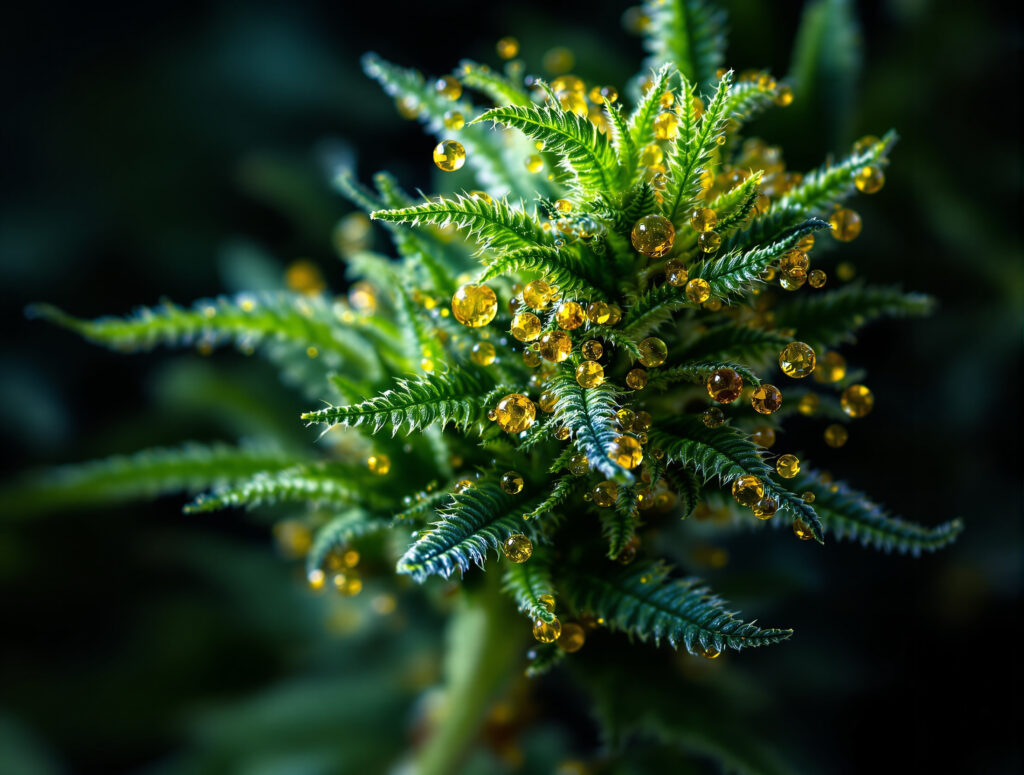
Cannabigerol is considered the parent cannabinoid because most other cannabinoids derive from its precursor CBGA in the plant. For years, CBG was regarded as a minor compound since commercial varieties contained only trace amounts. Through targeted breeding, strains with double-digit CBG content are now available, accelerating research. Hanf-Magazin has already documented how CBG demonstrates anxiety-relieving effects and has a distinctly different pharmacological profile from related cannabinoids.
Beyond pure cannabinoid research, the finding fits the picture emerging from clinical patient studies. A 2024 survey showed that more than six out of ten rheumatoid arthritis patients using medical cannabis reduced or discontinued nonsteroidal anti-inflammatory drugs, opioids, sleep aids, or muscle relaxants. This substitution observation aligns with the current JAMA study on older adults and our reporting on the Mainz online survey.
What the Study Doesn’t Answer
The Israeli researchers formulated their findings cautiously. Rheumatoid arthritis is a highly heterogeneous chronic disease, they write. Longer-term clinical studies in humans are necessary to confirm efficacy. Currently, only data from cell cultures and animal models exist. The jump to clinical trials is demanding because dosage, bioavailability, and long-term safety must be demonstrated in human patients.
There’s also a transparency question. Raphael Pharmaceutical Inc. provided the CBG for the study and partially funded the research. This is not uncommon in preclinical cannabinoid research but should be considered in evaluating the results. An industry-independent replication, ideally at a German or European clinic, would be the next reliable step.
Relevance for DACH Healthcare
For German rheumatology, this study is interesting for several reasons. First, it addresses a healthcare problem. Despite biologics, only some patients achieve sustained remission; many suffer from side effects or loss of efficacy after years. A new mechanism of action through neutrophils could represent a valuable addition. Second, substitution research suggests that cannabis preparations already replace opioids commonly prescribed for chronic rheumatic pain.
Third, CBG fits into the expanding spectrum of prescribable cannabinoid preparations. Since cannabis legislation and reforms in German cannabis prescription, physicians increasingly prescribe based on specific cannabinoid profiles. Evidence-based CBG indications for inflammatory joint diseases would represent a clear move away from crude THC-CBD dichotomies toward phytopharmacological precision medicine.
Frequently Asked Questions
What is Cannabigerol (CBG)?
Cannabigerol is a non-intoxicating cannabinoid from the hemp plant. It is considered a precursor molecule from which most other cannabinoids like THC and CBD derive through the acidic form CBGA in the plant. CBG typically occurs only in trace amounts in commercial varieties, but through targeted breeding, strains with high CBG content are now available.
What Role Do Neutrophils Play in Rheumatoid Arthritis?
Neutrophilic granulocytes are the most abundant white blood cells. In rheumatoid arthritis, they migrate to joints in large numbers, release pro-inflammatory cytokines like interleukin-6, and directly contribute to tissue destruction. The Israeli study shows for the first time in a preclinical model that CBG significantly inhibits this migration and cytokine release.
Can I Currently Use CBG for Rheumatism?
Clinical approval for rheumatoid arthritis indication does not yet exist. Current data comes from cell cultures and animal models; clinical human trials are pending. Patients should not alter their therapy independently but discuss any cannabinoid use with their treating physician.
How Does CBG Differ From CBD and THC?
CBG acts differently on the endocannabinoid system than better-known cannabinoids. While THC primarily activates CB1 receptors and produces psychoactive effects, CBG has an independent profile with affinity for alpha-2 adrenergic receptors and 5-HT1A serotonin receptors. CBD modulates the effects of other cannabinoids and influences various metabolic pathways. The specific effect must be researched separately for each indication.
When Can We Expect Human Clinical Trials?
The study authors emphasize the necessity of long-term clinical research but provide no specific timeline. Typically, two to four years elapse between positive preclinical findings and initial Phase 1 human studies. Broader clinical evidence for CBG in rheumatoid arthritis is realistically expected only by the end of this decade at the earliest.
Hast du schon mal CBG-Produkte gegen Entzündungen ausprobiert?
Sources: Pharmaceuticals (Rambam Health Care Campus study, preclinical data on CBG in rheumatoid arthritis), Marijuana Moment (reporting May 20, 2026), Hanf-Magazin research.







Branchen-Update
News, Analysen und Reportagen — mehrmals im Monat direkt in dein Postfach.
Folge uns