Question 8: Cansativa in 2030
📑 Inhaltsverzeichnis
Where do you see Cansativa in 2030: German market leader, European consolidator, or vertically integrated pharma player?
Benedikt: A bit of all three, but let me be sharper. By 2030, I see Cansativa as Europe’s leading integrated platform for medicinal cannabis. German market leadership isn’t the goal but the foundation. From there, we carry the model into additional European markets, beginning with the UK, where regulation supports the same integrated model.
Consolidation will be part of this story, because young markets always order themselves, and we want to stand on the shaping side of that order. I understand „pharma player“ as a claim to quality and seriousness, and I share that. But our core remains what it’s always been. We enable a functioning market. Others build a product. We build the infrastructure that market runs on. If we’ve accomplished that in multiple European countries by 2030, we’ll have achieved our real goal.


Frequently Asked Questions
What market share does Cansativa have in Germany?
According to its own figures, Cansativa holds over 28 percent of the German medicinal cannabis market. The company has been BfArM-licensed since 2017 and connects more than 3,000 pharmacies. For an explanation of how the broader market functions, see our patient guide to medicinal cannabis.
Who is Benedikt Sons?
Benedikt Sons is co-founder and CEO of Cansativa GmbH, based in Mörfelden-Walldorf, Hesse. He built the company together with his brother Jakob long before the Cannabis Act (CanG) opened the market in 2024.
Is Cansativa expanding beyond Germany?
Yes. Cansativa sees German market leadership as the foundation for a European platform and is beginning international expansion in the UK. Our report from Cannabis Europa in London shows how the European medicinal cannabis market is developing.
Where will you meet Benedikt Sons in 2026?
Benedikt Sons will present a live podcast at the Mary Jane Berlin 2026. For an impression of the year in industry events, see our recap of CannaTrade 2026 in Zurich.
Note: This interview was conducted in writing. Answers have been lightly edited for readability and grammar without changing content. Benedikt Sons presents a live podcast at the Mary Jane Berlin. This is an editorial interview, not a paid contribution.
Question 6: Message at Mary Jane
Mary Jane is an industry stage. What message will you place in your live podcast that you don’t normally speak openly about in day-to-day business?
Benedikt: Maybe this, and I say it deliberately on an industry stage. When we started in 2017, cannabis in Germany was a political issue. Today it’s a medical one. That was exactly our goal, and we’re not at the end of that journey yet. In day-to-day business, we talk about delivery quotas, assortment, and margins. What lies beneath, I rarely say openly: we’re building the infrastructure of an entire market right now, and we’re doing it from Hesse for all of Europe.
I believe that in ten years, medicinal cannabis will be prescribed as routinely as any other medication, and that the companies building the invisible infrastructure today will shape this market, not the loudest ones. We don’t want to be the loudest company in the industry. We want to be the company the industry can’t function without.
„We don’t want to be the loudest company in the industry. We want to be the company the industry can’t function without.“
Benedikt Sons · Cansativa GmbH
Question 7: What He’d Do Differently Today
If you had to launch a cannabis distributor in Germany today: what would you do differently than Cansativa did in 2017?
Benedikt: Honestly, I’d lay the foundation the same way. First the license, then supply capability, then pharmacy trust. That sequence was right, and it’s our advantage today. What I’d do earlier is the step from distribution to brand. In 2017, we first had to prove we could reliably deliver at all—that rightfully consumed all our energy. Today I know the real value lies in the connection between platform and proprietary brands. I’d think about that from day one instead of developing it over years.
And I’d take political engagement seriously earlier. We delivered for a long time and spoke little, because substance had to come first. That was disciplined, but a young market needs a credible voice early on. On the core principle, though—first deliver, then talk—I wouldn’t change a thing.
Question 8: Cansativa in 2030
Where do you see Cansativa in 2030: German market leader, European consolidator, or vertically integrated pharma player?
Benedikt: A bit of all three, but let me be sharper. By 2030, I see Cansativa as Europe’s leading integrated platform for medicinal cannabis. German market leadership isn’t the goal but the foundation. From there, we carry the model into additional European markets, beginning with the UK, where regulation supports the same integrated model.
Consolidation will be part of this story, because young markets always order themselves, and we want to stand on the shaping side of that order. I understand „pharma player“ as a claim to quality and seriousness, and I share that. But our core remains what it’s always been. We enable a functioning market. Others build a product. We build the infrastructure that market runs on. If we’ve accomplished that in multiple European countries by 2030, we’ll have achieved our real goal.
Frequently Asked Questions
What market share does Cansativa have in Germany?
According to its own figures, Cansativa holds over 28 percent of the German medicinal cannabis market. The company has been BfArM-licensed since 2017 and connects more than 3,000 pharmacies. For an explanation of how the broader market functions, see our patient guide to medicinal cannabis.
Who is Benedikt Sons?
Benedikt Sons is co-founder and CEO of Cansativa GmbH, based in Mörfelden-Walldorf, Hesse. He built the company together with his brother Jakob long before the Cannabis Act (CanG) opened the market in 2024.
Is Cansativa expanding beyond Germany?
Yes. Cansativa sees German market leadership as the foundation for a European platform and is beginning international expansion in the UK. Our report from Cannabis Europa in London shows how the European medicinal cannabis market is developing.
Where will you meet Benedikt Sons in 2026?
Benedikt Sons will present a live podcast at the Mary Jane Berlin 2026. For an impression of the year in industry events, see our recap of CannaTrade 2026 in Zurich.
Note: This interview was conducted in writing. Answers have been lightly edited for readability and grammar without changing content. Benedikt Sons presents a live podcast at the Mary Jane Berlin. This is an editorial interview, not a paid contribution.
Question 5: Full Integration vs. Specialists
Cansativa committed early to full integration. Where do you see the limits of this model today compared to specialized pharmacy service providers?
Benedikt: I don’t see the limit where the question suggests. Specialists do excellent work on their portion of the value chain, and we gladly work with many of them. But optimizing a single link in the chain is different from controlling the chain. Our strength is that import, quality testing, logistics, distribution, and our own pharmacy system all converge in one hand. One order, one delivery, one system.
This integration isn’t an end in itself—it’s why supply security is an operational state for us, not a promise. Of course, the model has a price; it demands depth over speed and discipline over rapid scaling. But this depth can’t be replicated by stringing service providers together. The specialist optimizes a piece. We take responsibility for the whole. In a market where patients must be reliably supplied, the whole is the real value.
Question 6: Message at Mary Jane
Mary Jane is an industry stage. What message will you place in your live podcast that you don’t normally speak openly about in day-to-day business?
Benedikt: Maybe this, and I say it deliberately on an industry stage. When we started in 2017, cannabis in Germany was a political issue. Today it’s a medical one. That was exactly our goal, and we’re not at the end of that journey yet. In day-to-day business, we talk about delivery quotas, assortment, and margins. What lies beneath, I rarely say openly: we’re building the infrastructure of an entire market right now, and we’re doing it from Hesse for all of Europe.
I believe that in ten years, medicinal cannabis will be prescribed as routinely as any other medication, and that the companies building the invisible infrastructure today will shape this market, not the loudest ones. We don’t want to be the loudest company in the industry. We want to be the company the industry can’t function without.
„We don’t want to be the loudest company in the industry. We want to be the company the industry can’t function without.“
Benedikt Sons · Cansativa GmbH
Question 7: What He’d Do Differently Today
If you had to launch a cannabis distributor in Germany today: what would you do differently than Cansativa did in 2017?
Benedikt: Honestly, I’d lay the foundation the same way. First the license, then supply capability, then pharmacy trust. That sequence was right, and it’s our advantage today. What I’d do earlier is the step from distribution to brand. In 2017, we first had to prove we could reliably deliver at all—that rightfully consumed all our energy. Today I know the real value lies in the connection between platform and proprietary brands. I’d think about that from day one instead of developing it over years.
And I’d take political engagement seriously earlier. We delivered for a long time and spoke little, because substance had to come first. That was disciplined, but a young market needs a credible voice early on. On the core principle, though—first deliver, then talk—I wouldn’t change a thing.
Question 8: Cansativa in 2030
Where do you see Cansativa in 2030: German market leader, European consolidator, or vertically integrated pharma player?
Benedikt: A bit of all three, but let me be sharper. By 2030, I see Cansativa as Europe’s leading integrated platform for medicinal cannabis. German market leadership isn’t the goal but the foundation. From there, we carry the model into additional European markets, beginning with the UK, where regulation supports the same integrated model.
Consolidation will be part of this story, because young markets always order themselves, and we want to stand on the shaping side of that order. I understand „pharma player“ as a claim to quality and seriousness, and I share that. But our core remains what it’s always been. We enable a functioning market. Others build a product. We build the infrastructure that market runs on. If we’ve accomplished that in multiple European countries by 2030, we’ll have achieved our real goal.
Frequently Asked Questions
What market share does Cansativa have in Germany?
According to its own figures, Cansativa holds over 28 percent of the German medicinal cannabis market. The company has been BfArM-licensed since 2017 and connects more than 3,000 pharmacies. For an explanation of how the broader market functions, see our patient guide to medicinal cannabis.
Who is Benedikt Sons?
Benedikt Sons is co-founder and CEO of Cansativa GmbH, based in Mörfelden-Walldorf, Hesse. He built the company together with his brother Jakob long before the Cannabis Act (CanG) opened the market in 2024.
Is Cansativa expanding beyond Germany?
Yes. Cansativa sees German market leadership as the foundation for a European platform and is beginning international expansion in the UK. Our report from Cannabis Europa in London shows how the European medicinal cannabis market is developing.
Where will you meet Benedikt Sons in 2026?
Benedikt Sons will present a live podcast at the Mary Jane Berlin 2026. For an impression of the year in industry events, see our recap of CannaTrade 2026 in Zurich.
Note: This interview was conducted in writing. Answers have been lightly edited for readability and grammar without changing content. Benedikt Sons presents a live podcast at the Mary Jane Berlin. This is an editorial interview, not a paid contribution.
Question 4: Regulatory Hurdles
Which regulatory hurdles most strongly brake the German distribution business in 2026, and which would you most like to see removed in the next 12 months?
Benedikt: The biggest brake isn’t a single ban but uncertainty. A market that doesn’t know what rules apply in twelve months invests more cautiously than it should. As a company, we prefer to deliver solutions rather than demands, so I’ll frame it this way: what would help this market most is reliability. Medicinal cannabis should ultimately be treated like any other prescription medication—with clear handling in prescriptions and reliable access through pharmacies.
Where distribution channels operate in gray zones today, we need clean regulatory guardrails, not blanket bans that ultimately hurt patients in underserved regions. If I could wish for one thing in the next twelve months, it’s predictability. Reliability is the most effective growth policy a legislator can pursue in a young market.
Question 5: Full Integration vs. Specialists
Cansativa committed early to full integration. Where do you see the limits of this model today compared to specialized pharmacy service providers?
Benedikt: I don’t see the limit where the question suggests. Specialists do excellent work on their portion of the value chain, and we gladly work with many of them. But optimizing a single link in the chain is different from controlling the chain. Our strength is that import, quality testing, logistics, distribution, and our own pharmacy system all converge in one hand. One order, one delivery, one system.
This integration isn’t an end in itself—it’s why supply security is an operational state for us, not a promise. Of course, the model has a price; it demands depth over speed and discipline over rapid scaling. But this depth can’t be replicated by stringing service providers together. The specialist optimizes a piece. We take responsibility for the whole. In a market where patients must be reliably supplied, the whole is the real value.
Question 6: Message at Mary Jane
Mary Jane is an industry stage. What message will you place in your live podcast that you don’t normally speak openly about in day-to-day business?
Benedikt: Maybe this, and I say it deliberately on an industry stage. When we started in 2017, cannabis in Germany was a political issue. Today it’s a medical one. That was exactly our goal, and we’re not at the end of that journey yet. In day-to-day business, we talk about delivery quotas, assortment, and margins. What lies beneath, I rarely say openly: we’re building the infrastructure of an entire market right now, and we’re doing it from Hesse for all of Europe.
I believe that in ten years, medicinal cannabis will be prescribed as routinely as any other medication, and that the companies building the invisible infrastructure today will shape this market, not the loudest ones. We don’t want to be the loudest company in the industry. We want to be the company the industry can’t function without.
„We don’t want to be the loudest company in the industry. We want to be the company the industry can’t function without.“
Benedikt Sons · Cansativa GmbH
Question 7: What He’d Do Differently Today
If you had to launch a cannabis distributor in Germany today: what would you do differently than Cansativa did in 2017?
Benedikt: Honestly, I’d lay the foundation the same way. First the license, then supply capability, then pharmacy trust. That sequence was right, and it’s our advantage today. What I’d do earlier is the step from distribution to brand. In 2017, we first had to prove we could reliably deliver at all—that rightfully consumed all our energy. Today I know the real value lies in the connection between platform and proprietary brands. I’d think about that from day one instead of developing it over years.
And I’d take political engagement seriously earlier. We delivered for a long time and spoke little, because substance had to come first. That was disciplined, but a young market needs a credible voice early on. On the core principle, though—first deliver, then talk—I wouldn’t change a thing.
Question 8: Cansativa in 2030
Where do you see Cansativa in 2030: German market leader, European consolidator, or vertically integrated pharma player?
Benedikt: A bit of all three, but let me be sharper. By 2030, I see Cansativa as Europe’s leading integrated platform for medicinal cannabis. German market leadership isn’t the goal but the foundation. From there, we carry the model into additional European markets, beginning with the UK, where regulation supports the same integrated model.
Consolidation will be part of this story, because young markets always order themselves, and we want to stand on the shaping side of that order. I understand „pharma player“ as a claim to quality and seriousness, and I share that. But our core remains what it’s always been. We enable a functioning market. Others build a product. We build the infrastructure that market runs on. If we’ve accomplished that in multiple European countries by 2030, we’ll have achieved our real goal.
Frequently Asked Questions
What market share does Cansativa have in Germany?
According to its own figures, Cansativa holds over 28 percent of the German medicinal cannabis market. The company has been BfArM-licensed since 2017 and connects more than 3,000 pharmacies. For an explanation of how the broader market functions, see our patient guide to medicinal cannabis.
Who is Benedikt Sons?
Benedikt Sons is co-founder and CEO of Cansativa GmbH, based in Mörfelden-Walldorf, Hesse. He built the company together with his brother Jakob long before the Cannabis Act (CanG) opened the market in 2024.
Is Cansativa expanding beyond Germany?
Yes. Cansativa sees German market leadership as the foundation for a European platform and is beginning international expansion in the UK. Our report from Cannabis Europa in London shows how the European medicinal cannabis market is developing.
Where will you meet Benedikt Sons in 2026?
Benedikt Sons will present a live podcast at the Mary Jane Berlin 2026. For an impression of the year in industry events, see our recap of CannaTrade 2026 in Zurich.
Note: This interview was conducted in writing. Answers have been lightly edited for readability and grammar without changing content. Benedikt Sons presents a live podcast at the Mary Jane Berlin. This is an editorial interview, not a paid contribution.
Question 3: Market Entry & Marketplaces
The medicinal market in Germany is growing rapidly. At what point does the window close for new competitors, and which marketplaces will dominate by 2027?
Benedikt: I don’t believe in a window that closes on a specific date. I believe in entry barriers that rise with market maturity. Anyone entering today must build not a product but a complete, regulatorily licensed infrastructure, plus manufacturer relationships across fifteen countries, a solid quality system, and the trust of thousands of pharmacies. That’s not something you can buy with capital alone—it takes years.
So the market will be decided by 2027 less through new players than through the question of who truly integrates distribution, brands, and systems. Pure marketplaces that only mediate come under pressure because they sit at the thinnest part of the value chain. But whoever controls the entire chain, from import to pharmacy counter, sets the pace. I’m convinced that integrated platforms will shape this market, not storefronts.
Question 4: Regulatory Hurdles
Which regulatory hurdles most strongly brake the German distribution business in 2026, and which would you most like to see removed in the next 12 months?
Benedikt: The biggest brake isn’t a single ban but uncertainty. A market that doesn’t know what rules apply in twelve months invests more cautiously than it should. As a company, we prefer to deliver solutions rather than demands, so I’ll frame it this way: what would help this market most is reliability. Medicinal cannabis should ultimately be treated like any other prescription medication—with clear handling in prescriptions and reliable access through pharmacies.
Where distribution channels operate in gray zones today, we need clean regulatory guardrails, not blanket bans that ultimately hurt patients in underserved regions. If I could wish for one thing in the next twelve months, it’s predictability. Reliability is the most effective growth policy a legislator can pursue in a young market.
Question 5: Full Integration vs. Specialists
Cansativa committed early to full integration. Where do you see the limits of this model today compared to specialized pharmacy service providers?
Benedikt: I don’t see the limit where the question suggests. Specialists do excellent work on their portion of the value chain, and we gladly work with many of them. But optimizing a single link in the chain is different from controlling the chain. Our strength is that import, quality testing, logistics, distribution, and our own pharmacy system all converge in one hand. One order, one delivery, one system.
This integration isn’t an end in itself—it’s why supply security is an operational state for us, not a promise. Of course, the model has a price; it demands depth over speed and discipline over rapid scaling. But this depth can’t be replicated by stringing service providers together. The specialist optimizes a piece. We take responsibility for the whole. In a market where patients must be reliably supplied, the whole is the real value.
Question 6: Message at Mary Jane
Mary Jane is an industry stage. What message will you place in your live podcast that you don’t normally speak openly about in day-to-day business?
Benedikt: Maybe this, and I say it deliberately on an industry stage. When we started in 2017, cannabis in Germany was a political issue. Today it’s a medical one. That was exactly our goal, and we’re not at the end of that journey yet. In day-to-day business, we talk about delivery quotas, assortment, and margins. What lies beneath, I rarely say openly: we’re building the infrastructure of an entire market right now, and we’re doing it from Hesse for all of Europe.
I believe that in ten years, medicinal cannabis will be prescribed as routinely as any other medication, and that the companies building the invisible infrastructure today will shape this market, not the loudest ones. We don’t want to be the loudest company in the industry. We want to be the company the industry can’t function without.
„We don’t want to be the loudest company in the industry. We want to be the company the industry can’t function without.“
Benedikt Sons · Cansativa GmbH
Question 7: What He’d Do Differently Today
If you had to launch a cannabis distributor in Germany today: what would you do differently than Cansativa did in 2017?
Benedikt: Honestly, I’d lay the foundation the same way. First the license, then supply capability, then pharmacy trust. That sequence was right, and it’s our advantage today. What I’d do earlier is the step from distribution to brand. In 2017, we first had to prove we could reliably deliver at all—that rightfully consumed all our energy. Today I know the real value lies in the connection between platform and proprietary brands. I’d think about that from day one instead of developing it over years.
And I’d take political engagement seriously earlier. We delivered for a long time and spoke little, because substance had to come first. That was disciplined, but a young market needs a credible voice early on. On the core principle, though—first deliver, then talk—I wouldn’t change a thing.
Question 8: Cansativa in 2030
Where do you see Cansativa in 2030: German market leader, European consolidator, or vertically integrated pharma player?
Benedikt: A bit of all three, but let me be sharper. By 2030, I see Cansativa as Europe’s leading integrated platform for medicinal cannabis. German market leadership isn’t the goal but the foundation. From there, we carry the model into additional European markets, beginning with the UK, where regulation supports the same integrated model.
Consolidation will be part of this story, because young markets always order themselves, and we want to stand on the shaping side of that order. I understand „pharma player“ as a claim to quality and seriousness, and I share that. But our core remains what it’s always been. We enable a functioning market. Others build a product. We build the infrastructure that market runs on. If we’ve accomplished that in multiple European countries by 2030, we’ll have achieved our real goal.
Frequently Asked Questions
What market share does Cansativa have in Germany?
According to its own figures, Cansativa holds over 28 percent of the German medicinal cannabis market. The company has been BfArM-licensed since 2017 and connects more than 3,000 pharmacies. For an explanation of how the broader market functions, see our patient guide to medicinal cannabis.
Who is Benedikt Sons?
Benedikt Sons is co-founder and CEO of Cansativa GmbH, based in Mörfelden-Walldorf, Hesse. He built the company together with his brother Jakob long before the Cannabis Act (CanG) opened the market in 2024.
Is Cansativa expanding beyond Germany?
Yes. Cansativa sees German market leadership as the foundation for a European platform and is beginning international expansion in the UK. Our report from Cannabis Europa in London shows how the European medicinal cannabis market is developing.
Where will you meet Benedikt Sons in 2026?
Benedikt Sons will present a live podcast at the Mary Jane Berlin 2026. For an impression of the year in industry events, see our recap of CannaTrade 2026 in Zurich.
Note: This interview was conducted in writing. Answers have been lightly edited for readability and grammar without changing content. Benedikt Sons presents a live podcast at the Mary Jane Berlin. This is an editorial interview, not a paid contribution.
Question 2: Reorientation After CanG
Which strategic reorientation was strongest for Cansativa after the Cannabis Act (CanG) came into force: operational logistics, patient onboarding, B2B distribution, or internationalization?
Benedikt: The strongest reorientation wasn’t a single function but a leap in self-definition. Before the market opening, we were the reliable distributor supplying the market with product. With legalization, we understood that distribution is the ticket to entry, not the destination. Distribution scales the market, brands scale the margin. So we built a powerhouse of proprietary brands—AMICI and N!CE—on top of our supply chain, complemented by exclusive partnerships.
The crucial thing is where these brands come from. From thousands of pharmacy relationships, we know firsthand what the market demands—market insight of this depth no one else possesses. That’s exactly where we developed products tailored to the needs of pharmacies and their patients. With our own inventory management system, we also made the pharmacy genuinely capable in medicinal cannabis for the first time. Operational logistics, B2B distribution, and internationalization weren’t competing priorities but parts of the same architecture. We turned a wholesaler into an integrated platform, and it carries most of our value today.
„Distribution scales the market, brands scale the margin.“
Benedikt Sons · Cansativa GmbH
Question 3: Market Entry & Marketplaces
The medicinal market in Germany is growing rapidly. At what point does the window close for new competitors, and which marketplaces will dominate by 2027?
Benedikt: I don’t believe in a window that closes on a specific date. I believe in entry barriers that rise with market maturity. Anyone entering today must build not a product but a complete, regulatorily licensed infrastructure, plus manufacturer relationships across fifteen countries, a solid quality system, and the trust of thousands of pharmacies. That’s not something you can buy with capital alone—it takes years.
So the market will be decided by 2027 less through new players than through the question of who truly integrates distribution, brands, and systems. Pure marketplaces that only mediate come under pressure because they sit at the thinnest part of the value chain. But whoever controls the entire chain, from import to pharmacy counter, sets the pace. I’m convinced that integrated platforms will shape this market, not storefronts.
Question 4: Regulatory Hurdles
Which regulatory hurdles most strongly brake the German distribution business in 2026, and which would you most like to see removed in the next 12 months?
Benedikt: The biggest brake isn’t a single ban but uncertainty. A market that doesn’t know what rules apply in twelve months invests more cautiously than it should. As a company, we prefer to deliver solutions rather than demands, so I’ll frame it this way: what would help this market most is reliability. Medicinal cannabis should ultimately be treated like any other prescription medication—with clear handling in prescriptions and reliable access through pharmacies.
Where distribution channels operate in gray zones today, we need clean regulatory guardrails, not blanket bans that ultimately hurt patients in underserved regions. If I could wish for one thing in the next twelve months, it’s predictability. Reliability is the most effective growth policy a legislator can pursue in a young market.
Question 5: Full Integration vs. Specialists
Cansativa committed early to full integration. Where do you see the limits of this model today compared to specialized pharmacy service providers?
Benedikt: I don’t see the limit where the question suggests. Specialists do excellent work on their portion of the value chain, and we gladly work with many of them. But optimizing a single link in the chain is different from controlling the chain. Our strength is that import, quality testing, logistics, distribution, and our own pharmacy system all converge in one hand. One order, one delivery, one system.
This integration isn’t an end in itself—it’s why supply security is an operational state for us, not a promise. Of course, the model has a price; it demands depth over speed and discipline over rapid scaling. But this depth can’t be replicated by stringing service providers together. The specialist optimizes a piece. We take responsibility for the whole. In a market where patients must be reliably supplied, the whole is the real value.
Question 6: Message at Mary Jane
Mary Jane is an industry stage. What message will you place in your live podcast that you don’t normally speak openly about in day-to-day business?
Benedikt: Maybe this, and I say it deliberately on an industry stage. When we started in 2017, cannabis in Germany was a political issue. Today it’s a medical one. That was exactly our goal, and we’re not at the end of that journey yet. In day-to-day business, we talk about delivery quotas, assortment, and margins. What lies beneath, I rarely say openly: we’re building the infrastructure of an entire market right now, and we’re doing it from Hesse for all of Europe.
I believe that in ten years, medicinal cannabis will be prescribed as routinely as any other medication, and that the companies building the invisible infrastructure today will shape this market, not the loudest ones. We don’t want to be the loudest company in the industry. We want to be the company the industry can’t function without.
„We don’t want to be the loudest company in the industry. We want to be the company the industry can’t function without.“
Benedikt Sons · Cansativa GmbH
Question 7: What He’d Do Differently Today
If you had to launch a cannabis distributor in Germany today: what would you do differently than Cansativa did in 2017?
Benedikt: Honestly, I’d lay the foundation the same way. First the license, then supply capability, then pharmacy trust. That sequence was right, and it’s our advantage today. What I’d do earlier is the step from distribution to brand. In 2017, we first had to prove we could reliably deliver at all—that rightfully consumed all our energy. Today I know the real value lies in the connection between platform and proprietary brands. I’d think about that from day one instead of developing it over years.
And I’d take political engagement seriously earlier. We delivered for a long time and spoke little, because substance had to come first. That was disciplined, but a young market needs a credible voice early on. On the core principle, though—first deliver, then talk—I wouldn’t change a thing.
Question 8: Cansativa in 2030
Where do you see Cansativa in 2030: German market leader, European consolidator, or vertically integrated pharma player?
Benedikt: A bit of all three, but let me be sharper. By 2030, I see Cansativa as Europe’s leading integrated platform for medicinal cannabis. German market leadership isn’t the goal but the foundation. From there, we carry the model into additional European markets, beginning with the UK, where regulation supports the same integrated model.
Consolidation will be part of this story, because young markets always order themselves, and we want to stand on the shaping side of that order. I understand „pharma player“ as a claim to quality and seriousness, and I share that. But our core remains what it’s always been. We enable a functioning market. Others build a product. We build the infrastructure that market runs on. If we’ve accomplished that in multiple European countries by 2030, we’ll have achieved our real goal.
Frequently Asked Questions
What market share does Cansativa have in Germany?
According to its own figures, Cansativa holds over 28 percent of the German medicinal cannabis market. The company has been BfArM-licensed since 2017 and connects more than 3,000 pharmacies. For an explanation of how the broader market functions, see our patient guide to medicinal cannabis.
Who is Benedikt Sons?
Benedikt Sons is co-founder and CEO of Cansativa GmbH, based in Mörfelden-Walldorf, Hesse. He built the company together with his brother Jakob long before the Cannabis Act (CanG) opened the market in 2024.
Is Cansativa expanding beyond Germany?
Yes. Cansativa sees German market leadership as the foundation for a European platform and is beginning international expansion in the UK. Our report from Cannabis Europa in London shows how the European medicinal cannabis market is developing.
Where will you meet Benedikt Sons in 2026?
Benedikt Sons will present a live podcast at the Mary Jane Berlin 2026. For an impression of the year in industry events, see our recap of CannaTrade 2026 in Zurich.
Note: This interview was conducted in writing. Answers have been lightly edited for readability and grammar without changing content. Benedikt Sons presents a live podcast at the Mary Jane Berlin. This is an editorial interview, not a paid contribution.
Question 1: Market Share
Since 2024, Cansativa has been a central player in the legalized market. What market shares are we actually talking about, and how do they compare to the three most important competitors?
Benedikt: Let me straighten out a figure first, because it frames the picture. Cansativa is not a child of the 2024 market opening. We’ve been BfArM-licensed since 2017 and were the federal government’s exclusive distribution partner from 2020 to 2024. These eight years of lead time are our foundation today. On that basis, we hold over 28 percent of the German medicinal cannabis market and lead it.
For me, though, this is less about ranking than responsibility. More than 3,000 pharmacies work with us, and over nine out of ten medicinal cannabis-active pharmacies are connected. I deliberately won’t comment on specific competitors‘ figures—I’ll leave that to others. What matters more to me is the structural point: in this business, market share doesn’t come from marketing but from supply capability, licenses, and infrastructure built over years. That’s the distance that can’t be closed in a single quarter.
Question 2: Reorientation After CanG
Which strategic reorientation was strongest for Cansativa after the Cannabis Act (CanG) came into force: operational logistics, patient onboarding, B2B distribution, or internationalization?
Benedikt: The strongest reorientation wasn’t a single function but a leap in self-definition. Before the market opening, we were the reliable distributor supplying the market with product. With legalization, we understood that distribution is the ticket to entry, not the destination. Distribution scales the market, brands scale the margin. So we built a powerhouse of proprietary brands—AMICI and N!CE—on top of our supply chain, complemented by exclusive partnerships.
The crucial thing is where these brands come from. From thousands of pharmacy relationships, we know firsthand what the market demands—market insight of this depth no one else possesses. That’s exactly where we developed products tailored to the needs of pharmacies and their patients. With our own inventory management system, we also made the pharmacy genuinely capable in medicinal cannabis for the first time. Operational logistics, B2B distribution, and internationalization weren’t competing priorities but parts of the same architecture. We turned a wholesaler into an integrated platform, and it carries most of our value today.
„Distribution scales the market, brands scale the margin.“
Benedikt Sons · Cansativa GmbH
Question 3: Market Entry & Marketplaces
The medicinal market in Germany is growing rapidly. At what point does the window close for new competitors, and which marketplaces will dominate by 2027?
Benedikt: I don’t believe in a window that closes on a specific date. I believe in entry barriers that rise with market maturity. Anyone entering today must build not a product but a complete, regulatorily licensed infrastructure, plus manufacturer relationships across fifteen countries, a solid quality system, and the trust of thousands of pharmacies. That’s not something you can buy with capital alone—it takes years.
So the market will be decided by 2027 less through new players than through the question of who truly integrates distribution, brands, and systems. Pure marketplaces that only mediate come under pressure because they sit at the thinnest part of the value chain. But whoever controls the entire chain, from import to pharmacy counter, sets the pace. I’m convinced that integrated platforms will shape this market, not storefronts.
Question 4: Regulatory Hurdles
Which regulatory hurdles most strongly brake the German distribution business in 2026, and which would you most like to see removed in the next 12 months?
Benedikt: The biggest brake isn’t a single ban but uncertainty. A market that doesn’t know what rules apply in twelve months invests more cautiously than it should. As a company, we prefer to deliver solutions rather than demands, so I’ll frame it this way: what would help this market most is reliability. Medicinal cannabis should ultimately be treated like any other prescription medication—with clear handling in prescriptions and reliable access through pharmacies.
Where distribution channels operate in gray zones today, we need clean regulatory guardrails, not blanket bans that ultimately hurt patients in underserved regions. If I could wish for one thing in the next twelve months, it’s predictability. Reliability is the most effective growth policy a legislator can pursue in a young market.
Question 5: Full Integration vs. Specialists
Cansativa committed early to full integration. Where do you see the limits of this model today compared to specialized pharmacy service providers?
Benedikt: I don’t see the limit where the question suggests. Specialists do excellent work on their portion of the value chain, and we gladly work with many of them. But optimizing a single link in the chain is different from controlling the chain. Our strength is that import, quality testing, logistics, distribution, and our own pharmacy system all converge in one hand. One order, one delivery, one system.
This integration isn’t an end in itself—it’s why supply security is an operational state for us, not a promise. Of course, the model has a price; it demands depth over speed and discipline over rapid scaling. But this depth can’t be replicated by stringing service providers together. The specialist optimizes a piece. We take responsibility for the whole. In a market where patients must be reliably supplied, the whole is the real value.
Question 6: Message at Mary Jane
Mary Jane is an industry stage. What message will you place in your live podcast that you don’t normally speak openly about in day-to-day business?
Benedikt: Maybe this, and I say it deliberately on an industry stage. When we started in 2017, cannabis in Germany was a political issue. Today it’s a medical one. That was exactly our goal, and we’re not at the end of that journey yet. In day-to-day business, we talk about delivery quotas, assortment, and margins. What lies beneath, I rarely say openly: we’re building the infrastructure of an entire market right now, and we’re doing it from Hesse for all of Europe.
I believe that in ten years, medicinal cannabis will be prescribed as routinely as any other medication, and that the companies building the invisible infrastructure today will shape this market, not the loudest ones. We don’t want to be the loudest company in the industry. We want to be the company the industry can’t function without.
„We don’t want to be the loudest company in the industry. We want to be the company the industry can’t function without.“
Benedikt Sons · Cansativa GmbH
Question 7: What He’d Do Differently Today
If you had to launch a cannabis distributor in Germany today: what would you do differently than Cansativa did in 2017?
Benedikt: Honestly, I’d lay the foundation the same way. First the license, then supply capability, then pharmacy trust. That sequence was right, and it’s our advantage today. What I’d do earlier is the step from distribution to brand. In 2017, we first had to prove we could reliably deliver at all—that rightfully consumed all our energy. Today I know the real value lies in the connection between platform and proprietary brands. I’d think about that from day one instead of developing it over years.
And I’d take political engagement seriously earlier. We delivered for a long time and spoke little, because substance had to come first. That was disciplined, but a young market needs a credible voice early on. On the core principle, though—first deliver, then talk—I wouldn’t change a thing.
Question 8: Cansativa in 2030
Where do you see Cansativa in 2030: German market leader, European consolidator, or vertically integrated pharma player?
Benedikt: A bit of all three, but let me be sharper. By 2030, I see Cansativa as Europe’s leading integrated platform for medicinal cannabis. German market leadership isn’t the goal but the foundation. From there, we carry the model into additional European markets, beginning with the UK, where regulation supports the same integrated model.
Consolidation will be part of this story, because young markets always order themselves, and we want to stand on the shaping side of that order. I understand „pharma player“ as a claim to quality and seriousness, and I share that. But our core remains what it’s always been. We enable a functioning market. Others build a product. We build the infrastructure that market runs on. If we’ve accomplished that in multiple European countries by 2030, we’ll have achieved our real goal.
Frequently Asked Questions
What market share does Cansativa have in Germany?
According to its own figures, Cansativa holds over 28 percent of the German medicinal cannabis market. The company has been BfArM-licensed since 2017 and connects more than 3,000 pharmacies. For an explanation of how the broader market functions, see our patient guide to medicinal cannabis.
Who is Benedikt Sons?
Benedikt Sons is co-founder and CEO of Cansativa GmbH, based in Mörfelden-Walldorf, Hesse. He built the company together with his brother Jakob long before the Cannabis Act (CanG) opened the market in 2024.
Is Cansativa expanding beyond Germany?
Yes. Cansativa sees German market leadership as the foundation for a European platform and is beginning international expansion in the UK. Our report from Cannabis Europa in London shows how the European medicinal cannabis market is developing.
Where will you meet Benedikt Sons in 2026?
Benedikt Sons will present a live podcast at the Mary Jane Berlin 2026. For an impression of the year in industry events, see our recap of CannaTrade 2026 in Zurich.
Note: This interview was conducted in writing. Answers have been lightly edited for readability and grammar without changing content. Benedikt Sons presents a live podcast at the Mary Jane Berlin. This is an editorial interview, not a paid contribution.
💬 In Conversation
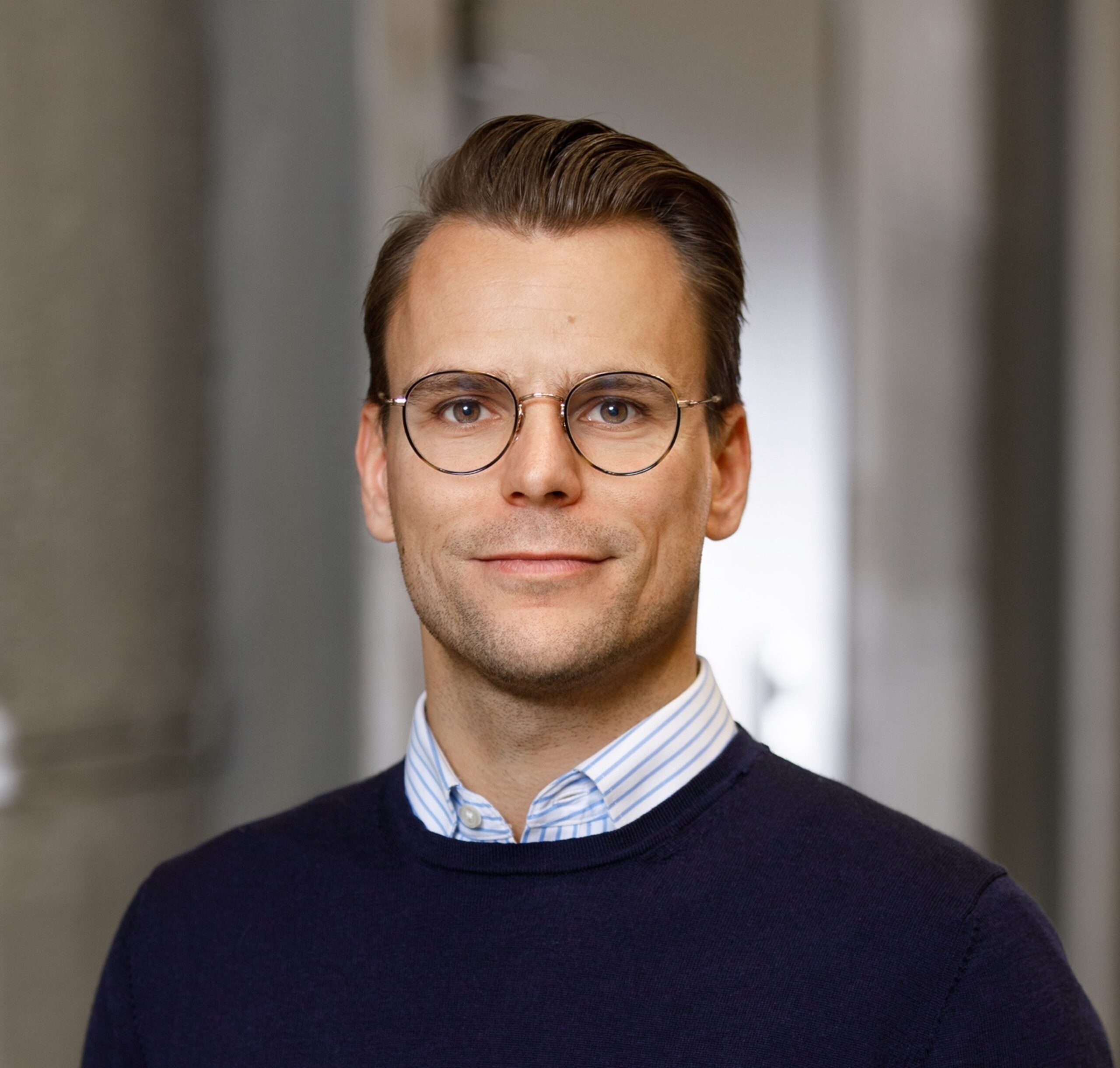
Benedikt Sons, CEO Cansativa GmbH
Benedikt Sons is co-founder and CEO of Cansativa GmbH (Mörfelden-Walldorf), market leader in German medicinal cannabis distribution according to the company. He will present a live podcast at the Mary Jane Berlin.
Question 1: Market Share
Since 2024, Cansativa has been a central player in the legalized market. What market shares are we actually talking about, and how do they compare to the three most important competitors?
Benedikt: Let me straighten out a figure first, because it frames the picture. Cansativa is not a child of the 2024 market opening. We’ve been BfArM-licensed since 2017 and were the federal government’s exclusive distribution partner from 2020 to 2024. These eight years of lead time are our foundation today. On that basis, we hold over 28 percent of the German medicinal cannabis market and lead it.
For me, though, this is less about ranking than responsibility. More than 3,000 pharmacies work with us, and over nine out of ten medicinal cannabis-active pharmacies are connected. I deliberately won’t comment on specific competitors‘ figures—I’ll leave that to others. What matters more to me is the structural point: in this business, market share doesn’t come from marketing but from supply capability, licenses, and infrastructure built over years. That’s the distance that can’t be closed in a single quarter.
Question 2: Reorientation After CanG
Which strategic reorientation was strongest for Cansativa after the Cannabis Act (CanG) came into force: operational logistics, patient onboarding, B2B distribution, or internationalization?
Benedikt: The strongest reorientation wasn’t a single function but a leap in self-definition. Before the market opening, we were the reliable distributor supplying the market with product. With legalization, we understood that distribution is the ticket to entry, not the destination. Distribution scales the market, brands scale the margin. So we built a powerhouse of proprietary brands—AMICI and N!CE—on top of our supply chain, complemented by exclusive partnerships.
The crucial thing is where these brands come from. From thousands of pharmacy relationships, we know firsthand what the market demands—market insight of this depth no one else possesses. That’s exactly where we developed products tailored to the needs of pharmacies and their patients. With our own inventory management system, we also made the pharmacy genuinely capable in medicinal cannabis for the first time. Operational logistics, B2B distribution, and internationalization weren’t competing priorities but parts of the same architecture. We turned a wholesaler into an integrated platform, and it carries most of our value today.
„Distribution scales the market, brands scale the margin.“
Benedikt Sons · Cansativa GmbH
Question 3: Market Entry & Marketplaces
The medicinal market in Germany is growing rapidly. At what point does the window close for new competitors, and which marketplaces will dominate by 2027?
Benedikt: I don’t believe in a window that closes on a specific date. I believe in entry barriers that rise with market maturity. Anyone entering today must build not a product but a complete, regulatorily licensed infrastructure, plus manufacturer relationships across fifteen countries, a solid quality system, and the trust of thousands of pharmacies. That’s not something you can buy with capital alone—it takes years.
So the market will be decided by 2027 less through new players than through the question of who truly integrates distribution, brands, and systems. Pure marketplaces that only mediate come under pressure because they sit at the thinnest part of the value chain. But whoever controls the entire chain, from import to pharmacy counter, sets the pace. I’m convinced that integrated platforms will shape this market, not storefronts.
Question 4: Regulatory Hurdles
Which regulatory hurdles most strongly brake the German distribution business in 2026, and which would you most like to see removed in the next 12 months?
Benedikt: The biggest brake isn’t a single ban but uncertainty. A market that doesn’t know what rules apply in twelve months invests more cautiously than it should. As a company, we prefer to deliver solutions rather than demands, so I’ll frame it this way: what would help this market most is reliability. Medicinal cannabis should ultimately be treated like any other prescription medication—with clear handling in prescriptions and reliable access through pharmacies.
Where distribution channels operate in gray zones today, we need clean regulatory guardrails, not blanket bans that ultimately hurt patients in underserved regions. If I could wish for one thing in the next twelve months, it’s predictability. Reliability is the most effective growth policy a legislator can pursue in a young market.
Question 5: Full Integration vs. Specialists
Cansativa committed early to full integration. Where do you see the limits of this model today compared to specialized pharmacy service providers?
Benedikt: I don’t see the limit where the question suggests. Specialists do excellent work on their portion of the value chain, and we gladly work with many of them. But optimizing a single link in the chain is different from controlling the chain. Our strength is that import, quality testing, logistics, distribution, and our own pharmacy system all converge in one hand. One order, one delivery, one system.
This integration isn’t an end in itself—it’s why supply security is an operational state for us, not a promise. Of course, the model has a price; it demands depth over speed and discipline over rapid scaling. But this depth can’t be replicated by stringing service providers together. The specialist optimizes a piece. We take responsibility for the whole. In a market where patients must be reliably supplied, the whole is the real value.
Question 6: Message at Mary Jane
Mary Jane is an industry stage. What message will you place in your live podcast that you don’t normally speak openly about in day-to-day business?
Benedikt: Maybe this, and I say it deliberately on an industry stage. When we started in 2017, cannabis in Germany was a political issue. Today it’s a medical one. That was exactly our goal, and we’re not at the end of that journey yet. In day-to-day business, we talk about delivery quotas, assortment, and margins. What lies beneath, I rarely say openly: we’re building the infrastructure of an entire market right now, and we’re doing it from Hesse for all of Europe.
I believe that in ten years, medicinal cannabis will be prescribed as routinely as any other medication, and that the companies building the invisible infrastructure today will shape this market, not the loudest ones. We don’t want to be the loudest company in the industry. We want to be the company the industry can’t function without.
„We don’t want to be the loudest company in the industry. We want to be the company the industry can’t function without.“
Benedikt Sons · Cansativa GmbH
Question 7: What He’d Do Differently Today
If you had to launch a cannabis distributor in Germany today: what would you do differently than Cansativa did in 2017?
Benedikt: Honestly, I’d lay the foundation the same way. First the license, then supply capability, then pharmacy trust. That sequence was right, and it’s our advantage today. What I’d do earlier is the step from distribution to brand. In 2017, we first had to prove we could reliably deliver at all—that rightfully consumed all our energy. Today I know the real value lies in the connection between platform and proprietary brands. I’d think about that from day one instead of developing it over years.
And I’d take political engagement seriously earlier. We delivered for a long time and spoke little, because substance had to come first. That was disciplined, but a young market needs a credible voice early on. On the core principle, though—first deliver, then talk—I wouldn’t change a thing.
Question 8: Cansativa in 2030
Where do you see Cansativa in 2030: German market leader, European consolidator, or vertically integrated pharma player?
Benedikt: A bit of all three, but let me be sharper. By 2030, I see Cansativa as Europe’s leading integrated platform for medicinal cannabis. German market leadership isn’t the goal but the foundation. From there, we carry the model into additional European markets, beginning with the UK, where regulation supports the same integrated model.
Consolidation will be part of this story, because young markets always order themselves, and we want to stand on the shaping side of that order. I understand „pharma player“ as a claim to quality and seriousness, and I share that. But our core remains what it’s always been. We enable a functioning market. Others build a product. We build the infrastructure that market runs on. If we’ve accomplished that in multiple European countries by 2030, we’ll have achieved our real goal.
Frequently Asked Questions
What market share does Cansativa have in Germany?
According to its own figures, Cansativa holds over 28 percent of the German medicinal cannabis market. The company has been BfArM-licensed since 2017 and connects more than 3,000 pharmacies. For an explanation of how the broader market functions, see our patient guide to medicinal cannabis.
Who is Benedikt Sons?
Benedikt Sons is co-founder and CEO of Cansativa GmbH, based in Mörfelden-Walldorf, Hesse. He built the company together with his brother Jakob long before the Cannabis Act (CanG) opened the market in 2024.
Is Cansativa expanding beyond Germany?
Yes. Cansativa sees German market leadership as the foundation for a European platform and is beginning international expansion in the UK. Our report from Cannabis Europa in London shows how the European medicinal cannabis market is developing.
Where will you meet Benedikt Sons in 2026?
Benedikt Sons will present a live podcast at the Mary Jane Berlin 2026. For an impression of the year in industry events, see our recap of CannaTrade 2026 in Zurich.
Note: This interview was conducted in writing. Answers have been lightly edited for readability and grammar without changing content. Benedikt Sons presents a live podcast at the Mary Jane Berlin. This is an editorial interview, not a paid contribution.
When Germany discusses medicinal cannabis, Cansativa is hard to avoid. The company from Mörfelden-Walldorf in Hesse has been licensed by the BfArM since 2017, served as the federal government’s exclusive distribution partner from 2020 to 2024, and today holds over 28 percent of the German medicinal cannabis market according to its own figures. More than 3,000 pharmacies are connected to its network.
CEO Benedikt Sons built the company together with his brother Jakob long before the 2024 market opening brought cannabis into the headlines. In conversation with Hanf Magazin, he explains why market share in this business doesn’t come from marketing but from licenses, supply capability, and infrastructure—and why he sees pure marketplaces as the losers of the next market phase.
Sons is preparing for his live podcast at the Mary Jane Berlin, where he will discuss market shares, consolidation, and where Cansativa wants to stand in 2030.
💬 In Conversation
Benedikt Sons, CEO Cansativa GmbH
Benedikt Sons is co-founder and CEO of Cansativa GmbH (Mörfelden-Walldorf), market leader in German medicinal cannabis distribution according to the company. He will present a live podcast at the Mary Jane Berlin.
Question 1: Market Share
Since 2024, Cansativa has been a central player in the legalized market. What market shares are we actually talking about, and how do they compare to the three most important competitors?
Benedikt: Let me straighten out a figure first, because it frames the picture. Cansativa is not a child of the 2024 market opening. We’ve been BfArM-licensed since 2017 and were the federal government’s exclusive distribution partner from 2020 to 2024. These eight years of lead time are our foundation today. On that basis, we hold over 28 percent of the German medicinal cannabis market and lead it.
For me, though, this is less about ranking than responsibility. More than 3,000 pharmacies work with us, and over nine out of ten medicinal cannabis-active pharmacies are connected. I deliberately won’t comment on specific competitors‘ figures—I’ll leave that to others. What matters more to me is the structural point: in this business, market share doesn’t come from marketing but from supply capability, licenses, and infrastructure built over years. That’s the distance that can’t be closed in a single quarter.
Question 2: Reorientation After CanG
Which strategic reorientation was strongest for Cansativa after the Cannabis Act (CanG) came into force: operational logistics, patient onboarding, B2B distribution, or internationalization?
Benedikt: The strongest reorientation wasn’t a single function but a leap in self-definition. Before the market opening, we were the reliable distributor supplying the market with product. With legalization, we understood that distribution is the ticket to entry, not the destination. Distribution scales the market, brands scale the margin. So we built a powerhouse of proprietary brands—AMICI and N!CE—on top of our supply chain, complemented by exclusive partnerships.
The crucial thing is where these brands come from. From thousands of pharmacy relationships, we know firsthand what the market demands—market insight of this depth no one else possesses. That’s exactly where we developed products tailored to the needs of pharmacies and their patients. With our own inventory management system, we also made the pharmacy genuinely capable in medicinal cannabis for the first time. Operational logistics, B2B distribution, and internationalization weren’t competing priorities but parts of the same architecture. We turned a wholesaler into an integrated platform, and it carries most of our value today.
„Distribution scales the market, brands scale the margin.“
Benedikt Sons · Cansativa GmbH
Question 3: Market Entry & Marketplaces
The medicinal market in Germany is growing rapidly. At what point does the window close for new competitors, and which marketplaces will dominate by 2027?
Benedikt: I don’t believe in a window that closes on a specific date. I believe in entry barriers that rise with market maturity. Anyone entering today must build not a product but a complete, regulatorily licensed infrastructure, plus manufacturer relationships across fifteen countries, a solid quality system, and the trust of thousands of pharmacies. That’s not something you can buy with capital alone—it takes years.
So the market will be decided by 2027 less through new players than through the question of who truly integrates distribution, brands, and systems. Pure marketplaces that only mediate come under pressure because they sit at the thinnest part of the value chain. But whoever controls the entire chain, from import to pharmacy counter, sets the pace. I’m convinced that integrated platforms will shape this market, not storefronts.
Question 4: Regulatory Hurdles
Which regulatory hurdles most strongly brake the German distribution business in 2026, and which would you most like to see removed in the next 12 months?
Benedikt: The biggest brake isn’t a single ban but uncertainty. A market that doesn’t know what rules apply in twelve months invests more cautiously than it should. As a company, we prefer to deliver solutions rather than demands, so I’ll frame it this way: what would help this market most is reliability. Medicinal cannabis should ultimately be treated like any other prescription medication—with clear handling in prescriptions and reliable access through pharmacies.
Where distribution channels operate in gray zones today, we need clean regulatory guardrails, not blanket bans that ultimately hurt patients in underserved regions. If I could wish for one thing in the next twelve months, it’s predictability. Reliability is the most effective growth policy a legislator can pursue in a young market.
Question 5: Full Integration vs. Specialists
Cansativa committed early to full integration. Where do you see the limits of this model today compared to specialized pharmacy service providers?
Benedikt: I don’t see the limit where the question suggests. Specialists do excellent work on their portion of the value chain, and we gladly work with many of them. But optimizing a single link in the chain is different from controlling the chain. Our strength is that import, quality testing, logistics, distribution, and our own pharmacy system all converge in one hand. One order, one delivery, one system.
This integration isn’t an end in itself—it’s why supply security is an operational state for us, not a promise. Of course, the model has a price; it demands depth over speed and discipline over rapid scaling. But this depth can’t be replicated by stringing service providers together. The specialist optimizes a piece. We take responsibility for the whole. In a market where patients must be reliably supplied, the whole is the real value.
Question 6: Message at Mary Jane
Mary Jane is an industry stage. What message will you place in your live podcast that you don’t normally speak openly about in day-to-day business?
Benedikt: Maybe this, and I say it deliberately on an industry stage. When we started in 2017, cannabis in Germany was a political issue. Today it’s a medical one. That was exactly our goal, and we’re not at the end of that journey yet. In day-to-day business, we talk about delivery quotas, assortment, and margins. What lies beneath, I rarely say openly: we’re building the infrastructure of an entire market right now, and we’re doing it from Hesse for all of Europe.
I believe that in ten years, medicinal cannabis will be prescribed as routinely as any other medication, and that the companies building the invisible infrastructure today will shape this market, not the loudest ones. We don’t want to be the loudest company in the industry. We want to be the company the industry can’t function without.
„We don’t want to be the loudest company in the industry. We want to be the company the industry can’t function without.“
Benedikt Sons · Cansativa GmbH
Question 7: What He’d Do Differently Today
If you had to launch a cannabis distributor in Germany today: what would you do differently than Cansativa did in 2017?
Benedikt: Honestly, I’d lay the foundation the same way. First the license, then supply capability, then pharmacy trust. That sequence was right, and it’s our advantage today. What I’d do earlier is the step from distribution to brand. In 2017, we first had to prove we could reliably deliver at all—that rightfully consumed all our energy. Today I know the real value lies in the connection between platform and proprietary brands. I’d think about that from day one instead of developing it over years.
And I’d take political engagement seriously earlier. We delivered for a long time and spoke little, because substance had to come first. That was disciplined, but a young market needs a credible voice early on. On the core principle, though—first deliver, then talk—I wouldn’t change a thing.
Question 8: Cansativa in 2030
Where do you see Cansativa in 2030: German market leader, European consolidator, or vertically integrated pharma player?
Benedikt: A bit of all three, but let me be sharper. By 2030, I see Cansativa as Europe’s leading integrated platform for medicinal cannabis. German market leadership isn’t the goal but the foundation. From there, we carry the model into additional European markets, beginning with the UK, where regulation supports the same integrated model.
Consolidation will be part of this story, because young markets always order themselves, and we want to stand on the shaping side of that order. I understand „pharma player“ as a claim to quality and seriousness, and I share that. But our core remains what it’s always been. We enable a functioning market. Others build a product. We build the infrastructure that market runs on. If we’ve accomplished that in multiple European countries by 2030, we’ll have achieved our real goal.
Frequently Asked Questions
What market share does Cansativa have in Germany?
According to its own figures, Cansativa holds over 28 percent of the German medicinal cannabis market. The company has been BfArM-licensed since 2017 and connects more than 3,000 pharmacies. For an explanation of how the broader market functions, see our patient guide to medicinal cannabis.
Who is Benedikt Sons?
Benedikt Sons is co-founder and CEO of Cansativa GmbH, based in Mörfelden-Walldorf, Hesse. He built the company together with his brother Jakob long before the Cannabis Act (CanG) opened the market in 2024.
Is Cansativa expanding beyond Germany?
Yes. Cansativa sees German market leadership as the foundation for a European platform and is beginning international expansion in the UK. Our report from Cannabis Europa in London shows how the European medicinal cannabis market is developing.
Where will you meet Benedikt Sons in 2026?
Benedikt Sons will present a live podcast at the Mary Jane Berlin 2026. For an impression of the year in industry events, see our recap of CannaTrade 2026 in Zurich.
Note: This interview was conducted in writing. Answers have been lightly edited for readability and grammar without changing content. Benedikt Sons presents a live podcast at the Mary Jane Berlin. This is an editorial interview, not a paid contribution.
When Germany discusses medicinal cannabis, Cansativa is hard to avoid. The company from Mörfelden-Walldorf in Hesse has been licensed by the BfArM since 2017, served as the federal government’s exclusive distribution partner from 2020 to 2024, and today holds over 28 percent of the German medicinal cannabis market according to its own figures. More than 3,000 pharmacies are connected to its network.
CEO Benedikt Sons built the company together with his brother Jakob long before the 2024 market opening brought cannabis into the headlines. In conversation with Hanf Magazin, he explains why market share in this business doesn’t come from marketing but from licenses, supply capability, and infrastructure—and why he sees pure marketplaces as the losers of the next market phase.
Sons is preparing for his live podcast at the Mary Jane Berlin, where he will discuss market shares, consolidation, and where Cansativa wants to stand in 2030.
💬 In Conversation
Benedikt Sons, CEO Cansativa GmbH
Benedikt Sons is co-founder and CEO of Cansativa GmbH (Mörfelden-Walldorf), market leader in German medicinal cannabis distribution according to the company. He will present a live podcast at the Mary Jane Berlin.
Question 1: Market Share
Since 2024, Cansativa has been a central player in the legalized market. What market shares are we actually talking about, and how do they compare to the three most important competitors?
Benedikt: Let me straighten out a figure first, because it frames the picture. Cansativa is not a child of the 2024 market opening. We’ve been BfArM-licensed since 2017 and were the federal government’s exclusive distribution partner from 2020 to 2024. These eight years of lead time are our foundation today. On that basis, we hold over 28 percent of the German medicinal cannabis market and lead it.
For me, though, this is less about ranking than responsibility. More than 3,000 pharmacies work with us, and over nine out of ten medicinal cannabis-active pharmacies are connected. I deliberately won’t comment on specific competitors‘ figures—I’ll leave that to others. What matters more to me is the structural point: in this business, market share doesn’t come from marketing but from supply capability, licenses, and infrastructure built over years. That’s the distance that can’t be closed in a single quarter.
Question 2: Reorientation After CanG
Which strategic reorientation was strongest for Cansativa after the Cannabis Act (CanG) came into force: operational logistics, patient onboarding, B2B distribution, or internationalization?
Benedikt: The strongest reorientation wasn’t a single function but a leap in self-definition. Before the market opening, we were the reliable distributor supplying the market with product. With legalization, we understood that distribution is the ticket to entry, not the destination. Distribution scales the market, brands scale the margin. So we built a powerhouse of proprietary brands—AMICI and N!CE—on top of our supply chain, complemented by exclusive partnerships.
The crucial thing is where these brands come from. From thousands of pharmacy relationships, we know firsthand what the market demands—market insight of this depth no one else possesses. That’s exactly where we developed products tailored to the needs of pharmacies and their patients. With our own inventory management system, we also made the pharmacy genuinely capable in medicinal cannabis for the first time. Operational logistics, B2B distribution, and internationalization weren’t competing priorities but parts of the same architecture. We turned a wholesaler into an integrated platform, and it carries most of our value today.
„Distribution scales the market, brands scale the margin.“
Benedikt Sons · Cansativa GmbH
Question 3: Market Entry & Marketplaces
The medicinal market in Germany is growing rapidly. At what point does the window close for new competitors, and which marketplaces will dominate by 2027?
Benedikt: I don’t believe in a window that closes on a specific date. I believe in entry barriers that rise with market maturity. Anyone entering today must build not a product but a complete, regulatorily licensed infrastructure, plus manufacturer relationships across fifteen countries, a solid quality system, and the trust of thousands of pharmacies. That’s not something you can buy with capital alone—it takes years.
So the market will be decided by 2027 less through new players than through the question of who truly integrates distribution, brands, and systems. Pure marketplaces that only mediate come under pressure because they sit at the thinnest part of the value chain. But whoever controls the entire chain, from import to pharmacy counter, sets the pace. I’m convinced that integrated platforms will shape this market, not storefronts.
Question 4: Regulatory Hurdles
Which regulatory hurdles most strongly brake the German distribution business in 2026, and which would you most like to see removed in the next 12 months?
Benedikt: The biggest brake isn’t a single ban but uncertainty. A market that doesn’t know what rules apply in twelve months invests more cautiously than it should. As a company, we prefer to deliver solutions rather than demands, so I’ll frame it this way: what would help this market most is reliability. Medicinal cannabis should ultimately be treated like any other prescription medication—with clear handling in prescriptions and reliable access through pharmacies.
Where distribution channels operate in gray zones today, we need clean regulatory guardrails, not blanket bans that ultimately hurt patients in underserved regions. If I could wish for one thing in the next twelve months, it’s predictability. Reliability is the most effective growth policy a legislator can pursue in a young market.
Question 5: Full Integration vs. Specialists
Cansativa committed early to full integration. Where do you see the limits of this model today compared to specialized pharmacy service providers?
Benedikt: I don’t see the limit where the question suggests. Specialists do excellent work on their portion of the value chain, and we gladly work with many of them. But optimizing a single link in the chain is different from controlling the chain. Our strength is that import, quality testing, logistics, distribution, and our own pharmacy system all converge in one hand. One order, one delivery, one system.
This integration isn’t an end in itself—it’s why supply security is an operational state for us, not a promise. Of course, the model has a price; it demands depth over speed and discipline over rapid scaling. But this depth can’t be replicated by stringing service providers together. The specialist optimizes a piece. We take responsibility for the whole. In a market where patients must be reliably supplied, the whole is the real value.
Question 6: Message at Mary Jane
Mary Jane is an industry stage. What message will you place in your live podcast that you don’t normally speak openly about in day-to-day business?
Benedikt: Maybe this, and I say it deliberately on an industry stage. When we started in 2017, cannabis in Germany was a political issue. Today it’s a medical one. That was exactly our goal, and we’re not at the end of that journey yet. In day-to-day business, we talk about delivery quotas, assortment, and margins. What lies beneath, I rarely say openly: we’re building the infrastructure of an entire market right now, and we’re doing it from Hesse for all of Europe.
I believe that in ten years, medicinal cannabis will be prescribed as routinely as any other medication, and that the companies building the invisible infrastructure today will shape this market, not the loudest ones. We don’t want to be the loudest company in the industry. We want to be the company the industry can’t function without.
„We don’t want to be the loudest company in the industry. We want to be the company the industry can’t function without.“
Benedikt Sons · Cansativa GmbH
Question 7: What He’d Do Differently Today
If you had to launch a cannabis distributor in Germany today: what would you do differently than Cansativa did in 2017?
Benedikt: Honestly, I’d lay the foundation the same way. First the license, then supply capability, then pharmacy trust. That sequence was right, and it’s our advantage today. What I’d do earlier is the step from distribution to brand. In 2017, we first had to prove we could reliably deliver at all—that rightfully consumed all our energy. Today I know the real value lies in the connection between platform and proprietary brands. I’d think about that from day one instead of developing it over years.
And I’d take political engagement seriously earlier. We delivered for a long time and spoke little, because substance had to come first. That was disciplined, but a young market needs a credible voice early on. On the core principle, though—first deliver, then talk—I wouldn’t change a thing.
Question 8: Cansativa in 2030
Where do you see Cansativa in 2030: German market leader, European consolidator, or vertically integrated pharma player?
Benedikt: A bit of all three, but let me be sharper. By 2030, I see Cansativa as Europe’s leading integrated platform for medicinal cannabis. German market leadership isn’t the goal but the foundation. From there, we carry the model into additional European markets, beginning with the UK, where regulation supports the same integrated model.
Consolidation will be part of this story, because young markets always order themselves, and we want to stand on the shaping side of that order. I understand „pharma player“ as a claim to quality and seriousness, and I share that. But our core remains what it’s always been. We enable a functioning market. Others build a product. We build the infrastructure that market runs on. If we’ve accomplished that in multiple European countries by 2030, we’ll have achieved our real goal.
Frequently Asked Questions
What market share does Cansativa have in Germany?
According to its own figures, Cansativa holds over 28 percent of the German medicinal cannabis market. The company has been BfArM-licensed since 2017 and connects more than 3,000 pharmacies. For an explanation of how the broader market functions, see our patient guide to medicinal cannabis.
Who is Benedikt Sons?
Benedikt Sons is co-founder and CEO of Cansativa GmbH, based in Mörfelden-Walldorf, Hesse. He built the company together with his brother Jakob long before the Cannabis Act (CanG) opened the market in 2024.
Is Cansativa expanding beyond Germany?
Yes. Cansativa sees German market leadership as the foundation for a European platform and is beginning international expansion in the UK. Our report from Cannabis Europa in London shows how the European medicinal cannabis market is developing.
Where will you meet Benedikt Sons in 2026?
Benedikt Sons will present a live podcast at the Mary Jane Berlin 2026. For an impression of the year in industry events, see our recap of CannaTrade 2026 in Zurich.
Wie gut kennst du den deutschen Medizinalcannabis-Markt?
Note: This interview was conducted in writing. Answers have been lightly edited for readability and grammar without changing content. Benedikt Sons presents a live podcast at the Mary Jane Berlin. This is an editorial interview, not a paid contribution.