
Since the Cannabis Consumption Act came into force on April 1, 2024, the legal landscape surrounding cannabis has fundamentally changed. What is permitted in private, however, ends at the factory gate at the latest. Employees who think smoking a joint during their lunch break is legal, or employers who want to impose a blanket consumption ban, risk conflicts. This article addresses the most important questions regarding cannabis in the workplace and shows which rights and obligations apply two years after partial legalization.
📑 Inhaltsverzeichnis
- Cannabis in the workplace after the CanG: the legal starting point
- What employers are permitted to do: management rights, house rules, and works agreements
- Employee obligations: personal responsibility instead of gray areas
- Drug tests in the workplace: narrow limits
- Warning, dismissal, employment prohibition
- Safety-sensitive professions and professional drivers
- What the CanG evaluation shows for the workplace
- Frequently asked questions
- 💬 Fragen? Frag den Hanf-Buddy!
The answers do not come from the Cannabis Consumption Act itself, but from labor law, workplace safety regulations, and established case law from the German Federal Labor Court. These sources were relevant even before legalization, but their importance has noticeably increased. A comprehensive overview of the new legal framework can be found in our background article on cannabis legalization in Germany.
Cannabis in the workplace after the CanG: the legal starting point
The Cannabis Consumption Act regulates private possession, home cultivation, and cannabis consumption. It is silent on the workplace. The employment contract, the employer’s management rights, relevant works agreements, and the DGUV Regulation 1 on accident prevention remain decisive. The regulation obligates employees not to intoxicate themselves in a way that could endanger themselves or others. While it does not explicitly name cannabis, it undoubtedly includes intoxicating substances.


From this framework emerges a central principle: private consumption rights end as soon as work performance or workplace safety is affected. Anyone who consumes during leisure time but appears noticeably impaired at work the following day violates their secondary contractual obligations. Legalization shifts consumption into a grayer zone because residual substances can be detected days after the last joint, and certain industries react sensitively to this.
What employers are permitted to do: management rights, house rules, and works agreements

Employers are permitted to completely prohibit cannabis consumption on company premises. The basis is the management right anchored in § 106 of the Trade Regulation Act, supplemented by house rules. The prohibition can extend to working hours, statutory breaks, company vehicles, and the entire company premises. However, a blanket prohibition on private consumption during leisure time is impermissible because the interference with employees‘ personal rights is too severe.
If a works council exists, the right to codetermination under § 87 (1) No. 1 of the Works Constitution Act comes into play. Consumption bans that regulate conduct in the workplace are not valid without the approval of this body. Therefore, a written works agreement that regulates prohibited zones, consequences for violations, and support services for affected employees is advisable. In companies without a works council, a service instruction or an amendment to the employment contract suffices. Written form is important because oral instructions are difficult to prove in disputes.
For safety-sensitive activities, the employer’s duty of care under § 618 of the German Civil Code additionally applies. Employers are obligated to actively prevent dangers to employees and third parties. Those who operate machines, construction equipment, or care for patients fall into this category. Stricter standards apply here because intoxication can constitute a breach of duty even without visible signs of impairment.
Employee obligations: personal responsibility instead of gray areas
Employees owe their employer full work performance. This obligation arises from the employment contract and has not been weakened by cannabis legalization. Anyone who appears intoxicated at work violates their primary performance obligation regardless of when and where consumption took place. Unlike alcohol, cannabis lacks a professionally recognized breathalyzer equivalent. The standard remains concrete impairment.
In practice, this means: if someone smoked a joint the evening before and appears fully capable the next morning, they typically face no sanctions. However, if someone consumes heavily over the weekend and appears noticeably tired, unfocused, or slow to react on Monday, they are on thin legal ice. The burden of proving impairment initially rests with the employer, but in safety-sensitive professions it shifts toward the employee.
Even cannabis patients with a medical prescription are not exempt from this obligation. They should proactively inform their employer about the therapy, especially for safety-relevant activities. While blanket discrimination based on medically prescribed therapy is impermissible, reassignment to another position is reasonable if the original activity can no longer be safely performed.
Drug tests in the workplace: narrow limits
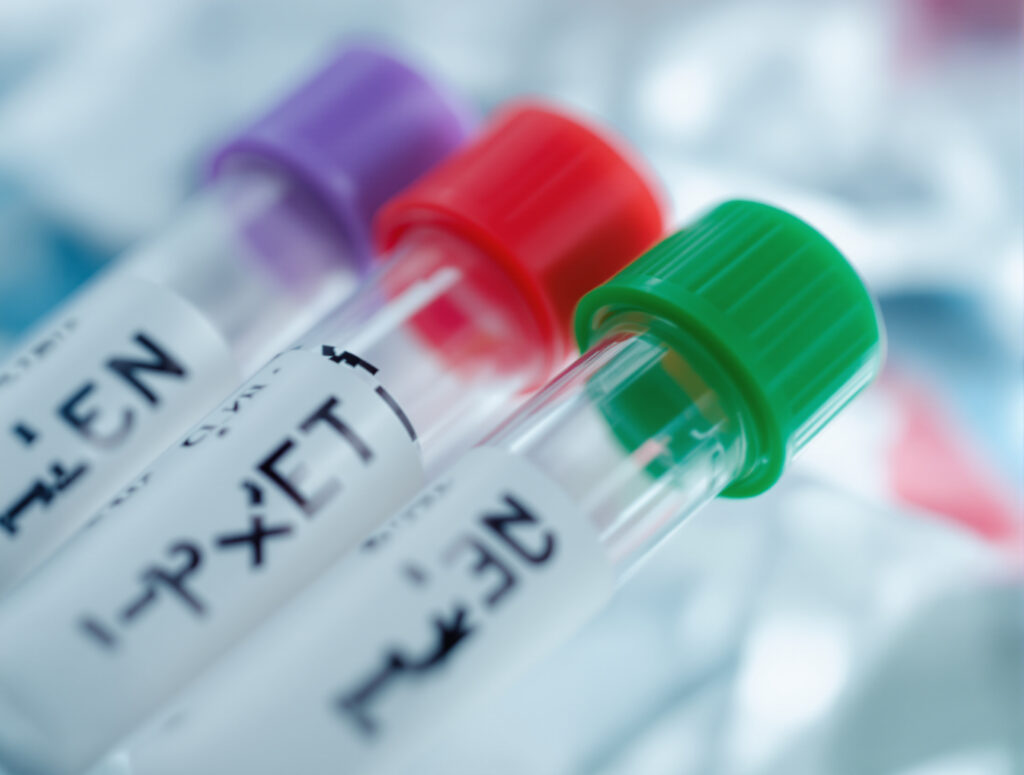
Unwarranted drug tests are illegal in Germany. The test affects the right to personal privacy and interferes with bodily integrity. It only becomes permissible when three conditions are met: a concrete reason, a legitimate interest of the employer, and express consent from the employee. In safety-critical areas, such as rail transport, aviation, or certain construction activities, the right to require a test may be contractually agreed.
The validity of tests is problematic. Urine quick tests detect THC metabolites for up to several weeks after the last consumption, depending on consumption intensity. A positive result therefore proves consumption but not necessarily a current state of intoxication. Anyone seeking clarity should understand the difference between detection and impairment, as explained in our article on risk factors for false-positive THC drug tests. In disputes between employees and employers, this imprecision regularly leads to litigation before labor courts.
Consent to the test must be voluntary. Threatening dismissal for refusal can undermine voluntariness and render the procedure challengeable. It is therefore advisable to clearly regulate test requirements in a works agreement, define job areas, and inform employees of the obligation before hiring.
Warning, dismissal, employment prohibition
If an employee violates an effective consumption ban, three measures are available. A written warning is the mildest response and in most cases a prerequisite for later dismissal. It must specifically name which obligation was violated and must threaten a labor law consequence for repeated violations. If an employer dismisses an employee for a second violation without first issuing a warning, they regularly fail in court.
Ordinary, conduct-based dismissal is possible if consumption continues despite a warning or if the severity of the violation justifies immediate termination. Immediate dismissal under § 626 of the German Civil Code remains reserved for exceptional cases according to established case law of the Federal Labor Court. It applies when the safety of persons has been significantly endangered, such as with an intoxicated crane operator or a severely impaired care worker on night shift.
In many cases, an employment prohibition precedes any dismissal. If the employer detects acute impairment, they must remove the employee from work and ensure safe transportation home. Failure to do so makes the employer liable for any resulting accident. This obligation arises from the Occupational Safety Act and applies regardless of the actual time of consumption.
Safety-sensitive professions and professional drivers

A special chapter covers professions where residual intoxication can directly endanger lives. Professional drivers fall into this category, as do train drivers, pilots, operating room personnel, and many construction workers. For them, the limits of road traffic law apply, plus strict internal regulations from occupational accident insurance associations.
Since August 22, 2024, the general THC limit in blood serum is 3.5 nanograms per milliliter. Details and practical questions are addressed in our article on the new THC limit in road traffic 2026. For professional drivers, this limit is particularly significant because exceeding it means losing driving privileges and thus the basis of their profession. Anyone wanting to avoid a medical-psychological evaluation should know the tips in our article on the DHV model letter against medical-psychological evaluation.
The Occupational Accident Insurance Association for the Construction Industry therefore explicitly requires its companies to establish internal zero-tolerance policies. This strictness is understandable from the association’s perspective because a single mistake on a construction site can be fatal. Similar procedures are followed by accident insurance associations for health services and logistics. Anyone working in one of these industries should generally avoid consumption the day before their shift.
What the CanG evaluation shows for the workplace
In April 2026, the federal government released the second interim report on the evaluation of the Cannabis Consumption Act. For the workplace, the assessment is sobering. To date, there is no measurable increase in workplace accidents that can be causally attributed to cannabis. Occupational accident insurance associations report no increase in cannabis-related incidents, yet they note growing uncertainty among personnel managers. A comprehensive assessment is provided in our assessment of legalization.
The data suggest that concerns about a wave of intoxicated employees have not materialized. Those who regularly consumed before April 2024 continue to do so. The legal situation in the workplace has barely changed; only attention has grown. For this very reason, clear internal communication is worthwhile, providing employees with security and employers with operational certainty.
Frequently asked questions
Am I permitted to smoke a joint during my lunch break after the CanG?
Basically not, if the employer has prohibited consumption on company premises. Even without an explicit ban, the secondary contractual obligation applies not to impair work performance afterward. In practice, this means a de facto consumption ban during breaks because intoxication typically extends beyond the break period.
Must I tolerate a drug test at work?
Only under strict conditions. The employer needs a concrete reason, a legitimate interest, and your consent. Unwarranted tests are illegal. In safety-critical industries, however, the obligation to participate can be anchored in the employment contract or a works agreement.
Can my employer dismiss me if I consume cannabis privately?
Private consumption alone is not grounds for dismissal. Sanctions only apply if work performance is impaired or there is a violation of an effective workplace consumption ban. A warning typically precedes any dismissal.
What applies to cannabis patients with medical prescriptions?
Cannabis patients cannot be blanket disadvantaged. They should proactively discuss the therapy with their employer, especially for safety-relevant activities. Reassignment to another position is reasonable, while discrimination without legitimate grounds is prohibited.
What role does the works council play in cannabis rules?
The works council has a right to codetermination under § 87 (1) No. 1 of the Works Constitution Act regarding workplace conduct. Consumption bans, test requirements, and sanctions must be negotiated with it and documented in a written works agreement. Without this participation, the rules are invalid.
How does cannabis differ from alcohol under labor law?
Sollte Cannabis am Arbeitsplatz komplett verboten werden dürfen?
Established blood alcohol levels serve as standards for alcohol. Cannabis lacks a professionally recognized limit because THC metabolites remain in the body long after intoxication ends. Under labor law, therefore, what matters is not the blood test result but the concrete impairment of work performance.






Branchen-Update
News, Analysen und Reportagen — mehrmals im Monat direkt in dein Postfach.
Folge uns