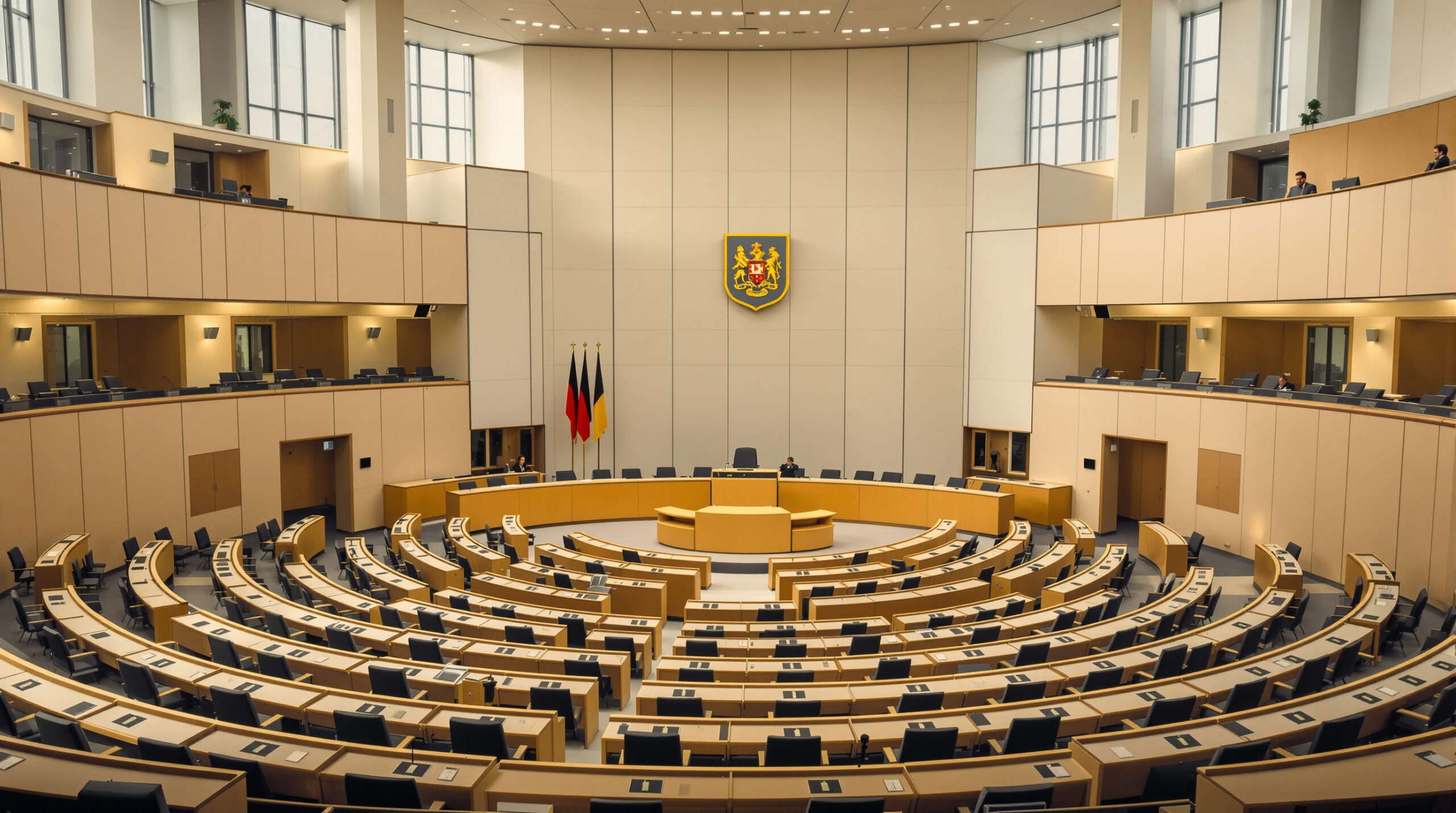
On September 6, 2026, Saxony-Anhalt will elect a new state parliament. The German Hemp Association published its election analysis on August 12, providing a comprehensive evaluation of the parties‘ positions on cannabis policy. The association analyzed electoral programs, distributed standardized policy questionnaires, and considered each party’s track record on drug policy. The resulting ranking spans from a clear recommendation to an equally clear rejection.
📑 Inhaltsverzeichnis
How the Hemp Association Evaluated the Parties
The methodology mirrors the approach the association has used for years before elections. First, electoral programs are reviewed in detail. Then standardized policy questionnaires are sent to state party branches. Finally, the association factors in how each party has actually behaved in practice—an important distinction, since campaign promises and real-world actions often diverge. The evaluation covered the Greens, FDP, The Left, SPD, CDU, BSW, and AfD. Those familiar with previous assessments will recognize the systematic approach used in our earlier analysis of party cannabis policy positions for Hamburg’s state election.
Greens Lead, FDP and The Left as Solid Alternatives
The Greens emerge as the clear winner from the assessment. The association credits them, by a significant margin, with the strongest drug policy program among all participating parties and points to concrete actions they’ve taken toward progressive drug policy. It’s the only explicit endorsement the association offers.


The FDP and The Left follow closely behind, deliberately ranked without preference between them. Both parties submitted weaker programs, but their responses to the policy questionnaires convinced the association. The Hemp Association therefore designates them as solid options for voters who prioritize cannabis policy. The SPD only partially meets this threshold. Their questionnaire responses were mixed, and the party remains hesitant about decriminalization in its platform.
CDU Evasive, BSW Silent, AfD Wants to Roll Back Progress
The CDU’s position is noteworthy. The state party answered evasively but didn’t explicitly oppose full legalization—a notable departure from the federal party’s rejection stance. However, this doesn’t go far enough to warrant the association’s endorsement. The BSW remains a mystery. It’s the only party that didn’t respond to the policy questionnaires at all, leaving no position on core cannabis questions in its program.
At the opposite end stands the AfD. As the only major party in Saxony-Anhalt, it explicitly opposes legalization and wants to actively reverse existing decriminalization measures. The Hemp Association classifies it as unelectable for cannabis consumers. That such rollbacks aren’t merely theoretical is evident from across the border in France, where penalties have just been tightened again—as our report on the increase in cannabis fines to €500 under the Ripost law demonstrates.
What State Parliaments Can Actually Decide About Cannabis
The Cannabis Consumption Act is federal law, but its enforcement falls to the states. They determine which agency approves cultivation associations, how strictly they’re monitored, and how quickly applications are processed. These differences are precisely where variation occurs—something we documented in our federal state comparison of CSC licenses. Additionally, states have a voice in the Bundesrat (upper house), and that voice matters for every change to the legal framework.
A state election doesn’t decide legalization itself, but it does determine how much of it actually reaches citizens in their daily lives. We’ve compiled our assessment of two years of the Cannabis Act and what the data shows, while our overview of CanG 2026 explains the legal framework. That regulatory details can topple entire organizational structures is shown by Spain’s case, where a tobacco law reform threatens that country’s Cannabis Social Clubs.
Frequently Asked Questions
When is the Saxony-Anhalt state election?
The election takes place on Sunday, September 6, 2026. According to the Federal Agency for Civic Education, 15 parties are running. The German Hemp Association evaluated seven of them on drug policy grounds.
Which party does the German Hemp Association recommend?
The association endorses the Greens. According to its assessment, they have by far the strongest drug policy program. The FDP and The Left are considered solid alternatives because their questionnaire responses were convincing.
What are policy questionnaires?
Policy questionnaires are standardized question catalogs that associations send to parties before an election. Answers are submitted in writing and therefore verifiable later. They complement electoral programs by posing specific questions that programs often leave unanswered.
Can a state reverse the partial legalization?
No, the Cannabis Consumption Act is federal law and can only be changed at the federal level. However, a state can shape enforcement restrictively and apply pressure through the Bundesrat for stricter policies. The practical scope is therefore broader than the bare legal text might suggest.
Why does the position of state parties matter at all?
Because states control the approval of cultivation associations, enforcement practices, and application processing times. There are significant differences between federal states in this regard. Anyone wanting to establish a cultivation association in Saxony-Anhalt will directly experience state-level politics in action.
Sources: German Hemp Association, Election Analysis for Saxony-Anhalt State Election (August 12, 2026); Federal Agency for Civic Education, Saxony-Anhalt State Election 2026.

Beeinflusst die Cannabis-Position einer Partei deine Wahlentscheidung?
Branchen-Update
News, Analysen und Reportagen — mehrmals im Monat direkt in dein Postfach.
Folge uns