When someone picks up a cannabis flower for the first time and smells it, they experience something remarkable: a complex aromatic bouquet that can range from earthy-musky to fresh-citrusy to sweetly-floral. Cannabis owes this olfactory diversity not to its famous cannabinoids like THC or CBD, but to a much larger group of compounds: terpenes. These volatile organic molecules not only shape the smell and taste of a strain, they demonstrably influence its effects profile. For anyone wanting to understand terpenes in cannabis, here’s the current state of the science.
📑 Inhaltsverzeichnis
What are terpenes and why does cannabis produce them?
Terpenes are one of the largest and most diverse classes of naturally occurring compounds. Over 30,000 terpenes and terpenoids exist in nature, and more than 200 different ones have been identified in the cannabis plant alone. Biochemically, all terpenes derive from the five-carbon building block isoprene (C5H8), but are assembled into very different structures: monoterpenes (C10), sesquiterpenes (C15), diterpenes (C20), and so on.
For the cannabis plant itself, terpenes serve several survival functions. They act as natural insecticides against pests, attract pollinators, and protect the plant from fungal infection and UV radiation. Over time, humans have put this phytochemical cocktail to use, both as a consumer product and as a source of active compounds. Recent research shows that terpenes are far more than just aromatic compounds. They interact with the human endocannabinoid system and other receptor systems, underscoring their medical significance.


The most important terpenes in cannabis and their profiles
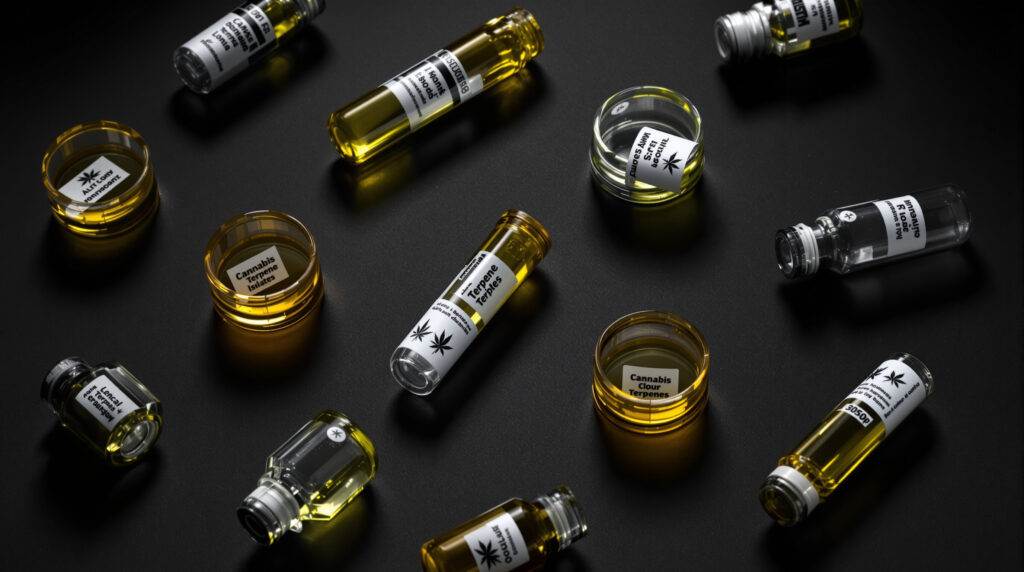
Not all terpenes in cannabis are equally significant. Some appear in almost every strain and make up a large portion of the aroma profile, while others are found only in specific genotypes. The following overview covers the scientifically most thoroughly researched representatives and what they reveal about a cannabis strain.
Myrcene is by far the most common terpene in modern cannabis strains and can make up to 50 percent of a flower’s entire terpene profile. Its aroma is earthy, musky, and slightly fruity—if you think of mangoes or hops, you’re on the right track. Myrcene demonstrably produces muscle-relaxing and sedating effects. In combination with THC, it is thought to enhance THC absorption into the brain, which explains the intense body effects of many indica-dominant strains. Its boiling point is 167 °C.
Limonene announces itself with its unmistakable citrus aroma. It occurs primarily in sativa-dominant strains and is associated with mood-lifting, anxiety-reducing, and antidepressant properties. Pharmacologically, limonene increases serotonin and dopamine concentrations in certain brain regions. Additionally, it has antifungal and antibacterial effects that the cosmetics and food industries have long utilized. Boiling point: 176 °C.
Beta-caryophyllene occupies a special position among all cannabis terpenes: it is the only known terpene that can bind directly to cannabinoid receptors, specifically CB2 receptors, which are found primarily in the immune system. Thus beta-caryophyllene functionally acts like a cannabinoid without being psychoactive. Its aroma is peppery and spicy, reminiscent of black pepper or cloves. Its anti-inflammatory and pain-relieving properties are well documented. Boiling point: 199–260 °C.
Linalool is best known from lavender and gives certain cannabis strains their floral-sweet character. It works anxiolytically—meaning it can reduce anxiety—as well as anti-spasmodic and locally anesthetic. Researchers suspect that linalool acts on the brain’s glutamate and GABA systems, thereby producing its calming effect. Particularly interesting is its potential as complementary therapy for epilepsy and chronic pain conditions. Boiling point: 198 °C.
Alpha-pinene is the most widely distributed terpene in the plant world and is responsible for the typical pine resin scent. In cannabis it occurs in high concentration especially in Skunk strains. Pinene is a well-known bronchodilator—it expands the airways and works anti-inflammatory. Equally remarkable is its property as an acetylcholinesterase inhibitor: it can mitigate THC-induced memory and attention impairment, an important interaction for medical applications. Boiling point: 156 °C.
Humulene, also known as alpha-caryophyllene, is closely related to beta-caryophyllene and gives hop plants their characteristic aroma. In cannabis it usually appears alongside beta-caryophyllene. Its earthy-woody aroma is subtle, but its effects are significant: humulene works antibacterially, anti-inflammatory and, unusually for cannabis, appetite-suppressing. Boiling point: 106 °C.
Terpinolene occurs less frequently in cannabis but is particularly characteristic of certain sativa genotypes. Its aroma is multifaceted: fruity-apple-like, slightly piney, and floral all at once. Terpinolene works antioxidatively, is thought to have mildly sedating properties, and shows potential anti-tumor properties in laboratory studies, though these haven’t been clinically confirmed. Strains with high terpinolene content are considered energizing. Boiling point: 186 °C.
Ocimene is a monoterpene with a sweetly-tropical, slightly woody aroma. It occurs in small amounts in many plants and is found primarily in exotic, tropical cannabis genotypes. Ocimene possesses antiviral, antibacterial, and fungistatic properties. As an independent active compound it remains understudied, but is considered an important aromatic marker for certain strain profiles. Boiling point: 66 °C.
Terpenes in cannabis and the entourage effect
The whole is greater than the sum of its parts. This principle aptly describes what happens in cannabis when terpenes and cannabinoids work together. The entourage effect describes the phenomenon where the totality of plant compounds produces a different effect—usually stronger or more nuanced—than isolated individual compounds. Isolated THC works differently than a full-spectrum extract with identical THC content.
Research here is still developing. High-quality human clinical trials are largely lacking, but preclinical data provides compelling evidence. Myrcene enhances blood-brain barrier permeability for THC, linalool modulates its anxiety-inducing side effects, pinene compensates for cognitive impairment. Each terpene profile thus creates a unique effects spectrum, which explains why two strains with identical THC content can work completely differently.
For medical patients, this is of considerable practical importance. Those seeking a specifically calming, pain-relieving strain should look for high myrcene and linalool content. Those wanting daytime clarity and focus will find these more readily in strains with high pinene and terpinolene content. The terpene profile of a hemp strain has thus become a medically relevant quality marker.
Reading terpene profiles and using them for strain selection
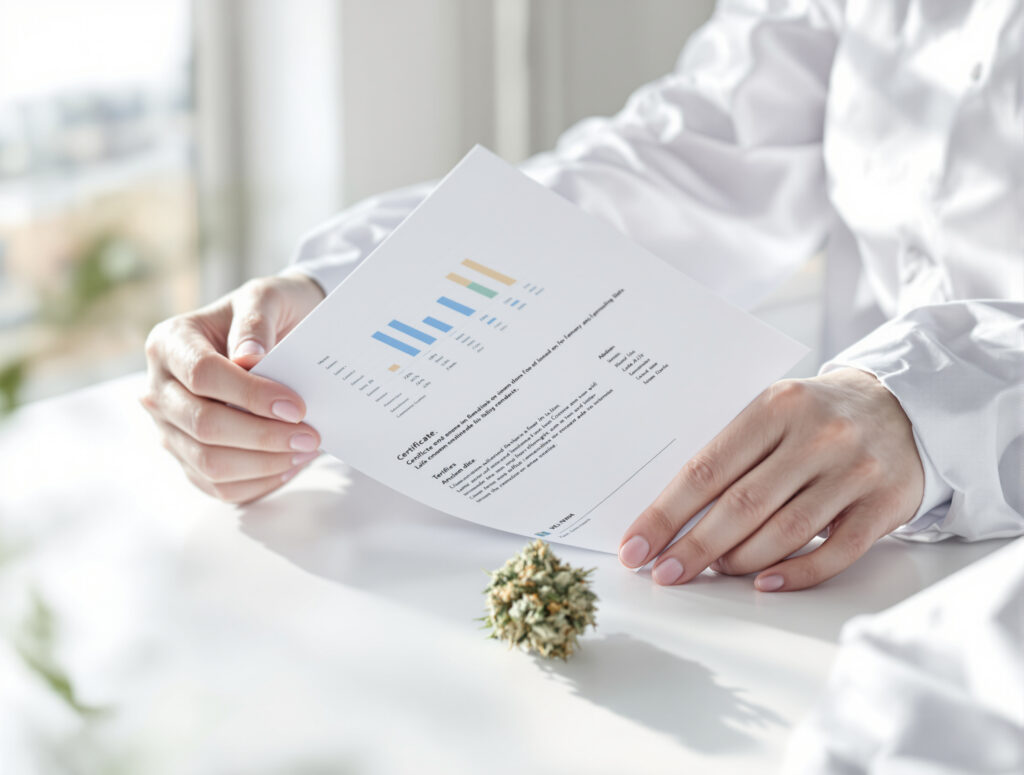
Modern pharmacies and legal cannabis dispensaries provide analysis certificates that list the terpene profile alongside THC and CBD content. These so-called Certificates of Analysis (CoA) provide precise percentages for the most common terpenes, usually expressed as mass percentage or mg/g. An experienced patient or consumer can draw important conclusions about the expected effects profile from these values.
The most important rule of thumb: strains with myrcene content above 0.5% tend toward stronger sedating, body-focused effects. Strains where limonene, pinene, or terpinolene dominate are considered more activating and head-focused. Beta-caryophyllene-rich strains are frequently preferred by patients with inflammatory conditions or neuropathic pain.
Important to know: terpenes are thermally unstable. They evaporate at moderate temperatures, which is why storage in the refrigerator or at a cool, light-protected location is critical for preserving the aroma profile. When consuming via vaporizer, different terpene fractions can be extracted through targeted temperature selection, offering the informed user another level of control.
Achtest du beim Kauf auf das Terpenprofil der Sorte?
FAQ: Terpenes in cannabis
What exactly are terpenes in cannabis?
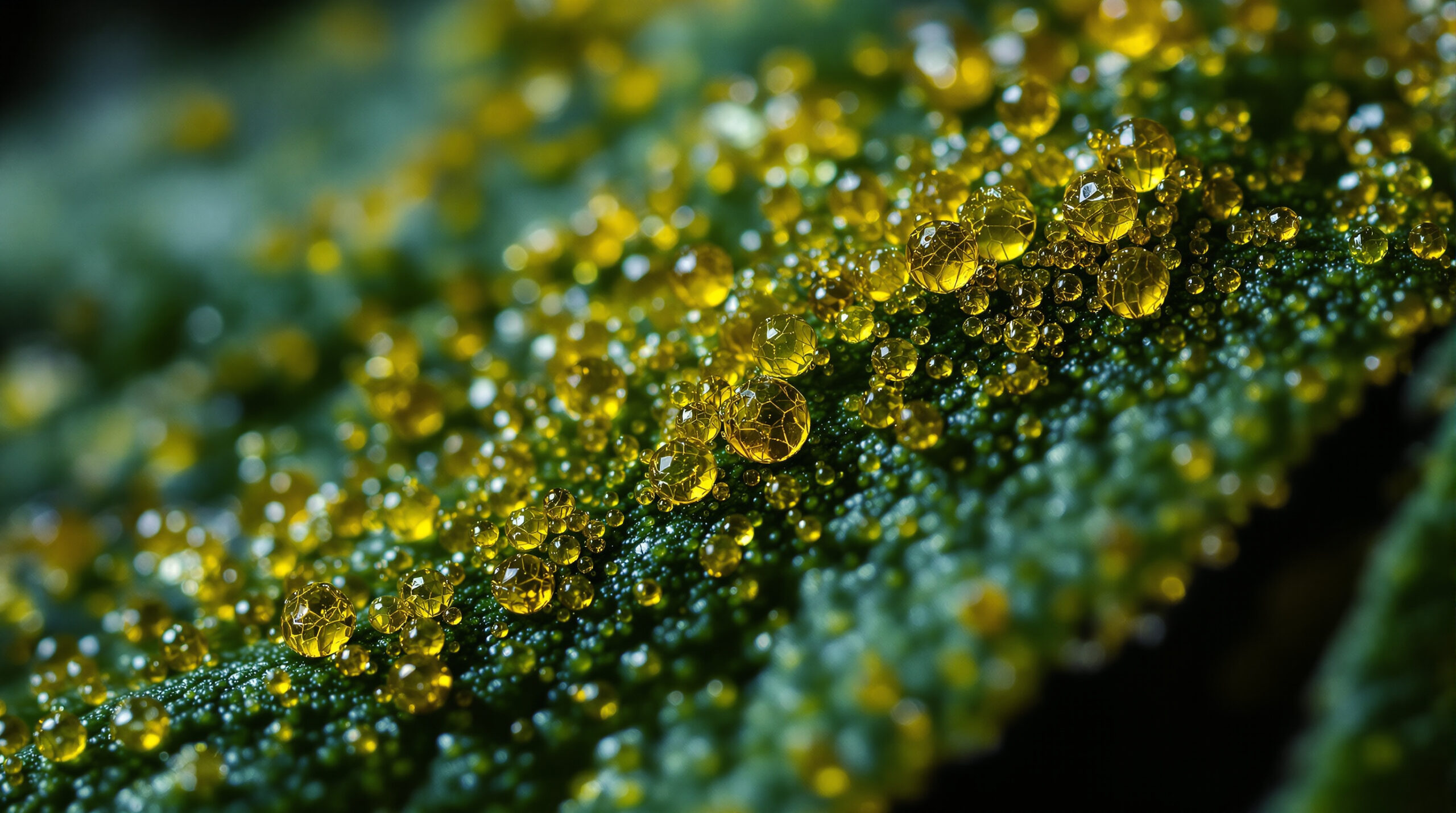
Terpenes are natural, volatile organic compounds produced in the cannabis plant’s resin glands (trichomes). They are responsible for the characteristic smell and taste of a strain and further influence its pharmacological effects profile. Over 200 different terpenes have been identified in the cannabis plant so far.
Which terpenes occur most commonly in cannabis?
The most commonly occurring terpenes in modern cannabis strains are myrcene, limonene, beta-caryophyllene, linalool, and alpha-pinene. Myrcene dominates in most strains and can make up to 50 percent of total terpene content. However, depending on strain type and growing conditions, humulene, terpinolene, and ocimene can also occur in noteworthy concentrations.
Does myrcene influence the effects of THC?
Yes. Myrcene is thought to increase the permeability of the blood-brain barrier and thus accelerate and enhance THC absorption into the brain. At the same time, myrcene itself produces muscle-relaxing and mildly sedating effects, which partly explains the body-focused, couch-lock-like effect of many indica strains. According to current research, strains with high myrcene content produce noticeably more intense effects than those with low myrcene at the same THC level.
How do I preserve the terpenes in my cannabis flower?
Terpenes are very volatile and sensitive to heat, light, and air. Optimal storage is in airtight glass containers at cool temperatures (10–15 °C) and without direct light exposure. Even a few days on a windowsill in summer heat can significantly deplete the terpene profile. Those using a vaporizer should start at low temperatures (140–170 °C) to capture the more volatile monoterpenes before higher temperatures release the heavier sesquiterpenes.
Can cannabis terpenes be medically effective?
Numerous preclinical studies document biological activities of various cannabis terpenes, from anti-inflammatory to anxiolytic to antibacterial. Beta-caryophyllene is the first terpene classified as a functional cannabinoid because it binds to CB2 receptors. However, clinical human studies proving the therapeutic effects of isolated or combined terpenes remain rare. Current research suggests that terpenes achieve their strongest medical effects in interaction with cannabinoids—that is, as part of a full-spectrum extract.






Branchen-Update
News, Analysen und Reportagen — mehrmals im Monat direkt in dein Postfach.