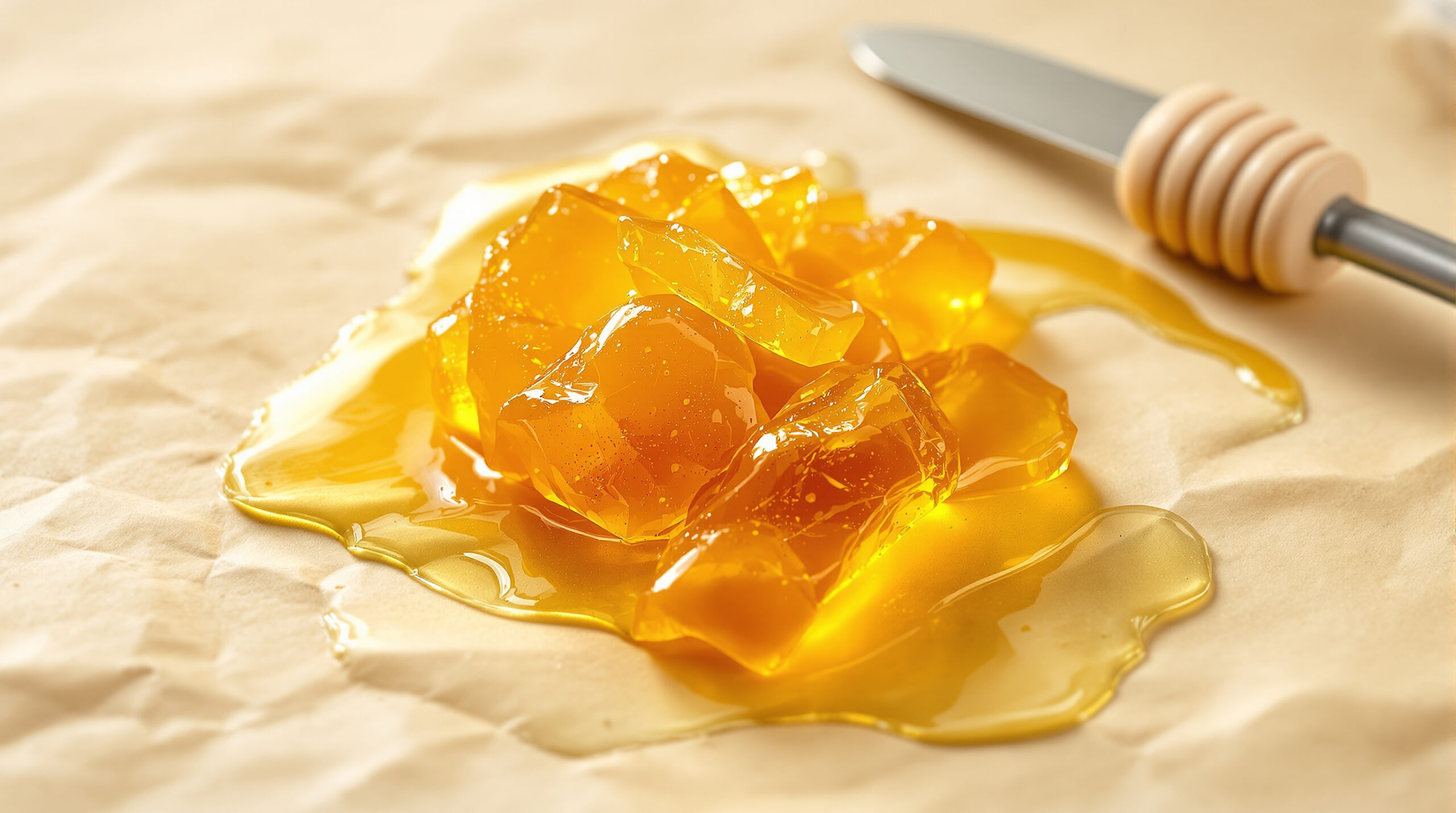
Rosin is regarded among home growers as the most honest of all cannabis concentrates. It is created solely through heat and pressure, without butane, propane, or other solvents. Anyone with a rosin press can transform dried flowers or hashish into a golden-yellow, terpene-rich extract in seconds. The appeal lies in its simplicity and safety, because unlike BHO production, there’s no need for flammable gases or a specialized lab. This guide shows you how to make rosin yourself, what equipment is really necessary, and what matters when it comes to temperature, pressure, and finishing.
📑 Inhaltsverzeichnis
- What is Rosin? Solvent-Free Concentrate Made from Heat and Pressure
- The Right Starting Material: Flowers, Kief, and Bubble Hash
- Making Rosin Yourself: The Right Equipment
- Step by Step: How to Press Rosin Correctly
- Finishing, Storage, and Consumption
- Common Mistakes and Safety Notes
- Frequently Asked Questions
- 💬 Fragen? Frag den Hanf-Buddy!
What is Rosin? Solvent-Free Concentrate Made from Heat and Pressure
Rosin is a cannabis concentrate obtained through the combination of controlled heat and high mechanical pressure. Between two heated plates, the resin glands of the plant are essentially pressed out of the material. A thick oil emerges, rich in cannabinoids and terpenes. Because no chemical solvent is involved, no residues are left behind that would need to be laboriously removed later.
The actual active compounds are found in the trichomes, the tiny resin glands on flowers and leaves. Under heat, the resin in these glands becomes viscous, and the pressure forces it through the plant material and outward. Depending on the starting material and technique, the result ranges from a honey-like, clear consistency to a butter-like texture. You’ll find a broader overview of all common extraction methods in our guide to cannabis extraction.


The major advantage over alcohol- or gas-based methods is safety. Alcohol extracts and classic BHO production work with flammable substances. Rosin, by contrast, requires only heat and force. If you still want to try an alcohol-based extract, you’ll find the right instructions in our article on making extracts yourself.
The Right Starting Material: Flowers, Kief, and Bubble Hash
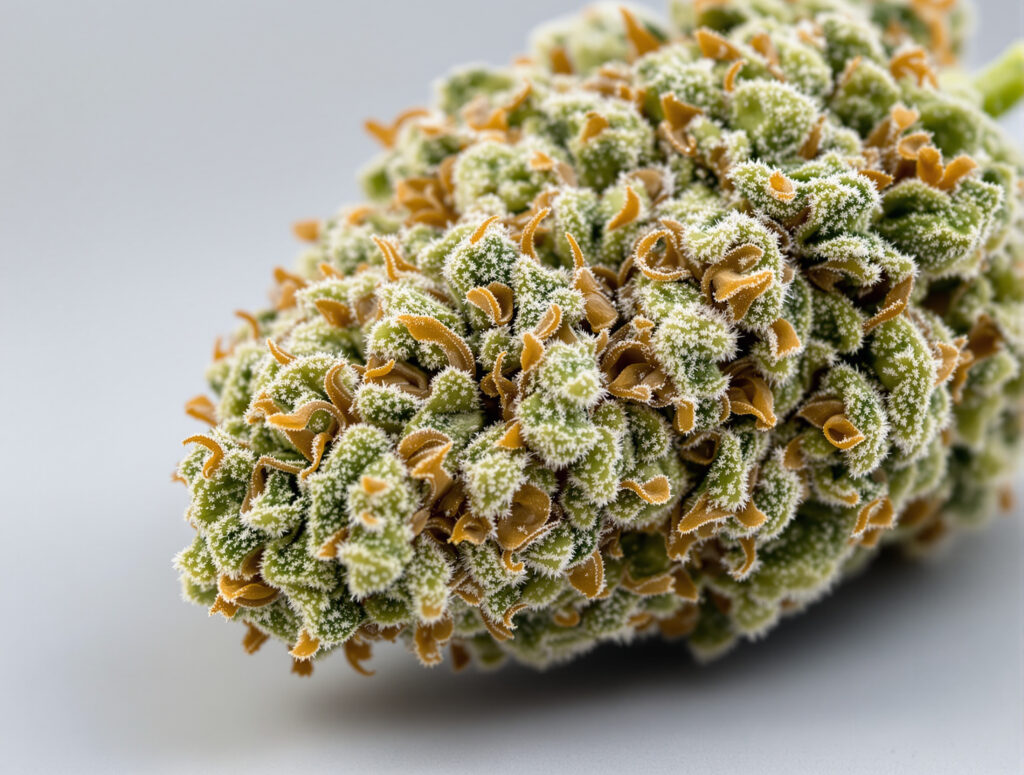
The quality of rosin first depends on the starting material. Basically, a distinction is made between flower rosin from dried buds and hash rosin from pre-sieved resin. For flower rosin, dense, well-ripened buds work best, because loose or degraded material yields significantly less. The residual moisture is also crucial, because material that is too dry barely flows and material that is too wet becomes watery.
This is why careful preparation of the flowers is so important. Those who have properly dried their harvest and fermented it for several weeks will press noticeably better rosin. For details on how this works, see our guide to harvesting, drying, and curing cannabis. An ideal relative humidity of the material is around 55 to 62 percent, because the resin then flows out smoothly enough.
Hash rosin delivers even purer results. First, kief—sieved trichome powder—or bubble hash from an ice water extraction is made, and only then is it pressed. Because much plant material has already been removed, the yield per gram is higher and the end product is lighter. Those seeking a connection to classic hashish can understand hash rosin as its concentrated, solvent-free evolution.
Making Rosin Yourself: The Right Equipment
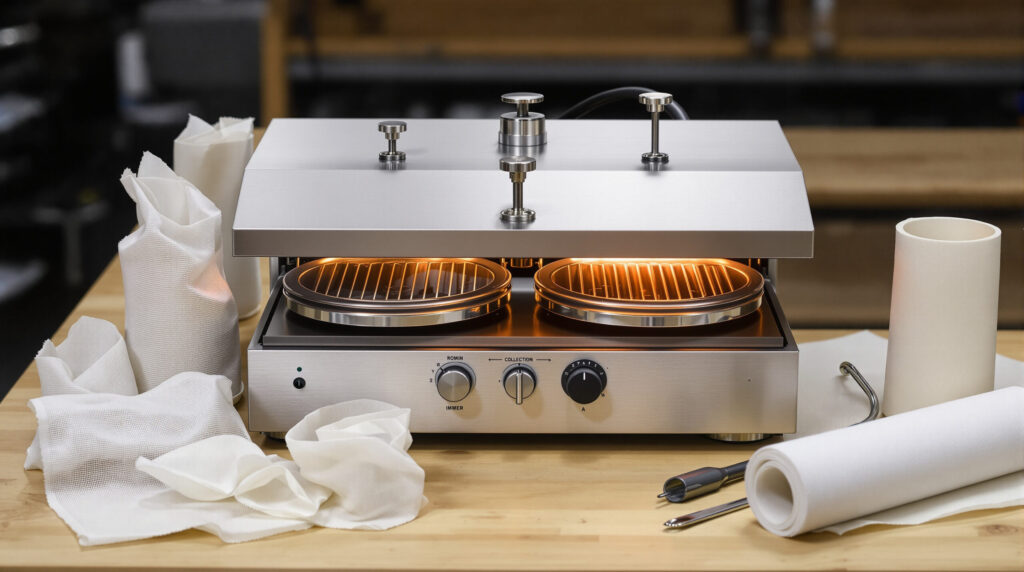
The centerpiece is the rosin press. For beginners, there are compact tabletop devices with two heated plates and a lever or screw mechanism. More important than the raw wattage is even heat distribution and precise temperature control, because only this ensures reproducible results. Those who regularly press larger quantities opt for hydraulic or pneumatic presses with multiple tons of pressure.
In addition to the press, you need so-called rosin bags. These are fine nylon pouches that enclose the plant material and trap particles. Their mesh size is given in microns. For flowers, 90 to 120 microns have proven effective, while for finer kief or bubble hash, 25 to 75 microns make sense. A finer mesh holds back more plant residue but can clog with coarser material.
You’ll also need heat-resistant baking paper made from unbleached parchment, a metal collection spatula, and ideally a small precision scale. For clean work, also have a silicone mat and a pair of heat-resistant gloves ready. The entire basic equipment is manageable, which is one reason why rosin has become so popular among home growers.
Step by Step: How to Press Rosin Correctly
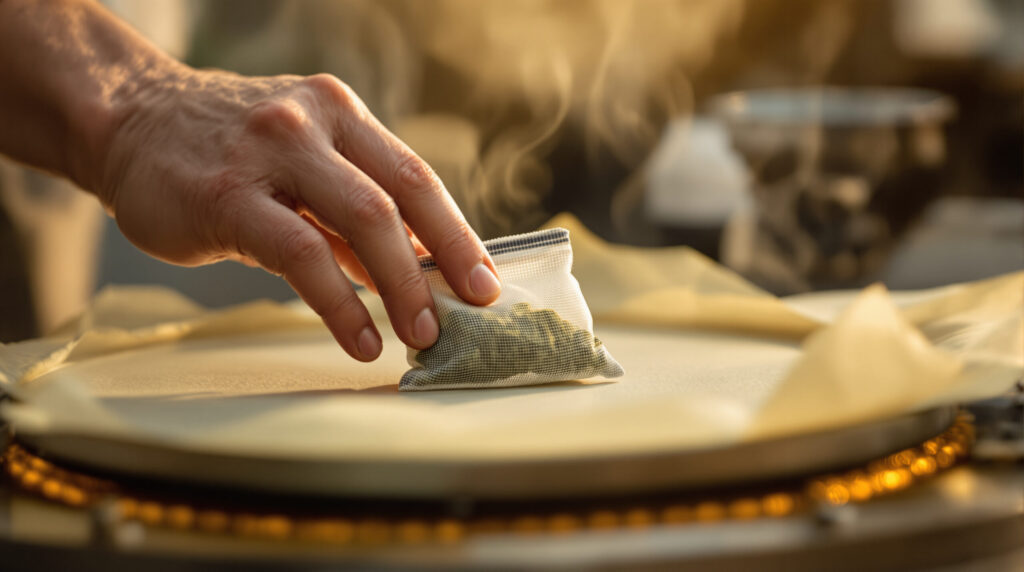
First, weigh your material and loosely fill it into an appropriately sized rosin bag. One to two grams of flowers per pressing is a good starting point. Fold the paper so that the emerging rosin lands cleanly on the parchment surface and doesn’t run off to the sides. Then place the filled bag in the center between the two plates.
Temperature is the most important control. For flowers, the range is usually between 90 and 120 degrees Celsius. Lower temperatures preserve more terpenes and result in a lighter, more aromatic product, while higher temperatures increase yield but compromise flavor. For hash rosin, often just 70 to 90 degrees is sufficient, since the resin is already prepared.
Now slowly build up pressure. Don’t press abruptly; instead increase the force over several seconds so the resin flows out evenly. Press time for flowers is usually between 45 and 90 seconds, often shorter for hash. Once no more oil is visibly emerging, release the pressure. Carefully fold the paper open and gather the still-warm rosin with the spatula.
Finishing, Storage, and Consumption
Freshly pressed rosin is initially thin and aromatic. If you want to change its consistency, there are two common techniques. With whipping, the warm rosin is beaten with the spatula until it develops a creamy texture. With cold curing, by contrast, you store it airtight at cool temperatures, where it develops a butter-like structure after a few days and becomes even more stable.
For storage, a small silicone or glass container kept cool, dark, and airtight works well. This preserves color, aroma, and potency for weeks. Heat and light are the biggest enemies, as they break down terpenes and darken the concentrate. A place in the refrigerator is ideal for longer storage.
Rosin is typically consumed by vaporizing at low temperature, such as in a suitable vaporizer or when dabbing cannabis extracts. Gentle vaporization in particular preserves the complex terpene profile that makes rosin so valued. The interplay of cannabinoids and terpenes creates the oft-cited entourage effect.
Common Mistakes and Safety Notes
The most common beginner mistake is setting the temperature too high. If you set the plates too hot, you burn the delicate terpenes and get a dark, harsh product. A second classic error is starting material that’s too dry and yields little oil. In this case, it helps to let the flowers rest briefly in an airtight jar with a humidity pack before pressing.
Caution applies even with the solvent-free method, as the plates become very hot. Heat-resistant gloves and a stable, heat-proof work surface are essential. Rosin itself is residue-free, but the quality of the concentrate can never be better than that of the starting material. Contaminated or moldy flowers should never go into the press, as pollutants would concentrate in the final product.
Frequently Asked Questions
Is making rosin yourself legal?
That depends on the starting material. Since the Cannabis Act, adults in Germany can legally possess a limited amount from home cultivation. Processing a concentrate from legally grown material exists in a legal gray area and should always stay within applicable possession limits. Processing from illegal material remains criminal.
What temperature is best for rosin?
For flowers, the typical range is between 90 and 120 degrees Celsius. Lower temperatures preserve more terpenes and result in lighter, more aromatic rosin. Higher temperatures increase yield but sacrifice flavor. Hash rosin often succeeds at just 70 to 90 degrees.
How much rosin do I get from one gram of flowers?
Yield varies greatly depending on strain and quality. With good flowers, yields of about 15 to 25 percent of the starting weight are realistic. High-quality bubble hash as starting material can achieve significantly higher values, since much plant material has already been removed.
Do I absolutely need an expensive press?
For beginners, a compact tabletop press with even heat and good temperature control is sufficient. Makeshift solutions using a hair straightener do produce initial results but are difficult to control and rarely yield clean rosin. Those who press regularly benefit from a genuine rosin press with defined pressure.
How long does homemade rosin keep?
Hast du schon einmal Rosin selbst gepresst?
Stored cool, dark, and airtight, rosin remains stable for several months. Refrigeration extends shelf life further. Heat and light degrade terpenes and darken the concentrate, making it less aromatic, so careful storage is critical.







Branchen-Update
News, Analysen und Reportagen — mehrmals im Monat direkt in dein Postfach.
Folge uns