For decades, hemp was barely found on German supermarket shelves. Today, hemp seeds are in muesli, hemp oil in salad bowls, and hemp protein in sports shakes, and rightfully so. For hardly any plant offers as balanced a nutritional profile as Cannabis sativa in its industrial hemp form. Those who discover hemp food products embark on a path that unites health and enjoyment without needing to compromise.
📑 Inhaltsverzeichnis
- What makes hemp foods so special?
- Hemp seeds: The nutrient-rich foundation
- Hemp oil health: The green gold of the kitchen
- Hemp protein: Plant-based power for muscles and recovery
- The entire product range: from hemp flour to hemp milk
- Buying, storing, and using correctly
- Frequently asked questions
- 💬 Fragen? Frag den Hanf-Buddy!
This guide is the central reference for everything you need to know about hemp as a food. From nutrient-dense hemp seeds through versatile hemp oil to hemp protein, hemp flour, and hemp milk: we cover the entire product range, explain how the contained ingredients work, and show you how to meaningfully integrate hemp foods into your daily life. One thing is certain: the hype around hemp as a superfood is not a marketing promise, it is nutritional science.
Here we are not talking about cannabis in the sense of THC or intoxication. Industrial hemp foods contain virtually no THC, lie well below legal limits, and are freely available for purchase. What distinguishes them are their nutrients, their origin, and their sustainability.


What makes hemp foods so special?
The special quality of hemp as a food lies in a combination that is rare in the plant world: a complete amino acid profile, an almost ideal fatty acid ratio, and a remarkable variety of vitamins and minerals, all in a single plant. While many superfoods excel in only one area, hemp delivers on multiple levels simultaneously.
Hemp as food is no invention of modern times. Archaeological finds show that hemp seeds served as a staple food in China over 3,000 years ago. In Europe, hemp was an important crop for centuries, providing fibers for ropes and textiles while simultaneously serving as a food source. The 20th century, with its drug laws, interrupted this tradition, but today it is making a comeback, this time with the tailwind of nutritional science.
There is also the ecological aspect. Hemp grows quickly, requires little water, typically needs no pesticides, and improves the soil in which it is rooted. In a time when the origin of food is increasingly coming into focus, this is no insignificant factor. Those who eat hemp are also choosing more sustainable agriculture.
Finally, hemp is one of the few plant-based foods that naturally contains gamma-linolenic acid (GLA), a rare omega-6 fatty acid that is often underrepresented in Western diets. Combined with the other ingredients, this creates a profile that is gaining increasing recognition in modern nutritional science.
The hemp food industry has gained enormous profile in recent years. Small mills and organic producers built the market, and today there is hardly a health food store without hemp products. For more on why hemp as a superfood has nothing to fear in comparison with chia, quinoa, and others, check out our article Hemp as a Superfood: Nutritional Physiological Benefits.
Hemp seeds: The nutrient-rich foundation
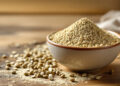
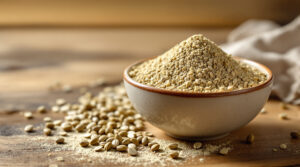
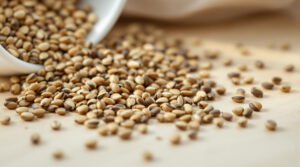
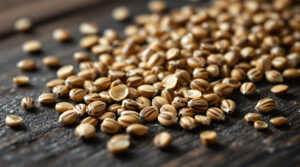
To understand hemp foods, start with the hemp seed. It is the foundation for all further products—hemp oil is pressed from it, hemp protein is extracted from it, and hemp flour is milled from it. At the same time, the hemp seed itself is a complete food that shines raw, roasted, or as an ingredient.
In 100 grams of hemp seeds, there are around 32 grams of protein, which corresponds to a protein content that is surpassed by few plant-based sources. What matters is not just the quantity but the quality: hemp seeds contain all nine essential amino acids—those that the body cannot produce itself and must obtain from food. This makes hemp seeds a complete protein source, which is far from standard for plant-based foods.
Particularly noteworthy is the content of arginine and glutamic acid, two amino acids that play an important role in heart health and the immune system. Arginine is the precursor to nitric oxide, which relaxes blood vessels and positively affects blood pressure. For those who want or need to avoid animal proteins, hemp seeds provide one of the most reliable plant-based alternatives available.
The fatty acid pattern of hemp seeds underscores their value. The ratio of omega-6 to omega-3 fatty acids is around 3 to 1 to 4 to 1, which the German Society for Nutrition considers favorable. In a Western diet that often features ratios of 10 to 1 or worse, this is a relevant correction. Additionally, hemp seeds provide alpha-linolenic acid (ALA), an essential omega-3 fatty acid, as well as the rare gamma-linolenic acid (GLA).
Another advantage is digestibility. The main protein of hemp seeds is edestin, a globulin that is structurally similar to human blood plasma and is therefore particularly easily absorbed. Together with albumin, the second main protein, hemp seeds achieve bioavailability that exceeds many other plant-based protein sources. This is particularly relevant for people with sensitive digestive systems, for whom legumes or soy products can be problematic.
In terms of minerals and vitamins, hemp seeds impress with magnesium, zinc, iron, phosphorus, and potassium, as well as vitamins E and B1. Three tablespoons of hulled hemp seeds per day, approximately 30 grams, provide about 10 grams of protein and cover a noticeable portion of daily magnesium needs. For more on the benefits for people who don’t eat meat, read our article on nutrient-rich hemp seeds: food for vegetarians.
Hemp oil health: The green gold of the kitchen
Hemp oil is the best-known hemp food product and at the same time the one with which most people have questions. Is hemp oil healthy? What distinguishes it from other plant oils? And what is it suitable for in the kitchen? The answers are consistently positive, with one important caveat we’ll address.
Hemp oil is obtained through cold pressing from hemp seeds. The characteristic green color, which comes from chlorophyll, is retained, and the typical nutty-grassy aroma that clearly distinguishes the oil from olive oil or rapeseed oil remains. The content of polyunsaturated fatty acids is over 80 percent and thus higher than in almost any other cooking oil. Cold pressing is not just a quality mark on the label but a prerequisite: refined or hot-pressed hemp oil loses much of its valuable constituents and hardly differs from commercial cheap oils.
The fatty acid ratio of omega-6 to omega-3 in hemp oil is about 3 to 1, which is considered nutritionally near-optimal. By comparison, sunflower oil has a ratio of 120 to 1, corn oil about 60 to 1. A favorable omega ratio has an anti-inflammatory effect, which in practice means that regular hemp oil consumption can dampen chronic inflammatory processes in the body. People with arthritis, atopic dermatitis, or other inflammatory conditions report positive effects, even though larger long-term studies for specific disease patterns are still pending.
Vitamin E is present in hemp oil in relevant amounts. It acts as an antioxidant, protects cells from oxidative stress, and is significant for skin health. In external application, hemp oil is therefore also used in cosmetics—it absorbs quickly, does not feel greasy, and is suitable for dry and sensitive skin.
For the kitchen, one decisive rule applies: hemp oil is not a cooking oil. It has a low smoke point and changes its valuable fatty acids into undesirable compounds when exposed to heat. Hemp oil belongs drizzled over finished dishes, in salads, soups, or smoothies, not in the pan. Two to three tablespoons daily are considered a sensible dosage. For more details on the constituents, our article Hemp Oil: What’s In It and Why You Should Have It at Home provides an in-depth analysis.
Quality plays a major role when purchasing. Good hemp oil is cold-pressed, bottled in dark glass bottles, and should be stored cool and protected from light. Since polyunsaturated fatty acids quickly oxidize, an open hemp oil should be used within four to six weeks. Those who look for organic seals reduce the risk of pesticide residues, which can concentrate especially in oil.
Hemp protein: Plant-based power for muscles and recovery
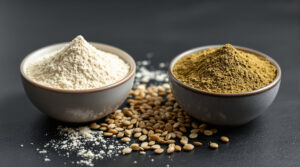
Hemp protein is the product that remains after hemp oil is pressed: the de-oiled hemp cake is ground into a fine powder. Depending on production, this powder contains between 45 and 55 percent protein and is considered one of the most valuable plant-based protein powders on the market.
The decisive difference from other plant proteins like pea protein or rice protein is the amino acid profile. Hemp protein contains all essential amino acids in a composition that closely matches human requirements. Particularly the branched-chain amino acids (BCAAs)—leucine, isoleucine, and valine—are of interest to athletes: they are largely responsible for muscle building and recovery after training.
What sets hemp protein apart from other protein powders is its accompanying substance profile. Unlike whey protein or isolated soy protein, hemp protein brings fiber, essential fatty acids, and minerals along with it. A shake based on hemp protein is therefore not just a protein source but a nutrient package. The taste is mildly nutty, earthier than many isolated protein powders, which fans appreciate while others find it requires adjustment.
For vegans and vegetarians who want adequate protein intake, hemp protein is a particularly attractive option because it fills the gap that many plant-based proteins with incomplete amino acid profiles leave behind. A detailed look can be found in our article Hemp Protein: Why Is It So Healthy?.
In practice, hemp protein integrates easily into smoothies, yogurt, porridge, or baked goods. When worked into pancakes or bread, you get a depth of flavor that surprises many. A serving of 30 grams of hemp protein per day is a sensible starting point; the exact amount depends on body weight, training goal, and overall diet.
The entire product range: from hemp flour to hemp milk
Hemp seeds, hemp oil, and hemp protein are the core products, but the range extends far beyond. Hemp flour, hemp milk, hemp tea, and various processed products have become established in recent years and offer something for every diet.
Hemp flour is created as a byproduct in hemp protein production or through direct grinding of seeds. It contains less protein than hemp protein powder but more fiber and a nutty aroma that makes it interesting for baked goods. As a complete replacement for wheat flour, it is not suitable because hemp flour contains no gluten and thus cannot build gluten structure. But combined with gluten-containing flours or alternatives like buckwheat flour, you can bake wonderfully.
Hemp milk has gained popularity in recent years as a plant-based milk alternative. It contains less protein than soy or oat milk but excels with its fatty acid pattern and nutty-mild flavor, which works well in coffee and breakfast cereals. How to integrate it into daily life is described in our article Hemp Milk in Daily Life: From Breakfast to Cappuccino.
Hemp hearts, or hulled hemp seeds, are the simplest entry into the world of hemp foods. They can be sprinkled over salads, added to muesli, stirred into yogurt, or eaten directly. Their flavor is mildly nutty, their texture soft, their nutrient density impressive. For anyone trying hemp foods for the first time, hemp hearts are the ideal first stop.
Hemp tea also deserves mention, even though nutritionally it does not compete with hemp seeds or hemp oil. It is brewed from hemp leaves, hemp flowers, or hemp stems and contains neither relevant amounts of protein nor fatty acids, but rather terpenes and plant secondary compounds that can have relaxing effects. As an evening beverage, hemp tea has a small but loyal fan base. When purchasing, quality control is important, as cheap hemp tea often consists mainly of stems with minimal active ingredient content.
Processed products such as hemp bars, hemp beer, hemp pasta, and hemp chocolate have also found their market. They should not primarily be seen as nutrient bombs but as a way to experience hemp as a culinary delight. Quality varies widely depending on how much actual hemp is in the product.
Buying, storing, and using correctly
Hemp foods are not complicated, but a few basic rules when buying and storing ensure that valuable constituents are preserved and enjoyment is maximized. Once you understand what matters, you’ll intuitively buy correctly in the future and avoid the most common mistakes that undermine the benefits of these products.
When purchasing, it is worth looking at the origin. European hemp, ideally from organic cultivation, is subject to strict regulations regarding THC content and cultivation standards. Hemp certified in Europe under EU law typically contains less than 0.3 percent THC in the raw material; in food products made from it, the THC content is even lower and far below any psychoactive effectiveness.
Storage is an issue for all hemp foods. Since polyunsaturated fatty acids are sensitive to light, heat, and oxygen, the rule is: hemp oil in the refrigerator after opening, hemp seeds and hemp protein in a cool, dry, and dark place. Opened packages should be used quickly. Those who buy larger quantities can easily freeze hemp seeds without loss of quality.
Starting dosage for newcomers: one tablespoon of hemp oil daily, a handful of hemp hearts over breakfast, a shake with hemp protein after exercise. Those who regularly consume hemp foods often notice changes within a few weeks, whether in skin quality, digestion, or energy after training. This is not magic, this is biochemistry.
Those who sensibly combine hemp foods get the best results. Hemp oil over salads or smoothies, hemp hearts as a topping on soups and bowls, hemp protein in a post-workout shake: each of these products has its natural place in the diet. Combining multiple hemp products is not overkill but enables a broad nutrient spectrum from a single source. Once someone has started with hemp foods, they usually find that the entry was easier than expected.
Frequently asked questions
Is hemp oil really healthy, or is it just a trend?
From a nutritional science perspective, hemp oil is indeed a valuable food. Its content of polyunsaturated fatty acids, the favorable omega-6 to omega-3 ratio of about 3 to 1, and the antioxidants it contains such as vitamin E set it apart from many other cooking oils. Whether regular consumption heals or prevents specific diseases remains to be determined by reliable long-term studies. As part of a balanced diet with high-quality fats, hemp oil is clearly among the sensible additions.
Can I get high from hemp foods?
No. Industrial hemp used for food contains virtually no THC. Hemp varieties approved in the EU may contain a maximum of 0.3 percent THC in the raw material; in processed products, the content is substantially lower. The amounts found in hemp oil, hemp seeds, or hemp protein are far below any psychoactive threshold. With regular consumption of large quantities, such as several liters of hemp oil daily, theoretically measurable THC values in the blood could occur, but this is not practically relevant.
For whom are hemp foods particularly suitable?
Hemp foods fit into any diet in principle but are particularly interesting for people who eat plant-based and seek a complete protein source, for athletes who want to optimize muscle building and recovery, and for everyone who wants to improve their fatty acid profile and integrate anti-inflammatory food components. People with gluten intolerance also benefit, as hemp products are naturally gluten-free, as long as they are not processed in facilities that also process wheat.
What is the difference between hemp oil and CBD oil?
This is a common question and the confusion is understandable. Hemp oil as food is pressed from the seeds of the hemp plant and contains hardly any cannabinoids. CBD oil, on the other hand, is extracted from the flowers and leaves of the hemp plant and contains cannabidiol (CBD) as a targeted active ingredient. Hemp oil is a cooking oil prized primarily for its fatty acids and nutrients. CBD oil is a dietary supplement with specific efficacy claims. The two products have different applications and should not be equated.
How much hemp oil should I take daily for it to be healthy?
Verwendest du bereits Hanf-Lebensmittel in deiner Ernährung?
Nutrition experts generally recommend one to two tablespoons of hemp oil daily, which equals 15 to 30 milliliters. This amount provides a meaningful dose of omega fatty acids without overloading your total calorie balance. Those who combine multiple oils in their diet, for example hemp oil for salads and olive oil for Mediterranean dishes, benefit from a broader fatty acid spectrum. Like any oil, hemp oil is energy-dense, around 900 calories per 100 grams, and should be viewed as a valuable component of a balanced diet, not as an unlimited-consumption miracle substance.






Branchen-Update
News, Analysen und Reportagen — mehrmals im Monat direkt in dein Postfach.
Folge uns