
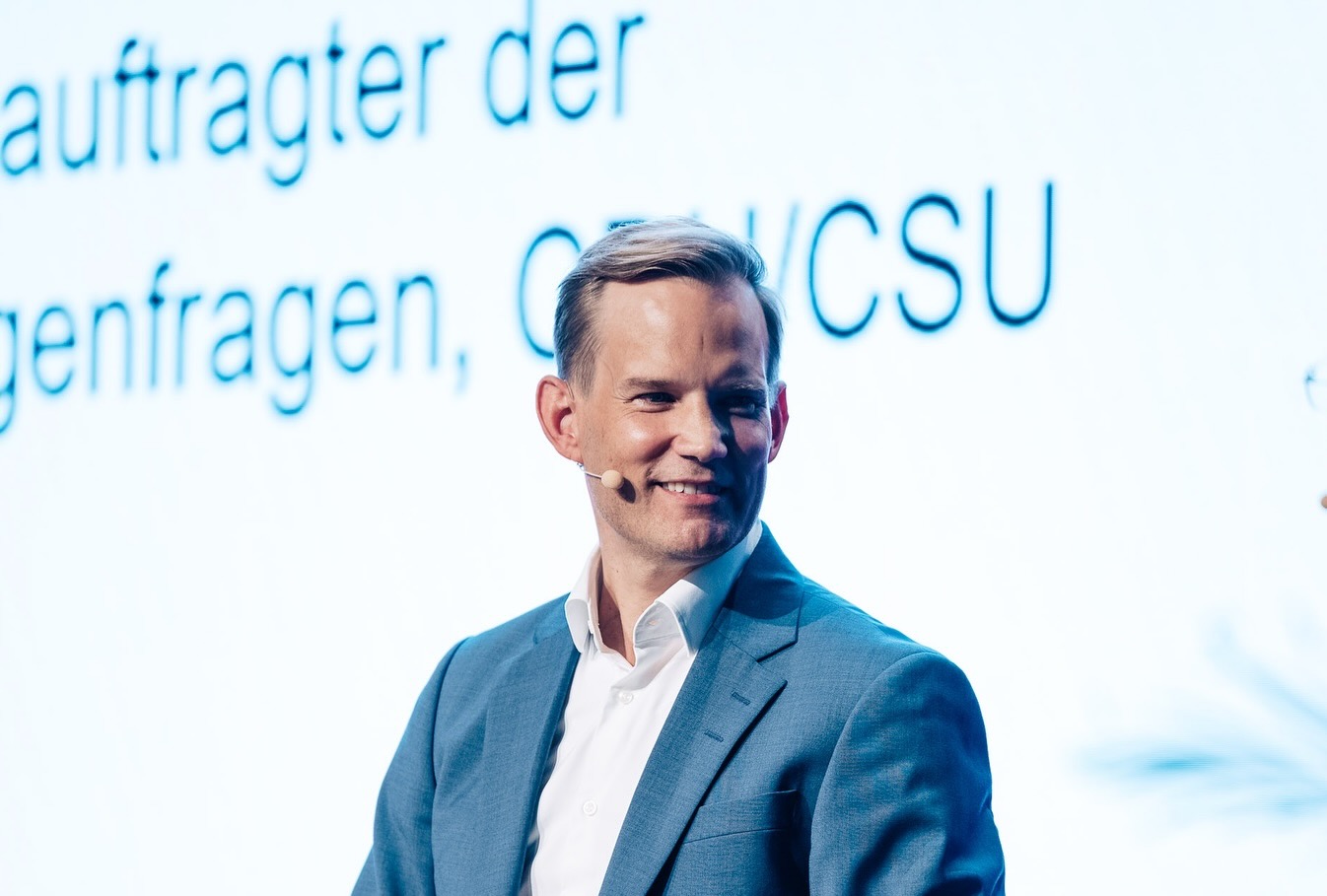
German drug commissioner Hendrik Streeck (CDU) recently gave an interview to the FAZ in which he expressed criticism of the current cannabis law and demanded several tightening measures. In particular, the current handling of medical cannabis came under fire – described as a makeshift solution that only exists because licensed specialty shops have yet to be approved and cultivation associations are being actively sabotaged.
📑 Inhaltsverzeichnis
Despite the restrictive CDU party line, Streeck, unlike his predecessors, advocated for harm reduction through drug checking and emphasized not wanting to push recreational consumers back to the black market.
„Misuse“ of Medical Cannabis
Like Nina Warken, Hendrik Streeck opposes online prescriptions and pointed out that imports of medical cannabis have increased by 430 percent as a result of this practice. Streeck referred to „dealers in white coats“ in this context and wants to crack down on online prescriptions. He cited a bill recently approved by the cabinet by Nina Warken, which still needs to be passed by the Bundestag. Streeck emphasized that this draft should be critically reviewed to reliably close any loopholes.


„Dealers in white coats“ have always been doctors in a figurative sense: benzodiazepines, opioids, and many other medications are nothing more than hard drugs – packaged in colorful wrapping. In fact, cannabis ranks among the safest substances that can be prescribed. According to the drug commissioner, cannabis should in the future only be prescribed for a few diseases with sufficient scientific evidence of its efficacy – a statement that does not reflect the current state of research. The list of diseases for which cannabis can provide at least some relief is long.
The possibility of restricting medical cannabis exclusively to oral finished products such as capsules was also raised. However, this overlooks the fact that many patients depend on rapid onset of action, which can only be achieved through inhalation. Furthermore, finished pharmaceutical products, which mostly contain isolated single active ingredients, lose the so-called entourage effect – the interplay of various active substances that enhances the overall effect of the plant.
Intoxicating Drugs and Cell Toxins
The interview also discussed the precise meaning of the term „drug“ – with the result that strictly speaking, coffee and valerian are also drugs. At the same time, Streeck noted that the correct designation should actually be „intoxicating drug“ – a formulation that in the context of cannabis recalls a long-outdated prohibition ideology.
The discussion about the unequal treatment of cannabis compared to alcohol was, as expected, characterized by ideological views. Using the argument that alcohol is also a cell toxin, cannabis was indirectly labeled as such – which is scientifically incorrect. Furthermore, it was claimed that alcohol cannot, unlike cannabis, trigger mental illness, which also does not correspond to the facts. On the contrary: there are a whole range of psychiatric disorders directly linked to alcohol consumption. Alcohol, which is actually a cell toxin, can demonstrably cause serious brain damage.
Pushing Back the Black Market
Although the interview indicated that the cannabis law would not be completely reversed, further restrictions are to be expected. According to the drug commissioner, three plants per household and 25 grams while out are too large an amount for personal use. He spoke of a „dealer quantity“ that makes it difficult for police to distinguish consumers from dealers. At the same time, he pointed out that five million regular consumers need to be provided with legal access.
Unlike his predecessors, Streeck advocated for drug checking. Since consumption can never be completely prevented, he cited drug checking as an appropriate means to make consumption as safe as possible – particularly with novel synthetic drugs that are increasingly appearing on the black market.
The declining consumption among adolescents was also discussed. Streeck, however, called this a questionable success and attributed it to the fact that fewer teenagers are being caught by police since cannabis consumption is no longer a criminal offense. As a result, teenagers are no longer automatically referred to addiction services and consequently no longer appear in the statistics.
Streeck announced that the CDU will revise the existing cannabis law once more.
Photo credit: https://www.facebook.com/hendrikstreeck/photos/




Branchen-Update
News, Analysen und Reportagen — mehrmals im Monat direkt in dein Postfach.
Folge uns