CBD has evolved over recent years from a wellness trend into a established tool in athletic routines. Professional athletes, ambitious recreational runners, and strength athletes alike report that cannabidiol supports recovery, helps manage inflammatory responses, and addresses acute pain. The body of research in 2026 is significantly more robust than it was five years ago, yet the field remains complex: dosage, delivery method, and WADA status determine whether CBD truly works in a training plan. This guide contextualizes key findings and shows what athletes should consider when getting started.
📑 Inhaltsverzeichnis
- How CBD Works in Athletic Routines
- Recovery After Intense Training Sessions
- Dampening Inflammation Without Blocking the Training Stimulus
- Pain Management: Salve, Oil, and Capsule
- WADA Regulations 2026 and the Risk of THC Contamination
- Practical Recommendations for Getting Started
- Frequently Asked Questions
- 💬 Fragen? Frag den Hanf-Buddy!
How CBD Works in Athletic Routines
Cannabidiol doesn’t act directly on muscle fibers; instead, it modulates the body’s endocannabinoid system. This network of receptors, endogenous signaling molecules, and enzymes regulates pain perception, sleep architecture, mood, and inflammatory responses. Unlike THC, CBD doesn’t activate CB1 or CB2 receptors directly; rather, it influences them indirectly and also acts on TRPV1 channels, serotonin receptors, and the FAAH enzyme. This multitude of action points explains why CBD can work on multiple levels simultaneously in athletes.
Those interested in diving deeper will find a detailed explanation in our article on the endocannabinoid system. What matters most for athletic practice is that CBD is non-psychoactive. Reaction speed, coordination, and judgment remain unaffected, making cannabidiol—unlike THC—interesting for competition day.


Recovery After Intense Training Sessions
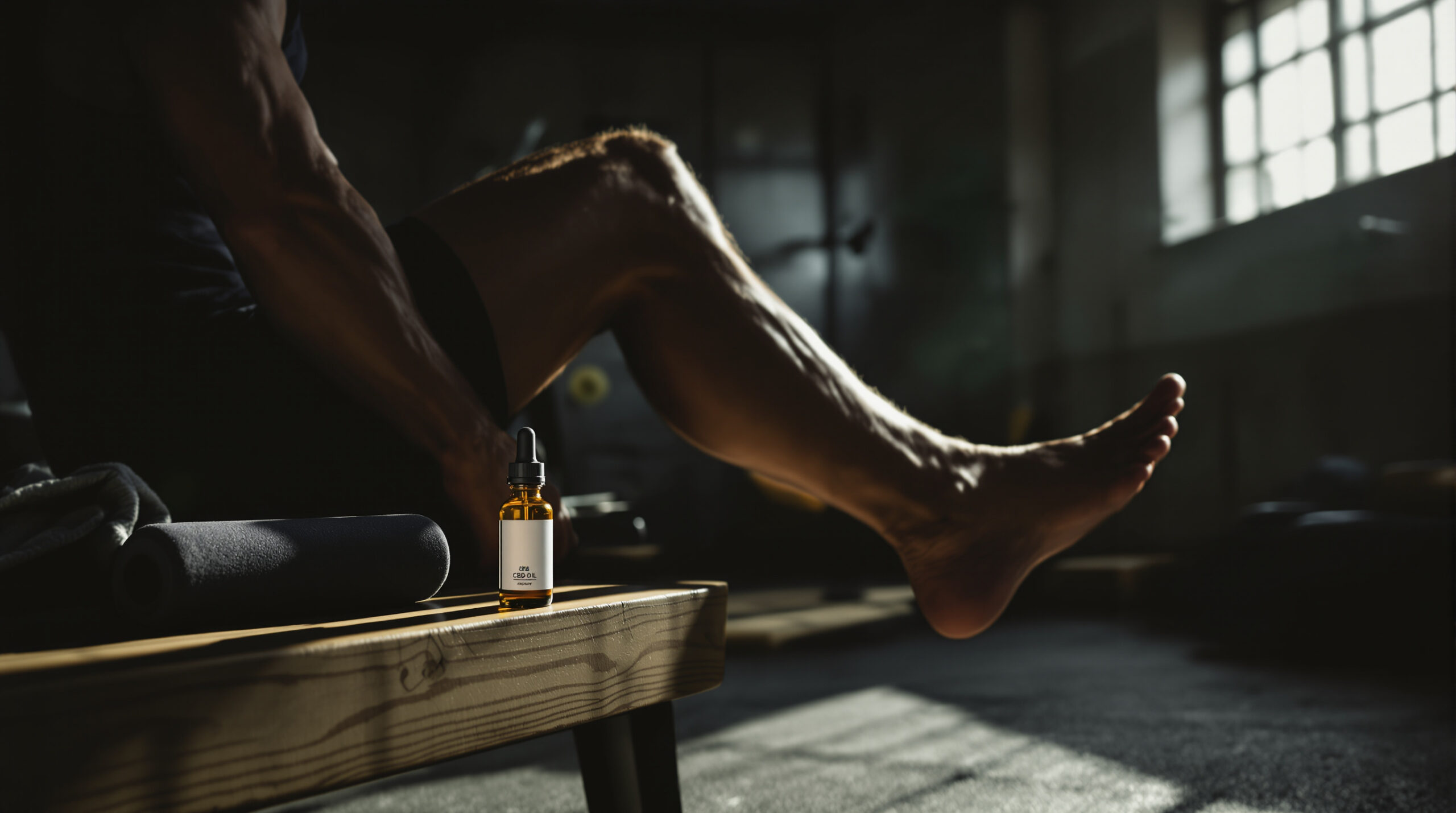
Recovery is the central lever in training. Athletes who recover faster can train more frequently and intensively. This is where the majority of studies on CBD in sports focus. A 2025 meta-analysis published in the Journal of the International Society of Sports Nutrition, evaluating eight studies with a total of 312 participants, shows several consistent effects. Markers for exercise-induced muscle damage, referred to as EIMD in technical terminology, dropped by an average of twelve to eighteen percent following CBD use. Subjective pain perception after intense sessions decreased by approximately twenty-two percent at a dosage of around 150 milligrams of CBD per day.
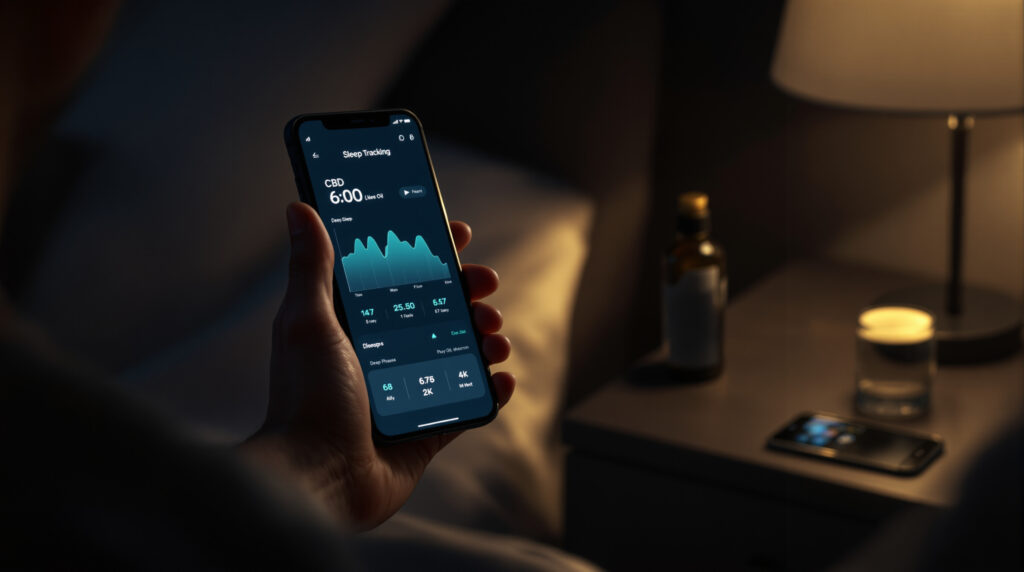
Particularly noteworthy is the effect on sleep. Endurance athletes in the evaluated studies reported deeper slow-wave sleep phases and shorter time to fall asleep. Since the majority of tissue recovery happens during deep sleep, CBD works here as an indirect recovery amplifier. Athletes who chronically undersleep lose the adaptive benefits of training. This leverage is precisely what makes cannabidiol so attractive for many athletes who must compensate for travel stress, competition anxiety, or simply late training sessions.
Dampening Inflammation Without Blocking the Training Stimulus
A controlled inflammatory response after hard training is desirable. It’s the biological trigger for muscle growth and adaptation. Suppressing this response entirely—for example through high-dose nonsteroidal anti-inflammatory drugs—sacrifices training progress. CBD behaves more subtly than a classic pain medication. Preclinical and initial clinical studies show that cannabidiol dampens pro-inflammatory messengers like TNF-alpha, interleukin-6, and the COX-2 enzyme, but doesn’t completely block acute inflammation.
In practice, this means: CBD shortens the inflammatory phase without eliminating it. The stimulus for adaptation remains intact, while noticeable side effects like muscle stiffness, dull pressure, or sleep disturbances become milder. For athletes who already rely on chronic ibuprofen use, CBD can be a meaningful supplement. We still recommend medical supervision, especially for pre-existing conditions and concurrent use of other medications.
Pain Management: Salve, Oil, and Capsule
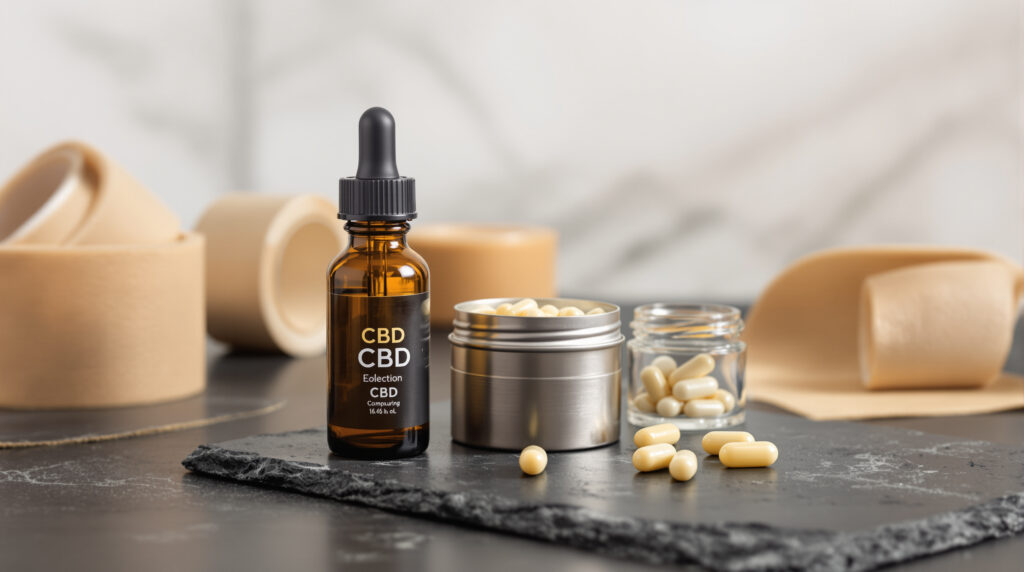
The delivery method determines how quickly and where CBD takes effect. In sports, three applications have become established: full-spectrum oil under the tongue, topical salve or gel on the affected joint, and capsules as a slow, steady-acting option. An overview of basic application is provided in our article Understanding CBD.
Oil under the tongue takes effect after roughly twenty to forty minutes and lasts four to nine hours. Salve or gel penetrates topically into tissue and barely enters the bloodstream, making it suitable for localized complaints at the knee, shoulder, or elbow. Capsules take longer but deliver more consistent drug levels and are more convenient for travel. For daily maintenance, doses between twenty-five and fifty milligrams of CBD have proven effective, with higher single doses around training sessions on intense days.
For chronic or stubborn complaints, it’s worth reviewing our article on CBD for chronic pain. For treating acute injuries, additional guidance is found in our piece on cannabis for sports injuries.
WADA Regulations 2026 and the Risk of THC Contamination
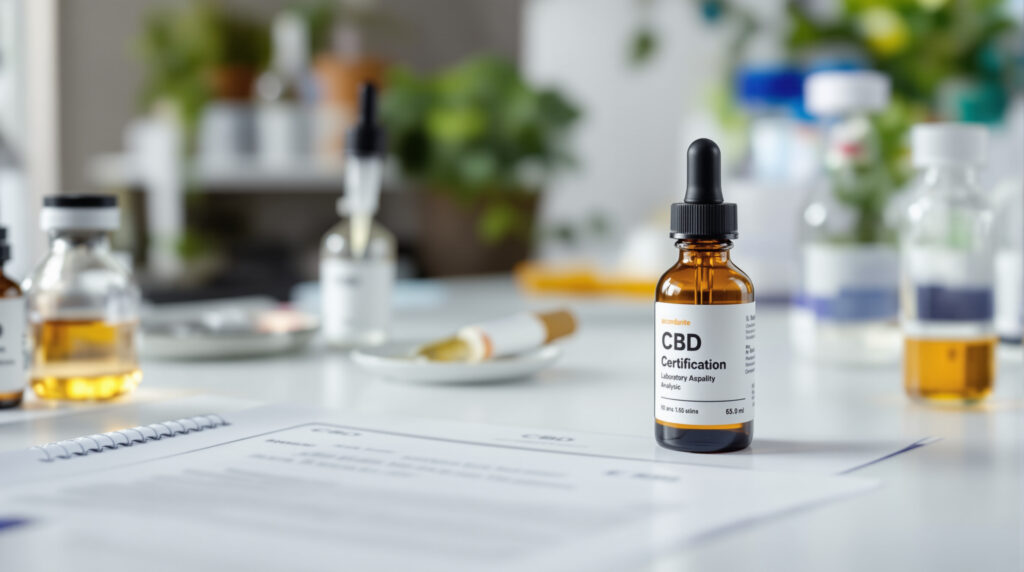
The World Anti-Doping Agency removed cannabidiol from the prohibited substances list in 2019. The 2026 Prohibited List changes nothing in this regard. CBD is permitted for professional athletes both in and out of competition. Pure cannabidiol triggers no positive test. Caution is warranted, however, because the problem isn’t the CBD molecule itself but the accompanying profile of certain products.
THC remains prohibited in competition, with a urine threshold of one hundred fifty nanograms per milliliter. Multiple laboratory analyses from recent years have demonstrated that a significant proportion of commercially available CBD oils contain THC traces not declared on the label. Someone consuming such a product daily over weeks can accumulate enough THC metabolites to test positive. WADA’s principle of strict liability offers little mercy here.
Professional athletes should use exclusively products tested to the Informed Sport or NSF Certified for Sport standard. These certifications document batch-by-batch that no THC and no other WADA-relevant substances are present. Recreational athletes without competitive ambitions don’t face this hurdle but should still pay attention to lab analyses and a complete cannabinoid profile.
Practical Recommendations for Getting Started
Those wanting to integrate CBD into their training routine should begin with a low dose and observe the response over two to three weeks. A starting dose of ten to twenty milligrams of full-spectrum oil in the evening is a good starting point. It allows assessment of effects on sleep and recovery without overwhelming the system. If needed, the dose can gradually be increased to up to fifty milligrams daily. Those specifically treating joint pain combine the oil with a topical salve on the affected area.
What remains important is a clear-eyed view of the research. CBD is no miracle cure that compensates for inadequate training or poor nutrition. It’s a tool that can deliver measurable benefit in a well-thought-out recovery plan. For comprehensive context, we recommend the main cluster article Cannabis and Sport: The Complete Guide, which covers additional aspects such as THC in sports, hemp protein, and the legal landscape.
Frequently Asked Questions
Is CBD Permitted for Athletes in Competition?
Yes, the World Anti-Doping Agency removed cannabidiol from the prohibited substances list in 2019. The 2026 WADA list does not include CBD. Pure cannabidiol is permitted in and out of competition. Caution applies only to inferior products that may contain undeclared THC traces.
How Quickly Does CBD Work After Training?
This depends on the delivery method. Full-spectrum oil under the tongue develops its effect after twenty to forty minutes. A capsule takes one to two hours but maintains its effect longer. Topical salve works locally within minutes at the applied site but barely enters systemic circulation.
What CBD Dosage Makes Sense for Athletes?
Research supports daily doses between twenty-five and one hundred fifty milligrams. For beginners, ten to twenty milligrams in the evening is recommended. Those noticing a clear effect can increase the dose on intense training days or during competition phases. Individual adjustment with a sports medicine physician is worthwhile.
Does CBD Really Help With Muscle Soreness?
Current meta-analyses show that CBD can reduce subjective pain perception after intense sessions by approximately twenty percent. Markers for exercise-induced muscle damage measurably decline. However, research on DOMS in humans is limited, with much data coming from animal models. CBD is not a miracle pill but can noticeably ease the course.
Is CBD Oil or Topical Salve Better for Athletes?
Nutzt du CBD bereits zur Regeneration nach dem Sport?
Both applications complement each other. Oil works systemically on sleep, stress, and inflammation. Salve or gel addresses locally stressed joints and muscle groups. In practice, many athletes combine daily oil as a foundation with targeted salve application to the most heavily loaded area. Based on reported experience, this combination delivers the most pronounced effects.





Branchen-Update
News, Analysen und Reportagen — mehrmals im Monat direkt in dein Postfach.
Folge uns