What the EFSA Has Now Evaluated
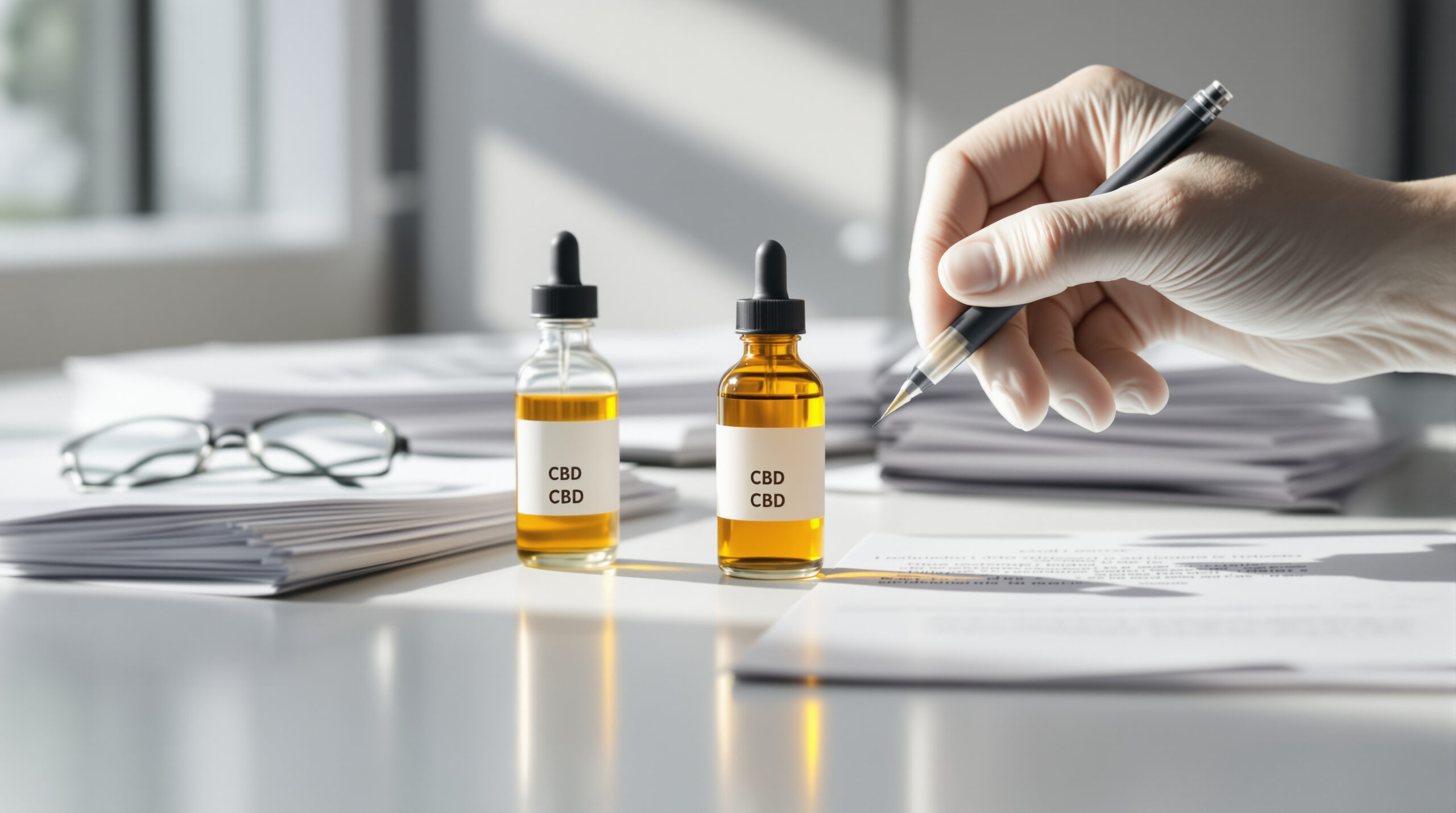
The assessment concerns a specific novel food application with the identifier EFSA-Q-2020-00257. According to the applicant manufacturer, the authority has produced a positive draft of its scientific opinion. Importantly, this is explicitly not a negative evaluation. The dossier has been substantively reviewed and recognized on its merits.
📑 Inhaltsverzeichnis
Context matters here. The draft remains under embargo and has not yet been officially published by the EFSA. Specific details on maximum levels, purity requirements, or permitted uses are not yet publicly available. Only with the official publication of the final opinion will the details become verifiable. Until then, the announcement remains credible but preliminary information from the authorization process.
The Long Standstill Since 2022
To understand the significance, it helps to look back. In 2022, the EFSA effectively stopped around 19 open CBD applications. The reasoning was that the safety of cannabidiol could not be definitively established with the available data. Outstanding concerns involved potential effects on the liver, hormone system, nervous system, and reproduction. For those wanting to understand what CBD actually is and how it works, our foundational article covers the key concepts.


Movement resumed only in February 2026. The EFSA established a provisional safe intake level of 0.0275 milligrams per kilogram of body weight per day. For a 70-kilogram adult, this equates to approximately 2 mg of CBD daily. This value is considered highly conservative because the authority applied a large uncertainty factor. For people under 25 years old, pregnant and nursing women, and individuals taking medications, the EFSA continued to find safety unproven.
What a Positive Opinion Means for the EU Market
A favorable EFSA opinion is not market authorization. However, it is the scientific foundation upon which the European Commission and member states will subsequently decide. If that decision is positive, the substance will be added to the Union list of approved novel foods. For the industry, this would be a turning point, as the first successful application demonstrates that the authorization pathway is fundamentally viable.
The news is particularly relevant for the German market. CBD dietary supplements have occupied a legal gray zone in Germany for years, from oils to water-soluble CBD formulations. Recently, regulation has intensified pressure. This includes France’s ban on CBD edibles and the controversial classification by the ECHA. A clear authorization pathway could finally provide manufacturers with planning security. The strength of benefit to individual companies is illustrated by the fact that a CBD company already received support from the Economic Ministry.
Assessment and Outstanding Questions
Despite justified relief, caution is warranted. A single positive opinion does not make CBD universally marketable across the EU. Every manufacturer must submit its own dossier and fill the known data gaps. The conservative dosage limits and exceptions for young and vulnerable groups also remain in place for now. The decisive next step is the official publication of the opinion and the subsequent political decision in Brussels.
Frequently Asked Questions
Is CBD as a food now approved in the EU?
No. A positive EFSA opinion is only the scientific assessment. The actual authorization is decided afterward by the European Commission and member states through inclusion in the Union list.
What does Novel Food mean for CBD?
Novel Food, or novel food, is an EU category for products without significant consumption history before 1997. CBD extracts fall into this category and therefore require a separate authorization procedure before they can be sold as food.
How much CBD does the EFSA consider safe?
In February 2026, the EFSA stated a provisional safe level of 0.0275 mg per kilogram of body weight per day. For an adult weighing 70 kilograms, this equals approximately 2 mg daily. This value is considered very conservative.
Why did the EFSA stop its review in 2022?
The authority identified significant data gaps. Outstanding concerns primarily involved potential effects on the liver, hormone system, nervous system, and reproduction. Without reliable studies, safety could not be conclusively assessed.
What is the next step in the process?
First, the EFSA must officially publish the final opinion. Only then can the Commission and member states decide on inclusion in the Union list. Only this step creates genuine legal certainty for manufacturers.
Sources: Cannabis Health News (15.07.2026), EFSA (Provisional safe level for cannabidiol as a novel food, 2026), Business of Cannabis.




Sollte CBD als Lebensmittel in der EU zugelassen werden?
Branchen-Update
News, Analysen und Reportagen — mehrmals im Monat direkt in dein Postfach.
Folge uns