
Since July 30, 2026, statutory health insurance no longer covers dried cannabis flowers. The first known court decision now shows how severely this cut affects existing patients. On August 21, the Social Court of Frankfurt am Main rejected an emergency motion from a seriously ill woman who has been treated with flowers for approximately three years and holds an unlimited approval from her insurance fund. The case number is S 14 KR 409/26 ER. We do not have the full text of the decision; the following account is based on the published summary of the court’s reasoning.
📑 Inhaltsverzeichnis
- Three Years of Therapy, Unlimited Approval, No Entitlement Anymore
- What Disappeared from Section 31(6) SGB V on July 30
- Why the Court Considers the Elimination Constitutional
- The Emergency Threshold Where the Emergency Motion Failed
- What the Decision Means for Other Existing Patients
- Frequently Asked Questions
- 💬 Fragen? Frag den Hanf-Buddy!
Three Years of Therapy, Unlimited Approval, No Entitlement Anymore
According to the court’s findings, the applicant suffers from a severe, therapy-resistant neurological disorder. There is no treatment corresponding to medical standards available to her. Cannabis-containing finished medicinal products are contraindicated in her case due to intolerance. She filed a request with her health insurance on July 21, 2026, to continue therapy because the statutory basis was about to change immediately. On July 27, she turned to the Social Court because the law could be announced at any time.
The figures in the proceedings illustrate the situation concretely. The applicant had a monthly supply of 120 grams remaining. At a price of 8.50 euros per gram, her monthly need amounts to approximately 1,020 euros. She receives basic subsistence benefits and cannot afford this amount. This exact situation—ongoing provision with unlimited approval and without an affordable alternative—was considered the hardship case in the legislative debate that a transitional provision should have addressed.


What Disappeared from Section 31(6) SGB V on July 30
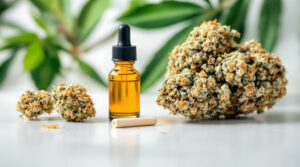
The trigger is the GKV Contribution Rate Stabilization Act of July 24, 2026, which has been in effect since July 30. Until then, Section 31(6) SGB V explicitly listed dried cannabis flowers as a benefit under the special cannabis entitlement. The current wording only recognizes cannabis extracts in standardized quality and medicinal products containing the active ingredients dronabinol or nabilon. The flowers have been eliminated without replacement. They remain prescribable and available through pharmacies, but only at private expense. We covered the Bundestag decision and the preference for finished medicinal products in our analysis on prescription coverage, and our article on the precarious reimbursement of extracts shows that these are not permanently secure either.
Critical to this case is one sentence from the decision: no transitional provision was created. This means that even an already-issued unlimited approval does not protect against the end of cost coverage. The legislature removed the benefit from the catalog, and the court sees no gap that it is permitted to fill.
Why the Court Considers the Elimination Constitutional
The Social Court conducted a summary review of whether the elimination violated fundamental rights and answered in the negative on three points. Neither the right to self-determination, nor the right to bodily integrity, nor the prohibition on discrimination against people with disabilities stands in opposition to the regulation. In its reasoning, the court relies on the case law of the Federal Constitutional Court. According to this, the legislature may structure the benefit catalog of statutory health insurance and thereby define what falls within the self-responsibility of the insured.
The decision explicitly states that the benefit catalog may also be influenced by financial considerations. In health care, the cost aspect carries considerable weight for legislative decisions. The funds are not constitutionally obligated to provide everything available to preserve health. Besides citing a savings potential of several million euros, the law’s statement of reasons offers two substantive arguments: greater addiction risk from inhaling flowers, particularly in long-term therapy, and the active ingredient fluctuations of a natural product.
This reasoning is not without opposition. Medical professional associations counter the addiction risk argument by noting that the form of administration alone says little about dependence risk and that inhalation is chosen for pain patients precisely because of rapid onset and better controllability. The argument about active ingredient fluctuations likewise targets a natural product whose content is standardized and tested in the pharmacy. For the court, this played no role because in emergency proceedings it does not examine the appropriateness of the decision, only whether it is constitutionally defensible. The objection remains relevant for political assessment.
The Emergency Threshold Where the Emergency Motion Failed
There remains the path through a direct constitutional entitlement to benefits. Case law grants this only exceptionally, namely in an emergency-like situation involving a life-threatening or predictably fatal illness. Typical features are acute time pressure and the absence of a standard treatment method. The court acknowledges the applicant’s illness as serious but does not classify it as life-threatening. She retains the option to try therapy again with cannabis-containing finished medicinal products.
This point reveals the actual hardship of the new legal situation. The applicant’s intolerance to finished medicinal products was her argument, and the court’s response directs her back to precisely these products. Anyone not suffering from a life-threatening illness currently has no lever in emergency legal protection. How differently medical practice positions itself on this is shown by the criticism of the prescription framework that we documented in our article on pain medicine physicians‘ demands.
What the Decision Means for Other Existing Patients
The decision is not final; an appeal to the Regional Social Court remains open. Moreover, it is a decision in emergency proceedings subject only to summary review. A main proceeding could reach a different conclusion, and the constitutional question is not thus conclusively settled. For practice, the signal effect is nonetheless significant. The fastest of the three legal attack routes we described in our overview of how the GKV flower ban is being challenged legally did not succeed on the first attempt.
The federal government sees it the same way. Parliamentary State Secretary Georg Kippels (CDU) has stated that following the entry into force of the Contribution Rate Stabilization Act, there is no protection for existing patients who received flowers at insurance expense before July 30; the exclusion of benefits also applies to ongoing therapies (according to a report from apotheke-adhoc). This means the Social Court’s interpretation stands alone: the court and ministry independently reached the same conclusion. For existing patients, this means that neither legal nor political correction is currently in sight.
For those affected, the question thus shifts from legal enforcement to supply planning. Anyone who previously received flowers on insurance prescription now faces a choice between switching to extracts, trying therapy again with finished medicinal products, or self-payment. The consequences of a predominantly privately financed market can be studied using the British example, where meanwhile 1.7 million prescriptions run almost entirely privately. The clarification from KBV and GKV-Spitzenverband recently specified which prescription pathways remain available in Germany.
Frequently Asked Questions
Does health insurance still cover cannabis flowers if I have unlimited approval?
According to the Frankfurt Social Court decision, unlimited approval does not protect against the end of cost coverage. The court bases this on the fact that the statutory entitlement basis has expired since July 30, 2026. No transitional provision for existing patients was created.
Which cannabis medicinal products remain reimbursable?
Section 31(6) SGB V in its current version lists cannabis extracts in standardized quality as well as medicinal products containing the active ingredients dronabinol or nabilon. Dried flowers have been removed from this list. They remain prescribable but are generally at the expense of patients.
Is the decision final?
No. The decision is not legally binding; an appeal to the Regional Social Court is possible. Moreover, this is an emergency proceeding with only summary review. A main proceeding could reach a different assessment.
When does a direct constitutional entitlement to benefits apply?
Case law permits it only in an emergency-like situation, that is, in the case of a life-threatening or predictably fatal illness without an available standard treatment. According to the Frankfurt decision, a serious but non-life-threatening illness is insufficient.
How does the legislature justify eliminating flowers?
The law’s statement of reasons cites a savings potential of several million euros for stabilizing contributions. Additionally, there is greater addiction risk from inhaling flowers, especially in long-term therapy, as well as active ingredient fluctuations in a natural product. Finished medicinal products and preparations are considered more highly standardized.
Sollte es eine Übergangsregelung für Bestandspatienten geben?
Sources: Social Court Frankfurt am Main, decision of August 21, 2026, case number S 14 KR 409/26 ER, reported via urteile.news; GKV Contribution Rate Stabilization Act of July 24, 2026; Section 31(6) SGB V in the version applicable since July 30, 2026 according to gesetze-im-internet.de; Hanfjournal of August 26, 2026; statement by Parliamentary State Secretary Georg Kippels according to a report from apotheke-adhoc.
Branchen-Update
News, Analysen und Reportagen — mehrmals im Monat direkt in dein Postfach.
Folge uns