
Since the partial legalization in April 2024, German animal clinics have reported a measurable increase in THC poisoning cases in dogs and cats. Individual emergency departments now report two to four cases per week, with significantly higher numbers in urban areas with high consumption. What remains a controlled enjoyment for humans can quickly become a medical emergency for four-legged companions.
📑 Inhaltsverzeichnis
- Why THC is more dangerous for animals than for humans
- Symptoms of THC poisoning in dogs
- Cats react differently and often more severely
- Where the greatest risks lurk in everyday life
- First aid, veterinarian, and treatment
- Prevention: How owners protect their animals
- Frequently asked questions
- 💬 Fragen? Frag den Hanf-Buddy!
The reason lies in the biology of the animals themselves. Dogs have a significantly higher density of CB1 receptors in the brain than humans, while cats break down the psychoactive intermediate 11-hydroxy-THC more poorly. Both species therefore react to amounts that would be harmless to an adult consumer with pronounced neurological symptoms. Those who legally keep cannabis at home therefore bear an additional responsibility.
This article clarifies the toxicological basics, describes typical poisoning patterns in dogs and cats, and shows how owners should respond correctly in emergencies. Those seeking a broader overview of the relationship between cannabis and pets will find a comprehensive guide with CBD and industrial hemp aspects here. For a deeper dive into the pharmacological mechanisms, our background article on how THC affects pets provides more information.


Why THC is more dangerous for animals than for humans
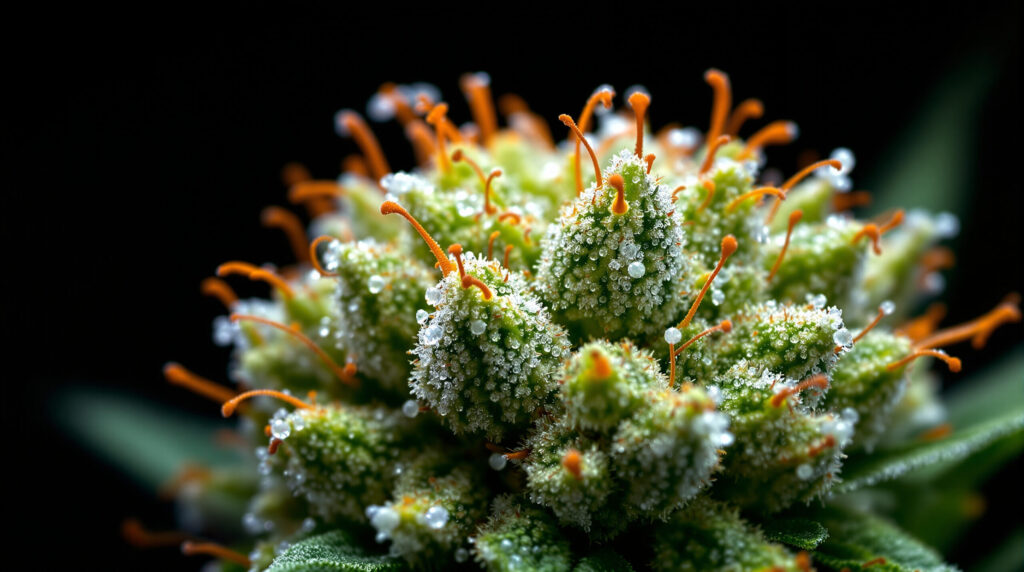
Dogs and cats, like humans, possess an endocannabinoid system with CB1 and CB2 receptors. However, in dogs, the receptor density in the cerebellum, brainstem, and areas controlling movement is significantly higher than in humans. This explains why even small amounts of THC can lead to severe balance disorders, apathy, and seizures.
Cats have a second complicating factor. Their liver lacks the enzyme complex UGT1A6, which is responsible for the glucuronidation of many foreign substances. This means cannabinoids are excreted more slowly and the active 11-hydroxy-THC circulates longer in the bloodstream. The acute effect phase can last 18 to 36 hours in cats, while dogs are usually completely sober after 24 to 72 hours.
The toxicological threshold is well below the lethal dose, which older animal studies with pure THC indicated at over three grams per kilogram of body weight. Clinically relevant effects occur from about 0.5 milligrams per kilogram. For a ten-kilogram dog, just five milligrams is enough to trigger noticeable symptoms. A single edible with 25 milligrams of THC is therefore far above the toxic threshold.
Symptoms of THC poisoning in dogs

Cannabinoid intoxication in dogs typically follows a characteristic pattern. First clinical signs usually appear one to three hours after oral ingestion, or within 30 minutes if the dog inhales smoke. Owners initially report restlessness, disorientation, and noticeable swaying while walking.
Typical neurological symptoms follow. The pupils dilate, dogs appear drowsy or show hypersensitivity to sounds and touch. Excessive drooling and involuntary urination are considered particularly reliable indicators. The latter symptom has even gained special significance in veterinary literature, as it rarely occurs with pure sedative poisoning.
Severe cases involve tremors, seizures, low body temperature, and in rare cases comatose states. Fatal outcomes are uncommon but occur with very small animals, very high doses, or combined poisonings. Cannabis edibles containing chocolate or xylitol are particularly dangerous because the toxicities add up.
Cats react differently and often more severely
Data on cats is scarcer, as they rarely deliberately seek out edibles. They usually come into contact with THC through secondhand smoke, discarded joints, or plant material on furniture. A nibbled flower bud or a crumb on the couch is enough to put a full-grown house cat into a hours-long intoxicated state.
The clinical picture resembles that of dogs, but is often more pronounced and longer-lasting. Typical signs include pronounced ataxia, dilated pupils, unusual vocalizations, and extreme light sensitivity. Some cats appear extremely withdrawn, while others show sudden fearfulness or aggressive reactions to familiar stimuli. Drooling and vomiting occur regularly.
Because the active metabolite remains in the blood longer, the course is more protracted. Veterinarians report cases where symptoms didn’t fully resolve until 48 hours later. Anyone observing a poisoned cat should document the suspected time of ingestion and not leave the animal alone. The pronounced movement disorder in particular can lead to falls from elevated resting places.
Where the greatest risks lurk in everyday life

The most common route of exposure is oral ingestion of cannabis edibles. Brownies, gummy bears, and cookies are extremely attractive to dogs by smell and often contain highly concentrated THC amounts per serving. A twelve-kilogram dog can suffer severe poisoning from just two pieces of chocolate brownie.
Unprocessed plant material also poses a risk. Dried flowers, trim, or home-pressed pollen are olfactorily attractive to dogs and are readily consumed. During walks, discarded joints—especially at bus stops, playgrounds, and in parks—are a frequent hazard. Professional veterinary associations have pointed multiple times since 2024 to the significant increase in such emergency cases following partial legalization.
An often underestimated risk is vaporizer liquids and concentrated extracts. These products sometimes contain THC levels of 70 to 90 percent. Just a few drops from a leaking tank are enough to cause massive overdosing. Secondhand smoke in poorly ventilated rooms also shouldn’t be underestimated, especially for house cats who can be continuously exposed.
First aid, veterinarian, and treatment
If THC ingestion is suspected, the first priority is to stay calm and act immediately. If ingestion occurred less than two hours ago and the animal is still awake, a veterinarian can remove the substance from the stomach using an emetic. Inducing vomiting at home with household remedies is risky and is expressly not recommended.
Treatment at the clinic is purely symptomatic, as there is no specific antidote to THC. Standard treatment includes intravenous fluid therapy for circulation stabilization, warmth for low body temperature, and sedatives for severe restlessness. Severe cases are treated with intravenous lipid emulsion, a fat-rich infusion that pulls cannabinoids from the central nervous system into the bloodstream.
Owners should inform the veterinarian openly and directly of their suspicions. Poisoning is not grounds for criminal prosecution, neither against the owner nor the animal. An honest medical history saves time by eliminating unnecessary differential diagnoses. More details on the specific procedures in the first hours can be found in our first aid guide for cannabis emergencies in pets.
Prevention: How owners protect their animals
Safe storage begins with two principles: out of reach and out of smell range. Odor-tight containers made of glass or food-grade plastic belong in a locked cabinet, not openly on the kitchen counter. Dogs with keen noses can find even high-quality vacuum-sealed bags if they’re stored in an unlocked drawer.
Edibles require special attention because they look like regular candy. Those with edibles at home should consistently store them in a childproof container and never leave them on tables or coffee tables. The container should return to secure storage immediately after consumption. A single forgotten piece of chocolate cookie is enough for an emergency vet visit.
When consuming in closed rooms, strict separation is worthwhile. During smoking and for at least one hour afterward, dogs and cats should be kept in another room. Those consuming outdoors should use covered ashtrays, as butts contain considerable amounts of active substances even after they’ve been extinguished. An overview of CBD and which hemp products are suitable for animals can be found in our article on CBD dosing in pets.
Frequently asked questions
How much THC is toxic to a dog?
Clinically relevant symptoms occur from about 0.5 milligrams of THC per kilogram of body weight. A ten-kilogram dog therefore already shows noticeable poisoning from just five milligrams of THC. Edibles for adult consumption contain 10 to 50 milligrams per serving, far exceeding this threshold.
How long does THC poisoning last in a cat?
Cats need significantly longer to break down THC due to the missing UGT1A6 enzyme. The acute effect phase typically lasts 18 to 36 hours, and in some cases symptoms don’t fully resolve for two days. Veterinarians recommend continuous monitoring.
Do I need to tell the veterinarian that my dog ate cannabis?
Yes, an open medical history is expressly desired. Veterinarians are bound by confidentiality and are not required to report it. Honest disclosure speeds up diagnosis and reduces unnecessary tests.
Can CBD products for pets also become dangerous?
Pure CBD is generally well tolerated in dogs and cats, provided dosing is appropriate and the product is free of THC. Full-spectrum oils with residual THC are problematic—they may be below the legal threshold for humans but can be relevant for a five-kilogram cat. When selecting products, certified pet products with laboratory analysis should be chosen.
How do I protect my dog from discarded joints during walks?
Bewahrst du Cannabis zu Hause sicher vor Haustieren auf?
Consistent anti-poison training is helpful. Dogs learn not to pick up items found on the ground without first showing them to their owner. Additionally, increased vigilance is warranted in the weeks following legal consumption peaks, such as around April 20th. If in doubt, a muzzle in risk areas like parks and bus stops can help.







Branchen-Update
News, Analysen und Reportagen — mehrmals im Monat direkt in dein Postfach.
Folge uns