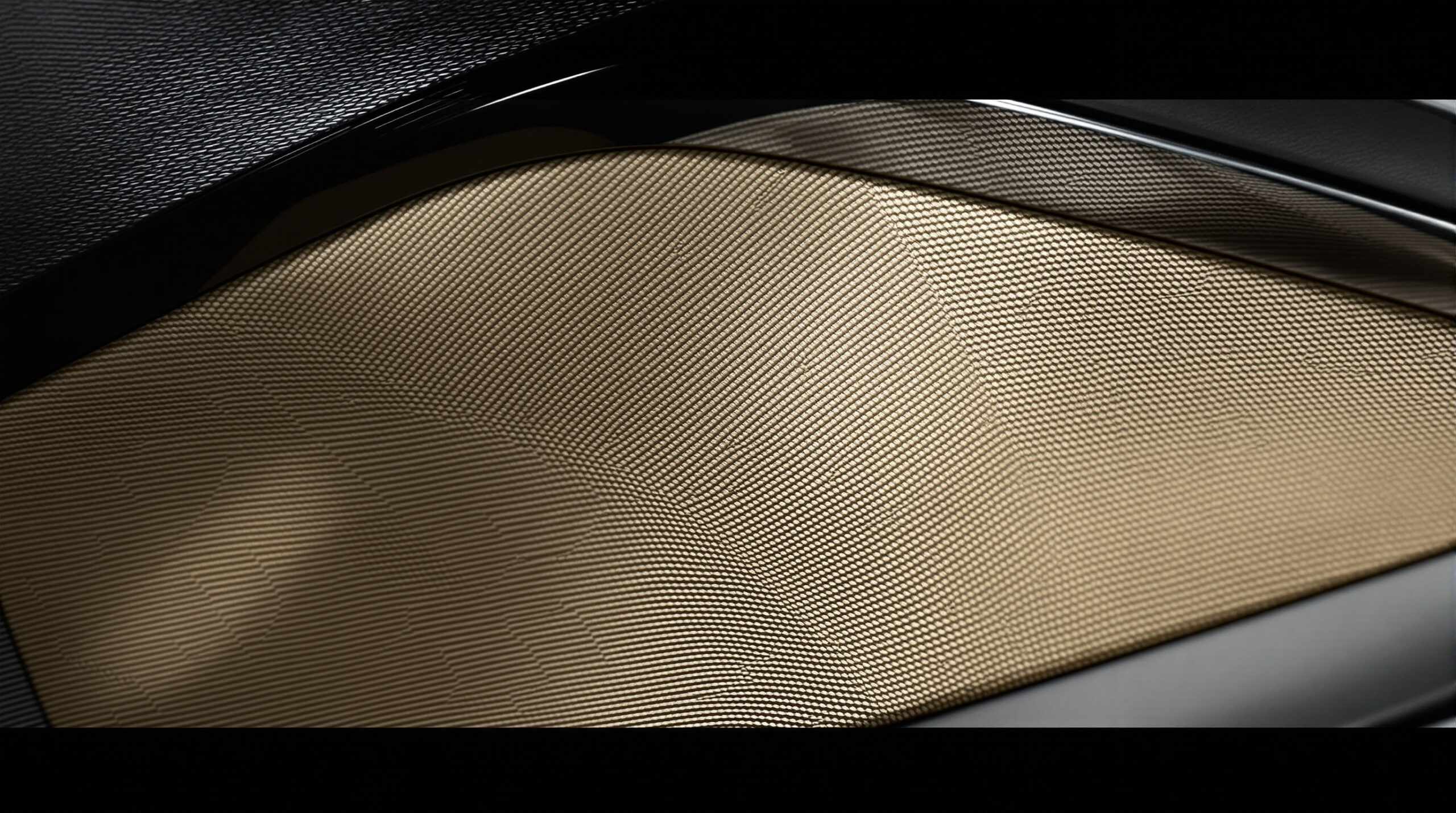
In August 1941, Henry Ford drove an axe against the trunk of a strange prototype while cameras rolled. The metal didn’t give way, because it wasn’t metal: the car bore a body made from a plastic that allegedly contained hemp fibers. Nearly a century later, natural fibers are back in cars, this time in production vehicles from BMW, Mercedes, and Porsche. The history of hemp automobiles spans from a pre-war PR stunt to cutting-edge biocomposites that reduce weight and emissions.
📑 Inhaltsverzeichnis
- Ford’s Dream of a Carriage from the Field
- Why Hemp Makes Sense in Vehicle Manufacturing
- Renaissance of Natural Fiber at BMW, Mercedes, and Porsche
- From Kit Car to Biocomposite: The Renew Story
- Limits of the Technology: Moisture, Fire, and Recycling
- Frequently Asked Questions
- 💬 Fragen? Frag den Hanf-Buddy!
Ford’s Dream of a Carriage from the Field
The prototype, known as the „Soybean Car,“ was unveiled on August 13, 1941 at the Dearborn Days. Mounted on a tubular steel frame were fourteen plastic panels roughly six millimeters thick. The vehicle weighed around 900 kilograms, roughly a third less than a comparable steel body. This weight advantage was precisely Ford’s motivation, since less mass means lower fuel consumption and higher payload capacity.
Whether hemp actually went into the panels cannot be definitively proven today. The original formula was never documented. Popular accounts mention a mixture of soybeans, wheat, hemp, flax, and ramie. Lowell E. Overly, who was instrumental in the design, described the material instead as soy fiber in phenolic resin with formaldehyde. Materials scientists consider it more likely to have been a conventional phenolic plastic similar to the familiar Bakelite. On January 13, 1942, Ford received a patent for the construction of a plastic car body.


The car never reached series production. With America’s entry into the war, industry switched to military production, and the project disappeared. Ford’s experiment nonetheless remained a powerful symbol that vehicles don’t necessarily have to be made of metal. The fact that the hemp content was so frequently emphasized owes less to the facts than to fascination with a plant that already played many industrial roles. Ford also pursued an agricultural policy goal: automobile manufacturing was meant to open new markets for American agriculture and make factories less dependent on increasingly scarce steel.
Why Hemp Makes Sense in Vehicle Manufacturing
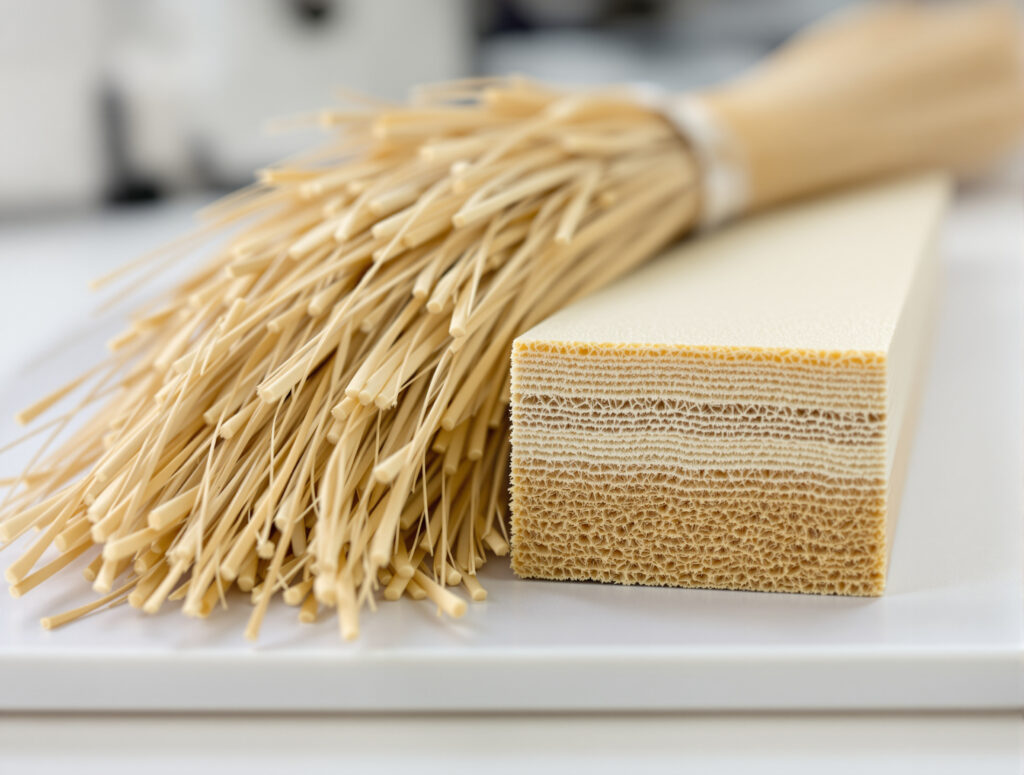
The appeal of hemp fibers lies in their strength-to-weight ratio. As reinforcement in a plastic matrix, they can achieve stiffness similar to fiberglass while being noticeably lighter. Components made from such natural fiber composites are typically thirty to forty percent lighter than comparable parts made from fiberglass-reinforced plastic. Less weight reduces fuel consumption in combustion engines and extends range in electric vehicles.
There’s also the matter of lifecycle assessment. Hemp grows in a single season, sequesters carbon dioxide during growth, and requires little crop protection. Where a natural fiber replaces petrochemically produced fibers, the fossil fuel requirement of a component drops significantly. According to manufacturers, plastic use in interior trim can be reduced by up to seventy percent and associated CO2 burden by up to sixty percent. These figures refer to individual components, not the entire car, but they illustrate the direction. Given increasingly strict fleet limits and growing demand for sustainable materials, every saved gram and every kilogram of petroleum-based plastic avoided becomes significant.
The versatile use of the fiber is no exception in the automotive industry. From building materials to seals, the plant finds industrial applications, as our article on sealing water pipes with hemp demonstrates. In vehicles, the fiber ends up primarily where stiffness and low weight matter more than a visibly flawless surface—in load-bearing parts behind the actual trim.
Renaissance of Natural Fiber at BMW, Mercedes, and Porsche
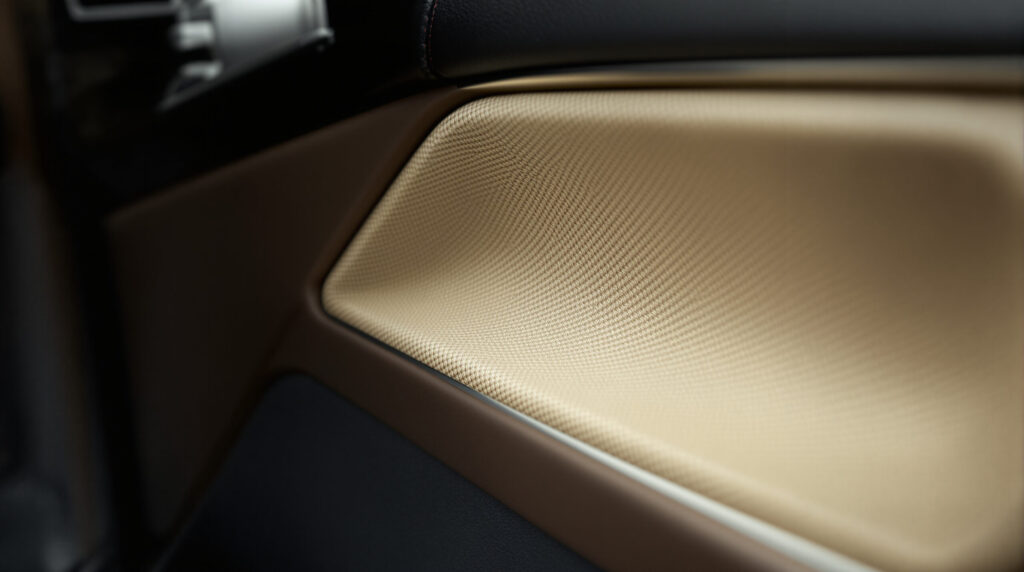
Unlike in Ford’s time, natural fibers are now a standard part of modern vehicles. BMW already employed hemp and related fibers in the i3 and i8 models for door panels and instrument panel carriers. In the M4 GT4 race car, the manufacturer replaced virtually all elements previously made from carbon fiber-reinforced plastic with natural fiber composites, making the production vehicle an example of consistent use of these materials in motorsport.
Mercedes-Benz also integrates natural fibers into interior components to save weight and improve sustainability. Porsche, meanwhile, installed doors and a rear wing made from a flax-and-hemp fiber blend in the 718 Cayman GT4 Clubsport variant instead of pure carbon fiber. This makes clear: natural fiber composites are no longer a niche phenomenon but have found their way into premium and motorsport vehicles.
This development is part of a longer tradition. Our overview of hemp in the automotive industry illuminates how hemp has repeatedly entered vehicle manufacturing over decades. The common thread remains the same: lighter components at reasonable cost and with a better environmental footprint.
From Kit Car to Biocomposite: The Renew Story
Anyone wanting to know how far the fiber content can be pushed ends up with American Bruce Dietzen. Inspired by Jack Herer’s book „The Emperor Wears No Clothes,“ he built a sports car starting in 2015 whose body and upholstery consist of roughly sixty-five percent woven hemp and thirty-five percent bio-epoxy. The basis was a gutted first-generation Mazda MX-5. Dietzen called the result „Renew.“
Dietzen promotes the idea that his hemp panels are significantly more impact-resistant than sheet steel and absorb dents better. Such claims come from the builder himself and are not independent test-stand values, but they show where the technology is headed. Renew remained a small-series and demonstration project that primarily accomplished one thing: it brought the old idea of hemp cars back into public consciousness and connected it with the concept of CO2 neutrality.
The difference between series manufacturers and a project like Renew lies in their ambitions. Where BMW and Porsche strategically employ the fiber in individual components to achieve measurable benefits, Dietzen attempted to fabricate as large a portion of the car as possible from renewable materials. Both approaches pursue the same goal from different angles.
Limits of the Technology: Moisture, Fire, and Recycling
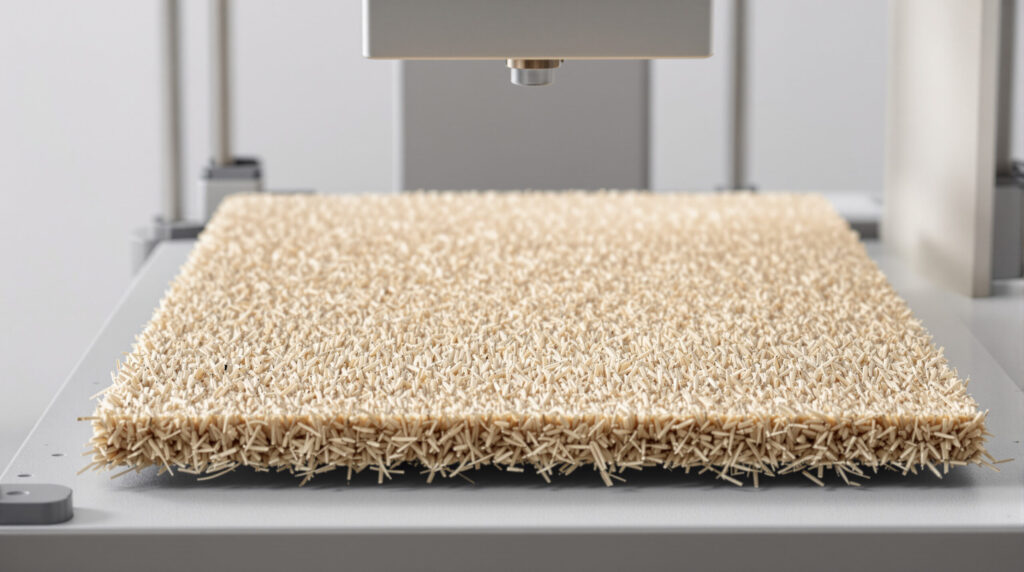
As compelling as the advantages sound, natural fiber composites have clear weaknesses. Hemp fibers are hydrophilic—they attract water. When they absorb moisture, they can swell, lose dimensional accuracy, and weaken the bond between fiber and plastic matrix. For this reason, they are preferred for use in protected interiors and less so on heavily weathered exterior surfaces.
Natural fibers also fall short of conventional materials in fire behavior. Their lower fire resistance and thermal stability limit use at high temperatures, which is why flame-retardant treatments are necessary. Additionally, they often don’t achieve the impact and tensile strength of fiberglass composites, which limits the selection of suitable components.
The recycling balance is mixed. Pure natural fibers are biodegradable, but most composites bind the fiber to thermoset resins that are difficult to separate. At end-of-life, many interior trim pieces end up being incinerated. At least natural fibers burn more cleanly than pure petroleum-based plastics, and research is working on fully biodegradable matrices. Hemp plays a role beyond the body in the mobility of the future, such as in energy storage, as our article on hemp batteries for electric cars describes. Hemp cars are thus less a curiosity of the past than a building block of more sustainable vehicle technology.
Frequently Asked Questions
Was Henry Ford’s Car Really Made from Hemp?
That’s uncertain. The prototype unveiled in 1941 carried plastic panels on a steel frame. Whether hemp fibers were contained in them cannot be proven because the formula was never documented. One engineer involved spoke of soy fiber in phenolic resin. Experts consider a Bakelite-like plastic more probable.
Which Automakers Use Hemp Fibers Today?
BMW uses hemp and related fibers in models such as the i3, i8, and M4 GT4. Mercedes-Benz installs natural fibers in interior components. Porsche used parts made from a flax-hemp blend in the 718 Cayman GT4 Clubsport instead of pure carbon fiber. The focus is usually on trim, carriers, and sport components.
How Much Weight Does a Hemp Composite Component Save?
Components made from natural fiber composites are often thirty to forty percent lighter than comparable parts made from fiberglass-reinforced plastic. In interior trim, plastic use can be reduced by up to seventy percent, depending on the manufacturer. Less weight means lower consumption or greater range.
What Are the Biggest Drawbacks of Hemp in Cars?
Natural fibers absorb moisture, which can cause swelling and poor adhesion. Their fire behavior and thermal stability are worse than synthetic fibers. Additionally, thermoset composites are difficult to recycle. For this reason, hemp is mostly found in protected interiors.
Is There a Car Made Almost Entirely from Hemp?
Sollten Autohersteller mehr Hanf-Biokomposite in Fahrzeugen verwenden?
Bruce Dietzen’s Renew comes closest. Its body consists of approximately sixty-five percent woven hemp and thirty-five percent bio-epoxy, built on a modified Mazda MX-5. It is a demonstration project, not a production vehicle.







Branchen-Update
News, Analysen und Reportagen — mehrmals im Monat direkt in dein Postfach.
Folge uns