Hanf Magazin
📑 Inhaltsverzeichnis
- Aeroponics, Aachen, Scaling
- Outro
- Frequently Asked Questions About Alsdorfer Lunte and Affordable Cannabis in CSCs
- The VAT Lawsuit: Why Alsdorfer Lunte Is Taking on the Tax Office
- Claude in the Backend: 20 Euros per Person Instead of Hours of Volunteer Work
- Aeroponics, Aachen, Scaling
- Outro
- Frequently Asked Questions About Alsdorfer Lunte and Affordable Cannabis in CSCs
- Under 2 Euros per Gram: How One CSC Breaks the Price
- The VAT Lawsuit: Why Alsdorfer Lunte Is Taking on the Tax Office
- Claude in the Backend: 20 Euros per Person Instead of Hours of Volunteer Work
- Aeroponics, Aachen, Scaling
- Outro
- Frequently Asked Questions About Alsdorfer Lunte and Affordable Cannabis in CSCs
- Under 2 Euros per Gram: How One CSC Breaks the Price
- The VAT Lawsuit: Why Alsdorfer Lunte Is Taking on the Tax Office
- Claude in the Backend: 20 Euros per Person Instead of Hours of Volunteer Work
- Aeroponics, Aachen, Scaling
- Outro
- Frequently Asked Questions About Alsdorfer Lunte and Affordable Cannabis in CSCs
- 💬 Fragen? Frag den Hanf-Buddy!
What exactly have you automated and what haven’t you? Please be specific.
Manuel Nilsson
I developed the skills with Claude without being able to program myself. We have two types of skills: deterministic and agentic. Deterministic is everything that exists as a small Python program. CSV import from bank statements, booking membership contributions to member accounts, adding and removing members. Agentic is everything the AI has to decide itself. Receipts are thrown into the chat as photos, Claude recognizes sum and date, searches bookkeeping for the matching line, and creates a hyperlink. A human confirms it matches. If the AI hallucinates a line in the distribution list, you see it immediately because two member numbers or two quantities don’t match. It’s always in tandem with humans.


Hanf Magazin
How do you prevent hallucinations in bookkeeping? A miscalculated VAT can become a tax bomb.
Manuel Nilsson
Hallucinations don’t seem so dangerous once you’ve spent half a year trying to get members who have no clue about Excel or bookkeeping to do exactly that. If you let members do it, there are always wrong signs, forgotten entries, and typos. Ultimately you can’t exclude hallucinations, but you can account for them. The answer is human-in-the-loop, backups, also backups the AI can’t access, to ensure good human verifiability, have the AI check itself, and use finished code where finished code can be used. The latter is practically always the case in our bookkeeping. If I just give Claude a CSV and say „put this in my bookkeeping Excel,“ he can guess anywhere. Instead, I have him write a Python script that does exactly this function: column X from the file into column Y. Instead of 70 bookings that can each go wrong, now only the script not starting can go wrong. You see that very easily. Either the month is there or it’s not. With our AI use, it’s not intended that it operates without control and humans.
Hanf Magazin
Data Protection: How do you solve this GDPR-compliant if you don’t have a data processing agreement with Anthropic?
Manuel Nilsson
We have two trusted points: Microsoft and Strato. Claude is not a trusted point because I did what any sensible person does when facing GDPR: run away if possible. Privacy by design. Claude deals with member numbers, not names. Claude doesn’t have access to everything; he has his area where he can access, but only three people can access the member list. In short: CSV import through program, bookkeeping without names but with member numbers, member accounts also have no real names. If we want to print the distribution list, we first have to open our own program that targets the member account and creates the names. I haven’t found a way around that yet. We actually use private Claude, each person for themselves. Enterprise I find overpriced for our use case. OneDrive is commercial and GDPR-compliant, that’s Microsoft 365 Business Standard.
Hanf Magazin
Vendor question. There are off-the-shelf providers like Cannanas or Hanfapp that address these problems. What drove you to build it yourself? Would you make the same decision in 12 months looking back?
Manuel Nilsson
The vendor question doesn’t even come up with our data protection requirements. Hanfapp had a leak right away, and ultimately it shows one thing: a lot is promised, but in the end the data lands on the internet. Cannanas didn’t have a leak problem, but the apps don’t really help us. We’re in a special position. Almost every club sells cannabis, we don’t. You come by, show ID and membership card, sign, and get your jar. Cannanas has no function that supports work allocation for members, and it’s clear why. CSCs are usually coffeeshops. So we’re building our own app in parallel that organizes members into work. When and where is manpower needed, what needs to be done, how do you water, how do you fill pots? None of the existing apps can do that. Would I make the same decision again? Yes, especially because of data protection and work coordination.
Hanf Magazin
Vibe-Coding Risks. AI-generated code can contain subtle errors that detonate during a tax audit. What happens if the AI makes a mistake in a distribution list and delivers to a non-eligible member? Board liability?
Manuel Nilsson
I asked the licensing authority exactly that: what happens if there’s an error? There was no answer about whether I at least get a chance to look into it or if the hammer comes down immediately. That’s handled unfortunately poorly overall. On one hand, CSCs are explicitly supposed to be noncommercial, on the other hand meticulous accuracy is demanded. You really shouldn’t wonder why not many CSCs dare member participation. I can barely remember a count that held up to my review. What we concretely do: backups before every request, test sheets with errors before rolling out a new feature to members, code review by myself, and gradual rollout. The code is relatively trivial. If something works smoothly, I have members test the feature. If they handle it well, the goal is reached.
Manuel Nilsson illustrates the effect with an example from daily operations:
Today a 50-year-old woman who can’t handle a computer used Claude to finish digitizing distributions. I checked it and everything was fine. She used to need hours to do that, and today it took minutes. It’s actually crazy that something like this is available for 20 euros per person.
Manuel Nilsson, Chairman, Alsdorfer Lunte e.V.
In terms of data protection, the association points to a privacy-by-design architecture. Data processing agreements with Anthropic do not exist for the standard Claude access the association uses, which is why the architecture reduces the data path to the AI to person-unbound content. According to the board’s assessment, full transferability to other CSCs depends less on technology than on the association model. If you don’t carry cultivation yourself through members, you have different backoffice demands anyway.
Aeroponics, Aachen, Scaling
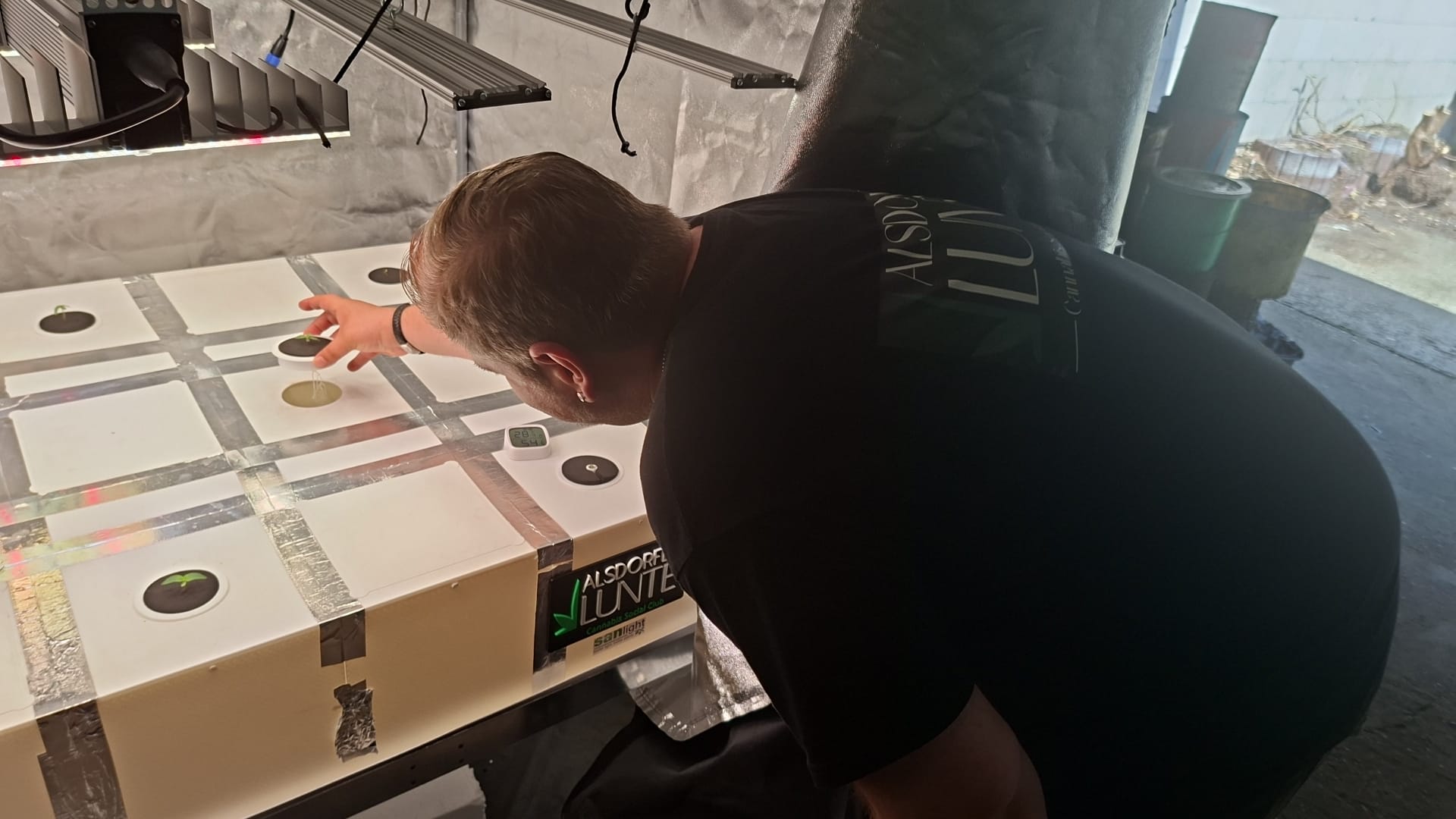
The association is pursuing three additional initiatives in parallel. In cultivation, the transition to aeroponics is in prototype stage. Two different systems have been running since May 2026 with the first plant generation, though reliable yield data in grams per square meter are not yet available. The association plans to document the model and compare it to traditional soil cultivation once first complete cycles are evaluated. Follow-up reporting with actual figures is targeted for late summer.
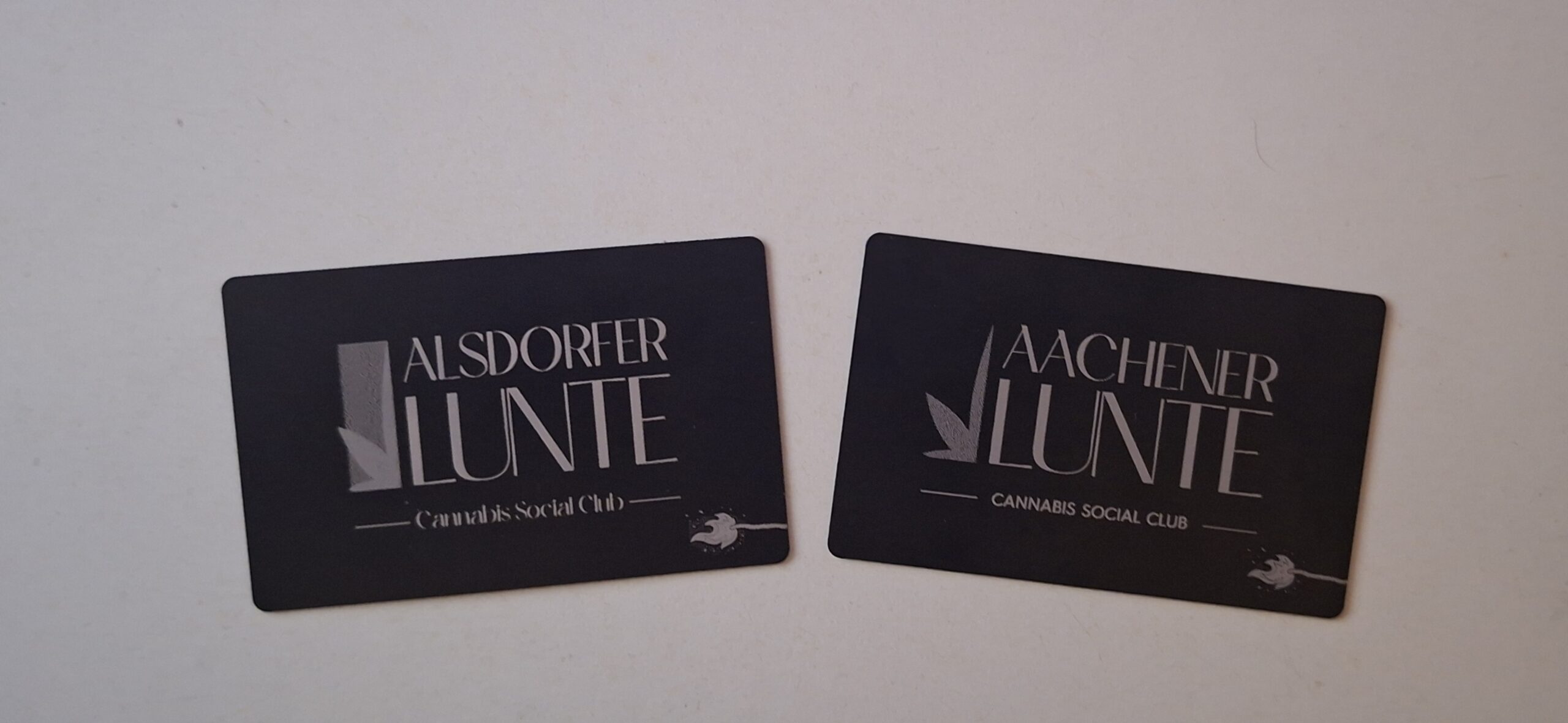
Geographically, the association is expanding to Aachen. A second location is in preparation according to the board. Behind this strategically lies a scaling model that differs significantly from other CSCs. The board builds clubs, brings them operationally online, then hands them over to local members. According to the board, the initial goal is five such handovers, after which the effect should work network-like. The association does not pursue profit motive in the classical sense. According to the board, the monetary leverage lies in synergies between multiple locally anchored CSCs.
Hanf Magazin
Scaling. Why hand over clubs to members instead of building your own branch network?
Manuel Nilsson
Generally, our club is 100 percent member-driven. I build them up and hand them over. I can use good support for the first five clubs. Once those are filled, the avalanche rolls on its own. My profit motive lies in the synergies you can unlock when you have a few dozen local CSCs. In these synergies there’s endless money to be made. Lunte-clubs are not built on credit.
Outro
We’re extremely transparent. Positive and negative. Not everything runs perfectly, but it doesn’t need to yet for a few years.
Manuel Nilsson, Chairman, Alsdorfer Lunte e.V.
With this statement, Manuel Nilsson sums up what distinguishes Alsdorfer Lunte e.V. from the majority of cultivation associations approved under KCanG. A self-chosen cost price, an openly conducted legal dispute with the tax office, and an AI stack in the backoffice that reaches surprisingly deep for a small association. Whether the model scales and whether the lawsuit succeeds will be decided in the coming months. Reporting to follow.
Was findest du am spannendsten an der Alsdorfer Lunte?
FAQ
How much does a gram of cannabis cost at Alsdorfer Lunte CSC?
According to the association’s board, the gram price in a regular cultivation cycle is under two euros for members who exhaust their 50-gram quota. In cycles with weaker yields, the calculated price can temporarily rise to 3 to 3.50 euros per gram. A one-time registration fee of 495 euros applies additionally.
What’s the Alsdorfer Lunte’s VAT lawsuit about?
The association is suing before the finance court against the classification of its membership contributions as so-called „improper“ contributions by the regional finance authority. The lawsuit relies on European law and a Dutch precedent case. If successful, according to the association’s argument, all previously paid VAT by all German CSCs since April 1, 2024 would be subject to refund.
How does a CSC automate its bookkeeping with AI?
According to its board, Alsdorfer Lunte uses Claude, Anthropic’s AI system, combined with Microsoft 365 and deterministically programmed Python scripts. Bookkeeping, member accounts, distribution lists, and receipt digitization run automatically. The system works exclusively with member numbers, not real names. Every workflow is designed as human-in-the-loop. Cost: approximately 20 euros per active person per month.
What CSC software alternatives exist to Hanfapp and Cannanas?
Most commercial solutions like Hanfapp and Cannanas cover the sales process of traditional CSCs where cultivation is organized through paid staff. Associations with member-driven cultivation and distribution find no suitable workforce coordination in these tools according to Alsdorfer Lunte. Custom solutions based on general office and AI stacks are rarely documented in the industry so far.
What happens if Alsdorfer Lunte’s lawsuit succeeds?
The board outlines three scenarios. First: the legislature regulates cannabis trade anew and thereby enables licensed retail shops in the long term. Second: the state introduces its own cannabis tax, which the association would legally accept. Third: if they lose, the status quo remains, with the board estimating court costs in the low four-figure range.
Frequently Asked Questions About Alsdorfer Lunte and Affordable Cannabis in CSCs
How can a Cannabis Social Club distribute cannabis for under 2 euros per gram?
Cultivation associations distribute cannabis to their members at cost price—without profit markup. Efficient self-production, volunteer structures, and lean operations push the price at Alsdorfer Lunte to just under two euros. How an association is generally structured is shown in our step-by-step guide to CSC founding.
Can a Cannabis Social Club sue against VAT liability?
Whether distribution of cannabis to association members is subject to sales tax is legally disputed. Alsdorfer Lunte is suing before the finance court against VAT liability for CSCs. Further legal hurdles for cultivation associations are classified in the interview Cannabis Law 2026 with Olivia Ewenike.
How does Alsdorfer Lunte automate its association backend with AI?
The association has key administrative tasks run via Claude, Anthropic’s AI system. This reduces manual effort in member management and documentation. Which specialized systems CSCs otherwise use for their backend is shown in our article on Cannaflow as a CSC system.
What does KCanG permit cultivation associations in Germany?
The Cannabis Consumption Act (KCanG) has permitted shared cultivation in cultivation associations since July 2024 with clear quantity and distribution limits. How many associations are already active is shown in our overview on the number of cannabis clubs in Germany, and a practice report is provided by 12 months of CSC founding at Lucas Green e.V.
Hanf Magazin
How exactly do you calculate your membership fee? What does a gram cost you per member, and what do they pay for it?
Manuel Nilsson
I calculated the 99-euro membership fee before founding the club as sufficient for 50 grams per member, starting from 60 members. Since I had never touched a potted plant in my life before founding the club, I had to make a good estimate with a safety buffer. Technically it’s 85 euros net and then 99 with 19 percent. The costs for cannabis in an average grow are around one euro per gram. In my view, true cost price can’t be reflected as a membership fee at all. An association needs to build up reserves, otherwise an unplanned expense leads to insolvency or an assessment.
Hanf Magazin
Where do you realistically position yourself in a DACH comparison?
Manuel Nilsson
Price-wise, we’re simply in a different place in the NRW region for heavy consumers, but you have to be fair. The Lunte concept is my protest against general and constant price increases. The price is 99 euros for up to 50 grams, and you should also show up occasionally during harvest or distribution. As far as I know, most CSCs with their concept are more like a coffeeshop than an association. Good luck to them. But when we harvest, 15 to 25 members are there. The growing team consists of members, distribution and even an order team exist. If you do it without members and have to pay for labor, you’re not at two euros per gram. Then you’re more like four or five euros.
Compared to the competitors named by the association’s board, the price difference is striking. CSC Grünschnitt lists just under 350 euros for 50 grams in its fee schedule, approximately 7 euros per gram for large quantities. Cannabis Premium Club Aachen and Cannabis Social Club Aachen are at approximately 8 to 10 euros per gram according to publicly available rates. CSC Ganderkesee, CSC Lighthouse Cologne, and CSC Cottbus range between 6.50 and 12 euros per gram, with discount tiers for high purchase volumes. Swiss pilot projects charge an estimated 7 to 12 francs per gram according to the board. Reliable comparison data from Spain were not available at the time of research, so the association’s statement is limited to the German market.
The fact that Alsdorfer Lunte can maintain this price depends on a hard structural condition. Cultivation, distribution, and the order team are entirely supported by members. Buying labor instead of organizing it as volunteers puts you at 4 to 5 euros per gram by the association’s calculation. A one-time registration fee of 495 euros covers startup costs and prevents the association from starting on credit. The association’s bylaws also anchor a cost principle clause that automatically suspends membership fees once association reserves are full. Manuel Nilsson articulates a clear expectation for the industry:
A CSC without profit motive. Anyone who has ever grown themselves knows that the prices charged in most CSCs do not represent actual costs. For the movement here, that’s certainly not helpful.
Manuel Nilsson, Chairman, Alsdorfer Lunte e.V.
The model also has a critical lower limit. If yields fail due to cultivation errors, members must expect higher gram prices or complete losses. According to the association, this has happened multiple times.
The VAT Lawsuit: Why Alsdorfer Lunte Is Taking on the Tax Office
Parallel to its pricing policy, the association is pursuing a legal strategy that, according to the board, could extend far beyond its own concerns. At the center is a lawsuit before the finance court, potentially with referral to the European Court of Justice. The dispute concerns whether cultivation associations under KCanG should be subject to VAT at all. This is not the association’s first legal move. Already in 2024, the association filed a constitutional complaint against KCanG’s advertising ban, which the Federal Constitutional Court rejected.
The background to the current lawsuit is a directive from the regional finance authority that, according to the board, classifies all membership contributions from Cannabis Social Clubs as so-called „improper“ membership contributions. In tax law, improper means a contribution is actually a disguised purchase price and thus subject to sales tax. Alsdorfer Lunte argues this blanket classification is legally untenable. Other nonprofit associations, from tennis clubs to community gardens, should be examined equally if one argues consistently. Cannabis associations are instead subjected to special treatment that the association considers legally challengeable.
At the European level, the lawsuit relies on existing precedent. A Dutch coffeeshop successfully sued years ago against VAT on cannabis sales, arguing that the Nice Treaty presupposes legal and free trade in goods. Since cannabis trade is neither legalized in the Netherlands nor Germany in the classical sense, but only regulated or tolerated, the foundation for VAT is absent according to this argument. Spanish CSCs pay VAT mostly on a voluntary basis, according to the board, with studies showing that clubs without voluntary payment experience raids more frequently there.
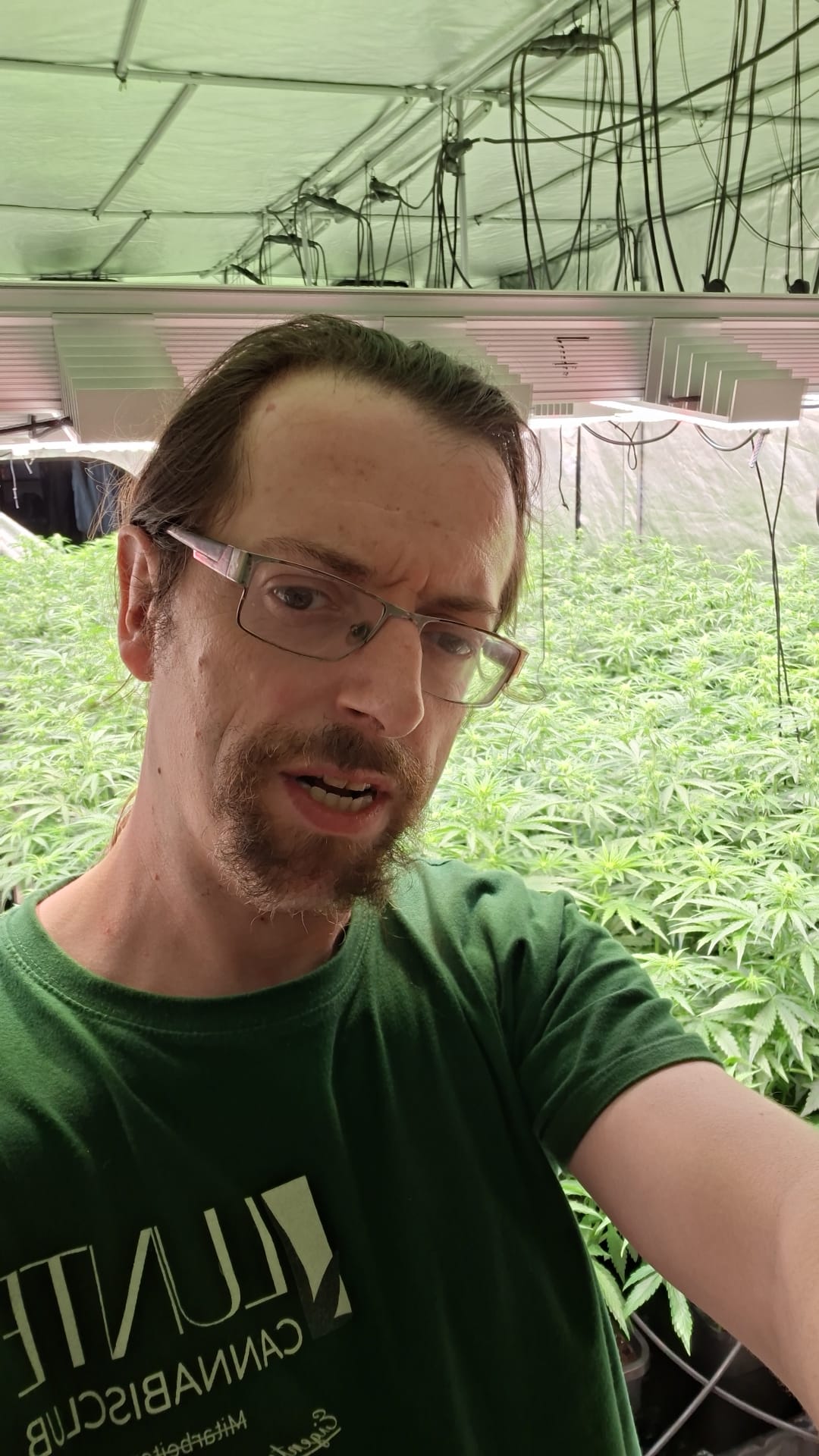
We asked the board where the proceedings stand and how he realistically assesses the chances of success:
Hanf Magazin
Where does the lawsuit stand at the time of research?
Manuel Nilsson
We’re waiting for the negative decision on our objection. The complaint is ready and everything is paid. We’ve been waiting patiently for about half a year. In that time, a friendly letter came from the tax office asking if we wanted to withdraw the lawsuit. We don’t. It can’t go fast enough for me.
Hanf Magazin
How do your lawyers assess the probability of success? We don’t want to sell this as David versus Goliath if the facts look different.
Manuel Nilsson
Legally it’s clear-cut, including precedent. On international law, meaning also EU level, the question is settled. Trade in recreational cannabis cannot be subject to VAT. It requires legal and free trade in goods, and cannabis trade was not legalized. But being right and getting right are two different things. This lawsuit is about nothing less than all VAT revenues from all CSCs in Germany since legalization. That’s a substantial sum by now. You leave the sphere where it’s mainly about laws and enter the one where such large sums and loss of face are involved that justice can be blindfolded. Our lawyer and I are certainly very curious to see how the snake tries to wiggle out of the noose.
Hanf Magazin
What happens to your members if you lose and have to pay back taxes?
Manuel Nilsson
At our prices, VAT doesn’t play a decisive role. An association that sells cannabis for ten euros per gram pays as much in VAT as our entire price. Even if we lose, nothing really happens. We pay VAT in wise anticipation and mark every tax declaration transfer to indicate we hold a different legal opinion. If we lose, it’s only about court costs, that will be just a few thousand euros. If we win, we get the VAT back including interest and part of the legal costs. It’s about principle. I have nothing against a cannabis tax, it would be legal and fair. Against a directive that violates applicable law to the detriment of our members, I do.
If the association wins, according to its calculations, all VAT revenues from all German Cannabis Social Clubs since April 1, 2024 would be subject to refund. Thus the lawsuit is not limited to the association’s own budget but would have industry-wide effects. The board outlines three scenarios publicly. In the first case, the association wins, the legislature responds with new regulation of cannabis trade and enables retail shops. In the second, the association wins and the state introduces its own cannabis tax, which the association would legally accept. In the third case, the association loses, everything remains as is, and the board estimates court costs at a few thousand euros.
Manuel Nilsson explains the persistence with a political position he states openly:
Cannabis consumers have experienced enough discrimination. More than enough. It can’t continue unabashedly. It’s categorically out of the question that I passively watch my members be treated unjustly. It doesn’t matter if it’s the licensing authority, the municipal office, the building authority, the tax office, or the state.
Manuel Nilsson, Chairman, Alsdorfer Lunte e.V.
Claude in the Backend: 20 Euros per Person Instead of Hours of Volunteer Work
The third unusual pillar of Alsdorfer Lunte lies not in law or price, but in backoffice automation. According to the board, the association operates via Claude, Anthropic’s AI system, embedded in a Microsoft 365 OneDrive stack with GDPR-compliant data protection. Manuel Nilsson estimates costs at around 20 euros per person per month for board members actively using the system.
The task scope encompasses four main areas according to the board’s listing. First, bookkeeping including VAT correction. Second, maintaining member accounts, meaning balances per member, sourced from imported contributions. Third, creating the distribution list, which must document under KCanG which member collected how much cannabis when. Fourth, mobile receipt digitization, where board members photograph receipts on the go and the system automatically sorts receipts into the bookkeeping workflow. According to Manuel, he built the skills himself without programming experience.
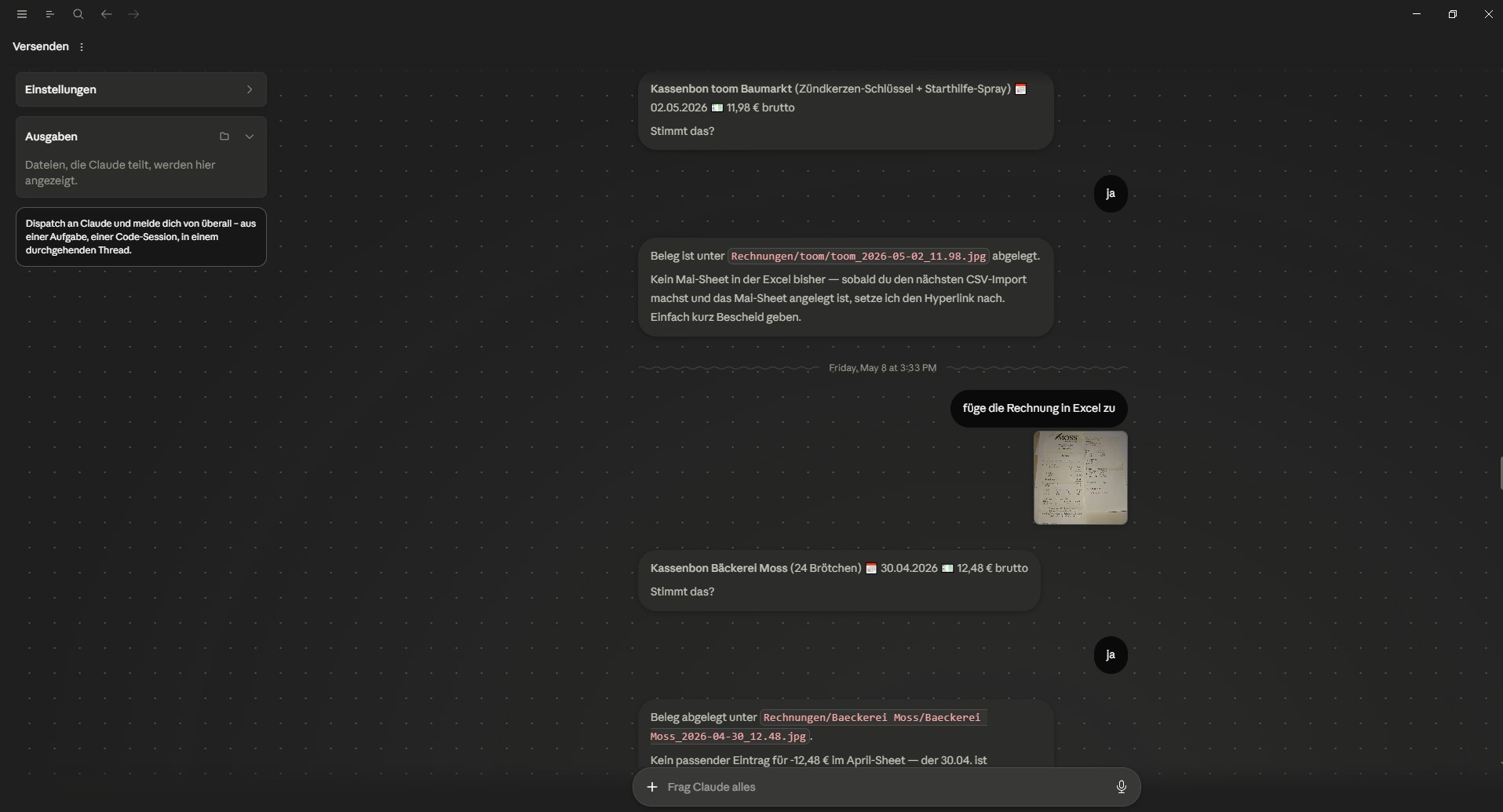
On questions about what exactly is automated, how the association limits hallucinations, and why they didn’t use an off-the-shelf industry solution, the board responds in detail:
Hanf Magazin
What exactly have you automated and what haven’t you? Please be specific.
Manuel Nilsson
I developed the skills with Claude without being able to program myself. We have two types of skills: deterministic and agentic. Deterministic is everything that exists as a small Python program. CSV import from bank statements, booking membership contributions to member accounts, adding and removing members. Agentic is everything the AI has to decide itself. Receipts are thrown into the chat as photos, Claude recognizes sum and date, searches bookkeeping for the matching line, and creates a hyperlink. A human confirms it matches. If the AI hallucinates a line in the distribution list, you see it immediately because two member numbers or two quantities don’t match. It’s always in tandem with humans.
Hanf Magazin
How do you prevent hallucinations in bookkeeping? A miscalculated VAT can become a tax bomb.
Manuel Nilsson
Hallucinations don’t seem so dangerous once you’ve spent half a year trying to get members who have no clue about Excel or bookkeeping to do exactly that. If you let members do it, there are always wrong signs, forgotten entries, and typos. Ultimately you can’t exclude hallucinations, but you can account for them. The answer is human-in-the-loop, backups, also backups the AI can’t access, to ensure good human verifiability, have the AI check itself, and use finished code where finished code can be used. The latter is practically always the case in our bookkeeping. If I just give Claude a CSV and say „put this in my bookkeeping Excel,“ he can guess anywhere. Instead, I have him write a Python script that does exactly this function: column X from the file into column Y. Instead of 70 bookings that can each go wrong, now only the script not starting can go wrong. You see that very easily. Either the month is there or it’s not. With our AI use, it’s not intended that it operates without control and humans.
Hanf Magazin
Data Protection: How do you solve this GDPR-compliant if you don’t have a data processing agreement with Anthropic?
Manuel Nilsson
We have two trusted points: Microsoft and Strato. Claude is not a trusted point because I did what any sensible person does when facing GDPR: run away if possible. Privacy by design. Claude deals with member numbers, not names. Claude doesn’t have access to everything; he has his area where he can access, but only three people can access the member list. In short: CSV import through program, bookkeeping without names but with member numbers, member accounts also have no real names. If we want to print the distribution list, we first have to open our own program that targets the member account and creates the names. I haven’t found a way around that yet. We actually use private Claude, each person for themselves. Enterprise I find overpriced for our use case. OneDrive is commercial and GDPR-compliant, that’s Microsoft 365 Business Standard.
Hanf Magazin
Vendor question. There are off-the-shelf providers like Cannanas or Hanfapp that address these problems. What drove you to build it yourself? Would you make the same decision in 12 months looking back?
Manuel Nilsson
The vendor question doesn’t even come up with our data protection requirements. Hanfapp had a leak right away, and ultimately it shows one thing: a lot is promised, but in the end the data lands on the internet. Cannanas didn’t have a leak problem, but the apps don’t really help us. We’re in a special position. Almost every club sells cannabis, we don’t. You come by, show ID and membership card, sign, and get your jar. Cannanas has no function that supports work allocation for members, and it’s clear why. CSCs are usually coffeeshops. So we’re building our own app in parallel that organizes members into work. When and where is manpower needed, what needs to be done, how do you water, how do you fill pots? None of the existing apps can do that. Would I make the same decision again? Yes, especially because of data protection and work coordination.
Hanf Magazin
Vibe-Coding Risks. AI-generated code can contain subtle errors that detonate during a tax audit. What happens if the AI makes a mistake in a distribution list and delivers to a non-eligible member? Board liability?
Manuel Nilsson
I asked the licensing authority exactly that: what happens if there’s an error? There was no answer about whether I at least get a chance to look into it or if the hammer comes down immediately. That’s handled unfortunately poorly overall. On one hand, CSCs are explicitly supposed to be noncommercial, on the other hand meticulous accuracy is demanded. You really shouldn’t wonder why not many CSCs dare member participation. I can barely remember a count that held up to my review. What we concretely do: backups before every request, test sheets with errors before rolling out a new feature to members, code review by myself, and gradual rollout. The code is relatively trivial. If something works smoothly, I have members test the feature. If they handle it well, the goal is reached.
Manuel Nilsson illustrates the effect with an example from daily operations:
Today a 50-year-old woman who can’t handle a computer used Claude to finish digitizing distributions. I checked it and everything was fine. She used to need hours to do that, and today it took minutes. It’s actually crazy that something like this is available for 20 euros per person.
Manuel Nilsson, Chairman, Alsdorfer Lunte e.V.
In terms of data protection, the association points to a privacy-by-design architecture. Data processing agreements with Anthropic do not exist for the standard Claude access the association uses, which is why the architecture reduces the data path to the AI to person-unbound content. According to the board’s assessment, full transferability to other CSCs depends less on technology than on the association model. If you don’t carry cultivation yourself through members, you have different backoffice demands anyway.
Aeroponics, Aachen, Scaling
The association is pursuing three additional initiatives in parallel. In cultivation, the transition to aeroponics is in prototype stage. Two different systems have been running since May 2026 with the first plant generation, though reliable yield data in grams per square meter are not yet available. The association plans to document the model and compare it to traditional soil cultivation once first complete cycles are evaluated. Follow-up reporting with actual figures is targeted for late summer.
Geographically, the association is expanding to Aachen. A second location is in preparation according to the board. Behind this strategically lies a scaling model that differs significantly from other CSCs. The board builds clubs, brings them operationally online, then hands them over to local members. According to the board, the initial goal is five such handovers, after which the effect should work network-like. The association does not pursue profit motive in the classical sense. According to the board, the monetary leverage lies in synergies between multiple locally anchored CSCs.
Hanf Magazin
Scaling. Why hand over clubs to members instead of building your own branch network?
Manuel Nilsson
Generally, our club is 100 percent member-driven. I build them up and hand them over. I can use good support for the first five clubs. Once those are filled, the avalanche rolls on its own. My profit motive lies in the synergies you can unlock when you have a few dozen local CSCs. In these synergies there’s endless money to be made. Lunte-clubs are not built on credit.
Outro
We’re extremely transparent. Positive and negative. Not everything runs perfectly, but it doesn’t need to yet for a few years.
Manuel Nilsson, Chairman, Alsdorfer Lunte e.V.
With this statement, Manuel Nilsson sums up what distinguishes Alsdorfer Lunte e.V. from the majority of cultivation associations approved under KCanG. A self-chosen cost price, an openly conducted legal dispute with the tax office, and an AI stack in the backoffice that reaches surprisingly deep for a small association. Whether the model scales and whether the lawsuit succeeds will be decided in the coming months. Reporting to follow.
FAQ
How much does a gram of cannabis cost at Alsdorfer Lunte CSC?
According to the association’s board, the gram price in a regular cultivation cycle is under two euros for members who exhaust their 50-gram quota. In cycles with weaker yields, the calculated price can temporarily rise to 3 to 3.50 euros per gram. A one-time registration fee of 495 euros applies additionally.
What’s the Alsdorfer Lunte’s VAT lawsuit about?
The association is suing before the finance court against the classification of its membership contributions as so-called „improper“ contributions by the regional finance authority. The lawsuit relies on European law and a Dutch precedent case. If successful, according to the association’s argument, all previously paid VAT by all German CSCs since April 1, 2024 would be subject to refund.
How does a CSC automate its bookkeeping with AI?
According to its board, Alsdorfer Lunte uses Claude, Anthropic’s AI system, combined with Microsoft 365 and deterministically programmed Python scripts. Bookkeeping, member accounts, distribution lists, and receipt digitization run automatically. The system works exclusively with member numbers, not real names. Every workflow is designed as human-in-the-loop. Cost: approximately 20 euros per active person per month.
What CSC software alternatives exist to Hanfapp and Cannanas?
Most commercial solutions like Hanfapp and Cannanas cover the sales process of traditional CSCs where cultivation is organized through paid staff. Associations with member-driven cultivation and distribution find no suitable workforce coordination in these tools according to Alsdorfer Lunte. Custom solutions based on general office and AI stacks are rarely documented in the industry so far.
What happens if Alsdorfer Lunte’s lawsuit succeeds?
The board outlines three scenarios. First: the legislature regulates cannabis trade anew and thereby enables licensed retail shops in the long term. Second: the state introduces its own cannabis tax, which the association would legally accept. Third: if they lose, the status quo remains, with the board estimating court costs in the low four-figure range.
Frequently Asked Questions About Alsdorfer Lunte and Affordable Cannabis in CSCs
How can a Cannabis Social Club distribute cannabis for under 2 euros per gram?
Cultivation associations distribute cannabis to their members at cost price—without profit markup. Efficient self-production, volunteer structures, and lean operations push the price at Alsdorfer Lunte to just under two euros. How an association is generally structured is shown in our step-by-step guide to CSC founding.
Can a Cannabis Social Club sue against VAT liability?
Whether distribution of cannabis to association members is subject to sales tax is legally disputed. Alsdorfer Lunte is suing before the finance court against VAT liability for CSCs. Further legal hurdles for cultivation associations are classified in the interview Cannabis Law 2026 with Olivia Ewenike.
How does Alsdorfer Lunte automate its association backend with AI?
The association has key administrative tasks run via Claude, Anthropic’s AI system. This reduces manual effort in member management and documentation. Which specialized systems CSCs otherwise use for their backend is shown in our article on Cannaflow as a CSC system.
What does KCanG permit cultivation associations in Germany?
The Cannabis Consumption Act (KCanG) has permitted shared cultivation in cultivation associations since July 2024 with clear quantity and distribution limits. How many associations are already active is shown in our overview on the number of cannabis clubs in Germany, and a practice report is provided by 12 months of CSC founding at Lucas Green e.V.
While the average cultivation association in Germany provides its members with between six and twelve euros per gram, the Alsdorfer Lunte comes in at just under two euros. Hash is free, rosin is in preparation. In parallel, the association is suing the tax office before the finance court against VAT liability for CSCs, and its entire association backend runs automated via Claude, Anthropic’s AI system. Three stories, one association, a very unusual interpretation of what is technically permitted under KCanG. Manuel Nilsson, chairman of Alsdorfer Lunte e.V., disclosed the calculation, the lawsuit, and the AI concept to Hanf Magazin in a written exchange over several days. We present the key points as a report, interspersed with the conversation in direct quotes.
Under 2 Euros per Gram: How One CSC Breaks the Price
Members of Alsdorfer Lunte e.V. pay a monthly membership fee of 99 euros gross, or 85 euros net contribution plus 19 percent VAT. In return, they receive up to 50 grams of cannabis flowers monthly, depending on cultivation yields. Hash is distributed free to eligible members, rosin is in the pipeline according to the association’s board. Mathematically, this results in a gram price that fluctuates between 1.98 euros and around 3.50 euros in weaker cycles, depending on harvest volume. Members who pick up infrequently pay proportionally more, in some cases up to 40 euros per gram.

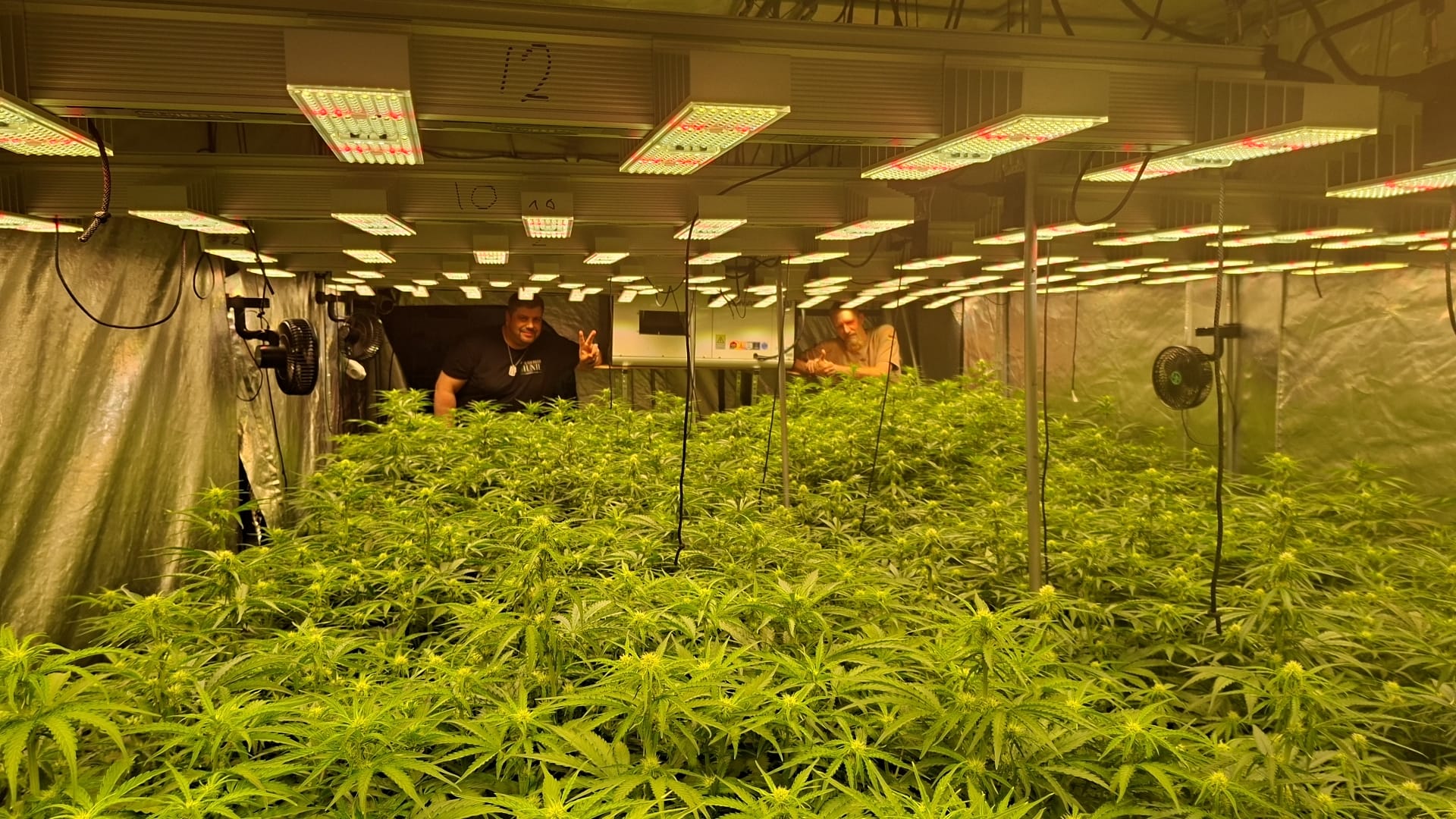
The board published its complete cost calculation in May 2026 on Reddit and provides it on request. According to the board, a two-month cultivation cycle costs the association approximately 7,390 euros including VAT, broken down into seedlings (about 540 euros for 180 cuttings), electricity (about 3,000 euros), soil and fertilizer (about 800 euros), and rent for cultivation space and distribution point (about 3,000 euros). Consumables like cleaning alcohol or gloves are negligible according to the association—members regularly bring these themselves. With approximately 70 paying members and gross contributions of about 14,000 euros per two months, production costs per gram are in the range of one euro. The remainder goes into reserves, administration, security, and insurance. The board calculates that with over 7,500 grams per cycle, the gram price can fall below one euro; in weaker cycles, it rises accordingly.
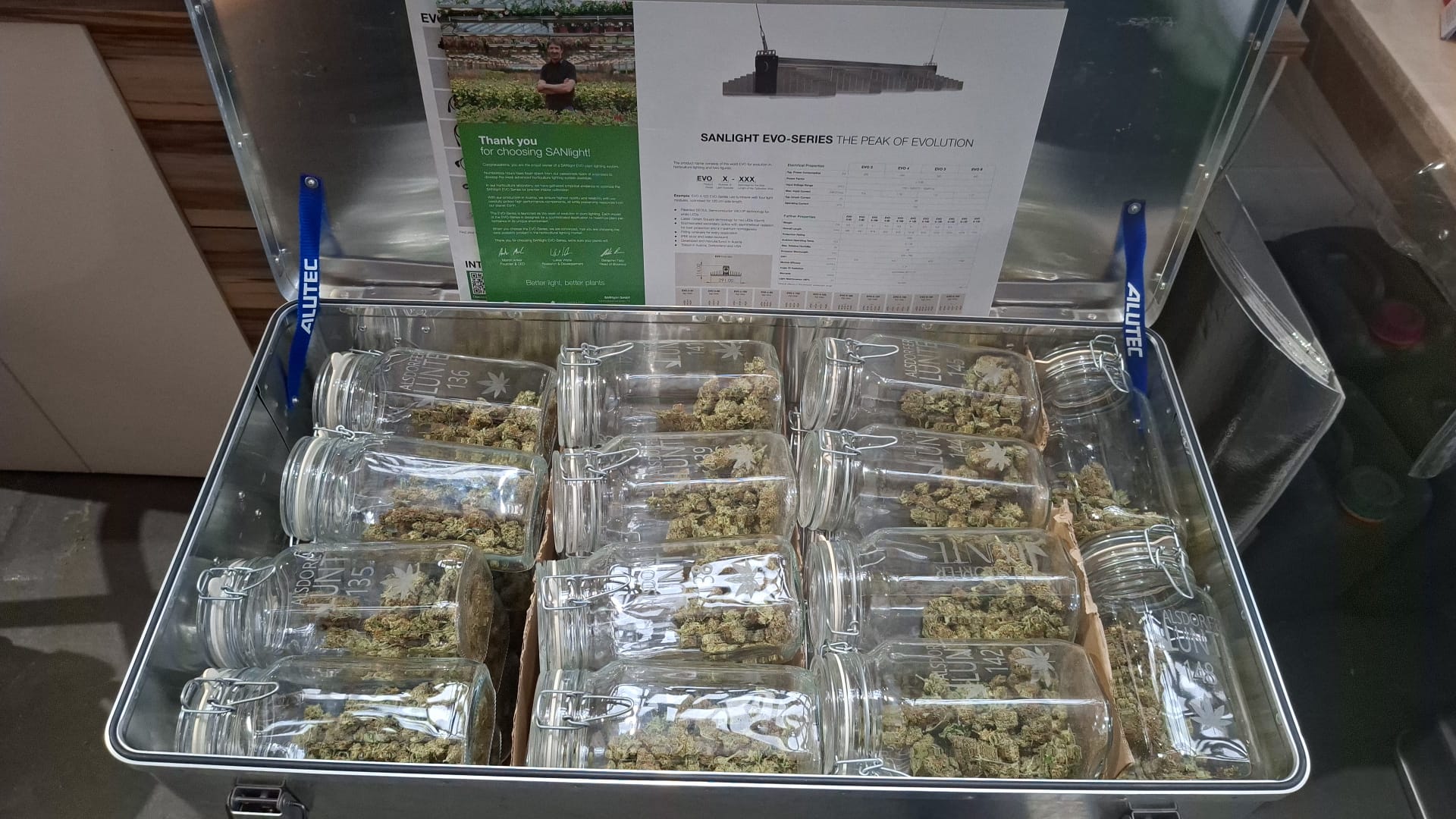
The board explains the mechanics directly:
Hanf Magazin
How exactly do you calculate your membership fee? What does a gram cost you per member, and what do they pay for it?
Manuel Nilsson
I calculated the 99-euro membership fee before founding the club as sufficient for 50 grams per member, starting from 60 members. Since I had never touched a potted plant in my life before founding the club, I had to make a good estimate with a safety buffer. Technically it’s 85 euros net and then 99 with 19 percent. The costs for cannabis in an average grow are around one euro per gram. In my view, true cost price can’t be reflected as a membership fee at all. An association needs to build up reserves, otherwise an unplanned expense leads to insolvency or an assessment.
Hanf Magazin
Where do you realistically position yourself in a DACH comparison?
Manuel Nilsson
Price-wise, we’re simply in a different place in the NRW region for heavy consumers, but you have to be fair. The Lunte concept is my protest against general and constant price increases. The price is 99 euros for up to 50 grams, and you should also show up occasionally during harvest or distribution. As far as I know, most CSCs with their concept are more like a coffeeshop than an association. Good luck to them. But when we harvest, 15 to 25 members are there. The growing team consists of members, distribution and even an order team exist. If you do it without members and have to pay for labor, you’re not at two euros per gram. Then you’re more like four or five euros.
Compared to the competitors named by the association’s board, the price difference is striking. CSC Grünschnitt lists just under 350 euros for 50 grams in its fee schedule, approximately 7 euros per gram for large quantities. Cannabis Premium Club Aachen and Cannabis Social Club Aachen are at approximately 8 to 10 euros per gram according to publicly available rates. CSC Ganderkesee, CSC Lighthouse Cologne, and CSC Cottbus range between 6.50 and 12 euros per gram, with discount tiers for high purchase volumes. Swiss pilot projects charge an estimated 7 to 12 francs per gram according to the board. Reliable comparison data from Spain were not available at the time of research, so the association’s statement is limited to the German market.
The fact that Alsdorfer Lunte can maintain this price depends on a hard structural condition. Cultivation, distribution, and the order team are entirely supported by members. Buying labor instead of organizing it as volunteers puts you at 4 to 5 euros per gram by the association’s calculation. A one-time registration fee of 495 euros covers startup costs and prevents the association from starting on credit. The association’s bylaws also anchor a cost principle clause that automatically suspends membership fees once association reserves are full. Manuel Nilsson articulates a clear expectation for the industry:
A CSC without profit motive. Anyone who has ever grown themselves knows that the prices charged in most CSCs do not represent actual costs. For the movement here, that’s certainly not helpful.
Manuel Nilsson, Chairman, Alsdorfer Lunte e.V.
The model also has a critical lower limit. If yields fail due to cultivation errors, members must expect higher gram prices or complete losses. According to the association, this has happened multiple times.
The VAT Lawsuit: Why Alsdorfer Lunte Is Taking on the Tax Office
Parallel to its pricing policy, the association is pursuing a legal strategy that, according to the board, could extend far beyond its own concerns. At the center is a lawsuit before the finance court, potentially with referral to the European Court of Justice. The dispute concerns whether cultivation associations under KCanG should be subject to VAT at all. This is not the association’s first legal move. Already in 2024, the association filed a constitutional complaint against KCanG’s advertising ban, which the Federal Constitutional Court rejected.
The background to the current lawsuit is a directive from the regional finance authority that, according to the board, classifies all membership contributions from Cannabis Social Clubs as so-called „improper“ membership contributions. In tax law, improper means a contribution is actually a disguised purchase price and thus subject to sales tax. Alsdorfer Lunte argues this blanket classification is legally untenable. Other nonprofit associations, from tennis clubs to community gardens, should be examined equally if one argues consistently. Cannabis associations are instead subjected to special treatment that the association considers legally challengeable.
At the European level, the lawsuit relies on existing precedent. A Dutch coffeeshop successfully sued years ago against VAT on cannabis sales, arguing that the Nice Treaty presupposes legal and free trade in goods. Since cannabis trade is neither legalized in the Netherlands nor Germany in the classical sense, but only regulated or tolerated, the foundation for VAT is absent according to this argument. Spanish CSCs pay VAT mostly on a voluntary basis, according to the board, with studies showing that clubs without voluntary payment experience raids more frequently there.
We asked the board where the proceedings stand and how he realistically assesses the chances of success:
Hanf Magazin
Where does the lawsuit stand at the time of research?
Manuel Nilsson
We’re waiting for the negative decision on our objection. The complaint is ready and everything is paid. We’ve been waiting patiently for about half a year. In that time, a friendly letter came from the tax office asking if we wanted to withdraw the lawsuit. We don’t. It can’t go fast enough for me.
Hanf Magazin
How do your lawyers assess the probability of success? We don’t want to sell this as David versus Goliath if the facts look different.
Manuel Nilsson
Legally it’s clear-cut, including precedent. On international law, meaning also EU level, the question is settled. Trade in recreational cannabis cannot be subject to VAT. It requires legal and free trade in goods, and cannabis trade was not legalized. But being right and getting right are two different things. This lawsuit is about nothing less than all VAT revenues from all CSCs in Germany since legalization. That’s a substantial sum by now. You leave the sphere where it’s mainly about laws and enter the one where such large sums and loss of face are involved that justice can be blindfolded. Our lawyer and I are certainly very curious to see how the snake tries to wiggle out of the noose.
Hanf Magazin
What happens to your members if you lose and have to pay back taxes?
Manuel Nilsson
At our prices, VAT doesn’t play a decisive role. An association that sells cannabis for ten euros per gram pays as much in VAT as our entire price. Even if we lose, nothing really happens. We pay VAT in wise anticipation and mark every tax declaration transfer to indicate we hold a different legal opinion. If we lose, it’s only about court costs, that will be just a few thousand euros. If we win, we get the VAT back including interest and part of the legal costs. It’s about principle. I have nothing against a cannabis tax, it would be legal and fair. Against a directive that violates applicable law to the detriment of our members, I do.
If the association wins, according to its calculations, all VAT revenues from all German Cannabis Social Clubs since April 1, 2024 would be subject to refund. Thus the lawsuit is not limited to the association’s own budget but would have industry-wide effects. The board outlines three scenarios publicly. In the first case, the association wins, the legislature responds with new regulation of cannabis trade and enables retail shops. In the second, the association wins and the state introduces its own cannabis tax, which the association would legally accept. In the third case, the association loses, everything remains as is, and the board estimates court costs at a few thousand euros.
Manuel Nilsson explains the persistence with a political position he states openly:
Cannabis consumers have experienced enough discrimination. More than enough. It can’t continue unabashedly. It’s categorically out of the question that I passively watch my members be treated unjustly. It doesn’t matter if it’s the licensing authority, the municipal office, the building authority, the tax office, or the state.
Manuel Nilsson, Chairman, Alsdorfer Lunte e.V.
Claude in the Backend: 20 Euros per Person Instead of Hours of Volunteer Work
The third unusual pillar of Alsdorfer Lunte lies not in law or price, but in backoffice automation. According to the board, the association operates via Claude, Anthropic’s AI system, embedded in a Microsoft 365 OneDrive stack with GDPR-compliant data protection. Manuel Nilsson estimates costs at around 20 euros per person per month for board members actively using the system.
The task scope encompasses four main areas according to the board’s listing. First, bookkeeping including VAT correction. Second, maintaining member accounts, meaning balances per member, sourced from imported contributions. Third, creating the distribution list, which must document under KCanG which member collected how much cannabis when. Fourth, mobile receipt digitization, where board members photograph receipts on the go and the system automatically sorts receipts into the bookkeeping workflow. According to Manuel, he built the skills himself without programming experience.
On questions about what exactly is automated, how the association limits hallucinations, and why they didn’t use an off-the-shelf industry solution, the board responds in detail:
Hanf Magazin
What exactly have you automated and what haven’t you? Please be specific.
Manuel Nilsson
I developed the skills with Claude without being able to program myself. We have two types of skills: deterministic and agentic. Deterministic is everything that exists as a small Python program. CSV import from bank statements, booking membership contributions to member accounts, adding and removing members. Agentic is everything the AI has to decide itself. Receipts are thrown into the chat as photos, Claude recognizes sum and date, searches bookkeeping for the matching line, and creates a hyperlink. A human confirms it matches. If the AI hallucinates a line in the distribution list, you see it immediately because two member numbers or two quantities don’t match. It’s always in tandem with humans.
Hanf Magazin
How do you prevent hallucinations in bookkeeping? A miscalculated VAT can become a tax bomb.
Manuel Nilsson
Hallucinations don’t seem so dangerous once you’ve spent half a year trying to get members who have no clue about Excel or bookkeeping to do exactly that. If you let members do it, there are always wrong signs, forgotten entries, and typos. Ultimately you can’t exclude hallucinations, but you can account for them. The answer is human-in-the-loop, backups, also backups the AI can’t access, to ensure good human verifiability, have the AI check itself, and use finished code where finished code can be used. The latter is practically always the case in our bookkeeping. If I just give Claude a CSV and say „put this in my bookkeeping Excel,“ he can guess anywhere. Instead, I have him write a Python script that does exactly this function: column X from the file into column Y. Instead of 70 bookings that can each go wrong, now only the script not starting can go wrong. You see that very easily. Either the month is there or it’s not. With our AI use, it’s not intended that it operates without control and humans.
Hanf Magazin
Data Protection: How do you solve this GDPR-compliant if you don’t have a data processing agreement with Anthropic?
Manuel Nilsson
We have two trusted points: Microsoft and Strato. Claude is not a trusted point because I did what any sensible person does when facing GDPR: run away if possible. Privacy by design. Claude deals with member numbers, not names. Claude doesn’t have access to everything; he has his area where he can access, but only three people can access the member list. In short: CSV import through program, bookkeeping without names but with member numbers, member accounts also have no real names. If we want to print the distribution list, we first have to open our own program that targets the member account and creates the names. I haven’t found a way around that yet. We actually use private Claude, each person for themselves. Enterprise I find overpriced for our use case. OneDrive is commercial and GDPR-compliant, that’s Microsoft 365 Business Standard.
Hanf Magazin
Vendor question. There are off-the-shelf providers like Cannanas or Hanfapp that address these problems. What drove you to build it yourself? Would you make the same decision in 12 months looking back?
Manuel Nilsson
The vendor question doesn’t even come up with our data protection requirements. Hanfapp had a leak right away, and ultimately it shows one thing: a lot is promised, but in the end the data lands on the internet. Cannanas didn’t have a leak problem, but the apps don’t really help us. We’re in a special position. Almost every club sells cannabis, we don’t. You come by, show ID and membership card, sign, and get your jar. Cannanas has no function that supports work allocation for members, and it’s clear why. CSCs are usually coffeeshops. So we’re building our own app in parallel that organizes members into work. When and where is manpower needed, what needs to be done, how do you water, how do you fill pots? None of the existing apps can do that. Would I make the same decision again? Yes, especially because of data protection and work coordination.
Hanf Magazin
Vibe-Coding Risks. AI-generated code can contain subtle errors that detonate during a tax audit. What happens if the AI makes a mistake in a distribution list and delivers to a non-eligible member? Board liability?
Manuel Nilsson
I asked the licensing authority exactly that: what happens if there’s an error? There was no answer about whether I at least get a chance to look into it or if the hammer comes down immediately. That’s handled unfortunately poorly overall. On one hand, CSCs are explicitly supposed to be noncommercial, on the other hand meticulous accuracy is demanded. You really shouldn’t wonder why not many CSCs dare member participation. I can barely remember a count that held up to my review. What we concretely do: backups before every request, test sheets with errors before rolling out a new feature to members, code review by myself, and gradual rollout. The code is relatively trivial. If something works smoothly, I have members test the feature. If they handle it well, the goal is reached.
Manuel Nilsson illustrates the effect with an example from daily operations:
Today a 50-year-old woman who can’t handle a computer used Claude to finish digitizing distributions. I checked it and everything was fine. She used to need hours to do that, and today it took minutes. It’s actually crazy that something like this is available for 20 euros per person.
Manuel Nilsson, Chairman, Alsdorfer Lunte e.V.
In terms of data protection, the association points to a privacy-by-design architecture. Data processing agreements with Anthropic do not exist for the standard Claude access the association uses, which is why the architecture reduces the data path to the AI to person-unbound content. According to the board’s assessment, full transferability to other CSCs depends less on technology than on the association model. If you don’t carry cultivation yourself through members, you have different backoffice demands anyway.
Aeroponics, Aachen, Scaling
The association is pursuing three additional initiatives in parallel. In cultivation, the transition to aeroponics is in prototype stage. Two different systems have been running since May 2026 with the first plant generation, though reliable yield data in grams per square meter are not yet available. The association plans to document the model and compare it to traditional soil cultivation once first complete cycles are evaluated. Follow-up reporting with actual figures is targeted for late summer.
Geographically, the association is expanding to Aachen. A second location is in preparation according to the board. Behind this strategically lies a scaling model that differs significantly from other CSCs. The board builds clubs, brings them operationally online, then hands them over to local members. According to the board, the initial goal is five such handovers, after which the effect should work network-like. The association does not pursue profit motive in the classical sense. According to the board, the monetary leverage lies in synergies between multiple locally anchored CSCs.
Hanf Magazin
Scaling. Why hand over clubs to members instead of building your own branch network?
Manuel Nilsson
Generally, our club is 100 percent member-driven. I build them up and hand them over. I can use good support for the first five clubs. Once those are filled, the avalanche rolls on its own. My profit motive lies in the synergies you can unlock when you have a few dozen local CSCs. In these synergies there’s endless money to be made. Lunte-clubs are not built on credit.
Outro
We’re extremely transparent. Positive and negative. Not everything runs perfectly, but it doesn’t need to yet for a few years.
Manuel Nilsson, Chairman, Alsdorfer Lunte e.V.
With this statement, Manuel Nilsson sums up what distinguishes Alsdorfer Lunte e.V. from the majority of cultivation associations approved under KCanG. A self-chosen cost price, an openly conducted legal dispute with the tax office, and an AI stack in the backoffice that reaches surprisingly deep for a small association. Whether the model scales and whether the lawsuit succeeds will be decided in the coming months. Reporting to follow.
FAQ
How much does a gram of cannabis cost at Alsdorfer Lunte CSC?
According to the association’s board, the gram price in a regular cultivation cycle is under two euros for members who exhaust their 50-gram quota. In cycles with weaker yields, the calculated price can temporarily rise to 3 to 3.50 euros per gram. A one-time registration fee of 495 euros applies additionally.
What’s the Alsdorfer Lunte’s VAT lawsuit about?
The association is suing before the finance court against the classification of its membership contributions as so-called „improper“ contributions by the regional finance authority. The lawsuit relies on European law and a Dutch precedent case. If successful, according to the association’s argument, all previously paid VAT by all German CSCs since April 1, 2024 would be subject to refund.
How does a CSC automate its bookkeeping with AI?
According to its board, Alsdorfer Lunte uses Claude, Anthropic’s AI system, combined with Microsoft 365 and deterministically programmed Python scripts. Bookkeeping, member accounts, distribution lists, and receipt digitization run automatically. The system works exclusively with member numbers, not real names. Every workflow is designed as human-in-the-loop. Cost: approximately 20 euros per active person per month.
What CSC software alternatives exist to Hanfapp and Cannanas?
Most commercial solutions like Hanfapp and Cannanas cover the sales process of traditional CSCs where cultivation is organized through paid staff. Associations with member-driven cultivation and distribution find no suitable workforce coordination in these tools according to Alsdorfer Lunte. Custom solutions based on general office and AI stacks are rarely documented in the industry so far.
What happens if Alsdorfer Lunte’s lawsuit succeeds?
The board outlines three scenarios. First: the legislature regulates cannabis trade anew and thereby enables licensed retail shops in the long term. Second: the state introduces its own cannabis tax, which the association would legally accept. Third: if they lose, the status quo remains, with the board estimating court costs in the low four-figure range.
Frequently Asked Questions About Alsdorfer Lunte and Affordable Cannabis in CSCs
How can a Cannabis Social Club distribute cannabis for under 2 euros per gram?
Cultivation associations distribute cannabis to their members at cost price—without profit markup. Efficient self-production, volunteer structures, and lean operations push the price at Alsdorfer Lunte to just under two euros. How an association is generally structured is shown in our step-by-step guide to CSC founding.
Can a Cannabis Social Club sue against VAT liability?
Whether distribution of cannabis to association members is subject to sales tax is legally disputed. Alsdorfer Lunte is suing before the finance court against VAT liability for CSCs. Further legal hurdles for cultivation associations are classified in the interview Cannabis Law 2026 with Olivia Ewenike.
How does Alsdorfer Lunte automate its association backend with AI?
The association has key administrative tasks run via Claude, Anthropic’s AI system. This reduces manual effort in member management and documentation. Which specialized systems CSCs otherwise use for their backend is shown in our article on Cannaflow as a CSC system.
What does KCanG permit cultivation associations in Germany?
The Cannabis Consumption Act (KCanG) has permitted shared cultivation in cultivation associations since July 2024 with clear quantity and distribution limits. How many associations are already active is shown in our overview on the number of cannabis clubs in Germany, and a practice report is provided by 12 months of CSC founding at Lucas Green e.V.
While the average cultivation association in Germany provides its members with between six and twelve euros per gram, the Alsdorfer Lunte comes in at just under two euros. Hash is free, rosin is in preparation. In parallel, the association is suing the tax office before the finance court against VAT liability for CSCs, and its entire association backend runs automated via Claude, Anthropic’s AI system. Three stories, one association, a very unusual interpretation of what is technically permitted under KCanG. Manuel Nilsson, chairman of Alsdorfer Lunte e.V., disclosed the calculation, the lawsuit, and the AI concept to Hanf Magazin in a written exchange over several days. We present the key points as a report, interspersed with the conversation in direct quotes.
Under 2 Euros per Gram: How One CSC Breaks the Price
Members of Alsdorfer Lunte e.V. pay a monthly membership fee of 99 euros gross, or 85 euros net contribution plus 19 percent VAT. In return, they receive up to 50 grams of cannabis flowers monthly, depending on cultivation yields. Hash is distributed free to eligible members, rosin is in the pipeline according to the association’s board. Mathematically, this results in a gram price that fluctuates between 1.98 euros and around 3.50 euros in weaker cycles, depending on harvest volume. Members who pick up infrequently pay proportionally more, in some cases up to 40 euros per gram.
The board published its complete cost calculation in May 2026 on Reddit and provides it on request. According to the board, a two-month cultivation cycle costs the association approximately 7,390 euros including VAT, broken down into seedlings (about 540 euros for 180 cuttings), electricity (about 3,000 euros), soil and fertilizer (about 800 euros), and rent for cultivation space and distribution point (about 3,000 euros). Consumables like cleaning alcohol or gloves are negligible according to the association—members regularly bring these themselves. With approximately 70 paying members and gross contributions of about 14,000 euros per two months, production costs per gram are in the range of one euro. The remainder goes into reserves, administration, security, and insurance. The board calculates that with over 7,500 grams per cycle, the gram price can fall below one euro; in weaker cycles, it rises accordingly.
The board explains the mechanics directly:
Hanf Magazin
How exactly do you calculate your membership fee? What does a gram cost you per member, and what do they pay for it?
Manuel Nilsson
I calculated the 99-euro membership fee before founding the club as sufficient for 50 grams per member, starting from 60 members. Since I had never touched a potted plant in my life before founding the club, I had to make a good estimate with a safety buffer. Technically it’s 85 euros net and then 99 with 19 percent. The costs for cannabis in an average grow are around one euro per gram. In my view, true cost price can’t be reflected as a membership fee at all. An association needs to build up reserves, otherwise an unplanned expense leads to insolvency or an assessment.
Hanf Magazin
Where do you realistically position yourself in a DACH comparison?
Manuel Nilsson
Price-wise, we’re simply in a different place in the NRW region for heavy consumers, but you have to be fair. The Lunte concept is my protest against general and constant price increases. The price is 99 euros for up to 50 grams, and you should also show up occasionally during harvest or distribution. As far as I know, most CSCs with their concept are more like a coffeeshop than an association. Good luck to them. But when we harvest, 15 to 25 members are there. The growing team consists of members, distribution and even an order team exist. If you do it without members and have to pay for labor, you’re not at two euros per gram. Then you’re more like four or five euros.
Compared to the competitors named by the association’s board, the price difference is striking. CSC Grünschnitt lists just under 350 euros for 50 grams in its fee schedule, approximately 7 euros per gram for large quantities. Cannabis Premium Club Aachen and Cannabis Social Club Aachen are at approximately 8 to 10 euros per gram according to publicly available rates. CSC Ganderkesee, CSC Lighthouse Cologne, and CSC Cottbus range between 6.50 and 12 euros per gram, with discount tiers for high purchase volumes. Swiss pilot projects charge an estimated 7 to 12 francs per gram according to the board. Reliable comparison data from Spain were not available at the time of research, so the association’s statement is limited to the German market.
The fact that Alsdorfer Lunte can maintain this price depends on a hard structural condition. Cultivation, distribution, and the order team are entirely supported by members. Buying labor instead of organizing it as volunteers puts you at 4 to 5 euros per gram by the association’s calculation. A one-time registration fee of 495 euros covers startup costs and prevents the association from starting on credit. The association’s bylaws also anchor a cost principle clause that automatically suspends membership fees once association reserves are full. Manuel Nilsson articulates a clear expectation for the industry:
A CSC without profit motive. Anyone who has ever grown themselves knows that the prices charged in most CSCs do not represent actual costs. For the movement here, that’s certainly not helpful.
Manuel Nilsson, Chairman, Alsdorfer Lunte e.V.
The model also has a critical lower limit. If yields fail due to cultivation errors, members must expect higher gram prices or complete losses. According to the association, this has happened multiple times.
The VAT Lawsuit: Why Alsdorfer Lunte Is Taking on the Tax Office
Parallel to its pricing policy, the association is pursuing a legal strategy that, according to the board, could extend far beyond its own concerns. At the center is a lawsuit before the finance court, potentially with referral to the European Court of Justice. The dispute concerns whether cultivation associations under KCanG should be subject to VAT at all. This is not the association’s first legal move. Already in 2024, the association filed a constitutional complaint against KCanG’s advertising ban, which the Federal Constitutional Court rejected.
The background to the current lawsuit is a directive from the regional finance authority that, according to the board, classifies all membership contributions from Cannabis Social Clubs as so-called „improper“ membership contributions. In tax law, improper means a contribution is actually a disguised purchase price and thus subject to sales tax. Alsdorfer Lunte argues this blanket classification is legally untenable. Other nonprofit associations, from tennis clubs to community gardens, should be examined equally if one argues consistently. Cannabis associations are instead subjected to special treatment that the association considers legally challengeable.
At the European level, the lawsuit relies on existing precedent. A Dutch coffeeshop successfully sued years ago against VAT on cannabis sales, arguing that the Nice Treaty presupposes legal and free trade in goods. Since cannabis trade is neither legalized in the Netherlands nor Germany in the classical sense, but only regulated or tolerated, the foundation for VAT is absent according to this argument. Spanish CSCs pay VAT mostly on a voluntary basis, according to the board, with studies showing that clubs without voluntary payment experience raids more frequently there.
We asked the board where the proceedings stand and how he realistically assesses the chances of success:
Hanf Magazin
Where does the lawsuit stand at the time of research?
Manuel Nilsson
We’re waiting for the negative decision on our objection. The complaint is ready and everything is paid. We’ve been waiting patiently for about half a year. In that time, a friendly letter came from the tax office asking if we wanted to withdraw the lawsuit. We don’t. It can’t go fast enough for me.
Hanf Magazin
How do your lawyers assess the probability of success? We don’t want to sell this as David versus Goliath if the facts look different.
Manuel Nilsson
Legally it’s clear-cut, including precedent. On international law, meaning also EU level, the question is settled. Trade in recreational cannabis cannot be subject to VAT. It requires legal and free trade in goods, and cannabis trade was not legalized. But being right and getting right are two different things. This lawsuit is about nothing less than all VAT revenues from all CSCs in Germany since legalization. That’s a substantial sum by now. You leave the sphere where it’s mainly about laws and enter the one where such large sums and loss of face are involved that justice can be blindfolded. Our lawyer and I are certainly very curious to see how the snake tries to wiggle out of the noose.
Hanf Magazin
What happens to your members if you lose and have to pay back taxes?
Manuel Nilsson
At our prices, VAT doesn’t play a decisive role. An association that sells cannabis for ten euros per gram pays as much in VAT as our entire price. Even if we lose, nothing really happens. We pay VAT in wise anticipation and mark every tax declaration transfer to indicate we hold a different legal opinion. If we lose, it’s only about court costs, that will be just a few thousand euros. If we win, we get the VAT back including interest and part of the legal costs. It’s about principle. I have nothing against a cannabis tax, it would be legal and fair. Against a directive that violates applicable law to the detriment of our members, I do.
If the association wins, according to its calculations, all VAT revenues from all German Cannabis Social Clubs since April 1, 2024 would be subject to refund. Thus the lawsuit is not limited to the association’s own budget but would have industry-wide effects. The board outlines three scenarios publicly. In the first case, the association wins, the legislature responds with new regulation of cannabis trade and enables retail shops. In the second, the association wins and the state introduces its own cannabis tax, which the association would legally accept. In the third case, the association loses, everything remains as is, and the board estimates court costs at a few thousand euros.
Manuel Nilsson explains the persistence with a political position he states openly:
Cannabis consumers have experienced enough discrimination. More than enough. It can’t continue unabashedly. It’s categorically out of the question that I passively watch my members be treated unjustly. It doesn’t matter if it’s the licensing authority, the municipal office, the building authority, the tax office, or the state.
Manuel Nilsson, Chairman, Alsdorfer Lunte e.V.
Claude in the Backend: 20 Euros per Person Instead of Hours of Volunteer Work
The third unusual pillar of Alsdorfer Lunte lies not in law or price, but in backoffice automation. According to the board, the association operates via Claude, Anthropic’s AI system, embedded in a Microsoft 365 OneDrive stack with GDPR-compliant data protection. Manuel Nilsson estimates costs at around 20 euros per person per month for board members actively using the system.
The task scope encompasses four main areas according to the board’s listing. First, bookkeeping including VAT correction. Second, maintaining member accounts, meaning balances per member, sourced from imported contributions. Third, creating the distribution list, which must document under KCanG which member collected how much cannabis when. Fourth, mobile receipt digitization, where board members photograph receipts on the go and the system automatically sorts receipts into the bookkeeping workflow. According to Manuel, he built the skills himself without programming experience.
On questions about what exactly is automated, how the association limits hallucinations, and why they didn’t use an off-the-shelf industry solution, the board responds in detail:
Hanf Magazin
What exactly have you automated and what haven’t you? Please be specific.
Manuel Nilsson
I developed the skills with Claude without being able to program myself. We have two types of skills: deterministic and agentic. Deterministic is everything that exists as a small Python program. CSV import from bank statements, booking membership contributions to member accounts, adding and removing members. Agentic is everything the AI has to decide itself. Receipts are thrown into the chat as photos, Claude recognizes sum and date, searches bookkeeping for the matching line, and creates a hyperlink. A human confirms it matches. If the AI hallucinates a line in the distribution list, you see it immediately because two member numbers or two quantities don’t match. It’s always in tandem with humans.
Hanf Magazin
How do you prevent hallucinations in bookkeeping? A miscalculated VAT can become a tax bomb.
Manuel Nilsson
Hallucinations don’t seem so dangerous once you’ve spent half a year trying to get members who have no clue about Excel or bookkeeping to do exactly that. If you let members do it, there are always wrong signs, forgotten entries, and typos. Ultimately you can’t exclude hallucinations, but you can account for them. The answer is human-in-the-loop, backups, also backups the AI can’t access, to ensure good human verifiability, have the AI check itself, and use finished code where finished code can be used. The latter is practically always the case in our bookkeeping. If I just give Claude a CSV and say „put this in my bookkeeping Excel,“ he can guess anywhere. Instead, I have him write a Python script that does exactly this function: column X from the file into column Y. Instead of 70 bookings that can each go wrong, now only the script not starting can go wrong. You see that very easily. Either the month is there or it’s not. With our AI use, it’s not intended that it operates without control and humans.
Hanf Magazin
Data Protection: How do you solve this GDPR-compliant if you don’t have a data processing agreement with Anthropic?
Manuel Nilsson
We have two trusted points: Microsoft and Strato. Claude is not a trusted point because I did what any sensible person does when facing GDPR: run away if possible. Privacy by design. Claude deals with member numbers, not names. Claude doesn’t have access to everything; he has his area where he can access, but only three people can access the member list. In short: CSV import through program, bookkeeping without names but with member numbers, member accounts also have no real names. If we want to print the distribution list, we first have to open our own program that targets the member account and creates the names. I haven’t found a way around that yet. We actually use private Claude, each person for themselves. Enterprise I find overpriced for our use case. OneDrive is commercial and GDPR-compliant, that’s Microsoft 365 Business Standard.
Hanf Magazin
Vendor question. There are off-the-shelf providers like Cannanas or Hanfapp that address these problems. What drove you to build it yourself? Would you make the same decision in 12 months looking back?
Manuel Nilsson
The vendor question doesn’t even come up with our data protection requirements. Hanfapp had a leak right away, and ultimately it shows one thing: a lot is promised, but in the end the data lands on the internet. Cannanas didn’t have a leak problem, but the apps don’t really help us. We’re in a special position. Almost every club sells cannabis, we don’t. You come by, show ID and membership card, sign, and get your jar. Cannanas has no function that supports work allocation for members, and it’s clear why. CSCs are usually coffeeshops. So we’re building our own app in parallel that organizes members into work. When and where is manpower needed, what needs to be done, how do you water, how do you fill pots? None of the existing apps can do that. Would I make the same decision again? Yes, especially because of data protection and work coordination.
Hanf Magazin
Vibe-Coding Risks. AI-generated code can contain subtle errors that detonate during a tax audit. What happens if the AI makes a mistake in a distribution list and delivers to a non-eligible member? Board liability?
Manuel Nilsson
I asked the licensing authority exactly that: what happens if there’s an error? There was no answer about whether I at least get a chance to look into it or if the hammer comes down immediately. That’s handled unfortunately poorly overall. On one hand, CSCs are explicitly supposed to be noncommercial, on the other hand meticulous accuracy is demanded. You really shouldn’t wonder why not many CSCs dare member participation. I can barely remember a count that held up to my review. What we concretely do: backups before every request, test sheets with errors before rolling out a new feature to members, code review by myself, and gradual rollout. The code is relatively trivial. If something works smoothly, I have members test the feature. If they handle it well, the goal is reached.
Manuel Nilsson illustrates the effect with an example from daily operations:
Today a 50-year-old woman who can’t handle a computer used Claude to finish digitizing distributions. I checked it and everything was fine. She used to need hours to do that, and today it took minutes. It’s actually crazy that something like this is available for 20 euros per person.
Manuel Nilsson, Chairman, Alsdorfer Lunte e.V.
In terms of data protection, the association points to a privacy-by-design architecture. Data processing agreements with Anthropic do not exist for the standard Claude access the association uses, which is why the architecture reduces the data path to the AI to person-unbound content. According to the board’s assessment, full transferability to other CSCs depends less on technology than on the association model. If you don’t carry cultivation yourself through members, you have different backoffice demands anyway.
Aeroponics, Aachen, Scaling
The association is pursuing three additional initiatives in parallel. In cultivation, the transition to aeroponics is in prototype stage. Two different systems have been running since May 2026 with the first plant generation, though reliable yield data in grams per square meter are not yet available. The association plans to document the model and compare it to traditional soil cultivation once first complete cycles are evaluated. Follow-up reporting with actual figures is targeted for late summer.
Geographically, the association is expanding to Aachen. A second location is in preparation according to the board. Behind this strategically lies a scaling model that differs significantly from other CSCs. The board builds clubs, brings them operationally online, then hands them over to local members. According to the board, the initial goal is five such handovers, after which the effect should work network-like. The association does not pursue profit motive in the classical sense. According to the board, the monetary leverage lies in synergies between multiple locally anchored CSCs.
Hanf Magazin
Scaling. Why hand over clubs to members instead of building your own branch network?
Manuel Nilsson
Generally, our club is 100 percent member-driven. I build them up and hand them over. I can use good support for the first five clubs. Once those are filled, the avalanche rolls on its own. My profit motive lies in the synergies you can unlock when you have a few dozen local CSCs. In these synergies there’s endless money to be made. Lunte-clubs are not built on credit.
Outro
We’re extremely transparent. Positive and negative. Not everything runs perfectly, but it doesn’t need to yet for a few years.
Manuel Nilsson, Chairman, Alsdorfer Lunte e.V.
With this statement, Manuel Nilsson sums up what distinguishes Alsdorfer Lunte e.V. from the majority of cultivation associations approved under KCanG. A self-chosen cost price, an openly conducted legal dispute with the tax office, and an AI stack in the backoffice that reaches surprisingly deep for a small association. Whether the model scales and whether the lawsuit succeeds will be decided in the coming months. Reporting to follow.
FAQ
How much does a gram of cannabis cost at Alsdorfer Lunte CSC?
According to the association’s board, the gram price in a regular cultivation cycle is under two euros for members who exhaust their 50-gram quota. In cycles with weaker yields, the calculated price can temporarily rise to 3 to 3.50 euros per gram. A one-time registration fee of 495 euros applies additionally.
What’s the Alsdorfer Lunte’s VAT lawsuit about?
The association is suing before the finance court against the classification of its membership contributions as so-called „improper“ contributions by the regional finance authority. The lawsuit relies on European law and a Dutch precedent case. If successful, according to the association’s argument, all previously paid VAT by all German CSCs since April 1, 2024 would be subject to refund.
How does a CSC automate its bookkeeping with AI?
According to its board, Alsdorfer Lunte uses Claude, Anthropic’s AI system, combined with Microsoft 365 and deterministically programmed Python scripts. Bookkeeping, member accounts, distribution lists, and receipt digitization run automatically. The system works exclusively with member numbers, not real names. Every workflow is designed as human-in-the-loop. Cost: approximately 20 euros per active person per month.
What CSC software alternatives exist to Hanfapp and Cannanas?
Most commercial solutions like Hanfapp and Cannanas cover the sales process of traditional CSCs where cultivation is organized through paid staff. Associations with member-driven cultivation and distribution find no suitable workforce coordination in these tools according to Alsdorfer Lunte. Custom solutions based on general office and AI stacks are rarely documented in the industry so far.
What happens if Alsdorfer Lunte’s lawsuit succeeds?
The board outlines three scenarios. First: the legislature regulates cannabis trade anew and thereby enables licensed retail shops in the long term. Second: the state introduces its own cannabis tax, which the association would legally accept. Third: if they lose, the status quo remains, with the board estimating court costs in the low four-figure range.
Frequently Asked Questions About Alsdorfer Lunte and Affordable Cannabis in CSCs
How can a Cannabis Social Club distribute cannabis for under 2 euros per gram?
Cultivation associations distribute cannabis to their members at cost price—without profit markup. Efficient self-production, volunteer structures, and lean operations push the price at Alsdorfer Lunte to just under two euros. How an association is generally structured is shown in our step-by-step guide to CSC founding.
Can a Cannabis Social Club sue against VAT liability?
Whether distribution of cannabis to association members is subject to sales tax is legally disputed. Alsdorfer Lunte is suing before the finance court against VAT liability for CSCs. Further legal hurdles for cultivation associations are classified in the interview Cannabis Law 2026 with Olivia Ewenike.
How does Alsdorfer Lunte automate its association backend with AI?
The association has key administrative tasks run via Claude, Anthropic’s AI system. This reduces manual effort in member management and documentation. Which specialized systems CSCs otherwise use for their backend is shown in our article on Cannaflow as a CSC system.
What does KCanG permit cultivation associations in Germany?
The Cannabis Consumption Act (KCanG) has permitted shared cultivation in cultivation associations since July 2024 with clear quantity and distribution limits. How many associations are already active is shown in our overview on the number of cannabis clubs in Germany, and a practice report is provided by 12 months of CSC founding at Lucas Green e.V.







Branchen-Update
News, Analysen und Reportagen — mehrmals im Monat direkt in dein Postfach.
Folge uns