
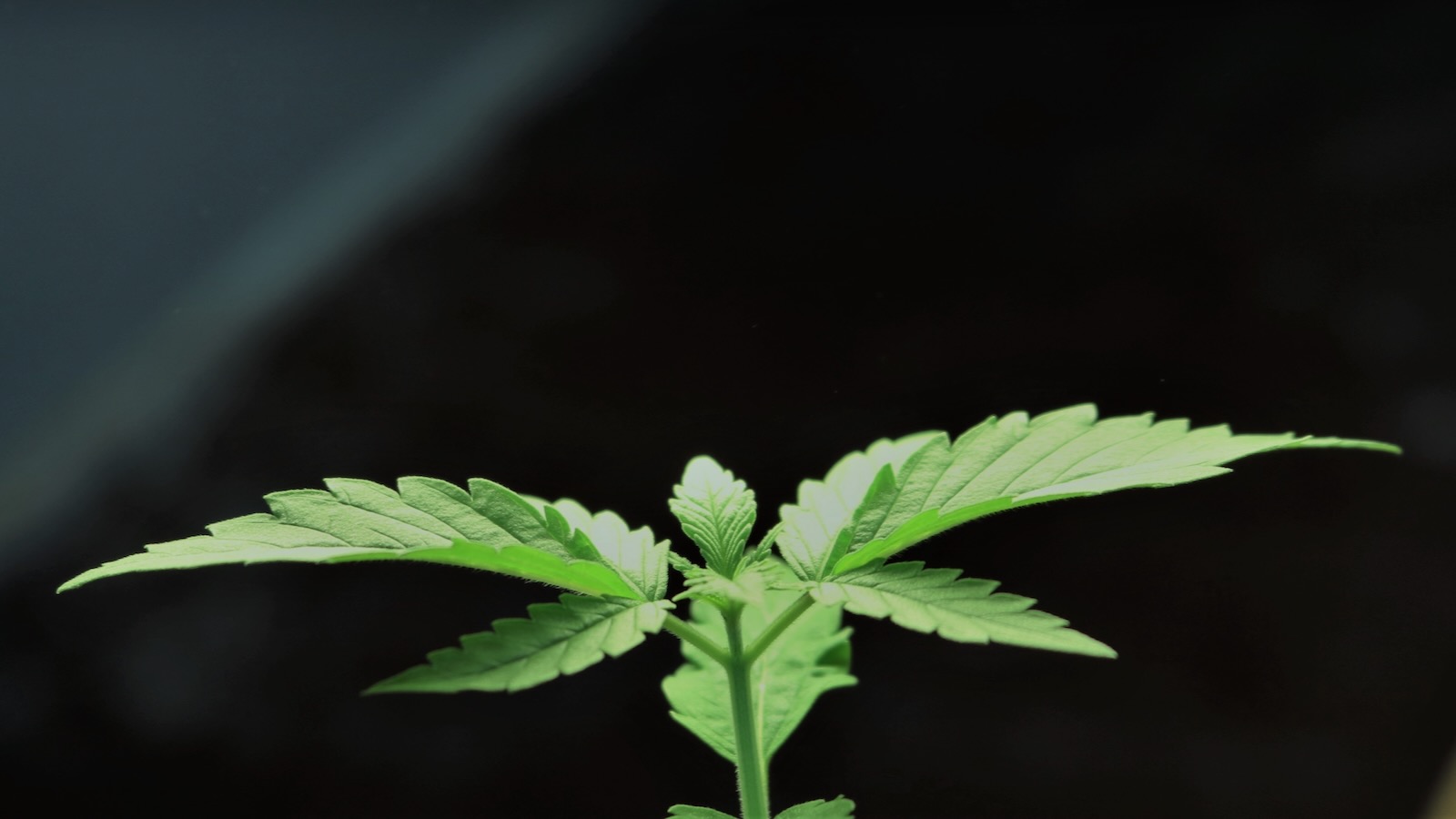
A leaf impression in fossilized mud, first described by a botanist in 1883 and nearly forgotten for 140 years in a Berlin museum collection: the fossil of Cannabis oligocaenica from near Eisleben in Saxony-Anhalt may be the world’s oldest known cannabis plant. Scientists at Berlin’s Museum für Naturkunde have redated the discovery with a remarkable result: the fossil originates from the Lower Eocene, making it between 56 and 48 million years old.
📑 Inhaltsverzeichnis
A Fossil That Rewrites Everything
Paul Friedrich, a botanist of the late 19th century, described the leaf fossil as Cannabis oligocaenica and dated it to the Oligocene, approximately 25 to 30 million years ago. However, newer geological analyses show that the deposit layer near Eisleben is far older. According to the Museum für Naturkunde Berlin’s current classification, the fossil belongs to the Lower Eocene, an epoch that ended roughly 56 to 48 million years ago. This makes it 30 to 35 million years older than the previously known oldest cannabis fossils from northwest China, which are dated to approximately 20 million years old.
The leaf impression exhibits the characteristic features of modern cannabis plants: an elongated, lance-shaped form and a distinctly serrated leaf margin. This morphological similarity to Cannabis sativa surprises researchers. What once wandered into the archive as a curiosity now stands at the center of paleobotanical debates. The fact that the fossil lay dormant in the Berlin Natural History Museum’s collection makes the story even more remarkable: the plant essentially lay unrecognized on a shelf while science for decades searched elsewhere for the roots of the hemp plant.


Saxony-Anhalt as the Cradle of Cannabis?
The discovery raises a far-reaching question: did cannabis really originate exclusively in Central Asia? Current scientific consensus holds that the genus Cannabis emerged in northwest China and spread from there across the world over millennia. The Eisleben fossil at least calls this thesis into question. Either early cannabis predecessors existed across a broader Eurasian distribution area, or early relatives of the genus had a significantly wider geographical range than previously assumed.
From a historical perspective, this is not a completely surprising result. Cannabis is a plant with a deep, still not fully deciphered history that extends far beyond human use. As our overview on the history of the hemp plant shows, humans have utilized cannabis for tens of thousands of years in various cultures—first as a fiber plant, then as a medicine, and eventually as a recreational substance. That the genus itself is far older than this cultural history of use was known. But 56 million years had never crossed the minds of scientists before.
Spectacular Discovery with Caveats: What Researchers Still Need to Clarify
As sensational as the discovery is, researchers remain cautious. For definitive classification, researchers would need microstructural details beyond the external leaf form—particularly the characteristic leaf hairs (trichomes) that distinguish modern cannabis plants from related genera. These details are absent from the fossil due to its preservation state. Scientists therefore speak of a strong indication rather than definitive proof. Further paleobotanical analyses are ongoing.
This is not a weakness of the discovery but good scientific practice. Paleobotany always works with incomplete data, as fossils never preserve the complete picture—only what time has left behind. Yet the fact that the leaf impression from Eisleben shifts the previous age boundary so drastically makes it significant nonetheless. And perhaps the museum collection holds more: collections like Berlin’s Natural History Museum contain millions of objects, many of which have not yet been fully scientifically processed. The question of how the word hemp found its way through the millennia presents linguistic history with similar puzzles.
Frequently Asked Questions
How old is the cannabis fossil from Saxony-Anhalt?
The fossil of Cannabis oligocaenica from near Eisleben is dated to 56 to 48 million years old. It originates from the Lower Eocene and is thus considerably older than all previously known cannabis fossils, which came from northwest China and were estimated at approximately 20 million years old.
Who discovered the fossil?
The fossil was already described in 1883 by botanist Paul Friedrich and has since been housed in the Museum für Naturkunde Berlin’s collection. Scientists at the museum have reassessed the geological classification and determined its significantly greater age. In the classical sense, it is not a new discovery but rather a revaluation of a long-known specimen.
Does the discovery prove that cannabis originated in Europe?
No. However, the discovery challenges the prevailing assumption that Cannabis originated exclusively in Central Asia. It suggests that early predecessor plants may have existed across a much larger Eurasian distribution area. Further research is needed to confirm or refute this thesis.
Why is the discovery not yet conclusively confirmed?
For definitive botanical classification to the genus Cannabis, microstructural characteristics are missing—particularly the distinctive leaf hairs (trichomes). These are not preserved in the fossil. While the leaf form strongly resembles modern cannabis plants, according to current scientific standards it does not suffice for definitive classification. Paleobotanical research is still ongoing.






Wie gut kennst du die Geschichte der Cannabispflanze?
Branchen-Update
News, Analysen und Reportagen — mehrmals im Monat direkt in dein Postfach.
Folge uns