What the Authority Tested
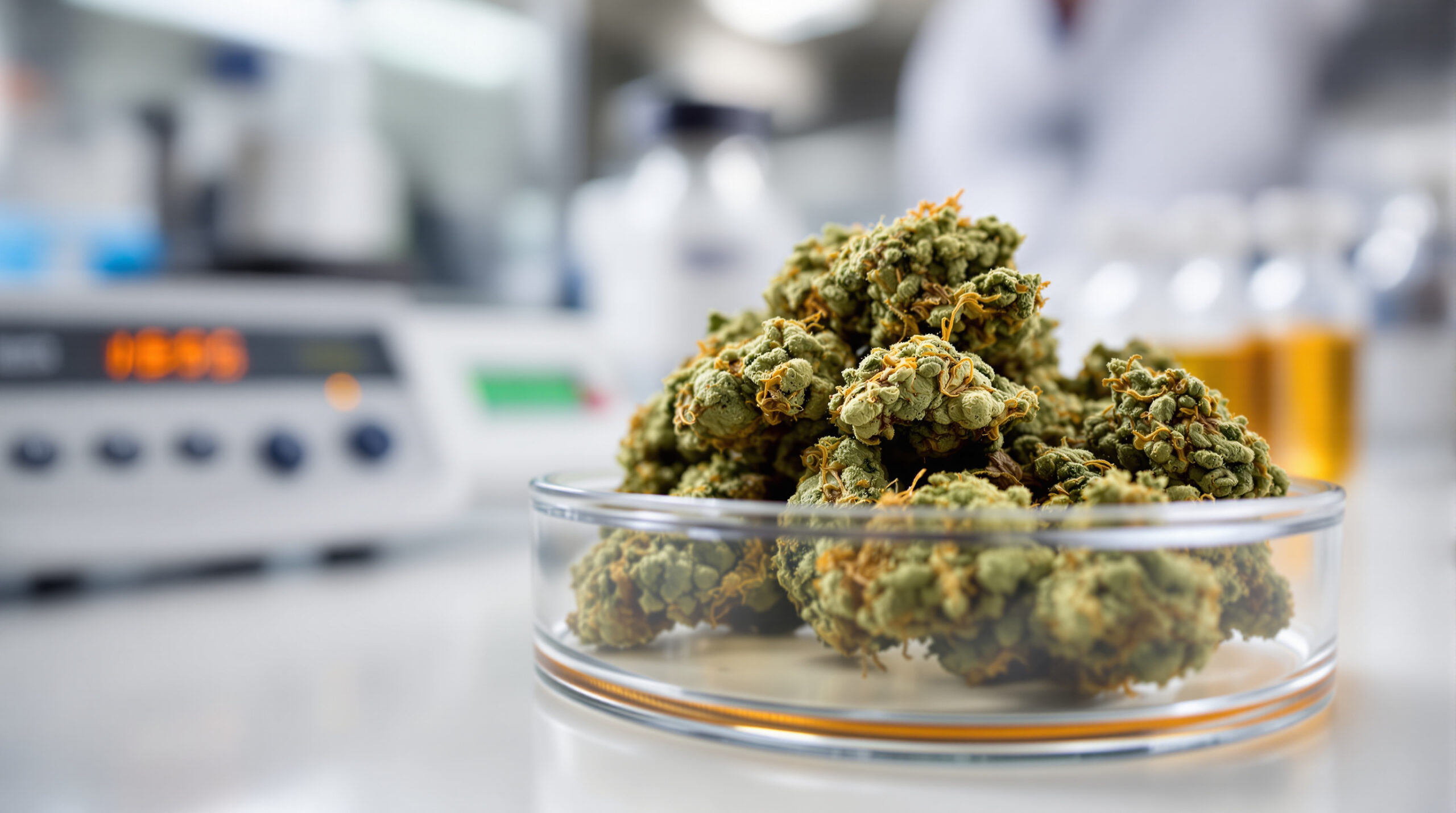
The Cannabis Control Commission in Massachusetts conducted laboratory retesting of cannabis flowers from the legal market. Approximately 13 percent of the tested products fell outside the allowable deviation from the stated THC value. The agency examined 63 flower products from 62 manufacturers—the broadest official sample testing initiative of its kind in the state.
📑 Inhaltsverzeichnis
Massachusetts permits a tolerance range of 75 to 125 percent of the labeled THC content. A product labeled at 20 percent THC, for example, can legally contain between 15 and 25 percent. This wide tolerance is intentional, since cannabis flowers are a natural product with cannabinoid levels that fluctuate within any given batch.
Despite this generous margin, roughly one in eight products fell outside acceptable parameters. Forty-three of the tested products came close to the tolerance threshold. Only seven matched the label value within two percentage points. Travis Ahern, who leads the commission, described the testing as ongoing work by an internal task force focused on laboratory analytics.


For non-compliant batches, the agency outlined several remedies: recall with reprocessing and retesting, recall with relabeling, simple retesting, or destruction. The commission has not announced fines against individual operators to date.
Why THC Accuracy Becomes Problematic
In every legal cannabis market, a substantial portion of consumers make purchasing decisions based on the number printed on the label. Higher THC content commands higher prices, creating a financial incentive to inflate values. In the United States, this practice has become known as „lab shopping.“ Producers send samples to multiple testing facilities and use the most favorable result.
This pattern is not new. The globally rising THC content we’ve documented over recent years reflects this pressure. The extent to which cannabinoid potency now determines pricing demonstrates how market economics can drive labeling practices.
A wide tolerance range exacerbates rather than solves this problem. When a producer can legally deliver 25 percent THC while printing 20 percent on the label, consumers receive a different product than advertised. For patients using cannabis medically and requiring precise dosing, this discrepancy matters significantly.
Implications for the German Market
Germany’s market operates under different structures, yet faces the same core issue. Medical cannabis flowers must meet pharmaceutical codex standards. Every batch includes an analysis certificate documenting THC and CBD content. Testing occurs through qualified laboratories, with responsibility resting on the importer or manufacturer.
Cultivation associations operate under weaker regulations. They must provide average THC and CBD content information upon distribution. A state-mandated testing regime with official sampling, as Massachusetts now demonstrates, does not exist in comparable form. Home cultivation bypasses analytics entirely. Those seeking to determine cannabinoid content independently rely on home testing devices.
The Massachusetts case presents an argument that has received limited attention in German policy discussions: cannabinoid accuracy verification is not a minor regulatory detail but a consumer protection issue. That cannabis market figures regularly require retroactive correction demonstrates this need. The resources required to establish reliable analytical infrastructure—as evidenced by Canada’s 24 million dollar research program—underscore the investment necessary for robust testing systems.
Frequently Asked Questions
How much deviation from labeled THC values is permitted?
Massachusetts sets the acceptable range at 75 to 125 percent of the label value. For a product labeled at 20 percent THC, this means 15 to 25 percent is compliant. Other U.S. states employ tighter or wider ranges. No federal standard exists.
What is lab shopping?
This refers to the practice of submitting samples to multiple testing laboratories and selecting the result showing the highest THC content for labeling purposes. Since laboratories are commissioned and paid by producers, a structural conflict of interest develops. Official regulatory sampling programs serve as the standard countermeasure.
Do German medical cannabis products follow stricter regulations?
Yes. Medical cannabis flowers qualify as pharmaceuticals and must meet pharmaceutical codex requirements. Every batch requires an analysis certificate documenting THC and CBD levels. This process is substantially more formalized than U.S. recreational market testing.
What applies to German cultivation associations?
Cultivation associations must provide information on average THC and CBD content during distribution. No comprehensive state-level testing program with independent sampling currently exists. Practices vary significantly across federal states.
Can I test THC content at home?
Consumer devices exist that provide rough estimates, though they cannot match accredited laboratory accuracy. Sample preparation substantially affects results. Such devices offer general guidance but lack the precision required for medical dosing.
Wie wichtig ist dir der genaue THC-Wert beim Cannabiskauf?
Sources: Cannabis Control Commission Massachusetts, Ganjapreneur, Marijuana Moment.






Branchen-Update
News, Analysen und Reportagen — mehrmals im Monat direkt in dein Postfach.
Folge uns