
Post-traumatic stress disorder often changes lives for years. Insomnia, flashbacks, and constant inner hypervigilance shape the daily reality of many affected individuals. An increasing number of patients are asking whether cannabis can be a real help for PTSD. Military veterans in particular are driving this debate worldwide. This overview classifies the current state of research and explains what has applied in Germany since the Medical Cannabis Act.
📑 Inhaltsverzeichnis
- What triggers PTSD and the role of the endocannabinoid system
- What the research evidence on cannabis for PTSD really shows
- Which PTSD symptoms cannabis can relieve
- Why veterans are at the center of cannabis research
- Cannabis for PTSD in international comparison
- Medical cannabis for PTSD in Germany: Prescription and limitations
- Forms of administration and dosage in cannabis therapy
- Risks, limitations, and the role of psychotherapy
- Frequently asked questions
- 💬 Fragen? Frag den Hanf-Buddy!
What triggers PTSD and the role of the endocannabinoid system
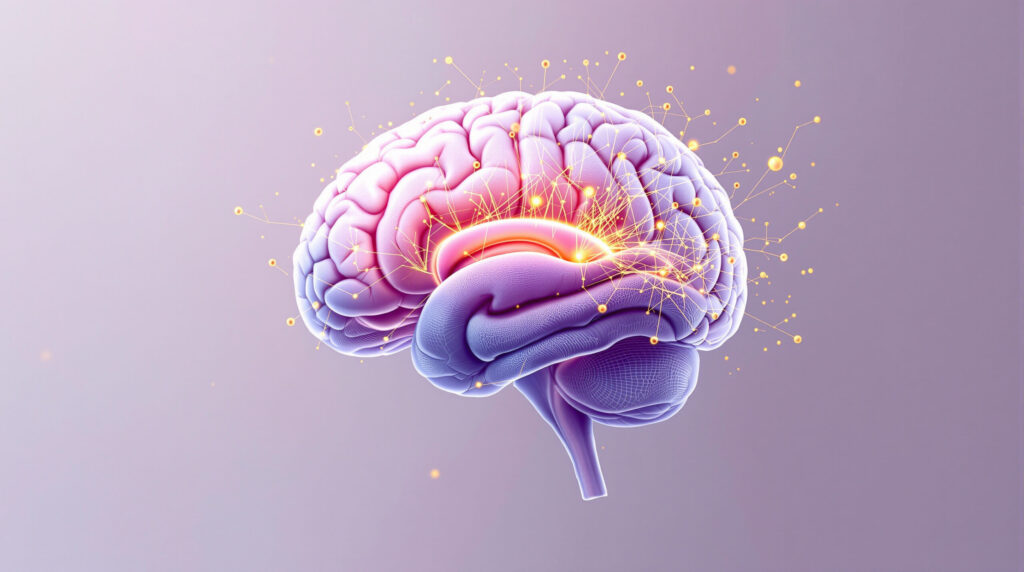
PTSD develops after one or more highly traumatic events. These include military deployments, serious accidents, experiences of violence, or sexual abuse. The brain stores the memory of the trauma in such a way that it keeps intruding. Affected individuals experience flashbacks, nightmares, and significantly increased startle responses. The body remains in a state of constant tension for an extended period.
The body’s own endocannabinoid system controls, among other things, the processing of fear and the extinction of fear responses. Researchers suspect that this system becomes imbalanced in PTSD. A low level of the body’s own messenger substance anandamide is considered a possible factor. This is precisely where the idea comes in to intervene with the active compounds of the hemp plant in a regulatory manner. Our fundamental article on the endocannabinoid system explains how this delicate network of receptors works.


What the research evidence on cannabis for PTSD really shows
Research presents a mixed picture. An evaluation of the UK Medical Cannabis Registry from 2025 followed 269 people with PTSD. Participants reported significant improvements in symptoms, anxiety, sleep quality, and overall quality of life. Such observational data are encouraging but do not replace controlled trials.
Systematic reviews are more cautious. Some reviews found no clear evidence of efficacy for cannabis flower and extracts in PTSD, anxiety, or depression. The best evidence so far exists for the synthetic compound nabilone against trauma-related nightmares. A review by De Bode and colleagues from 2025 also showed that CBD can reduce acute anxiety. The combination of CBD and THC improved sleep in this analysis. The overall consensus is: there are clear signals for benefit, but high-quality randomized trials are still lacking.
Which PTSD symptoms cannabis can relieve

The symptoms of PTSD can be broadly divided into several groups. Cannabis does not act on the trauma itself but on individual symptoms. Patients most frequently report better sleep. In particular, the harrowing nightmares often occur less frequently during treatment. This relieves the body, which otherwise struggles to rest.
A second point of intervention is constant hyperarousal. Many affected individuals are perpetually on edge and startle at every sound. THC and CBD can dampen this inner tension. The pronounced avoidance behavior is also a focus of research. As anxiety decreases, some patients find it easier to re-engage with everyday life. An important caveat remains a realistic expectation, as cannabis dampens symptoms but does not erase the traumatic memory.
Why veterans are at the center of cannabis research
Military veterans are among the most heavily affected groups. Following deployments involving combat operations, a substantial proportion develop PTSD. Conventional medications and psychotherapy do not help all patients sufficiently. Many veterans therefore turn to cannabis on their own to regulate sleep and inner tension.
This widespread self-medication has put research under pressure. In late 2024, the U.S. Food and Drug Administration approved a Phase 2 trial involving 320 veterans. It examines inhaled cannabis in PTSD for the first time under strictly controlled conditions. The results are considered an important benchmark for the entire debate. Should they prove positive, this would likely ease medical access in many countries.
Cannabis for PTSD in international comparison
The approach to cannabis for PTSD varies significantly worldwide. In Israel, post-traumatic stress disorder has been recognized as an approved indication for years. The country is considered a pioneer in cannabis research. In Canada, many patients legally use cannabis for their symptoms. In the United States, the situation is more complicated because federal and state law diverge. This is precisely why the approval of the new veterans‘ study there has received so much attention. Germany is taking a clearly regulated middle path with the Medical Cannabis Act.
Medical cannabis for PTSD in Germany: Prescription and limitations
Since the Medical Cannabis Act of April 2024, the legal situation has become clearer. Physicians are permitted to prescribe cannabis for PTSD if other therapies are insufficient or cause severe side effects. Dentists and veterinarians are exempt. Prescription is issued via a controlled substance prescription. The diagnosis must be medically confirmed and properly documented.
Therapy planning with regular follow-up monitoring is mandatory. Health insurance companies cover costs if an individual application is submitted and the indication is plausibly justified. Certain pre-existing conditions typically exclude treatment. These include psychosis, severe arrhythmias, and active substance use disorders. Those who additionally suffer from anxiety disorders or depression should discuss this openly with their treating physician.
Forms of administration and dosage in cannabis therapy
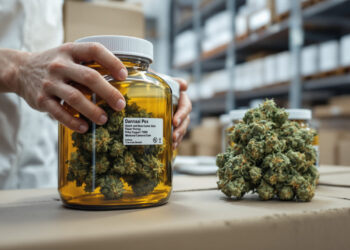
Medical cannabis is available in several forms. Dried flower is vaporized and takes effect quickly but has a relatively short duration. Extracts and oils take longer to work but last longer. Different preparations often suit different times of day. Which form is appropriate depends on the symptom and the patient’s daily routine.
The ratio of THC to CBD is also crucial. A high CBD content can mitigate the psychoactive effects of THC. For this reason, many treatments start with very low doses. The principle is start low, go slow—in other words, gradually introduce and carefully increase the dose. This allows for finding the individually appropriate amount without overtaxing the cardiovascular system or psyche. Fine-tuning always remains in the physician’s hands.
Risks, limitations, and the role of psychotherapy
Cannabis is not a cure-all for PTSD. Experts emphasize that trauma therapy must be at the center of any treatment. Established procedures such as cognitive behavioral therapy address the actual cause of the disease. Cannabis can at best play a supportive role, for instance with stubborn sleep problems or severe tension.
Possible side effects include drowsiness, dizziness, and concentration difficulties. In sensitive individuals, THC can even increase anxiety. This is why close medical supervision is so important. Our article on side effects of cannabis provides an overview of unwanted effects. A study on the efficacy of cannabis for PTSD presented in 2019 pointed early to possible benefit but could not provide definitive proof.
Frequently asked questions
Is cannabis approved for PTSD in Germany?
There is no specific approval of a cannabis medication for PTSD. However, since April 2024, physicians have been able to prescribe cannabis under the Medical Cannabis Act if other therapies are insufficient. Prescription is issued individually via a controlled substance prescription.
Which cannabinoids are most likely to help with PTSD?
The best scientific evidence exists for the synthetic compound nabilone against nightmares. CBD can dampen acute anxiety, while the combination of CBD and THC can improve sleep. The appropriate composition is always determined by the treating physician.
Does health insurance cover the cost of therapy?
Yes, health insurance can cover the costs. Requirements include an individual application and a plausibly justified medical indication. Without an approved application, patients must typically pay for the therapy themselves.
Can cannabis replace trauma therapy?
No, cannabis cannot replace trauma therapy. Psychotherapeutic treatment remains the core of any PTSD therapy. Cannabis can only be used in a supportive capacity, for instance against sleep disorders or severe inner tension.
Why is cannabis for PTSD often associated with veterans?
Sollte Cannabis bei PTBS leichter zugänglich sein als heute?
Military veterans are among the most frequently affected groups. Many of them have been using cannabis for self-medication for years. For this reason, major research projects specifically target this population, such as the veterans‘ study approved by the FDA.



Branchen-Update
News, Analysen und Reportagen — mehrmals im Monat direkt in dein Postfach.
Folge uns