It happens every summer: Someone walks through a residential neighborhood, catches the unmistakably sweet and resinous scent of cannabis, and calls the police. Yet at the end of the trail stands no illegal cultivation, but an unassuming ground cover in someone’s front yard. Nature has a remarkable ability to imitate aromas we distinctly associate with marijuana. In fact, there are quite a few plants that smell like marijuana without being remotely related to the hemp plant. Once you understand which chemical compounds are responsible, you’ll see your home garden in a whole new light.
📑 Inhaltsverzeichnis
These mix-ups are rarely coincidental. Aromatic compounds like terpenes and coumarins are produced by completely different plant families, yet our nose doesn’t distinguish based on botanical relationships—it responds to molecules. These molecules overlap between hemp and a handful of garden and wild plants remarkably often. In this article, we introduce the most famous candidates, from the notorious sweet woodruff to the North American skunk cabbage, and explain why they so thoroughly fool our sense of smell.
Why different plants smell like marijuana
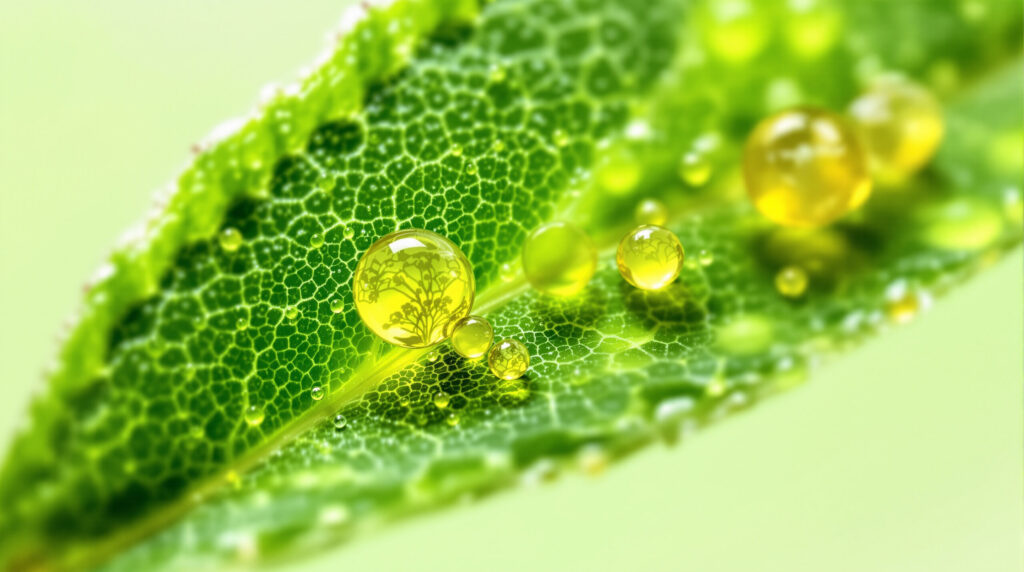
The cannabis smell is not a single substance but a complex bouquet of dozens of aromatic compounds. Terpenes make up the largest share—volatile hydrocarbons found not only in hemp but in almost all fragrant plants. Myrcene provides earthy, musky notes; limonene contributes citrus accents; caryophyllene delivers a peppery, spicy sharpness. Only the interplay of all these molecules creates the typical, multi-layered aroma we recognize as marijuana. Learn more about these aromatic compounds and their profiles in our comprehensive terpene guide.


The crucial insight is this: a foreign plant doesn’t need to copy the entire cannabis profile to remind us of cannabis. Often it’s enough for it to emit one or two of these dominant terpenes in high concentration. Our brain fills in the rest and responds to the familiar pattern. Besides terpenes, coumarins play an important role—a group of compounds with sweet, hay-like character. When coumarins are released through moisture or leaf damage, the scent quickly becomes resinous, further fueling confusion with dried grass.
Sweet woodruff: the classic case of mistaken identity
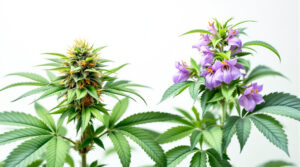
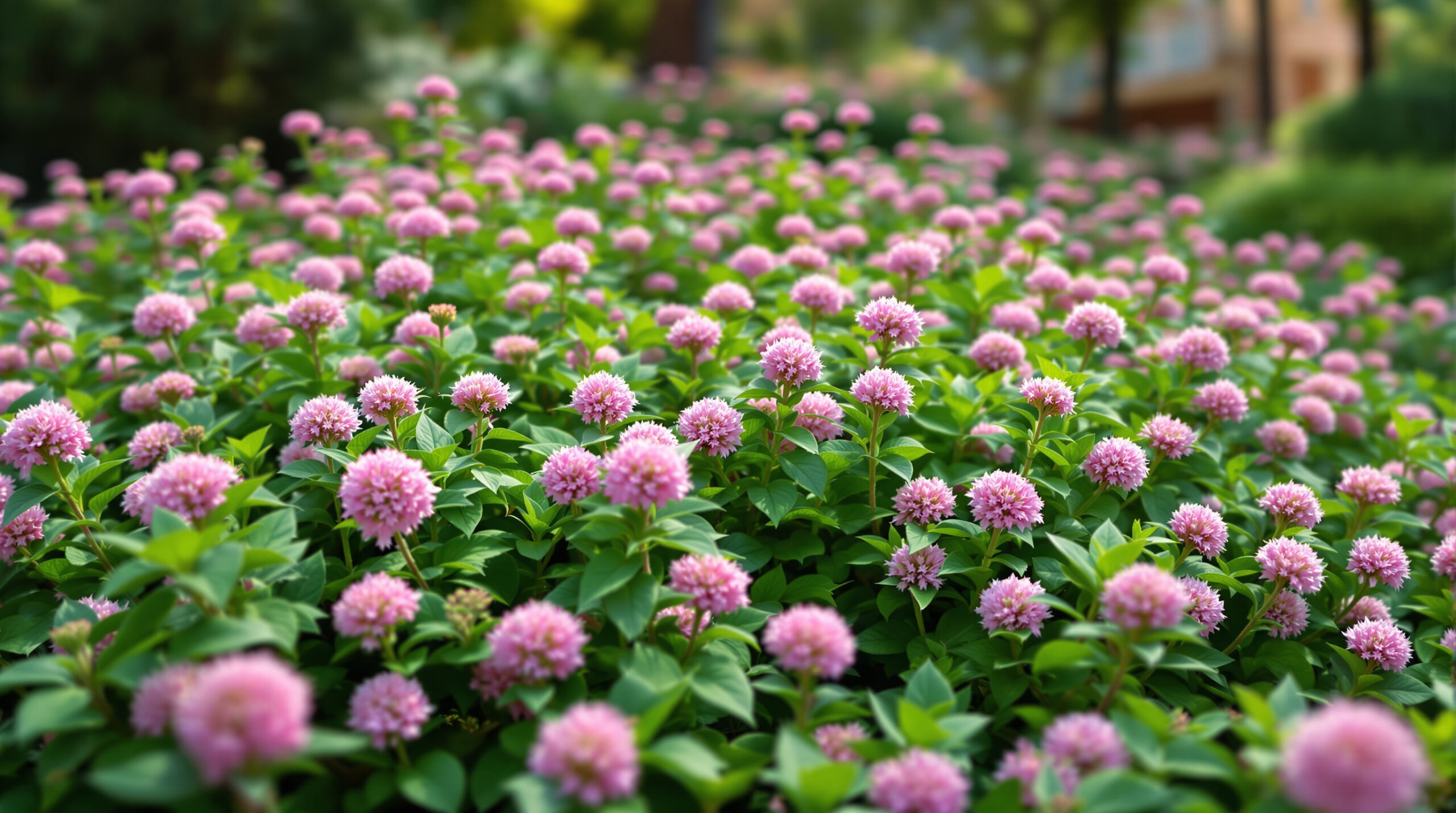
No plant has caused more false alarms at European police stations than sweet woodruff (Phuopsis stylosa). This ground cover from the Caucasus has been cultivated in our gardens for over two hundred years and forms dense mats with rosy-pink, spherical flower clusters. As attractive as it looks, its smell can be overpowering. Especially after rainfall, the plant releases an intense, sweetly pungent odor that many spontaneously identify as hemp. We’ve already devoted a dedicated profile to this notorious ground cover, which describes sweet woodruff as a marijuana doppelgänger in detail.
Responsible for the aroma is an extraordinarily high coumarin content combined with terpene-like compounds. Some noses perceive the smell not as cannabis but as wet animal fur, which is why the plant earned the English nickname „stinking plant.“ Several Swiss cases are documented where entire residential neighborhoods smelled of hemp for months until the alleged culprit was finally found in someone’s front yard and cleared of suspicion. So if you have sweet woodruff in your garden, don’t be surprised if neighbors start sniffing suspiciously.
Skunk cabbage, hellebore, and the smell of decay

Eastern skunk cabbage (Symplocarpus foetidus), a wetland plant from eastern North America, enters an entirely different league. Strictly speaking, it smells less like marijuana than like a mixture of skunk, rotten flesh, and garlic, yet in its more variable, muted variations, some people do place it in the cannabis category. Skunk cabbage is a biological marvel: it generates its own heat through thermogenesis and melts the snow above its flowers in late winter. The intense carrion smell is no accident but an invitation—it attracts blow flies and mosquitoes that serve as pollinators.
The stinking hellebore (Helleborus foetidus), a native buttercup family plant, works similarly. As long as its leaves remain undamaged, it stays quiet smell-wise. But when crushed, a musty, musky odor escapes that is also quickly associated with cannabis. Here too, the smell serves to attract flies and carrion insects. Both plants exemplify how nature has independently invented the same olfactory trick multiple times. They use smell not for camouflage but as a targeted signal to the right pollinators.
Marigolds, skunk plants, and other doppelgängers
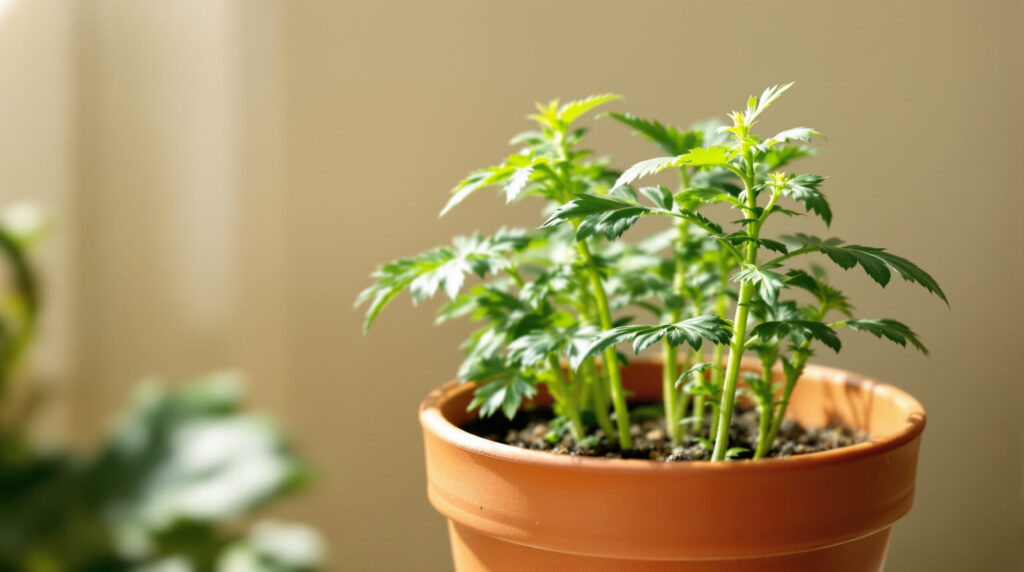
Among garden plants, the slender-leaved marigold (Tagetes minuta) deserves special attention—aptly named „Stinking Roger“ in English. Its scent is described as potent, spicy, and almost medicinal, and as a seedling it bears a striking resemblance to young hemp plants with its long, finely serrated leaves. It thus deceives in two ways—both visually and olfactorily. Other Tagetes species and some sage varieties also emit resinous, spicy aromas that quickly raise eyebrows in the open air.
The list can be extended: certain hop varieties, botanical close relatives of hemp, share many terpenes and thus smell almost identical. Some boxwood species develop a sharp, cat-like odor in summer that also triggers associations. Even citrus plants and some conifers can release limonene and pinene in quantities that briefly recall grass on warm days. If you want to dig deeper, you can read our article on odorless cannabis varieties, since hemp cultivation is now also deliberately working on scent control.
When the garden becomes a police matter
These curious scent confusions do have practical consequences. Before partial legalization in Germany in 2024, anonymous tips about alleged cannabis odor repeatedly led to police operations that came to nothing. Even today, when private cultivation of up to three plants is permitted, the smell still sparks debates among neighbors. Important to know: smell alone is not proof. A blooming sweet woodruff or marigold is enough to set an entire street abuzz without a single hemp plant being present anywhere.
For garden owners, therefore, a dose of equanimity is recommended, and when in doubt, have a conversation. If you plant a scent-intensive ground cover, it’s wise to educate curious neighbors before speculation arises. Conversely, it’s worth sniffing twice before filing a report and thinking of botanical doppelgängers. Nature simply produces the same molecules in many plants, and our nose is a fascinating but easily deceived instrument.
Frequently asked questions
Which plant smells most strongly like marijuana?
Sweet woodruff (Phuopsis stylosa) is considered the most famous and convincing doppelgänger. Especially after rain, it releases large quantities of coumarin and emits a sweetly resinous odor that many people spontaneously mistake for hemp. It has already led to multiple police operations in residential areas.
Why do plants smell like cannabis if they’re not related to it?
The cannabis smell results from terpenes and coumarins—aromatic compounds that occur independently in many plant families. A foreign plant doesn’t need to possess the complete hemp profile but only needs to emit one or two dominant terpenes like myrcene in high concentration for our nose to recognize the familiar pattern.
Is skunk cabbage related to hemp?
No, eastern skunk cabbage (Symplocarpus foetidus) belongs to the arum family and is botanically unrelated to cannabis. Its intense odor is more reminiscent of skunk and putrefying flesh but serves the same purpose as that of many doppelgängers: attracting carrion insects for pollination.
Can the smell of a garden plant trigger a police operation?
Yes, this is well documented. Especially in Switzerland, ground covers like sweet woodruff have put entire neighborhoods under suspicion. However, smell alone is not proof of illegal cultivation, and in many cases the alleged hemp source turned out to be a harmless ornamental plant.
Does a plant also look like cannabis if it smells like it?
Hast du schon einmal eine Pflanze mit Cannabis verwechselt?
Some do. The slender-leaved marigold (Tagetes minuta), for instance, resembles young hemp plants as a seedling with its long, serrated leaves and simultaneously smells spicy-resinous. It thus deceives in two ways. However, most scent doppelgängers like sweet woodruff don’t actually look like cannabis.






Branchen-Update
News, Analysen und Reportagen — mehrmals im Monat direkt in dein Postfach.
Folge uns