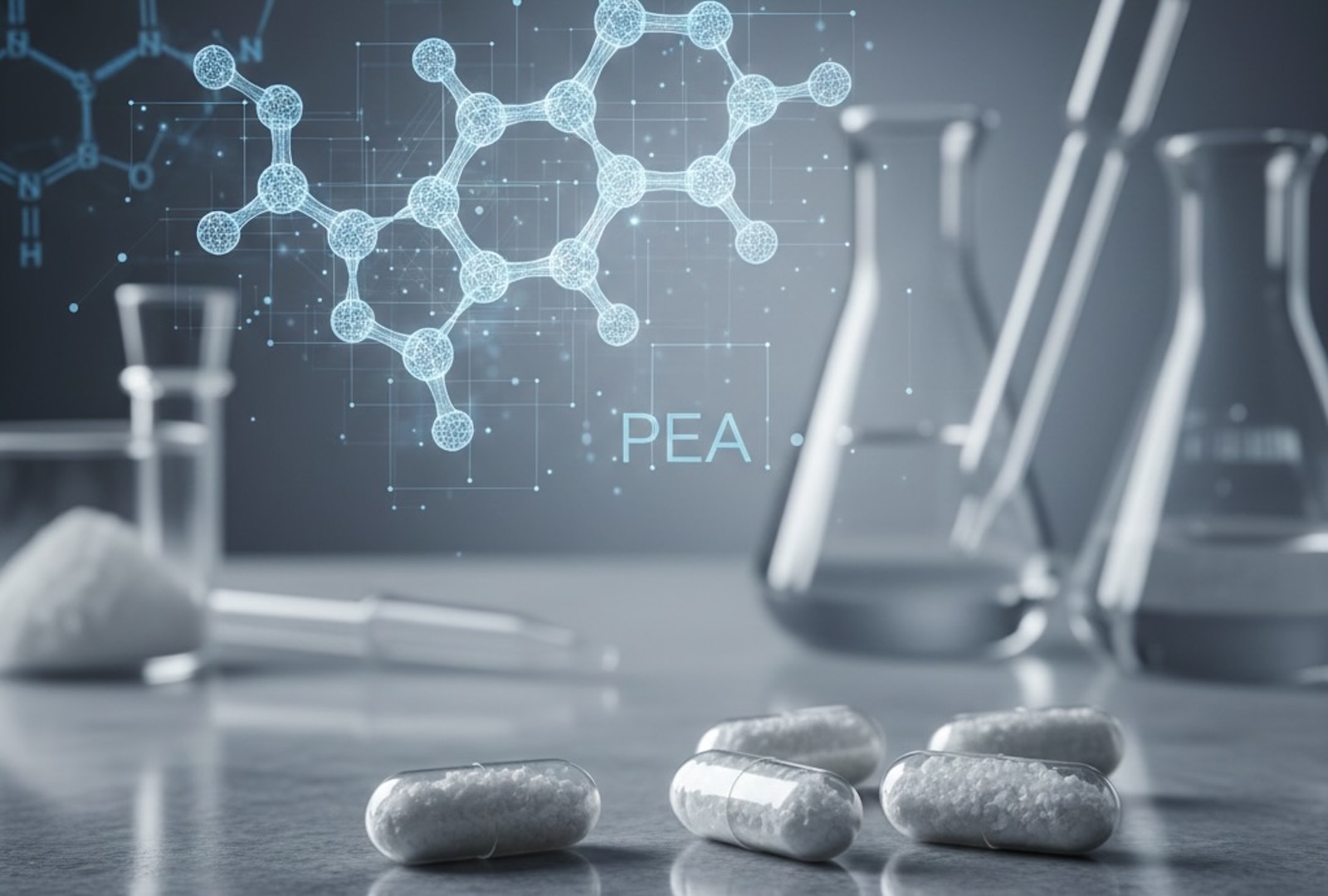
Palmitoylethanolamide, or PEA, is an often underestimated component of the extended endocannabinoid system. The substance is produced by the body as a natural response to cellular damage or inflammation. While PEA does not directly bind to classical cannabinoid receptors (CB1 and CB2), it amplifies the effects of the body’s own cannabinoids through the so-called „entourage effect.“
📑 Inhaltsverzeichnis
PEA exerts its effects primarily through receptors of the extended endocannabinoid system, such as PPAR-alpha. As a fatty acid amide that plays a central role in immunological processes, it is increasingly becoming the focus of medical research. Due to its high therapeutic potential combined with very low side effect risk, PEA is already freely available as a dietary supplement.
A Promising Candidate for Psychosis
An Italian study published in 2025 investigated whether PEA could have a preventive effect in adolescents with genetic predisposition to psychosis. Sixteen high-risk patients received 600 mg of PEA daily for 12 weeks.


The results were impressive: psychopathological symptoms, measured on the international CAARMS scale, decreased by 52.5% within 12 weeks. Measurable biomarkers in the body also confirmed the antipsychotic effect. Particularly noteworthy is that PEA was well-tolerated by all participants—there were no reports of side effects.
Treatment for Restless Legs Syndrome (RLS)
Neurological disorders like restless legs syndrome often significantly impact sleep quality. Current standard therapies frequently come with severe side effects. Initial clinical observations now suggest that PEA can be an effective alternative or complement. It appears particularly to support the effects of the medication gabapentin without exacerbating its side effect profile.
Breakthrough in Chronic Back Pain
Evidence for PEA as a valuable addition to chronic pain management comes from another Italian study in 2025. Forty-nine patients with chronic back pain who responded inadequately to conventional treatments like tramadol received PEA (combined with horsetail extract) for eight weeks.
The result: 94% of participants experienced a significant reduction in pain intensity. On average, scores on the Numeric Pain Rating Scale (NPRS) decreased by 3.8 points. Since the treatment was virtually free of side effects, PEA offers a promising option for pain patients who wish to reduce their conventional medication.
Sources
- Psychosis Study: Palmitoylethanolamide in clinical high risk for psychosis (PubMed)
- CAARMS Explained: Comprehensive Assessment of At-Risk Mental States (PubMed)
- Restless Legs Syndrome: PEA as a potential treatment for RLS (PubMed)
- Chronic Back Pain: Clinical evidence for PEA and Equisetum arvense in chronic back pain (MDPI)







Hast du schon einmal PEA als Nahrungsergänzungsmittel ausprobiert?
Branchen-Update
News, Analysen und Reportagen — mehrmals im Monat direkt in dein Postfach.
Folge uns