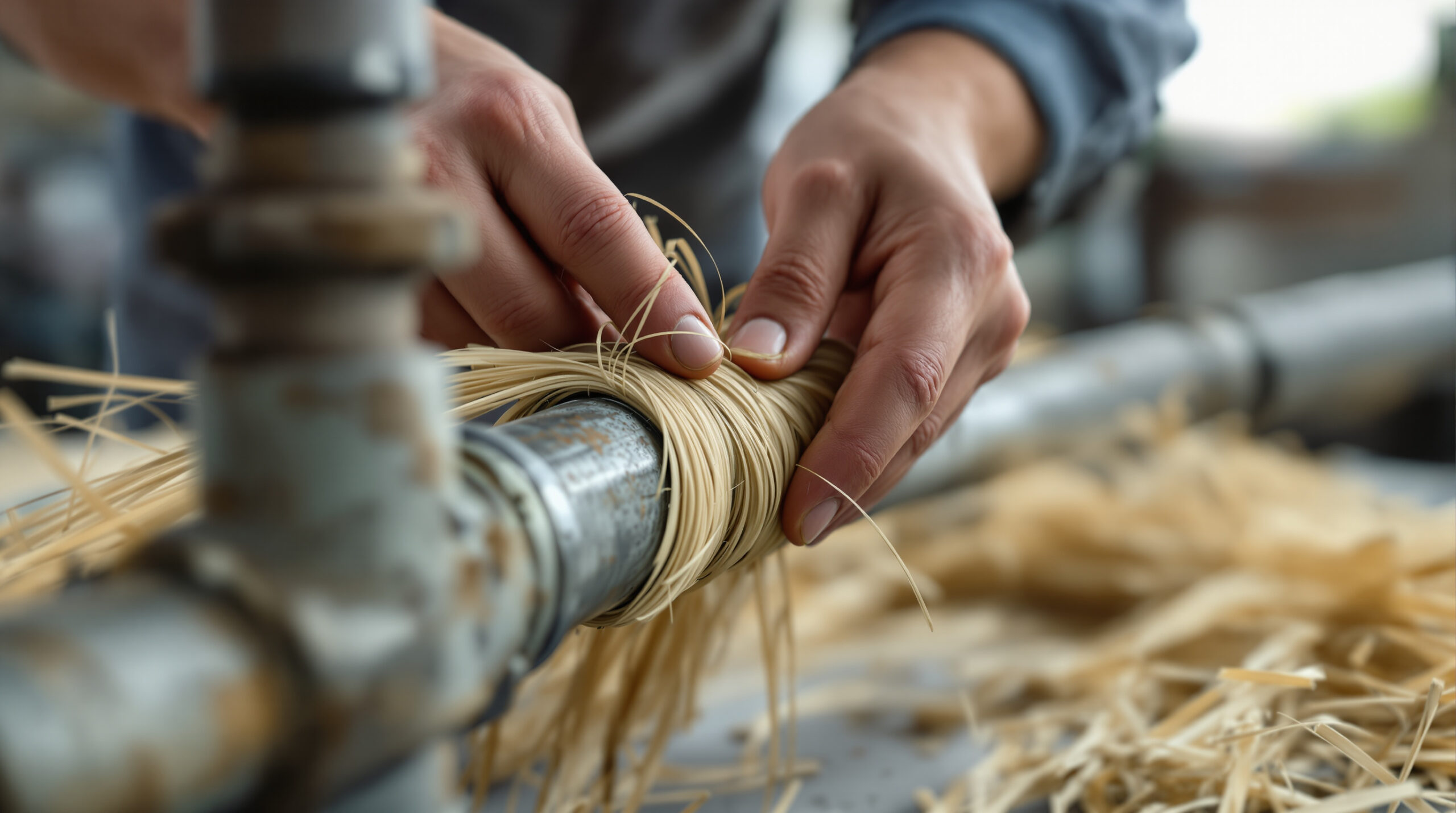
In an industry where materials are replaced by high-tech variants on an annual cycle, one material has remained virtually unchanged for over a century: sealing hemp. Anyone who watches a plumber at work knows the image. Before a threaded fitting is screwed together, the skilled worker pulls a few honey-colored fibers from the braid, expertly twists them around the external threads, and spreads a paste over them. This very hand movement connects modern plumbing with generations of plumbers before it. That it is precisely a plant fiber that has withstood PTFE tape and chemical liquid sealants to this day is no accident, but a matter of material physics.
📑 Inhaltsverzeichnis
- Why Plumbers Swear by Hemp for Sealing
- From Oakum to Professional Braid: A Brief Look at History
- How the Professional Does It: Correct Processing Step by Step
- Hemp versus PTFE Tape: When Each Material Excels
- Drinking Water, Gas, and Standards: Is Hemp Still Permitted?
- Frequently Asked Questions
- 💬 Fragen? Frag den Hanf-Buddy!
The key phrase is hemp seal plumber, and it leads straight into one of the oldest practical applications of this utility plant. While hemp in public perception oscillates between an intoxicant and a trendy insulation material, it performs invisible continuous work in millions of German heating and water pipes. This article explains why the fiber works, how it should be processed correctly, and why even updated regulations have not displaced it from the toolbox.
Why Plumbers Swear by Hemp for Sealing
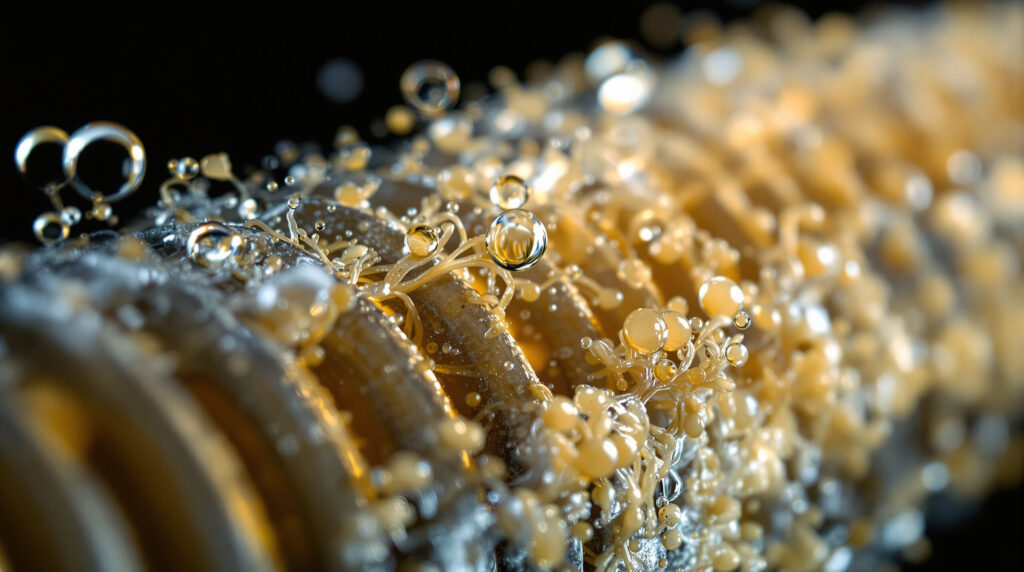
The secret lies in a simple property of the fiber: it swells. When sealing hemp comes into contact with water, the cell walls absorb moisture and increase their volume. In a threaded connection, this means the fiber actively presses itself into every remaining void and compensates for small movements or imprecise fits of the conical connection. A metallic steel thread can never be manufactured with absolute precision. The swelling fiber closes these exact tolerances without the skilled worker needing to apply higher torque.


Added to this is a mechanical robustness that synthetic alternatives often lack. Significant shear forces act on the sealing material during screwing. While PTFE tape can tear or roll up if tightened too firmly, the hemp braid withstands these stresses. Even near soldering points or during later welding work, the fiber handles heat better than a plastic tape that would melt. For installers who may want to tighten a connection later, this is a decisive practical advantage. Hemp allows readjustment without immediately losing its sealing effect.
Last but not least, cost-effectiveness plays a role. A braid of sealing hemp costs just a few euros and is sufficient for dozens of connections. The material is renewable, biodegradable, and available in every hardware store. For those who want to understand the ecological strengths of the plant, the article on the rediscovery of hemp as a utility plant provides broader context for its renaissance.
From Oakum to Professional Braid: A Brief Look at History
Strictly speaking, the material in plumbing is often simply called oakum, and it does not consist exclusively of hemp. A mixture of hemp and flax fibers is standard, which is why skilled workers also speak of flax when they mean the braid. Both fibers come from plants whose stalks can be processed into long, tear-resistant strands. Long before modern plastics existed, craftsmen used them to seal barrels, ship planks, and pipe connections.
With the spread of cast iron and later galvanized steel pipes in the 19th and early 20th centuries, fiber sealing became the standard of emerging household plumbing. It was cheap, readily available, and above all reliable. This continuity explains why the technique remains part of the basic repertoire of every apprenticeship in plumbing, heating, and air conditioning trades to this day. That such a traditional technique has outlived modern press-fitting and adhesive systems shows how well the material properties suit the task. The long career of the fiber fits seamlessly into the history of hemp fiber in Europe.
How the Professional Does It: Correct Processing Step by Step
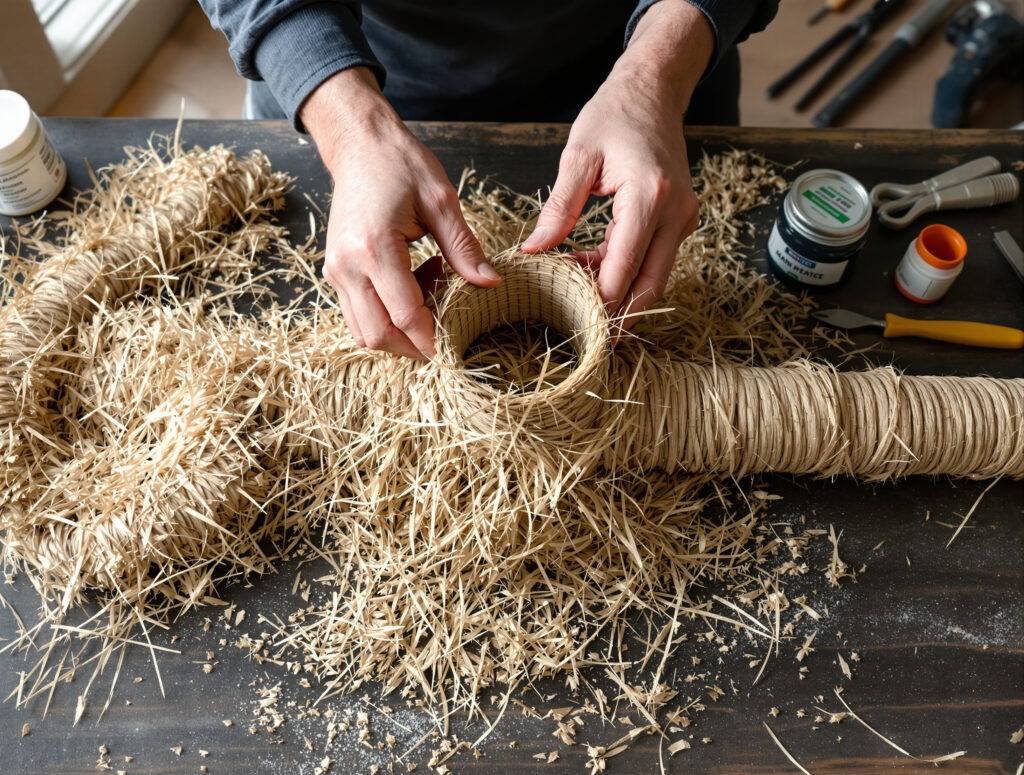
A hemp seal only works if certain rules are followed. The most common mistake by non-professionals is wrapping in the wrong direction. The hemp should be wrapped in the direction of the thread’s rotation, that is, clockwise. Only then is the fiber compressed as it is screwed in and seals, instead of loosening and knotting. Wrapping against the rotation direction produces leaks guaranteed.
Before application, the external thread should be slightly roughened if it is still smooth. A few strokes with a water pump pliers or saw blade give the fiber purchase. After that, only a few fibers are needed. Professionals first lay a thread across the thread grooves and then wrap the remaining hemp over it from inside to outside. This way the material grips and doesn’t slip when screwing.
Crucial is the second component: hemp alone does not seal permanently. A sealant paste is applied over the fiber, such as a well-known product from the Fermit brand. This paste serves multiple purposes. It lubricates the connection during tightening, fills remaining voids in the thread grooves, and protects the hemp from chemical and biological decomposition. Only the interplay of the swelling fiber and protective paste creates a connection that remains sealed for decades. For those who want to delve deeper into the purely technical question of whether hemp is truly a better choice than alternatives, find detailed information in the article on sealing water pipes with hemp.
Hemp versus PTFE Tape: When Each Material Excels
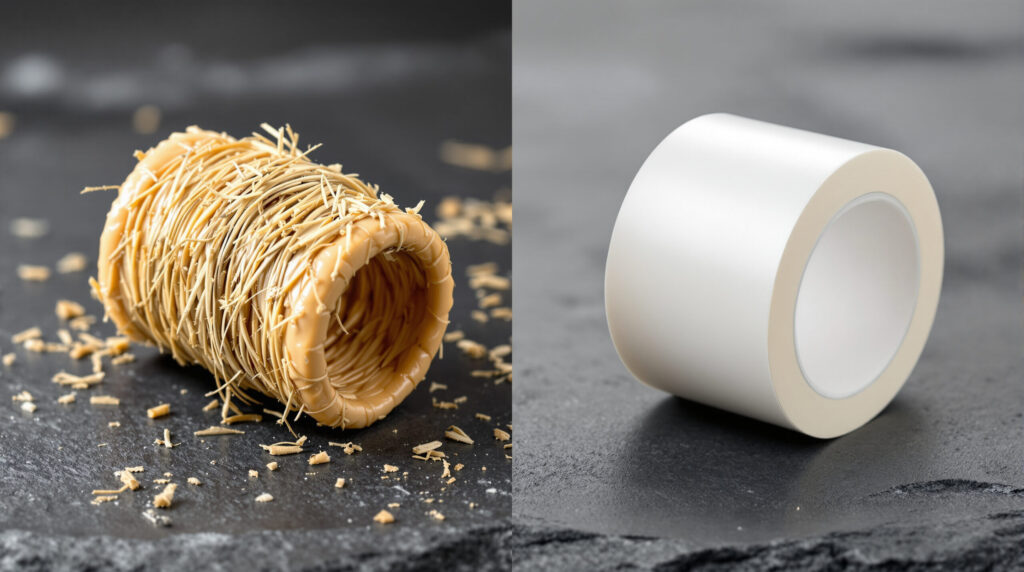
The question of the better sealant has occupied DIY forums for years, and the honest answer is: it depends. PTFE tape, a thin band of polytetrafluoroethylene, excels primarily through its ease of use. It is wrapped tightly around the external thread and is therefore particularly suitable for beginners and connections with lower contact pressure. On plastic threads that cannot be tightened arbitrarily tight, the tape plays to its strengths.
With classic metal threads that are tightened firmly, and with older installations with larger tolerances, hemp comes out ahead. It better compensates for irregularities, allows readjustment, and tolerates heat. PTFE tape, on the other hand, allows no correction. If a connection is unscrewed slightly after tightening, the sealing effect is lost. Professionals therefore select the most appropriate material depending on the situation rather than dogmatically committing to one choice. For demanding heating and drinking water connections made of metal, the hemp braid remains the first choice in many businesses.
Drinking Water, Gas, and Standards: Is Hemp Still Permitted?
There is a persistent rumor that hemp is no longer approved for drinking water for hygienic reasons. This is false. A fiber seal made of hemp or flax is, in combination with an approved sealant, still a permissible seal for threaded connections in drinking water installations. The relevant regulations, including DIN EN 751-2 and DIN 30660, as well as DIN EN 806 Part 4 as the connection method, expressly provide for the procedure.
What matters is that the sealant paste used has a valid approval. For established products such as Neo-Fermit Universal thread sealant paste, a DIN-DVGW type examination certificate with registration number exists. In combination with the sealant carrier hemp, use in drinking water installations thus remains permitted. In the industry, moreover, no cases of damage are known where a professionally executed hemp seal has led to hygienic deficiencies. The standard therefore does not require abandonment of hemp, but proper material bonding. For those who want to learn more about the regulatory side of industrial hemp applications, the overview of hemp as a utility crop in Germany provides further context.
Frequently Asked Questions
Why does hemp seal a pipe connection at all?
Hemp fiber swells when it comes into contact with water and increases its volume. This way it fills remaining voids in the thread grooves and compensates for tolerances of the metal connection. In combination with a sealant paste, this creates a permanently sealed material bond.
In which direction do you wrap sealing hemp?
The hemp is wrapped in the direction of the thread’s rotation, that is, clockwise. Only then is the fiber compressed as it is screwed in and seals reliably. If you wrap against the rotation direction, the hemp loosens and the connection begins to leak.
Is hemp alone sufficient for sealing?
No, hemp is always processed together with a sealant paste. The paste lubricates the thread, fills voids, and protects the fiber from decomposition. Only the interplay of swelling fiber and paste creates a long-lasting, sealed connection.
Is hemp better than PTFE tape?
That depends on the application. On firmly tightened metal threads and older installations, hemp is more robust, heat-resistant, and allows readjustment. PTFE tape is simpler to work with and suits plastic threads with low contact pressure. Professionals choose based on the situation.
Can hemp still be used for drinking water lines?
Hast du schon mal selbst mit Hanf eine Verbindung gedichtet?
Yes. Hemp in combination with an approved sealant paste is still permitted for drinking water installations under current standards such as DIN EN 751-2 and DIN 30660. The requirement is that the paste used has a valid DVGW approval.







Branchen-Update
News, Analysen und Reportagen — mehrmals im Monat direkt in dein Postfach.
Folge uns