Who lies awake at night struggling to fall asleep often seeks out herbal alternatives to sleeping pills. Cannabis is increasingly coming into focus because certain varieties have distinctly sedating effects. However, not every flower from the pharmacy or personal cultivation is suitable for falling asleep. What matters is the genetics, the terpene profile, and the ratio of cannabinoids. This guide introduces the most important varieties and explains what patients and consumers should look for in a sleep strain.
📑 Inhaltsverzeichnis
Why certain cannabis strains promote sleep
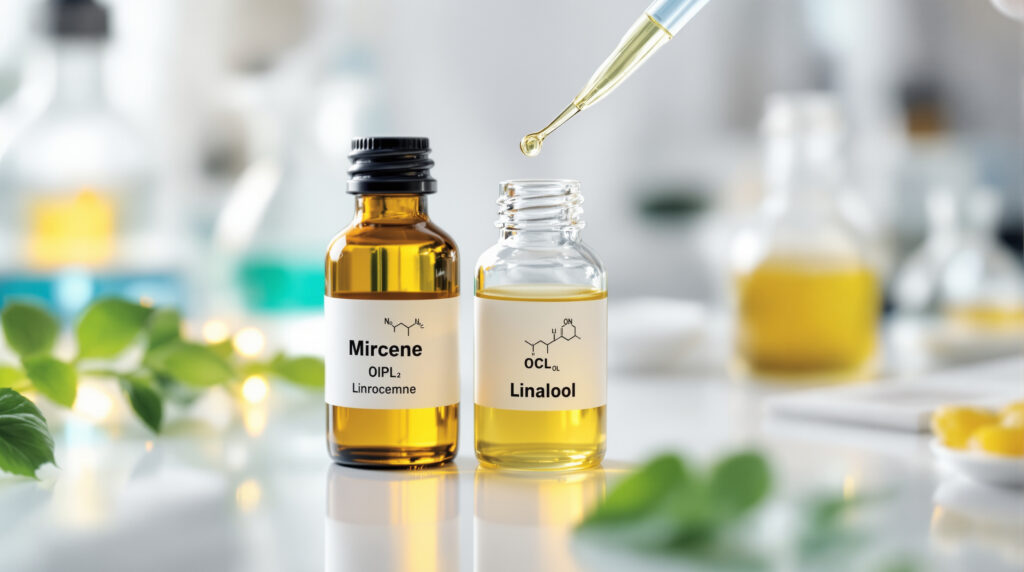
The sleep-promoting effect of a flower depends less on pure THC content than is often assumed. Rather, it is the interplay of cannabinoids and terpenes that matters. Indica-dominant strains typically contain more myrcene, a monoterpene that has demonstrated muscle-relaxing and sedating effects in studies. Above a myrcene content of around 0.5 percent, a strain is considered a typical couch-locker. In addition, there is linalool, which is also found in lavender and has a calming effect through GABA modulation. A detailed overview of the most important aromatic compounds can be found in our terpene guide.
THC itself does shorten sleep onset time, but it also affects the REM phase. A moderate dose between 18 and 22 percent provides a more favorable effect profile for most patients than highly potent 30-percent strains, which can trigger heart palpitations and rebound anxiety in sensitive consumers. Additionally, the cannabinoid CBN is gaining attention: it is produced through the aging and oxidation of THC and is considered particularly sedating. Those wanting to learn more about the neurobiological mechanisms can find further information in the article on the influence of cannabis on sleep and dreams.


The most effective Indica strains for nighttime
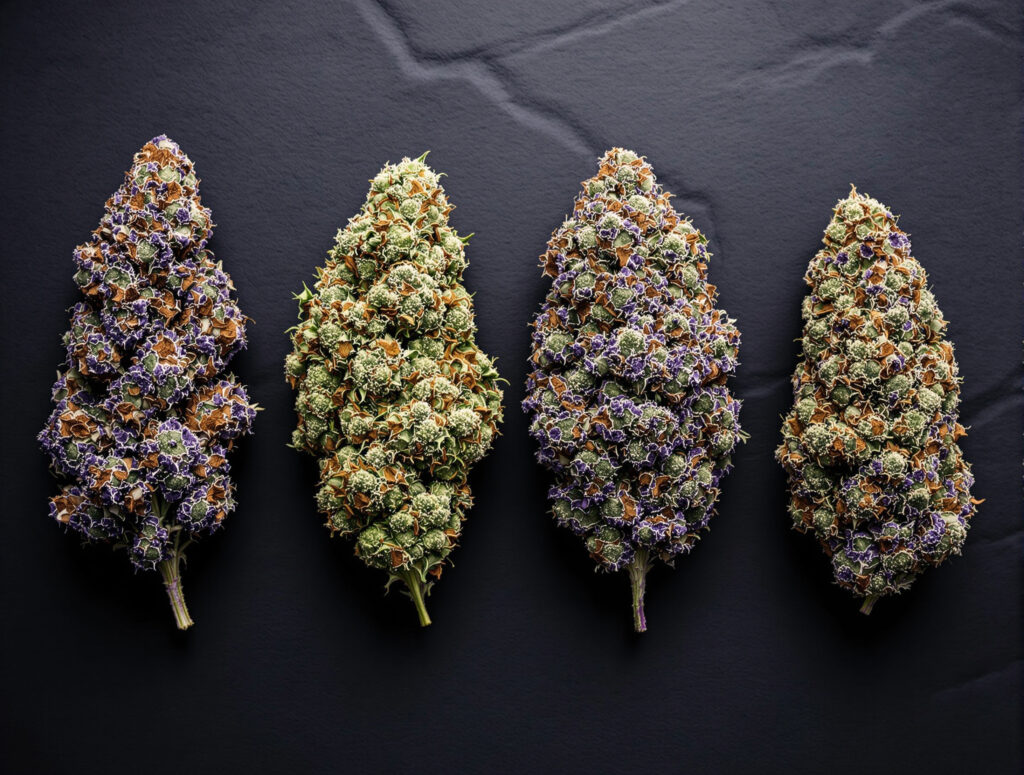
Granddaddy Purple is considered the reference standard among sleep strains. This California cross of Big Bud and Purple Urkle brings an intensely berry aroma, with myrcene, pinene, and caryophyllene dominating the terpene profile. Patients describe a warm body high that eases the transition into sleep without leaving the head foggy the next morning. Those sensitive to high THC values should prefer a phenotype with levels between 17 and 20 percent.
Northern Lights has been a fixture for restless nights since the 1980s. This nearly pure Indica delivers myrcene values over one percent in many phenotypes, reaching up to 1.5 percent in some cuts. Characteristic is the rapid onset: within 20 to 30 minutes of vaporizing, a deep physical heaviness sets in. This very predictability makes the strain so popular with patients suffering from chronic sleep disorders.
Bubba Kush and its relatives Death Bubba and Pink Kush belong to the top tier when physical tension blocks sleep. The sweetly earthy aroma comes from a strong caryophyllene content that also binds to the CB2 receptor and has anti-inflammatory effects. Patients with back pain or fibromyalgia often report that these strains dampen pain enough that continuous nighttime rest becomes possible again.
Lavender, a cross of Super Skunk, Big Skunk Korean, and Afghani Hawaiian, owes its name to its high linalool content. It is particularly suitable when rumination and tension prevent falling asleep. In pharmacy assortments, comparable profiles are frequently found under the search term Indica-dominant hybrids with a THC value between 18 and 22 percent.
Medical cannabis from the German pharmacy
Since the prescription reform of 2024, patients in Germany have access to over one thousand strains from around sixty manufacturers. Those receiving a prescription for cannabis flowers for sleep disorders should specifically ask their treating physician or pharmacist for Indica-dominant strains with moderate THC value and high myrcene content. Providers such as avaay, Tilray, and Aurora carry several strains that document precisely these profiles in their terpene analyses.
A practical approach is to inhale or take as oil the final daily dose about an hour before bedtime. Inhalation via vaporizer takes effect within ten to twenty minutes, while oil takes forty to ninety minutes. The effect lasts approximately four to six hours with both application methods. Those wishing to systematically optimize the process will find concrete dosing recommendations in our article on cannabis oil for sleep disorders.
Gradual adjustment is important. Too high an initial dose can have the opposite effect: instead of sleeping soundly, patients feel drowsy in the morning or experience a hangover effect. The science behind this phenomenon is explored in our article on the pharmacodynamics of the hemp plant, which explains the role of the endocannabinoid system in the sleep-wake cycle.
Cannabis and sleep phases

Human sleep is divided into light sleep, deep sleep, and REM phases, which repeat in cycles of around 90 minutes. THC-containing strains lengthen deep sleep, where the body regenerates, but shorten REM phases. Since dreams and memory consolidation are tied to the REM sleep phase, regular consumers often report distinctly dream-poor nights. After a longer break, so-called REM rebound occurs with particularly intense dreams.
For most sleep patients, the benefit of prolonged deep sleep outweighs the reduced dream time. However, those who work professionally with creative processes or tend toward low moods should critically observe the duration and intensity of cannabis use. Intermittent use three to four evenings per week often preserves effectiveness and gives REM sleep room to recover.
What to consider when selecting a strain
Those wishing to deliberately use cannabis to fall asleep should check three criteria. First, the terpene profile: myrcene above 0.5 percent, supplemented with linalool and caryophyllene. Second, the cannabinoid mix: ideally THC between 18 and 24 percent, supplemented with measurable CBN levels that naturally develop in properly stored and cured flowers. Third, duration of effect: strains with rapid onset suit acute sleep problems, while longer-lasting varieties relieve sleep maintenance problems.
In home cultivation, sleep strains can be selectively bred. Even in legal home growing, the specifications of home cultivation regulations from the Cannabis Act apply. An overview of suitable genetics is offered in our comprehensive strain guide 2026. When curing the harvest, patience is required: only after several weeks in a jar with controlled humidity does the full terpene profile develop, and some of the THC converts to the sedating CBN.
A common mistake is mixing with alcohol or other sedatives. Both substances enhance the respiratory depressant effect of cannabinoids and worsen sleep quality in the second half of the night. Those using cannabis permanently to fall asleep should also take a break every three to four weeks so that tolerance doesn’t increase and effectiveness is preserved.
Frequently asked questions
Which cannabis strain helps best with falling asleep?
From experience, Granddaddy Purple, Northern Lights, and Bubba Kush deliver the most reliable results for sleep problems. The individual name is less important than the terpene profile: an Indica with high myrcene and linalool content and a THC level of 18 to 22 percent is usually the best choice.
Is Indica or Sativa better for sleep?
Indica-dominant strains are considered the better choice for nighttime because they predominantly work to relax the body. Sativa strains, by contrast, stimulate the mind and can even make falling asleep more difficult. The division into Indica and Sativa is simplified, however. The terpene profile of the specific strain is more important.
How much cannabis should one consume before sleeping?
Patients typically start with 0.1 to 0.2 grams inhaled or 5 to 10 milligrams THC orally and increase gradually. While a high dose does shorten sleep onset time, it compromises the REM phase and leads to unrefreshing sleep. The individual effective dose is often significantly lower than what consumers use for pure enjoyment.
Which terpenes are responsible for the sleep effect?
Above all, myrcene has sedating and muscle-relaxing effects. Linalool, known from lavender, calms through GABA receptors. Caryophyllene reduces inflammation and pain, which can disrupt sleep. Terpinolene also enhances sedation in higher concentrations.
Does CBD or CBN help sleep better?
Nutzt du Cannabis gezielt als Einschlafhilfe?
CBD acts more anxiolytic and can indirectly support falling asleep, but is not a classic sleeping aid. CBN is produced through THC oxidation and is considered specifically sedating. A study published in 2023 showed that 25 to 100 milligrams of CBN improves sleep quality similarly well as 4 milligrams of melatonin. A combination of moderate THC, some CBN, and sleep-promoting terpenes usually delivers the best results.







Branchen-Update
News, Analysen und Reportagen — mehrmals im Monat direkt in dein Postfach.
Folge uns