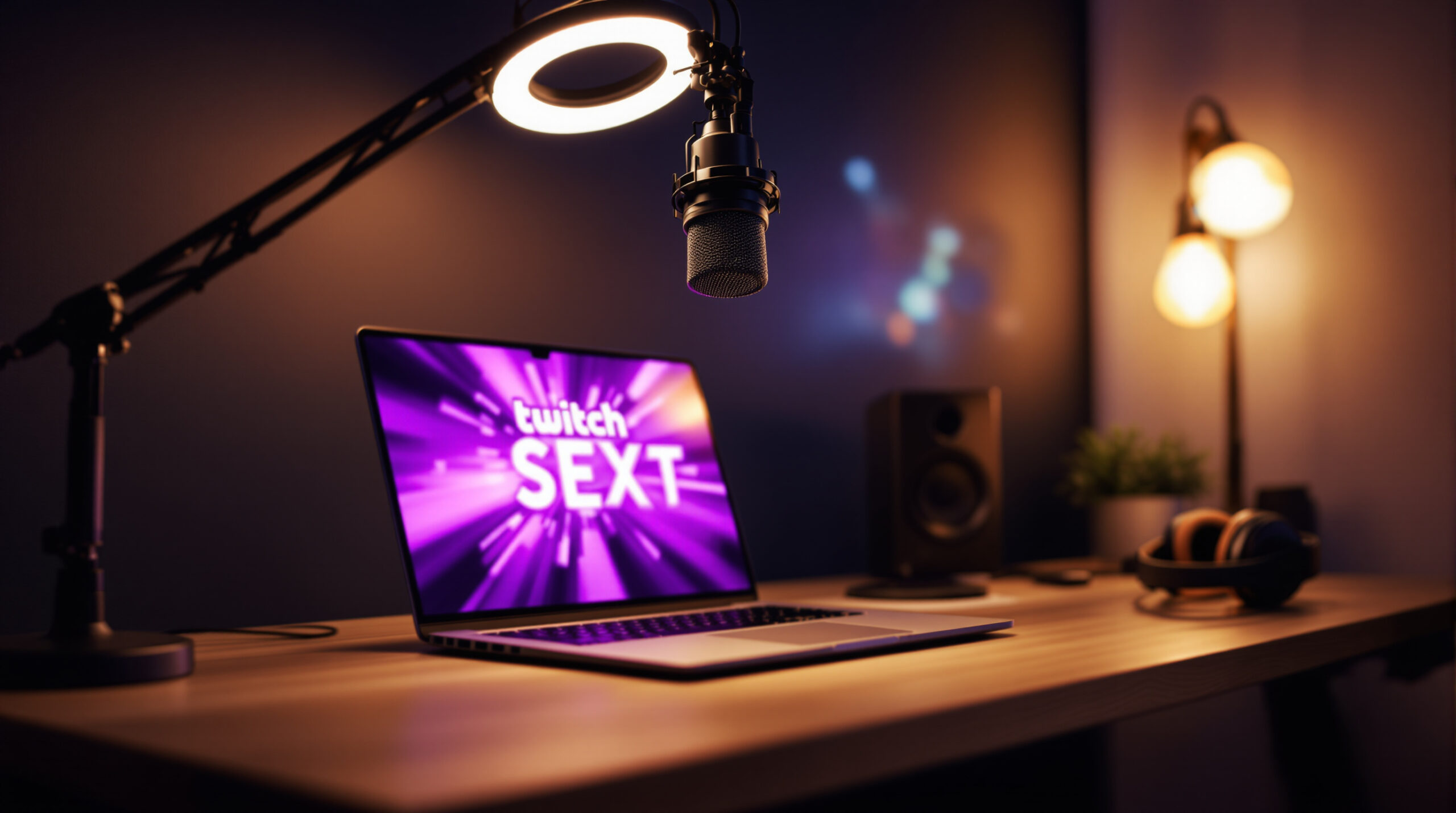
The question pops up in almost every German cannabis Discord the moment someone plans a stream: Can you actually smoke on Twitch without getting banned the next morning? Since partial legalization in Germany in April 2024, the answer has become more complicated than most expect. That’s because two regulatory systems collide on Twitch: the law in effect at the streamer’s place of residence and the global platform policies of a US corporation owned by Amazon. Anyone who confuses the two risks losing their channel.
📑 Inhaltsverzeichnis
This article cleanly separates what is legally permitted from what Twitch prescribes in its own rules. Both must be correct simultaneously, otherwise things get tight. We examine the notorious content label, clarify the distinction between consumption and advertising, and take a look at what is probably the most well-known precedent on the platform.
Can you smoke on Twitch? The short answer
Twitch does not generally prohibit smoking cannabis on camera. Community Guidelines explicitly ban only hard drugs and the misuse of legal substances. Adult streamers are permitted to consume alcohol, tobacco, or other legal substances as long as they do not visibly lose control. Since April 1, 2024, cannabis in Germany fundamentally falls under legal substances, provided the quantity limits and consumption restrictions of the Cannabis Consumption Act are observed.


The crucial sentence from Twitch’s rules essentially states: We expect all users to respect applicable local, national, and international law. With this, Twitch shifts responsibility to the location. In California, a joint in a stream is unproblematic; in a country with an absolute cannabis ban, that same joint would violate the guidelines on illegal activities. Germany has landed in between since the reform, because private consumption is legal but subject to distance restrictions and advertising prohibitions.
Content labeling is mandatory, not optional
Anyone wanting to consume on Twitch cannot avoid one step: setting the appropriate content label. Twitch requires the label „Drugs, intoxication, or excessive tobacco consumption“ before the stream. This label covers every form of cannabis consumption, including smoking, vaping, eating edibles on camera, and dabbing. Even extended, glorifying discussions about excessive consumption trigger the labeling requirement.
Here lies a trap many streamers underestimate. Failing to set the label is a guideline violation even if consumption itself would be permitted. In other words: it’s not smoking that costs the channel, but the missing label. The label ensures the stream is not played unfiltered to underage viewers and that advertising partners don’t unintentionally land next to drug content. Those who consume regularly should build the label into their stream routine, much like checking audio and video.
Consumption allowed, advertising prohibited: the subtle difference

The most important dividing line in Twitch’s rules runs between private consumption and paid promotion. In a policy update, Twitch prohibited promoting any form of marijuana but continues to allow alcohol promotion. Brand Guidelines specifically name cannabis-related products, including vaporizers, delivery services, and CBD, as ineligible for sponsored content.
Practically speaking: a streamer may smoke a joint during the stream but cannot accept money from a cannabis shop for it. The moment a logo appears, a discount code is mentioned, or a product is actively promoted, permitted consumption tips into prohibited brand advertising. This rule applies globally and thus also to European streamers, even if cannabis is legally sold in their home country. Twitch treats alcohol far more generously here, which draws criticism in many circles but doesn’t change the basic requirement.
This double standard between alcohol and cannabis is no accident but reflects the platform’s advertising economics. We’ve already examined in detail how deep the advertising prohibition cuts into brand guidelines. Creators thinking about the Twitch cannabis promotion and unequal treatment of alcohol should strictly separate the sponsorship issue from pure consumption.
The Snoop Dogg precedent
To see how Twitch decides in practice, look at the platform’s most famous case. Rapper Snoop Dogg smoked a blunt during a promotional stream for the game SOS in 2018 in front of around 80,000 viewers, and his channel stayed online. The reason wasn’t celebrity special status but simply the legal situation: recreational consumption had just been legalized in California, so there was no legal violation in his living room.
A Twitch spokesperson summed up the logic concisely at the time: because legality varies from country to country and state to state, they encourage users to follow their local laws. This principle remains unchanged. The case also shows the flip side, as there was criticism anyway, but less because of the joint than because of the rather casual gameplay participation. Consumption alone thus doesn’t result in a ban as long as local law covers it and the labeling is correct.
What German streamers must observe since legalization
With the Cannabis Consumption Act, private consumption for adults aged 18 and over has been legal in Germany since April 1, 2024. Adults may possess up to 25 grams in public and up to 50 grams of dried cannabis at home and grow up to three plants for personal use. For streamers, this means: a joint in their own living room is legally covered in principle, eliminating the Twitch ban solely for consumption.
But the law has pitfalls relevant in streams. Consumption bans apply in sight of schools, day care centers, playgrounds, and sports facilities, as well as in pedestrian zones at certain times. Whoever streams from a public location must observe these distances; otherwise legal consumption becomes an administrative violation. We detail what other obligations daily life brings in our review of the Cannabis Act. The Cannabis Act’s advertising prohibition also reinforces Twitch’s brand guidelines, since cannabis advertising is already heavily restricted in Germany anyway.
One last point concerns the setting. Streaming at work or on behalf of an employer operates in an entirely different context, as our article on cannabis in the workplace shows. For private hobby streams: legal consumption under the Cannabis Act, correct Twitch label, no paid cannabis advertising. These three conditions must be met together.
Frequently asked questions
Do you get banned on Twitch immediately if you smoke?
No, there is no automatic ban solely for cannabis consumption. What matters is whether consumption is legal at your place of residence and whether the „Drugs, intoxication, or excessive tobacco consumption“ label has been set. If the label is missing or consumption is illegal where you are, a violation threatens.
Must I set a content label as a German streamer?
Yes. The moment cannabis is consumed on camera or you are visibly under the influence, Twitch requires the appropriate label before streaming begins. This applies equally to smoking, vaping, and edibles. Failure to do so is a violation even if consumption is permitted.
Can I advertise for a cannabis shop in my stream?
No. Twitch’s Brand Guidelines explicitly prohibit sponsored content for cannabis-related products, including vaporizers, delivery services, and CBD. This rule applies globally, even for streamers in countries where cannabis is legally sold. Private consumption remains unaffected.
Why can you advertise alcohol but not cannabis?
Twitch treats both substances differently. Alcohol brands may advertise under certain conditions; cannabis brands may not. The background is the inconsistent international legal situation and advertising standards of the platform and its partners. This unequal treatment is controversial but part of the current policy.
How did Snoop Dogg avoid a ban in 2018?
Streamst du selbst oder hast du es vor?
His consumption was legal in California because recreational consumption had just been permitted there. This meant no legal violation, and Twitch pointed to the local legal situation. The case remains to this day evidence that it’s not consumption but its legality at the location that decides whether a ban occurs.




Branchen-Update
News, Analysen und Reportagen — mehrmals im Monat direkt in dein Postfach.
Folge uns