Cannabis and anxiety disorders share a contradictory relationship. On one hand, thousands of patients report noticeable calming effects from cannabidiol, while on the other, high-dose tetrahydrocannabinol products can trigger precisely the panic attacks they are supposed to relieve. Since the 2024 Cannabis Act and the stricter regulatory rules of 2026, the topic has become even more pressing. This specialist article examines the current research landscape, typical risk factors, and therapeutic options.
📑 Inhaltsverzeichnis
- Why cannabis works so contradictorily in anxiety disorders
- What the research landscape really says in 2025 and 2026
- Risk groups, warning signs, and the factor of self-medication
- Therapeutic use in Germany under 2026 rules
- Help or risk? A balanced assessment
- Frequently asked questions
- 💬 Fragen? Frag den Hanf-Buddy!
Why cannabis works so contradictorily in anxiety disorders

The central reason for the contradictory effects lies in the biphasic pharmacology of THC. Low doses activate CB1 receptors in the amygdala and prefrontal cortex in a way that dampens emotional reactivity. At this dosage, many users experience pleasant relaxation, reduced thought loops, and decreased physical tension. Once the dose exceeds an individual threshold, however, the picture changes. The same receptors then trigger a paradoxical reaction with heart racing, derealization, and acute anxiety. Pharmacologically, professionals speak of dose-dependent inversion of effects; in the everyday experience of patients, it’s simply called: too much.
Cannabidiol behaves differently. It binds only weakly to CB1 receptors but modulates the serotonin system via the 5-HT1A receptor and interferes with anandamide breakdown. This multifaceted action explains why CBD shows stable anxiolytic effects in clinical studies without being psychoactive. The catch: in the illicit market and in many recreational strains, the CBD-to-THC ratio is unfavorably shifted toward THC. Anyone smoking a standard high-potency strain today rarely gets the balanced plant that was examined in older studies on anxiety modulation. More on this shift in prescribing practices can be found in the article 25 Percent THC and the Question of Correct Dosing.


What the research landscape really says in 2025 and 2026

In April 2025, a systematic review published in the journal The Lancet Psychiatry delivered sobering findings. Across all included studies, the authors could not establish reliable benefit from medical cannabis for generalized anxiety disorders, depression, and post-traumatic stress disorder. Several professional societies cited these findings and warned against overestimating efficacy. However, the review combined very heterogeneous studies, from whole-plant preparations to isolated cannabinoids, and critics point out this heterogeneity is precisely the problem.
When differentiated by active ingredient, the picture changes. Multiple randomized, placebo-controlled studies exist for CBD in social phobia. The most methodologically rigorous studies used single doses between 300 and 600 milligrams and observed significant symptom reduction in speaking situations. A follow-up study with adolescent patients replicated the effect at 300 milligrams over several weeks. Leipzig University also conducted a double-blind study with forty participants with social anxiety disorder, which also suggests an anxiolytic effect. The situation is worse for THC. There is evidence that low doses may reduce post-traumatic stress symptoms, but no solid evidence for classical anxiety disorders.
Cannabigerol also received reliable attention for the first time in 2025. A peer-reviewed study showed a measurable anxiety-reducing effect without cognitive side effects, which has changed the view of so-called minor cannabinoids. We already summarized these findings in our own article: CBG demonstrates anxiety-reducing effects.
Risk groups, warning signs, and the factor of self-medication
Not everyone tolerates cannabis the same way. Anyone with a history of panic attacks, dissociative episodes, or psychosis in the family belongs to the primary risk group. High-dose THC can trigger latent symptoms here and, in unfavorable cases, cause them to manifest. Mixed consumption with tobacco or alcohol also significantly shifts the risk profile because tobacco prolongs THC’s half-life and intensifies circulation-related anxiety symptoms. A sober look at consumption is worthwhile especially when relief from cannabis only works while consuming, and the rebound the next day amplifies baseline anxiety.
A second risk group comprises people who self-medicate without medical supervision. They usually resort to strains from the gray or illicit market, without knowledge of THC content, without purity analyses, and without a plan for duration of use. Studies show that this path significantly increases the risk for cannabis use disorder while simultaneously reducing medium- and long-term efficacy against anxiety. The CB1 receptor responds with downregulation, the anxiolytic effect diminishes, consumption increases, and the spiral continues. If you start on your own and after weeks feel you can’t get through the day without cannabis, you should discuss consumption with a specialist.
Warning signs for a problematic course include increasing daily requirements, physical withdrawal symptoms like sleep disturbances and irritability, and an increase in the original anxiety symptoms. If taking other psychopharmaceuticals in parallel, one must watch for interactions, as CBD inhibits cytochrome P450 enzymes and can raise blood levels of benzodiazepines, SSRIs, and some anticonvulsants. An example of the tight connection between sleep, stress, and cannabinoids is offered in the article Cannabis oil for sleep disorders.
Therapeutic use in Germany under 2026 rules

Anxiety disorders are recognized indications for medical cannabis in Germany, though as a reserve therapy. A prescription typically comes into question when classical methods such as cognitive behavioral therapy, SSRIs, or pregabalin have either not worked sufficiently or were not tolerated. Since early 2026, stricter rules apply. Video consultations alone are no longer sufficient for initial prescriptions; the first contact must occur in person. Additionally, mail-order sales of cannabis flowers have been discontinued, with dispensing now occurring only after personal counseling at the pharmacy. This reflects the legislator’s response to the sharp increase in telemedicine-driven prescriptions in 2024 and 2025.
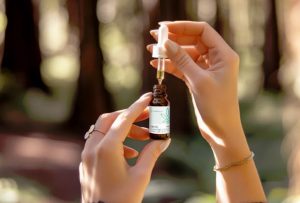
In practice, experienced physicians work with a clear stepped approach. In the first step, a CBD-dominant full-spectrum preparation is used, often orally as an oil, in doses between 25 and 75 milligrams per day. Only if the effect is absent and the patient history justifies a THC component does a balanced cannabinoid ratio come into play. Full flowers with high THC content are rarely first choice for pure anxiety disorders because the pharmacokinetics of inhalation are steep and patients can easily slip into anxiogenic high doses. Careful titration, a low starting dose, and close monitoring by treatment providers are more important here than in most other indications.
The choice of strain also plays a role. Indica-dominant genetics with pronounced linalool and myrcene profiles are considered more calming, while Sativa strains with high limonene and pinene content tend to be more stimulating and can, in rare cases, worsen symptoms. Cannabis therapy is therefore always also a question of terpene profile, not just THC content. For those wanting to deepen their understanding, the basics can be found in our article Understanding CBD.
Help or risk? A balanced assessment
The honest answer to the title question is: both. Cannabis can be a valuable component of anxiety therapy in properly selected patients, at the right dose, and under medical supervision. Particularly CBD-dominant preparations have built a plausible efficacy profile in recent years, and combining them with psychotherapy increases success probability. At the same time, cannabis in self-medication, with high THC content, and without structured setting represents considerable risk for the development or worsening of anxiety disorders. Those seeking a therapy option should clearly prefer the medical approach to home experimentation and should not delay a conversation in their primary care practice.
Frequently asked questions
Does cannabis help with generalized anxiety disorder?
The research landscape is mixed. For CBD, there is reliable evidence of anxiolytic effects, especially for social phobia. For THC and for generalized anxiety disorder in the strict sense, evidence is thin, though individual cases do benefit. Prescription is possible in Germany when classical therapies have been exhausted.
What dose makes sense if I have anxiety?
For CBD, treatment providers orient themselves to clinical studies using 300 to 600 milligrams per day for acute situations and 25 to 75 milligrams in maintenance therapy. For THC, the rule of thumb is to start with less than two milligrams per single dose and titrate in small steps. High single doses over ten milligrams can trigger panic and paranoia.
Can cannabis trigger panic attacks?
Yes, especially in inexperienced users, with high THC content, and with genetic vulnerability to anxiety or psychosis disorders. THC’s effects are biphasic, meaning low doses can calm but high doses can significantly amplify anxiety. Anyone who has experienced a cannabis-induced panic attack should reconsider consumption or switch to pure CBD preparations.
What changes in 2026 regarding prescriptions?
Since early 2026, a video consultation alone is no longer sufficient for initial prescriptions. The physician must have seen the patient in person at least once. Mail-order sales of cannabis flowers have been discontinued, with dispensing occurring in person at the pharmacy. These measures aim to ensure the quality of therapy decisions and curb self-medication.
Is over-the-counter CBD a serious alternative?
Hast du Cannabis schon einmal gezielt gegen Angst eingesetzt?
Freely available CBD can provide gentle support for mild anxiety symptoms but does not replace therapy. The doses in commercial oils are usually far below study doses, so effects are milder. Anyone with a diagnosed anxiety disorder should coordinate treatment with their primary care provider and ideally a psychotherapy practice, rather than relying solely on drugstore CBD.


Branchen-Update
News, Analysen und Reportagen — mehrmals im Monat direkt in dein Postfach.
Folge uns