• Kolumnen
    • Interviews
  • Hanf Allgemein
    • Gesellschaft & Soziales
  • Drogenkunde
    • Safer Use
    • Pflanzliche Drogen
  • Produkte
  • Strain Reviews
  • Print Magazin
  • Tools
Sonntag, Juli 26, 2026
Hanf Magazin
  • News
  • Medizin
    • Cannabinoide
    • Erkrankungen
    • Cannabis bei Tieren
    • Erfahrungsberichte
  • Recht & Politik
    • Deutschland
    • Österreich
    • Schweiz
    • International
    • Rechtslage DE
    • Rechtslage International
  • Wissenschaft
    • Studien
    • Forschung
  • Growing
    • Indoor-Growing
    • Outdoor-Growing
    • Strains & Reviews
    • Equipment
  • Nutzhanf
    • Baustoffe
    • Rohstoffe
    • Lebensmittel
    • Kleidung
    • Kosmetika
  • Wirtschaft
  • Konsum & Lifestyle
    • Rauchen
    • Vaporisieren
    • Essen & Rezepte
    • Kultur & Szene
    • Termine & Events
No Result
View All Result
  • News
  • Medizin
    • Cannabinoide
    • Erkrankungen
    • Cannabis bei Tieren
    • Erfahrungsberichte
  • Recht & Politik
    • Deutschland
    • Österreich
    • Schweiz
    • International
    • Rechtslage DE
    • Rechtslage International
  • Wissenschaft
    • Studien
    • Forschung
  • Growing
    • Indoor-Growing
    • Outdoor-Growing
    • Strains & Reviews
    • Equipment
  • Nutzhanf
    • Baustoffe
    • Rohstoffe
    • Lebensmittel
    • Kleidung
    • Kosmetika
  • Wirtschaft
  • Konsum & Lifestyle
    • Rauchen
    • Vaporisieren
    • Essen & Rezepte
    • Kultur & Szene
    • Termine & Events
No Result
View All Result
Hanf Magazin
No Result
View All Result
Home Hanf allgemein

Is Cannabis a Nightshade Plant? The Botanical Classification

von Mara König
07.07.2026
in Hanf allgemein
Lesezeit: 6 Minuten
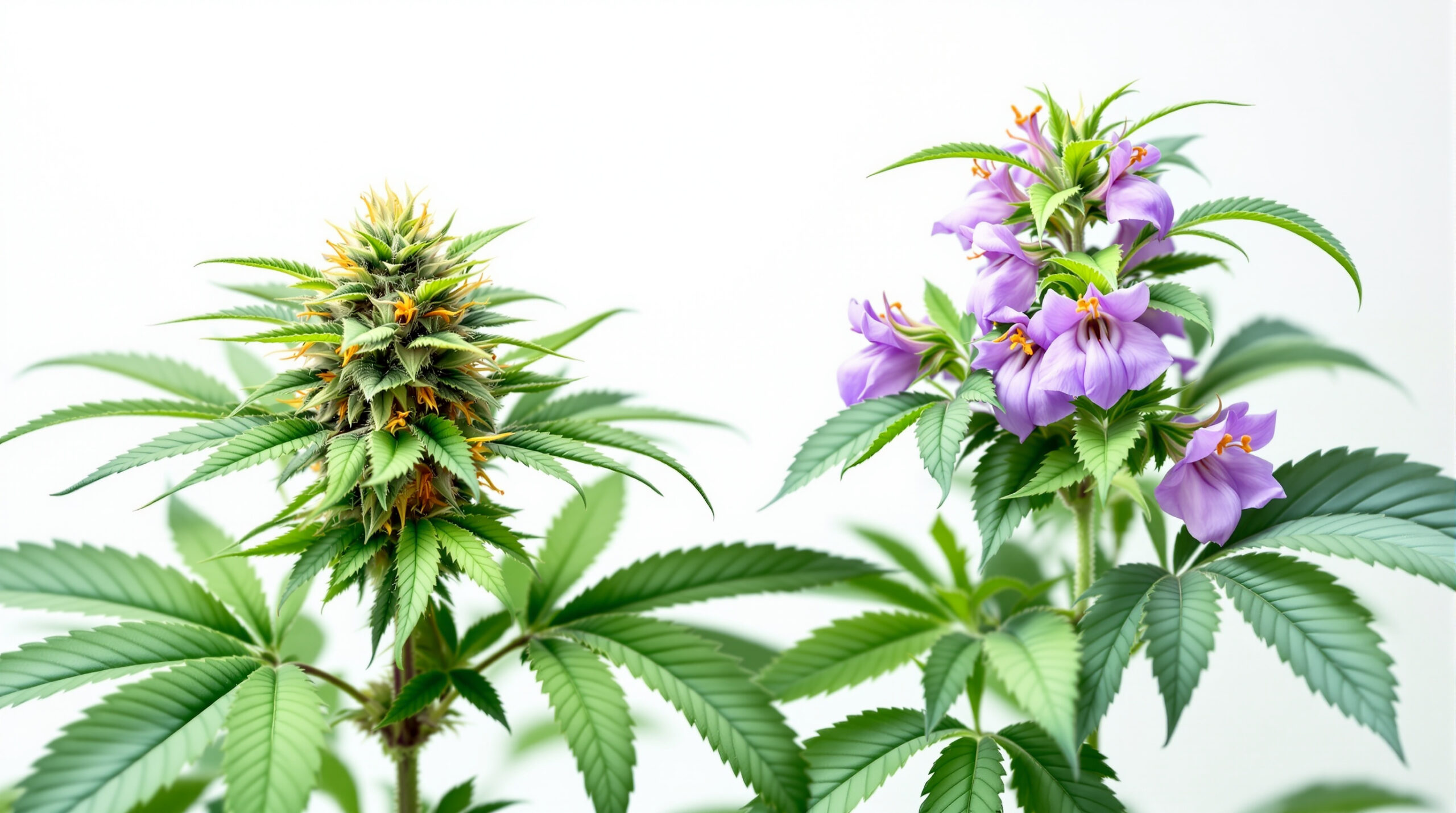
Cannabis und Tollkirsche im botanischen Vergleich – zwei nicht verwandte Pflanzenfamilien
⏱ 8 Min. Lesezeit·1.418 Wörter
Teilen:WhatsAppFacebookXLinkedInE-Mail
🌐 This article was automatically translated from German. Browse all English articles

Hardly any botanical misconception persists as stubbornly as this one: that cannabis is a nightshade plant, botanically related to tomatoes, potatoes, and the poisonous deadly nightshade. In forums, at social gatherings, and even in some guides, the claim keeps resurfacing. The short answer is: no. Hemp belongs to its own plant family, the Cannabaceae or hemp plants, and its closest relative is not the potato but hops. For those wanting to know why the myth persists so tenaciously and what the deadly nightshade has to do with it, you’ll find a detailed botanical classification here.

📑 Inhaltsverzeichnis

  1. Is Cannabis a Nightshade Plant? The Clear Answer
  2. The Family of Hemp Plants: Cannabis and Its True Relatives
  3. The Deadly Nightshade and True Nightshade Plants
  4. Where Does the Myth of Cannabis as a Nightshade Come From?
  5. Why Correct Classification Is More Than Semantic Pedantry
  6. Frequently Asked Questions
  7. 💬 Fragen? Frag den Hanf-Buddy!

Is Cannabis a Nightshade Plant? The Clear Answer

Cannabis is not a nightshade plant. The plant belongs to the family of Cannabaceae, while nightshade plants form the independent family of Solanaceae. Although both families are grouped together in the large category of flowering plants, they are evolutionarily far removed from each other. The Cannabaceae are today classified in the order of Rosales, which also includes roses, mulberries, and nettles. Nightshade plants, by contrast, are classified in the order Solanales.

This classification is more than just a matter of categorization. It describes an actual relationship that manifests itself in the structure of flowers, in the composition of fruits, and especially in the chemical makeup of plants. Cannabis produces cannabinoids and a characteristic terpene profile, while deadly nightshade produces highly potent tropane alkaloids such as atropine and scopolamine. These compound groups have nothing in common, neither in structure nor in effects. The assumption of a close relationship cannot be botanically substantiated in any way.


GanjaFarmerGanjaFarmer

The Family of Hemp Plants: Cannabis and Its True Relatives
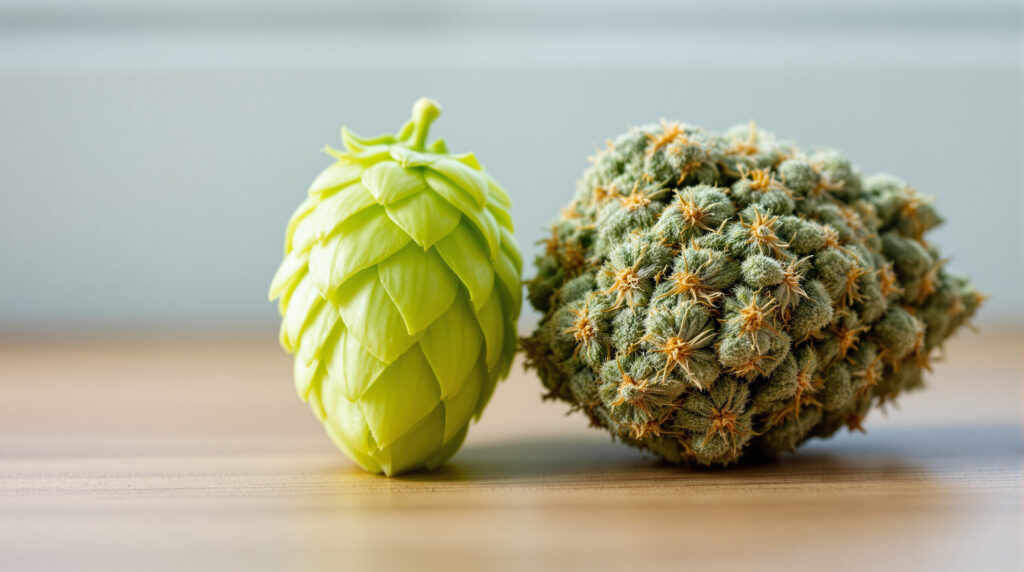
Hop cones and cannabis flower – close relatives from the family of hemp plants

According to current knowledge, the Cannabaceae comprise around eleven genera with approximately 170 species, distributed almost worldwide. For a long time, the family was considered exceptionally small and in older literature consisted of only two genera: hemp, or Cannabis, and hops, or Humulus. Molecular genetic studies have expanded this picture over the past decades. Today, botanists also count nettle trees, or Celtis in Latin, as well as the genus Trema among the hemp plants. These woody plants formerly belonged to the elm family but were reclassified based on new genetic analyses.

By far the most well-known relative of hemp is and remains hops. Both genera not only share a family but also a number of genetic characteristics. Research shows that hemp and hops possess similar genes for the production of aromatic and bitter compounds. This explains why some hop varieties develop a surprisingly hemp-like aroma and why the two plants are morphologically similar, such as in the shape of their leaves and the structure of their female flower clusters. Those wishing to deepen their knowledge of the family relationships and ethnobotanical history of these plants will find a detailed overview in our article on the ethnobotany of the Cannabaceae.

Within the genus Cannabis itself, there is an ongoing debate about whether there is a single variable species called Cannabis sativa or whether several species should be distinguished. This distinction plays no role in the question of family classification. Whether sativa, indica, or ruderalis, all forms are firmly established in the family of hemp plants and nowhere near the nightshades.

The Deadly Nightshade and True Nightshade Plants
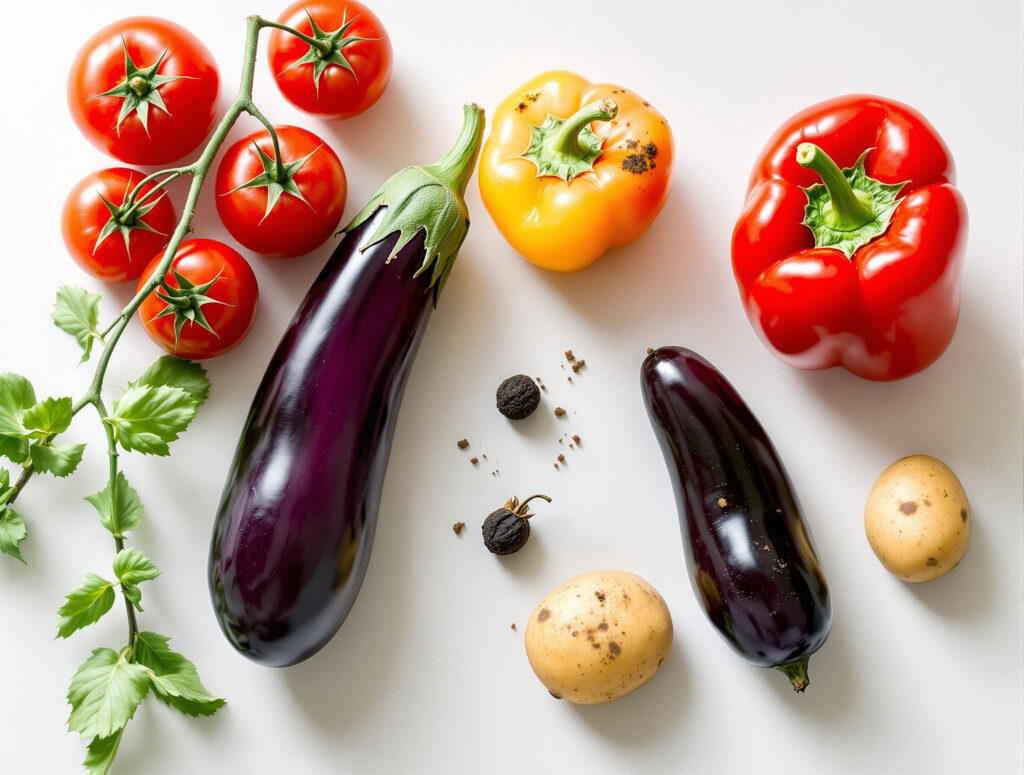
Typical members of the nightshade family: tomatoes, peppers, eggplant, and potato

To understand the myth, it’s worth taking a look at the plants with which cannabis is allegedly related. The nightshade plants or Solanaceae are a large and diverse family. They include important crops such as tomato, potato, pepper, and eggplant, but also numerous highly toxic representatives. The most prominent of these is the black deadly nightshade, botanically Atropa belladonna. It contains a bundle of highly potent tropane alkaloids, including hyoscyamine, atropine, and scopolamine, which affect the autonomic nervous system and can be life-threatening even in small amounts.

It is precisely these toxic members of the family that create the historical connection between cannabis and nightshades in the minds of some people. Deadly nightshade, henbane, and datura have been regarded for centuries as classic witches‘ plants and intoxicating plants. Their alkaloids produce pronounced hallucinations in cases of poisoning. Because cannabis also has psychoactive effects, many concluded it must somehow belong to the same group. This equation of effect and kinship is the actual logical fallacy behind the myth. Learn more about this compound group and its medical significance in our article on alkaloids in hemp and their medical significance.

In fact, cannabis does not produce tropane alkaloids. Its active constituents are cannabinoids, primarily tetrahydrocannabinol and cannabidiol, supplemented by terpenes and flavonoids. These substances are produced through entirely different biochemical pathways than the alkaloids of deadly nightshade. So if someone takes psychoactive effects as proof of kinship, they are comparing two chemically completely different systems. Plants from distantly related families can independently develop active compounds without being related to each other.

Where Does the Myth of Cannabis as a Nightshade Come From?

The exact origin of the claim can hardly be traced back to a single source. Multiple factors work together. The most important is the aforementioned confusion of effect and ancestry. Both cannabis and toxic nightshades alter consciousness, so they were lumped together in popular imagination. Additionally, both appear historically in the context of medicine, witchcraft mythology, and intoxicating cultures, which reinforces the perceived connection.

A second factor is linguistic in nature. In the cannabis community, individual strains carry names like Nightshade. Such marketing names have nothing to do with botanical classification but fuel the false association. Similar is the case with modern debates about so-called nightshade sensitivities in nutrition. When people read about nightshades and inflammation, they quickly transfer the term to other potent plants without respecting systematic boundaries.

💬 Hanf-Buddy — dein Cannabis-Experte
🌿 Fragen zu diesem Thema? Schreib einfach los — ich helfe dir!

Bitte verifiziere deine E-Mail. Wir haben dir einen 6-stelligen Code geschickt.

Danke für den Chat! 😊 Abonniere unseren Newsletter für mehr:

Zum Newsletter

Finally, older plant systematics play a role. Family boundaries have been redrawn multiple times over the course of research history. Until molecular genetic methods provided clarity, some genera were classified differently, and the Cannabaceae were long considered part of the now-dissolved order of Urticales. Such shifts contribute to outdated or simply incorrect classifications persisting in popular texts. Similar to other plants with strong cultural resonance, such as mugwort as a ritual magic plant, inherited half-knowledge mingles with actual botany.

Why Correct Classification Is More Than Semantic Pedantry
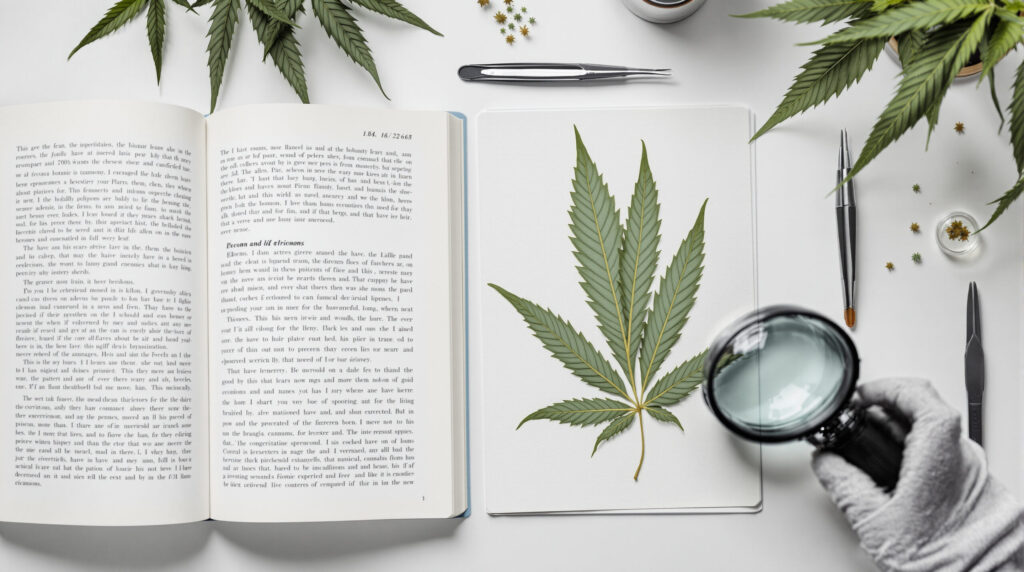
Botanical research work on the correct taxonomic classification of cannabis

Correct botanical classification is not an academic exercise. It has very practical consequences. If someone incorrectly believes cannabis is a nightshade, they might assume the plant contains toxic tropane alkaloids or responds like tomatoes and potatoes to certain diseases and pests. Neither is true. The cultivation, care, and disease patterns of hemp follow the patterns of hemp plants, not those of Solanaceae. Gardening with the wrong family in mind leads to the wrong conclusions.

Correct classification is also important for evaluating constituents. The discussion of nightshade alkaloids and possible sensitivities concerns Solanaceae, not cannabis. Cannabinoids belong to their own compound class with their own research history. Mixing both worlds transfers concerns or promises from one plant group to another that has nothing to do with it. A clear botanical classification thus protects against faulty reasoning in cultivation, nutrition, and medicine alike.

Frequently Asked Questions

What plant family does cannabis really belong to?

Cannabis belongs to the family of hemp plants, in Latin Cannabaceae. This family is in the order of Rosales. Besides hemp, it includes hops as well as nettle trees and the genus Trema. Cannabis is not related to nightshade plants.

Why do many people believe cannabis is a nightshade plant?

The main reason is the confusion of effect and kinship. Both cannabis and toxic nightshades like deadly nightshade have psychoactive effects and appear historically in the context of medicine and intoxicating cultures. Additionally, strain names like Nightshade and outdated taxonomy fuel the false notion.

What is the closest relative of cannabis?

The closest known relative of cannabis is hops, botanically Humulus. Both genera belong to the family of hemp plants and share similar genes for aromatic and bitter compounds. This explains the sometimes hemp-like aroma of some hop varieties and the similarity in leaf structure.

Does cannabis contain the same toxins as deadly nightshade?

No. Deadly nightshade produces highly potent tropane alkaloids such as atropine and scopolamine. Cannabis, by contrast, produces cannabinoids, terpenes, and flavonoids. These substances are produced through entirely different biochemical pathways and have nothing in common with each other, neither in structure nor in effects.

Why is correct botanical classification important?

📊 Deine Meinung zählt

Wusstest du, dass Cannabis kein Nachtschattengewächs ist?

✓
Danke für deine Stimme!

Incorrect family classification leads to faulty conclusions. If someone believes cannabis is a nightshade, they might make false assumptions about toxins, cultivation, pests, or sensitivities. The cultivation and disease patterns of hemp follow the patterns of hemp plants, not those of tomatoes or potatoes.


HE Abverkauf
Kannabia
Dr. Mang
MedCanOneStop
Khalifa Genetics
S&B Phase-Out Crafty1 160×600
S&B Phase-Out Crafty2 160×600
S&B Phase-Out Plenty1 160×600
S&B Phase-Out Combi 160×600
S&B Phase-Out Plenty2 (Years&Sessions) 160×600
Royal Queen Seeds #1

Das könnte dich auch interessieren

  • → Legales Cannabis schon heute
  • → Die Glasmann Akademie
  • → Langgriffliger Rosenwaldmeister stinkt wie Marihuana

Branchen-Update

News, Analysen und Reportagen — mehrmals im Monat direkt in dein Postfach.

Folge uns
Was dich auch interessieren könnte...

Rosenwaldmeister mit rosa Blüten im Gartenbeet, Nahaufnahme

Pflanzen, die wie Marihuana riechen: vom Rosenwaldmeister bis zum Stinkkohl

11. Juli 2026
Besen-Radmelde in herbstlicher Rotfärbung mit kegelförmigem Wuchs

Besenkraut: Welche Pflanze hinter dem Namen steckt

9. Juli 2026
InstagramYouTubeFacebookLinkedIn
Tags: BotanikCannabisHanfgewächseHopfenNachtschattengewächsePflanzenkundeTollkirsche

Related Posts

Vergleich eines Cannabis-Joints und einer Tabakzigarette auf weißer Fläche
Safer Use von Drogen

Ist Kiffen gesünder als Rauchen? Was der Vergleich mit Tabak zeigt

von Christian Schäfer
18. Juli 2026
Einzelne schwarze Tollkirschen-Beere auf typischem Sternkelch
Pflanzliche Drogen - natürlich high

Wie sieht eine Tollkirsche aus? Die giftige Doppelgängerin im Porträt

von Mara König
16. Juli 2026
🛠️ Tool-Tipp
🌡️VPD-Rechner
Optimales Klima für jede Wachstumsphase
→ Alle 10 Tools im Werkzeugkasten

Folge uns bei:

  • 38.8k Fans
  • 52.8k Followers
  • 3.5k Followers
  • 573 Followers
📰

Seit 2015

📝

4719+ Artikel

👥

180.000+ Leser/Monat

🏆

DACH #1 Cannabis-Magazin

Über uns

Hanf Magazin ist das führende deutschsprachige Fachmagazin für Cannabis — von der Pflanze bis zur Politik, von der Medizin bis zum Genuss.

Instagram Facebook LinkedIn

Themen

Cannabis News Medizin & Forschung Growing & Anbau Strain Reviews Nutzhanf & Rohstoffe Konsum & Rezepte Recht & Politik Wissenschaft & Studien

Beliebte Artikel

Cannabispatient Kevin Anahid: Was die Blüten-Streichung für Menschen mit Behinderung bedeutetWie vaporisiere ich richtig?Warum Vaporisieren gesünder istWas ist Cannabidiol?Kiffen in der Schwangerschaft?

Branchen-Update

Cannabis-News direkt in dein Postfach.

Für Unternehmen

Werben auf Hanf Magazin Mediadaten HM Ventures Jobs & Karriere Tools & Rechner

Weitere Themen

  • Kolumnen
  • Hanf Allgemein
  • Drogenkunde
  • Produkte
  • Strain Reviews
  • Print Magazin
  • Tools

© 2026 Hanf Magazin

Impressum Datenschutz AGB Kontakt Presse
WhatsAppFacebookXE-Mail
No Result
View All Result
  • News
  • Medizin
    • Cannabinoide
    • Erkrankungen
    • Cannabis bei Tieren
    • Erfahrungsberichte
  • Recht & Politik
    • Deutschland
    • Österreich
    • Schweiz
    • International
    • Rechtslage DE
    • Rechtslage International
  • Wissenschaft
    • Studien
    • Forschung
  • Growing
    • Indoor-Growing
    • Outdoor-Growing
    • Strains & Reviews
    • Equipment
  • Nutzhanf
    • Baustoffe
    • Rohstoffe
    • Lebensmittel
    • Kleidung
    • Kosmetika
  • Wirtschaft
  • Konsum & Lifestyle
    • Rauchen
    • Vaporisieren
    • Essen & Rezepte
    • Kultur & Szene
    • Termine & Events
  • Kolumnen
  • Interviews
  • Hanf Allgemein
  • Gesellschaft & Soziales
  • Drogenkunde
  • Safer Use
  • Pflanzliche Drogen
  • Produkte
  • Strain Reviews
  • Print Magazin
  • Tools

©2026 Hanf Magazin

Datenschutz-Einstellung

Wir nutzen Cookies auf hanf-magazin.com. Einige von ihnen sind essenziell notwendig, andere helfen unsere Website und deine Nutzer-Erfahrungen zu verbessern. Wenn Sie unter 16 Jahre alt sind und Ihre Zustimmung zu freiwilligen Diensten geben möchten, müssen Sie Ihre Erziehungsberechtigten um Erlaubnis bitten. Wir verwenden Cookies und andere Technologien auf unserer Website. Einige von ihnen sind essenziell, während andere uns helfen, diese Website und Ihre Erfahrung zu verbessern. Personenbezogene Daten können verarbeitet werden (z. B. IP-Adressen), z. B. für personalisierte Anzeigen und Inhalte oder Anzeigen- und Inhaltsmessung. Weitere Informationen über die Verwendung Ihrer Daten finden Sie in unserer Datenschutzerklärung. Sie können Ihre Auswahl jederzeit unter Einstellungen widerrufen oder anpassen.

  • Essenziell
  • Marketing
  • Externe Medien

Alle akzeptieren

Nur essenzielle Cookies akzeptieren

Individuelle Datenschutzeinstellungen

Cookie-Details Datenschutzerklärung Impressum

Datenschutzeinstellungen Datenschutzeinstellungen

Wenn Sie unter 16 Jahre alt sind und Ihre Zustimmung zu freiwilligen Diensten geben möchten, müssen Sie Ihre Erziehungsberechtigten um Erlaubnis bitten. Wir verwenden Cookies und andere Technologien auf unserer Website. Einige von ihnen sind essenziell, während andere uns helfen, diese Website und Ihre Erfahrung zu verbessern. Personenbezogene Daten können verarbeitet werden (z. B. IP-Adressen), z. B. für personalisierte Anzeigen und Inhalte oder Anzeigen- und Inhaltsmessung. Weitere Informationen über die Verwendung Ihrer Daten finden Sie in unserer Datenschutzerklärung. Hier finden Sie eine Übersicht über alle verwendeten Cookies. Sie können Ihre Einwilligung zu ganzen Kategorien geben oder sich weitere Informationen anzeigen lassen und so nur bestimmte Cookies auswählen.

Alle akzeptieren Speichern Nur essenzielle Cookies akzeptieren

Zurück

Datenschutzeinstellungen

Essenzielle Cookies ermöglichen grundlegende Funktionen und sind für die einwandfreie Funktion der Website erforderlich.

Cookie-Informationen anzeigen Cookie-Informationen ausblenden

Name
AnbieterEigentümer dieser Website, Impressum
ZweckSpeichert die Einstellungen der Besucher, die in der Cookie Box von Borlabs Cookie ausgewählt wurden.
Cookie Nameborlabs-cookie
Cookie Laufzeit1 Jahr

Marketing-Cookies werden von Drittanbietern oder Publishern verwendet, um personalisierte Werbung anzuzeigen. Sie tun dies, indem sie Besucher über Websites hinweg verfolgen.

Cookie-Informationen anzeigen Cookie-Informationen ausblenden

Akzeptieren
Name
AnbieterGoogle Ireland Limited, Gordon House, Barrow Street, Dublin 4, Ireland
ZweckCookie von Google für Website-Analysen. Erzeugt statistische Daten darüber, wie der Besucher die Website nutzt.
Datenschutzerklärung https://policies.google.com/privacy?hl=de
Cookie Name_ga,_gat,_gid
Cookie Laufzeit2 Jahre

Inhalte von Videoplattformen und Social-Media-Plattformen werden standardmäßig blockiert. Wenn Cookies von externen Medien akzeptiert werden, bedarf der Zugriff auf diese Inhalte keiner manuellen Einwilligung mehr.

Cookie-Informationen anzeigen Cookie-Informationen ausblenden

Akzeptieren
Name
AnbieterMeta Platforms Ireland Limited, 4 Grand Canal Square, Dublin 2, Ireland
ZweckWird verwendet, um Facebook-Inhalte zu entsperren.
Datenschutzerklärung https://www.facebook.com/privacy/explanation
Host(s).facebook.com
Akzeptieren
Name
AnbieterSoundcloud
ZweckWird verwendet, um Soundcloud Inhalte zu entsperren.
Datenschutzerklärung https://soundcloud.com/pages/privacy
Host(s)soundcloud.com
Akzeptieren
Name
AnbieterMeta Platforms Ireland Limited, 4 Grand Canal Square, Dublin 2, Ireland
ZweckWird verwendet, um Instagram-Inhalte zu entsperren.
Datenschutzerklärung https://help.instagram.com/519522125107875/?maybe_redirect_pol=0
Host(s).instagram.com
Cookie Namepigeon_state
Cookie LaufzeitSitzung

Datenschutzerklärung Impressum

HE Abverkauf
Dr. Mang
MedCanOneStop
Khalifa Genetics
S&B Phase-Out Combi 160×600
Royal Queen Seeds #1

Mehr aus Hanf allgemein

  • Pflanzen, die wie Marihuana riechen: vom Rosenwaldmeister bis zum Stinkkohl

    Pflanzen, die wie Marihuana riechen: vom Rosenwaldmeister bis zum Stinkkohl

    11.07.2026 — Mara König
  • Besenkraut: Welche Pflanze hinter dem Namen steckt

    Besenkraut: Welche Pflanze hinter dem Namen steckt

    09.07.2026 — Mara König
  • Wie viele Blätter hat ein Hanfblatt? Die Botanik des Fächerblatts

    Wie viele Blätter hat ein Hanfblatt? Die Botanik des Fächerblatts

    02.07.2026 — Mara König
  • Hanf im Frost – Winterruhe einer alten Kulturpflanze

    Hanf im Frost – Winterruhe einer alten Kulturpflanze

    04.01.2026 — Leo Hartmann
  • Cannabis in Europa - Wie Deutschland von den Erfahrungen seiner Nachbarn profitieren könnte

    Cannabis in Europa - Wie Deutschland von den Erfahrungen seiner Nachbarn profitieren könnte

    05.06.2025 — Christian Schäfer

Beliebte Artikel

  • Cannabis auf Kassenrezept: Bundestag streicht Blüten aus der GKV-Erstattung

    Cannabis auf Kassenrezept: Bundestag streicht Blüten aus der GKV-Erstattung

    13.07.2026 — Leo Hartmann
  • CBD-Blüten in Österreich: Rechtslage und was aktuell gilt

    CBD-Blüten in Österreich: Rechtslage und was aktuell gilt

    16.07.2026 — Christian Schäfer
  • Lila Cannabisblätter: Anthocyane, Kältestress und wann die Färbung ein Warnsignal ist

    Lila Cannabisblätter: Anthocyane, Kältestress und wann die Färbung ein Warnsignal ist

    14.07.2026 — Jonas Reuter
  • Hanfmehl verwenden: Kann es normales Mehl ersetzen?

    Hanfmehl verwenden: Kann es normales Mehl ersetzen?

    17.07.2026 — Mara König
  • Ab wann riechen Cannabispflanzen? Geruch über den gesamten Grow

    Ab wann riechen Cannabispflanzen? Geruch über den gesamten Grow

    13.07.2026 — Jonas Reuter

Aktuelle News

  • 632 Kilogramm Medizin im Müllofen: Der Düsseldorfer Cannabis-Fall

    632 Kilogramm Medizin im Müllofen: Der Düsseldorfer Cannabis-Fall

    18.07.2026 — Leo Hartmann
  • Bayern blockiert Cannabis-Anbau: Hanfverband und CSC Inntal klagen

    Bayern blockiert Cannabis-Anbau: Hanfverband und CSC Inntal klagen

    13.06.2026 — Christian Schäfer
  • VER-01 von Vertanical: FDA-Breakthrough-Status für Cannabis-Schmerzmittel aus München

    VER-01 von Vertanical: FDA-Breakthrough-Status für Cannabis-Schmerzmittel aus München

    05.06.2026 — Leo Hartmann
  • Alsdorfer Lunte: Unter 2 Euro pro Gramm, MwSt-Klage, KI im Backend

    Alsdorfer Lunte: Unter 2 Euro pro Gramm, MwSt-Klage, KI im Backend

    03.06.2026 — Christian Schäfer
  • Schweizer Cannabis-Regulierung: IG Hanf fordert Tempo statt Verzögerung

    Schweizer Cannabis-Regulierung: IG Hanf fordert Tempo statt Verzögerung

    13.05.2026 — Christian Schäfer
  • DIW-Studie: Cannabis bleibt stabil – Kokain ist auf das Vierfache gestiegen

    DIW-Studie: Cannabis bleibt stabil – Kokain ist auf das Vierfache gestiegen

    12.05.2026 — Christian Schäfer
  • 9 Jahre CBD VITAL: Erkenntnisse aus über 1 Million Kundenstimmen

    9 Jahre CBD VITAL: Erkenntnisse aus über 1 Million Kundenstimmen

    05.05.2026 — Lucas Nestler
  • Cannabis-Medizin 2026: Bilanz vom dritten Circle of Experts in Paderborn

    Cannabis-Medizin 2026: Bilanz vom dritten Circle of Experts in Paderborn

    03.05.2026 — Mara König

Produktvorstellungen

  • Wenn Aktivkohle auf Tip-Gefühl trifft

    Wenn Aktivkohle auf Tip-Gefühl trifft

    03.02.2026 — Christian Schäfer
  • AirVape Legacy Pro 2 – Der Klassiker neu definiert

    AirVape Legacy Pro 2 – Der Klassiker neu definiert

    29.10.2025 — Dieter Klaus Glasmann
  • Der Begleiter für dein Wohlbefinden - Hanfosan CBD-Öl 10 %

    Der Begleiter für dein Wohlbefinden - Hanfosan CBD-Öl 10 %

    09.07.2025 — Dieter Klaus Glasmann
  • Kontrolle über Körper und Geist - Renact REST und RELIEF

    Kontrolle über Körper und Geist - Renact REST und RELIEF

    06.06.2025 — Dieter Klaus Glasmann
  • Der gezielte Einsatz von Terpenen in Getränken - The Happiest Hour

    Der gezielte Einsatz von Terpenen in Getränken - The Happiest Hour

    24.05.2025 — Dieter Klaus Glasmann
🇩🇪 Deutsch 🇬🇧 English ✓ 🇪🇸 Español 🇫🇷 Français 🇧🇷 Português 🇮🇹 Italiano 🇵🇱 Polski 🇹🇷 Türkçe 🇳🇱 Nederlands 🇨🇿 Čeština 🇯🇵 日本語 🇰🇷 한국어 🇷🇺 Русский 🇸🇦 العربية 🇹🇭 ไทย 🇮🇳 हिन्दी