• Kolumnen
    • Interviews
  • 🎉 MJ Berlin 2026
  • Hanf Allgemein
    • Gesellschaft & Soziales
  • Drogenkunde
    • Safer Use
    • Pflanzliche Drogen
  • Produkte
  • Strain Reviews
  • Print Magazin
  • Tools
Sonntag, Juni 14, 2026
Hanf Magazin
  • News
  • Medizin
    • Cannabinoide
    • Erkrankungen
    • Cannabis bei Tieren
    • Erfahrungsberichte
  • Recht & Politik
    • Deutschland
    • Österreich
    • Schweiz
    • International
    • Rechtslage DE
    • Rechtslage International
  • Wissenschaft
    • Studien
    • Forschung
  • Growing
    • Indoor-Growing
    • Outdoor-Growing
    • Strains & Reviews
    • Equipment
  • Nutzhanf
    • Baustoffe
    • Rohstoffe
    • Lebensmittel
    • Kleidung
    • Kosmetika
  • Wirtschaft
  • Konsum & Lifestyle
    • Rauchen
    • Vaporisieren
    • Essen & Rezepte
    • Kultur & Szene
    • Termine & Events
No Result
View All Result
  • News
  • Medizin
    • Cannabinoide
    • Erkrankungen
    • Cannabis bei Tieren
    • Erfahrungsberichte
  • Recht & Politik
    • Deutschland
    • Österreich
    • Schweiz
    • International
    • Rechtslage DE
    • Rechtslage International
  • Wissenschaft
    • Studien
    • Forschung
  • Growing
    • Indoor-Growing
    • Outdoor-Growing
    • Strains & Reviews
    • Equipment
  • Nutzhanf
    • Baustoffe
    • Rohstoffe
    • Lebensmittel
    • Kleidung
    • Kosmetika
  • Wirtschaft
  • Konsum & Lifestyle
    • Rauchen
    • Vaporisieren
    • Essen & Rezepte
    • Kultur & Szene
    • Termine & Events
No Result
View All Result
Hanf Magazin
No Result
View All Result
Home Marihuana Growing Cannabis-Strains und Sorten

Indica vs. Sativa vs. Hybrid: What Still Holds True in 2026?

von Mara König
09.06.2026
in Cannabis-Strains und Sorten
Lesezeit: 6 Minuten
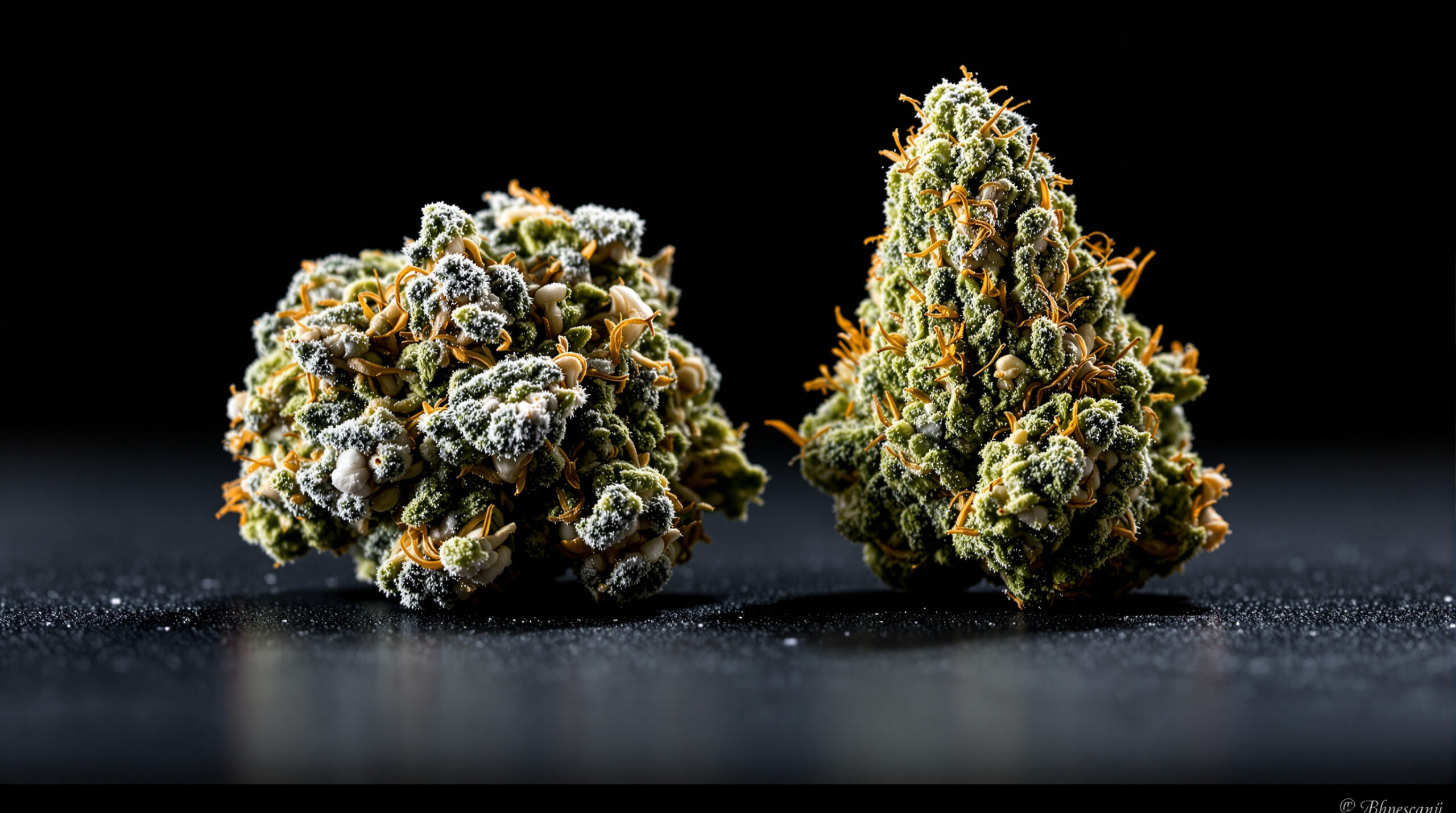
Zwei Cannabis-Blüten unterschiedlicher Morphologie nebeneinander im Makro
⏱ 8 Min. Lesezeit·1.483 Wörter
Teilen:WhatsAppFacebookXLinkedInE-Mail
🌐 This article was automatically translated from German. Browse all English articles

Hardly any classification persists as stubbornly in cannabis terminology as the pairing of Indica and Sativa. In coffeeshops, pharmacies, and on countless product packages, it suggests a simple rule of thumb. Indica is supposed to have a sedating, heavy, and physically relaxing effect, while Sativa is said to be uplifting, creative, and cerebral. Hybrids are meant to fall somewhere in between. This notion is intuitive, but it barely withstands scientific scrutiny anymore.

📑 Inhaltsverzeichnis

  1. Where the Indica, Sativa, and Hybrid classification comes from
  2. Indica vs. Sativa vs. Hybrid: What science says in 2026
  3. Terpenes and Chemovars: The more precise classification
  4. What the new perspective means for pharmacies and home cultivation
  5. Frequently asked questions
  6. 💬 Fragen? Frag den Hanf-Buddy!

In 2026, research paints a far more differentiated picture. A strain’s effects depend less on its botanical classification than on its chemical profile. Cannabinoids like THC and CBD, combined with the individual terpene pattern, dosage, and personal disposition determine the experience. This article clarifies what the classical three-way division still holds up today and which terms are taking its place.

Where the Indica, Sativa, and Hybrid classification comes from

The terms trace back to the 18th century. Naturalist Carl Linnaeus described the species Cannabis sativa in 1753. A few decades later, Jean-Baptiste de Lamarck named a second form as Cannabis indica, which he located on the Indian subcontinent. Originally, these were purely botanical descriptions. They referred to growth form, leaf width, and geographic origin, not to effects in the body.


GanjaFarmerGanjaFarmer

Sativa plants classically grew tall and slender with narrow leaves and came from regions near the equator. Indica plants were considered more compact and bushy with broad leaves and came from mountainous areas like the Hindu Kush. Over the course of the 20th century, this pure botany became a popular theory of effects. Breeders and consumers readily transferred the external characteristics to what the plant was supposed to trigger in the mind.

The current criticism centers precisely on this transfer. A plant’s growth form says nothing reliable about its active compounds. After decades of intensive crossbreeding, the once-separate lineages are heavily mixed. Pure Indica or Sativa genetics are practically nonexistent in today’s market.

Botanically, a third form also comes into play with Cannabis ruderalis. This robust, short-statured variety from northern latitudes flowers independently of the light cycle. It provides the foundation for today’s popular autoflowering strains. In popular Indica-Sativa doctrine, it rarely appears at all, which shows how selective the widespread classification was from the beginning.

Indica vs. Sativa vs. Hybrid: What science says in 2026

Laboratory for cannabis genetics with samples and scientific equipment

Genetic research of recent years has largely dissolved the old dividing line. Modern cannabis strains in the recreational space show no consistent genetic boundary between Sativa and Indica. Decades of hybridization have so thoroughly mixed the original genetic lineages that the labels barely map out anything genetically distinct anymore. What appears on the package today often follows marketing tradition more than measurable fact.

An analysis from March 2026 made this particularly clear. Researchers examined the terpene profiles of 140 medicinal cannabis strains on the German market. The result was sobering for supporters of the old school. No consistent differences in terpene patterns could be demonstrated between the Indica, Sativa, and Hybrid labels. A strain labeled as Indica could be chemically closer to a Sativa than to another Indica.

This doesn’t mean all strains have the same effects. On the contrary, the differences are real and sometimes substantial. They simply don’t follow the familiar Indica-Sativa logic. The popular rule of thumb that Indica is for evenings and Sativa for daytime use is therefore at best a rough guideline. In individual cases, it can even be misleading, because two flowers with the same label can have completely different profiles.

Why does the myth then persist so stubbornly? One reason is the power of expectation. When someone smokes an Indica and expects tiredness, they often interpret their sensations accordingly. Add to this the economic benefit of a simple story. A binary division is easy to communicate and sell. An honest statement about terpene profiles would be more correct but far more cumbersome in a sales conversation.

Our editorial team addressed this discussion years ago. For those wanting to dive deeper, an early analysis can be found in our article Indica and Sativa: Ready for the package insert. The doubts formulated there have been further confirmed by current data.

Terpenes and Chemovars: The more precise classification
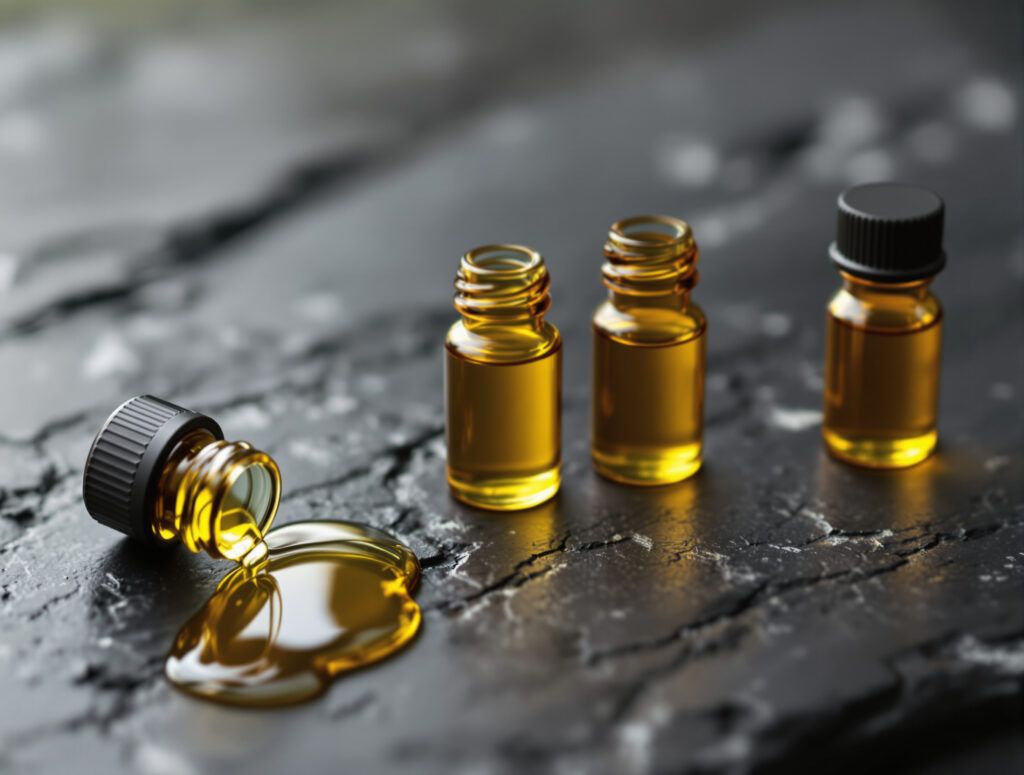
Row of glass vials with isolated cannabis terpenes of varying viscosity

When growth form fails, a better yardstick is needed. In cannabis science, the term chemovar has established itself, short for chemical variety. A chemovar describes a plant based on its actual chemical profile. The focus is on cannabinoids and terpenes, not external appearance. This approach doesn’t ask what the plant looks like, but what actually comprises it.

Terpenes are aromatic plant compounds responsible for the smell and taste of a strain. But they do more than just define the aroma. In interplay with cannabinoids, they actively shape the effects profile. This interplay is known as the entourage effect. Read more about this in our backgrounder on the entourage effect, which explains the therapeutic synergy of cannabinoids and terpenes.

Some terpenes are particularly well studied. Myrcene is considered one of the most common and is suspected of facilitating THC’s entry into the brain. Limonene, the second most common terpene in many strains, can influence the emotional character of the effect and, according to preliminary evidence, has anxiolytic properties. Beta-caryophyllene holds a special role. It binds directly to the CB2 receptor of the endocannabinoid system, thus acting itself like a cannabinoid.

💬 Hanf-Buddy — dein Cannabis-Experte
🌿 Fragen zu diesem Thema? Schreib einfach los — ich helfe dir!

Bitte verifiziere deine E-Mail. Wir haben dir einen 6-stelligen Code geschickt.

Danke für den Chat! 😊 Abonniere unseren Newsletter für mehr:

Zum Newsletter

How these substances dock in the body is closely tied to the body’s own signaling system. A comprehensible foundation for this is offered in our article on the endocannabinoid system. For those wanting to understand the role of terpenes even more precisely, our guide to terpenes in cannabis offers a comprehensive overview of the most important varieties.

Based on such profiles, researchers propose new classification systems. Instead of single marketing terms, they organize strains by their dominant terpenes and cannabinoids. A myrcene-dominant flower with high THC content can thus be assessed more clearly than a flower with merely the word Indica on it. For patients and consumers, this creates the prospect of more predictable effects.

What the new perspective means for pharmacies and home cultivation

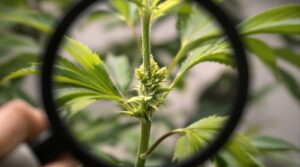
Workspace of a home grower with rockwool seedling and examination tool

For medical supply, the shift in perspective has concrete consequences. A therapy oriented solely toward high THC content or the Indica label inevitably remains imprecise. More sensible is examining the complete analysis certificate of a batch. It shows actual cannabinoid values and, with quality providers, also the most important terpenes. This datasheet tells you more about the expected effects than any botanical category.

In home cultivation too, closer inspection pays off. Those seeking a specific effect should pay less attention to the seed bank’s label and more to the described terpene and cannabinoid profile. Two strains with the same Indica content can differ significantly in aroma and effects. A flower with abundant linalool and myrcene promises a different experience than one emphasizing limonene and pinene, even if both are sold as Indica hybrids.

This doesn’t mean the old terms need to disappear entirely. As rough orientation in conversation, they retain practical value. No one needs to relearn their vocabulary. What matters is awareness that no guarantee stands behind the label. Those seeking reliable effects cannot avoid the chemical profile. The future of strain classification lies in the terpene pattern, not in the historical plant name.

Frequently asked questions

Does Indica really make you sleepy and Sativa make you alert?

This rule of thumb is at best a rough guideline. Effects depend on the specific terpene and cannabinoid profile, the dosage, and your own disposition. Two flowers with the same Indica label can have very different effects. Checking the analysis certificate is more reliable than looking at the botanical name.

Are there still pure Indica or Sativa strains?

Practically not in the market anymore. Decades of intensive crossbreeding have heavily mixed the original genetic lineages. Almost all strains available today are hybrids. The terms Indica and Sativa therefore describe more of a tendency or origin story than pure genetics.

What is a chemovar?

A chemovar is a chemical variety. The term classifies a plant based on its actual chemical profile, meaning its cannabinoids and terpenes. Unlike the Indica and Sativa classification, it doesn’t describe growth form but the measurable composition. This allows for more precise prediction of effects.

Why are terpenes more important than the Indica-Sativa label?

Terpenes do more than define smell and taste—they actively shape the effects profile in interplay with cannabinoids. A study from March 2026 found no consistent terpene differences between the Indica, Sativa, and Hybrid labels. The terpene pattern thus reliably distinguishes strains better than the historical name. This is precisely why it’s gaining importance as a classification basis.

What should I focus on when buying strains in 2026?

📊 Deine Meinung zählt

Achtest du beim Kauf auf die Indica/Sativa-Angabe?

✓
Danke für deine Stimme!

Pay less attention to the label and more to the data. In pharmacies, the analysis certificate provides information about cannabinoids and ideally also terpenes. In home cultivation, it’s worth examining the strain’s described terpene profile. This allows you to assess expected effects far better than through the mere terms Indica or Sativa.


HE Abverkauf
Kannabia
Dr. Mang
GrowTechnology – Left
MedCanOneStop
Khalifa Genetics
Grow Technology – Right
Royal Queen Seeds #1

Das könnte dich auch interessieren

  • → Gorilla Glue CBD Blüten von Charlie Green
  • → Bestellung von Cannabissamen im Internet
  • → Medizinisches Weed: Was ist ein CBD Marihuana?

Branchen-Update

News, Analysen und Reportagen — mehrmals im Monat direkt in dein Postfach.

Folge uns
Was dich auch interessieren könnte...

Hochpotente Cannabissorten Vergleich

Die stärksten Cannabissorten im Vergleich: Was THC-Spitzenwerte aussagen

8. Juni 2026
Cannabis-Samen in drei Generationsgruppen auf dunkler Oberfläche arrangiert

Cannabis-Genetik erklärt: F1, F2, BX und was sie bedeuten

7. Juni 2026
InstagramYouTubeFacebookLinkedIn
Tags: CannabinoideEndocannabinoid-SystemEntourage-EffektHanfforschungStrain ReviewTerpeneTHC Gehalt

Related Posts

Undeklariertes Cannabis-Harz in unbeschriftetem Glas
Rechtliche Aspekte von Cannabis

Vollspektrum-Hanf-Harz mit „CBX“: Was hinter den angeblich legalen Produkten steckt

von Leo Hartmann
13. Juni 2026
Europäische Cannabispolitik: Dokumente und Cannabissamen auf Schreibtisch
Studien

Europäischer Drogenbericht 2026: 25 Millionen Cannabis-Konsumenten und steigende Potenz

von Christian Schäfer
12. Juni 2026
🛠️ Tool-Tipp
💡DLI-Rechner
Tägliche Lichtmenge in mol/m²/Tag
→ Alle 10 Tools im Werkzeugkasten

Folge uns bei:

  • 38.8k Fans
  • 52.8k Followers
  • 3.5k Followers
  • 573 Followers
  • 2.7k Abonnenten
📰

Seit 2015

📝

4646+ Artikel

👥

180.000+ Leser/Monat

🏆

DACH #1 Cannabis-Magazin

Über uns

Hanf Magazin ist das führende deutschsprachige Fachmagazin für Cannabis — von der Pflanze bis zur Politik, von der Medizin bis zum Genuss.

Instagram YouTube Facebook LinkedIn

Themen

Cannabis News Medizin & Forschung Growing & Anbau Strain Reviews Nutzhanf & Rohstoffe Konsum & Rezepte Recht & Politik Wissenschaft & Studien

Beliebte Artikel

Vollspektrum-Hanf-Harz mit „CBX“: Was hinter den angeblich legalen Produkten stecktWie vaporisiere ich richtig?Warum Vaporisieren gesünder istWas ist Cannabidiol?Kiffen in der Schwangerschaft?

Branchen-Update

Cannabis-News direkt in dein Postfach.

Für Unternehmen

Werben auf Hanf Magazin Mediadaten HM Ventures Jobs & Karriere Tools & Rechner

Weitere Themen

  • Kolumnen
  • 🎉 MJ Berlin 2026
  • Hanf Allgemein
  • Drogenkunde
  • Produkte
  • Strain Reviews
  • Print Magazin
  • Tools

© 2026 Hanf Magazin

Impressum Datenschutz AGB Kontakt Presse
WhatsAppFacebookXE-Mail
No Result
View All Result
  • News
  • Medizin
    • Cannabinoide
    • Erkrankungen
    • Cannabis bei Tieren
    • Erfahrungsberichte
  • Recht & Politik
    • Deutschland
    • Österreich
    • Schweiz
    • International
    • Rechtslage DE
    • Rechtslage International
  • Wissenschaft
    • Studien
    • Forschung
  • Growing
    • Indoor-Growing
    • Outdoor-Growing
    • Strains & Reviews
    • Equipment
  • Nutzhanf
    • Baustoffe
    • Rohstoffe
    • Lebensmittel
    • Kleidung
    • Kosmetika
  • Wirtschaft
  • Konsum & Lifestyle
    • Rauchen
    • Vaporisieren
    • Essen & Rezepte
    • Kultur & Szene
    • Termine & Events
  • Kolumnen
  • 🎉 MJ Berlin 2026
  • Interviews
  • Hanf Allgemein
  • Gesellschaft & Soziales
  • Drogenkunde
  • Safer Use
  • Pflanzliche Drogen
  • Produkte
  • Strain Reviews
  • Print Magazin
  • Tools

©2026 Hanf Magazin

Datenschutz-Einstellung

Wir nutzen Cookies auf hanf-magazin.com. Einige von ihnen sind essenziell notwendig, andere helfen unsere Website und deine Nutzer-Erfahrungen zu verbessern. Wenn Sie unter 16 Jahre alt sind und Ihre Zustimmung zu freiwilligen Diensten geben möchten, müssen Sie Ihre Erziehungsberechtigten um Erlaubnis bitten. Wir verwenden Cookies und andere Technologien auf unserer Website. Einige von ihnen sind essenziell, während andere uns helfen, diese Website und Ihre Erfahrung zu verbessern. Personenbezogene Daten können verarbeitet werden (z. B. IP-Adressen), z. B. für personalisierte Anzeigen und Inhalte oder Anzeigen- und Inhaltsmessung. Weitere Informationen über die Verwendung Ihrer Daten finden Sie in unserer Datenschutzerklärung. Sie können Ihre Auswahl jederzeit unter Einstellungen widerrufen oder anpassen.

  • Essenziell
  • Marketing
  • Externe Medien

Alle akzeptieren

Nur essenzielle Cookies akzeptieren

Individuelle Datenschutzeinstellungen

Cookie-Details Datenschutzerklärung Impressum

Datenschutzeinstellungen Datenschutzeinstellungen

Wenn Sie unter 16 Jahre alt sind und Ihre Zustimmung zu freiwilligen Diensten geben möchten, müssen Sie Ihre Erziehungsberechtigten um Erlaubnis bitten. Wir verwenden Cookies und andere Technologien auf unserer Website. Einige von ihnen sind essenziell, während andere uns helfen, diese Website und Ihre Erfahrung zu verbessern. Personenbezogene Daten können verarbeitet werden (z. B. IP-Adressen), z. B. für personalisierte Anzeigen und Inhalte oder Anzeigen- und Inhaltsmessung. Weitere Informationen über die Verwendung Ihrer Daten finden Sie in unserer Datenschutzerklärung. Hier finden Sie eine Übersicht über alle verwendeten Cookies. Sie können Ihre Einwilligung zu ganzen Kategorien geben oder sich weitere Informationen anzeigen lassen und so nur bestimmte Cookies auswählen.

Alle akzeptieren Speichern Nur essenzielle Cookies akzeptieren

Zurück

Datenschutzeinstellungen

Essenzielle Cookies ermöglichen grundlegende Funktionen und sind für die einwandfreie Funktion der Website erforderlich.

Cookie-Informationen anzeigen Cookie-Informationen ausblenden

Name
AnbieterEigentümer dieser Website, Impressum
ZweckSpeichert die Einstellungen der Besucher, die in der Cookie Box von Borlabs Cookie ausgewählt wurden.
Cookie Nameborlabs-cookie
Cookie Laufzeit1 Jahr

Marketing-Cookies werden von Drittanbietern oder Publishern verwendet, um personalisierte Werbung anzuzeigen. Sie tun dies, indem sie Besucher über Websites hinweg verfolgen.

Cookie-Informationen anzeigen Cookie-Informationen ausblenden

Akzeptieren
Name
AnbieterGoogle Ireland Limited, Gordon House, Barrow Street, Dublin 4, Ireland
ZweckCookie von Google für Website-Analysen. Erzeugt statistische Daten darüber, wie der Besucher die Website nutzt.
Datenschutzerklärung https://policies.google.com/privacy?hl=de
Cookie Name_ga,_gat,_gid
Cookie Laufzeit2 Jahre

Inhalte von Videoplattformen und Social-Media-Plattformen werden standardmäßig blockiert. Wenn Cookies von externen Medien akzeptiert werden, bedarf der Zugriff auf diese Inhalte keiner manuellen Einwilligung mehr.

Cookie-Informationen anzeigen Cookie-Informationen ausblenden

Akzeptieren
Name
AnbieterMeta Platforms Ireland Limited, 4 Grand Canal Square, Dublin 2, Ireland
ZweckWird verwendet, um Facebook-Inhalte zu entsperren.
Datenschutzerklärung https://www.facebook.com/privacy/explanation
Host(s).facebook.com
Akzeptieren
Name
AnbieterSoundcloud
ZweckWird verwendet, um Soundcloud Inhalte zu entsperren.
Datenschutzerklärung https://soundcloud.com/pages/privacy
Host(s)soundcloud.com
Akzeptieren
Name
AnbieterMeta Platforms Ireland Limited, 4 Grand Canal Square, Dublin 2, Ireland
ZweckWird verwendet, um Instagram-Inhalte zu entsperren.
Datenschutzerklärung https://help.instagram.com/519522125107875/?maybe_redirect_pol=0
Host(s).instagram.com
Cookie Namepigeon_state
Cookie LaufzeitSitzung

Datenschutzerklärung Impressum

AC Infinity – Header
HE Abverkauf
Kannabia
Dr. Mang
GrowTechnology – Left
MedCanOneStop
Khalifa Genetics
Grow Technology – Right
Royal Queen Seeds #1

Mehr aus Cannabis-Strains und Sorten

  • Die stärksten Cannabissorten im Vergleich: Was THC-Spitzenwerte aussagen

    Die stärksten Cannabissorten im Vergleich: Was THC-Spitzenwerte aussagen

    08.06.2026 — Mara König
  • Cannabis-Genetik erklärt: F1, F2, BX und was sie bedeuten

    Cannabis-Genetik erklärt: F1, F2, BX und was sie bedeuten

    07.06.2026 — Jonas Reuter
  • House of Seeds: Wie Professor Genetix US-Cannabis-Genetik nach Europa bringt

    House of Seeds: Wie Professor Genetix US-Cannabis-Genetik nach Europa bringt

    04.06.2026 — Mara König
  • Die besten Cannabis-Sorten für den Heimanbau 2026

    Die besten Cannabis-Sorten für den Heimanbau 2026

    14.05.2026 — Leo Hartmann
  • Cannabis-Genetik verstehen: So findest du die richtigen Samen für deinen Homegrow

    Cannabis-Genetik verstehen: So findest du die richtigen Samen für deinen Homegrow

    01.05.2026 — Mara König

Beliebte Artikel

  • VER-01 von Vertanical: FDA-Breakthrough-Status für Cannabis-Schmerzmittel aus München

    VER-01 von Vertanical: FDA-Breakthrough-Status für Cannabis-Schmerzmittel aus München

    05.06.2026 — Leo Hartmann
  • Indoor Cannabis Anbau: Der komplette Guide 2026

    Indoor Cannabis Anbau: Der komplette Guide 2026

    11.06.2026 — Mara König
  • Cannabis Europa London Day 2: Genetik-Standards, deutsche Telemedizin und Frauenmedizin im Fokus

    Cannabis Europa London Day 2: Genetik-Standards, deutsche Telemedizin und Frauenmedizin im Fokus

    06.06.2026 — Christian Schäfer
  • Cansativa-Chef Benedikt Sons: „Wir wollen das Unternehmen sein, ohne das die Branche nicht funktioniert“

    Cansativa-Chef Benedikt Sons: „Wir wollen das Unternehmen sein, ohne das die Branche nicht funktioniert“

    11.06.2026 — Leo Hartmann
  • RCT zu Cannabis bei Fibromyalgie, Rheuma und Arthrose

    RCT zu Cannabis bei Fibromyalgie, Rheuma und Arthrose

    05.06.2026 — Mara König

Aktuelle News

  • Bayern blockiert Cannabis-Anbau: Hanfverband und CSC Inntal klagen

    Bayern blockiert Cannabis-Anbau: Hanfverband und CSC Inntal klagen

    13.06.2026 — Christian Schäfer
  • VER-01 von Vertanical: FDA-Breakthrough-Status für Cannabis-Schmerzmittel aus München

    VER-01 von Vertanical: FDA-Breakthrough-Status für Cannabis-Schmerzmittel aus München

    05.06.2026 — Leo Hartmann
  • Alsdorfer Lunte: Unter 2 Euro pro Gramm, MwSt-Klage, KI im Backend

    Alsdorfer Lunte: Unter 2 Euro pro Gramm, MwSt-Klage, KI im Backend

    03.06.2026 — Christian Schäfer
  • Schweizer Cannabis-Regulierung: IG Hanf fordert Tempo statt Verzögerung

    Schweizer Cannabis-Regulierung: IG Hanf fordert Tempo statt Verzögerung

    13.05.2026 — Christian Schäfer
  • DIW-Studie: Cannabis bleibt stabil – Kokain ist auf das Vierfache gestiegen

    DIW-Studie: Cannabis bleibt stabil – Kokain ist auf das Vierfache gestiegen

    12.05.2026 — Christian Schäfer
  • 9 Jahre CBD VITAL: Erkenntnisse aus über 1 Million Kundenstimmen

    9 Jahre CBD VITAL: Erkenntnisse aus über 1 Million Kundenstimmen

    05.05.2026 — Lucas Nestler
  • Cannabis-Medizin 2026: Bilanz vom dritten Circle of Experts in Paderborn

    Cannabis-Medizin 2026: Bilanz vom dritten Circle of Experts in Paderborn

    03.05.2026 — Mara König
  • Wie viele Cannabis-Clubs gibt es in Deutschland? Warum die Zahlen weit auseinandergehen

    Wie viele Cannabis-Clubs gibt es in Deutschland? Warum die Zahlen weit auseinandergehen

    30.04.2026 — Christian Schäfer

Produktvorstellungen

  • Wenn Aktivkohle auf Tip-Gefühl trifft

    Wenn Aktivkohle auf Tip-Gefühl trifft

    03.02.2026 — Christian Schäfer
  • „Warum wir wieder Boxen machen“ – der Hanf Magazin Shop

    „Warum wir wieder Boxen machen“ – der Hanf Magazin Shop

    15.01.2026 — Leo Hartmann
  • AirVape Legacy Pro 2 – Der Klassiker neu definiert

    AirVape Legacy Pro 2 – Der Klassiker neu definiert

    29.10.2025 — Dieter Klaus Glasmann
  • Der Begleiter für dein Wohlbefinden - Hanfosan CBD-Öl 10 %

    Der Begleiter für dein Wohlbefinden - Hanfosan CBD-Öl 10 %

    09.07.2025 — Dieter Klaus Glasmann
  • Kontrolle über Körper und Geist - Renact REST und RELIEF

    Kontrolle über Körper und Geist - Renact REST und RELIEF

    06.06.2025 — Dieter Klaus Glasmann
🇩🇪 Deutsch 🇬🇧 English ✓ 🇪🇸 Español 🇫🇷 Français 🇧🇷 Português 🇮🇹 Italiano 🇵🇱 Polski 🇹🇷 Türkçe 🇳🇱 Nederlands 🇨🇿 Čeština 🇯🇵 日本語 🇰🇷 한국어 🇷🇺 Русский 🇸🇦 العربية 🇹🇭 ไทย 🇮🇳 हिन्दी