Hemp cosmetics have grown from a niche into the beauty mainstream. In drugstores, pharmacies and natural cosmetics shops, creams, serums and salves with hemp seed oil, CBD or hemp flower extract now stand side by side, often barely distinguishable in labeling, yet very different in their efficacy claims. Anyone buying a hemp cream typically wants two things: skincare that supports the skin barrier, and a product that is natural, transparent and ideally verifiable. This guide does exactly that. It categorizes the most important ingredients, explains the legal situation in the EU following the latest SCCS statement on CBD, and shows how to safely and easily make your own hemp cream at home.
📑 Inhaltsverzeichnis
- Hemp in Cosmetics: Properly Distinguishing Hemp Seed Oil, CBD and Hemp Flower Extract
- Effects of Hemp Cream: What Your Skin Really Gets From It
- Making Hemp Cream at Home: Basic Recipe and Variations
- Buying Hemp Cosmetics or Making Your Own: What Really Matters
- Hemp Cosmetics in the Market: Trends 2026
- Frequently Asked Questions About Hemp Cosmetics and Hemp Cream
- 💬 Fragen? Frag den Hanf-Buddy!
In editorial work, we repeatedly encounter the same confusion: Is hemp seed oil the same as CBD? Does cannabis salve get you high? Is hemp cosmetics even allowed to be freely sold in the EU? The answers are less complicated than the marketing language of many manufacturers suggests. The ingredients have been known in natural cosmetics for centuries, the mechanisms of action are well described, and the legal framework has become progressively more concrete since the first EU assessment of CBD in cosmetics. Understanding a few basics helps you make better purchasing decisions and gradually take your skincare into your own hands.
Hemp in Cosmetics: Properly Distinguishing Hemp Seed Oil, CBD and Hemp Flower Extract
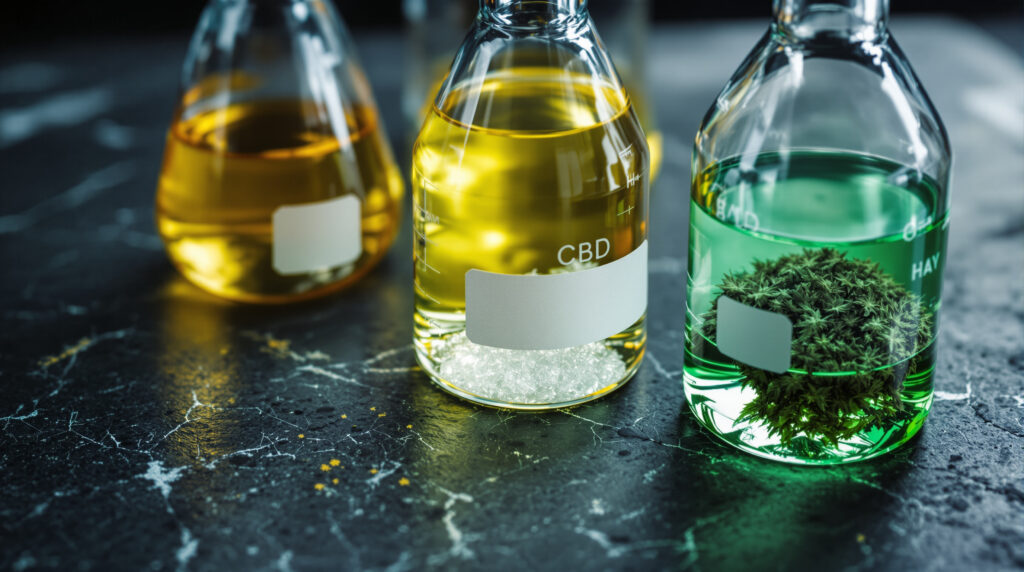
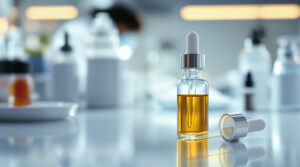
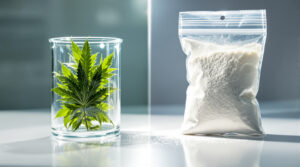
The most important step in understanding hemp cosmetics is to clearly distinguish three ingredients. Hemp seed oil is cold-pressed from the seeds of the cannabis plant and contains virtually no cannabinoids. It is the classic nourishing raw material in hemp creams and appears in the INCI list usually as Cannabis Sativa Seed Oil. CBD, fully known as cannabidiol, is obtained from flowers and leaves, is not psychoactive and is considered a calming, inflammation-modulating active ingredient in skincare. Hemp flower extract, depending on the process, can be a full-spectrum extract with additional cannabinoids, terpenes and plant compounds, making it more complex and expensive than isolated CBD.


The mixing of these terms in advertising is common but misleading. Many products labeled as cannabis salve or hemp salve actually contain only hemp seed oil, without significant CBD content. This is not necessarily a drawback, as hemp seed oil brings its own well-documented benefits for the skin. It simply means that the price premium for a supposed CBD product is often unjustified when looking more closely at the INCI list. Anyone specifically aiming for the anti-inflammatory effects of CBD should see the cannabidiol content stated in milligrams per tube, not just a hemp leaf on the packaging. A more detailed classification of the individual ingredient classes is provided in our article on cannabinoids in skincare.
Why Hemp Seed Oil Is So Popular as a Care Raw Material
Hemp seed oil is one of the few plant oils whose fatty acid profile closely matches the natural lipid film of human skin. Around 55 to 60 percent of the oil consists of linoleic acid, an omega-6 fatty acid that provides intact barrier function in the stratum corneum. This is complemented by 15 to 20 percent alpha-linolenic acid from the omega-3 family and 2 to 4 percent of the rare gamma-linolenic acid (GLA). The resulting ratio of omega-6 to omega-3 of approximately three to one is considered very well-balanced both nutritionally and from a skin physiology perspective. The profile is completed by a high content of vitamin E, which acts as a natural antioxidant in the oil and protects the lipids from premature rancidity.
On the skin, hemp seed oil has a dual function. Linoleic acid is a component of ceramides, those lipid molecules that hold the stratum corneum together and bind moisture. A deficiency in linoleic acid has long been associated with dry, scaly skin and a weakened barrier. Gamma-linolenic acid additionally modulates inflammatory processes and is discussed in dermatological research in connection with atopic dermatitis and psoriasis. We have described in detail elsewhere the role that cannabis can play in psoriasis.
CBD in Cosmetics: What the EU Decided in 2025
For a long time, the legal status of CBD in cosmetics was a gray area. Manufacturers, suppliers and authorities navigated between food law, the Novel Food Regulation and EU Cosmetics Regulation 1223/2009. With the preliminary opinion of the scientific consumer protection committee SCCS (SCCS/1685/25) from October 30, 2025, there is now a concrete safety assessment for the first time. The authority classifies CBD when applied to skin and in oral hygiene products up to a concentration of 0.19 percent as safe, provided that CBD derived from hemp is used and the THC impurity content does not exceed 0.00025 percent (2.5 ppm).
For manufacturers, this means a clear corridor: products below the 0.19 percent mark will in future be considered safe EU-wide, provided clean raw materials and documented THC residual values are proven. For consumers, it means checking the label not just for marketing claims, but for the stated CBD content. Where only the hemp leaf is displayed but no concentration is stated, the active ingredient is often lacking in relevant amounts. The SCCS opinion is explicitly preliminary and may be adjusted after consultation, but the trend is clear: hemp cosmetics are becoming more transparent and thus safer for serious manufacturers.
Effects of Hemp Cream: What Your Skin Really Gets From It
The efficacy claims surrounding hemp creams range from anti-aging through acne relief to gentle care for atopic dermatitis. Not all of this is scientifically equally well documented, but much is plausible. At its core, a well-formulated hemp cream works on three levels. It delivers essential fatty acids to the stratum corneum, it supports the skin barrier through occlusive and humectant components, and depending on the formulation it can modulate inflammatory stimuli via cannabinoids or terpenes. Those wanting to understand how the body’s own docking sites for these substances work will find the necessary background in our article on the endocannabinoid system.
For dry, irritated or age-related thinning skin, hemp seed oil demonstrates its core value. The linoleic acid stabilizes the lipid structure, and skin feels less taut after just a few days, with smaller cracks healing more quickly. For oily, shine-prone skin, the oil plays its second trump: it is non-comedogenic, so it does not clog pores, and can even help regulate sebum production. Studies in orthomolecular skincare observe that adequate supply of omega-6 and omega-3 lowers the skin’s own predisposition to inflammation. The phytosterols and tocopherols in the oil also contribute to this, acting as radical scavengers.
Hemp Cosmetics for Atopic Dermatitis, Psoriasis and Acne
For chronically inflammatory skin conditions, hemp cosmetics are not a cure but can significantly relieve symptoms as adjunctive care. In atopic dermatitis (atopic dermatitis), the skin barrier is structurally impaired, the skin loses excess moisture and reacts more sensitively to stimuli. A rich hemp cream can reduce transepidermal water loss, stabilize the barrier and alleviate itching through GLA and CBD. Important is a fragrance-free, ideally minimalist formulation, as any additional essential oil can be a trigger for sensitized skin. Patient reports on supplemental hemp care use have been compiled in our testimonial section on hemp medicine.
For psoriasis, the benefit is similar. The disease is autoimmune-related, hemp cosmetics do not replace medicinal therapy, but can significantly reduce scaling, dryness and the tightness sensation in plaques. With acne, the rule of thumb applies: oils containing linoleic acid like hemp seed oil are well-tolerated because they help balance the often-disrupted fatty acid profile in sebum. Early clinical observations suggest that topically applied CBD can dampen sebum production and the proinflammatory activity of sebaceous gland cells. Accompanying hemp cream is thus not a miracle cure, but a sensible addition to established acne therapy.
Making Hemp Cream at Home: Basic Recipe and Variations
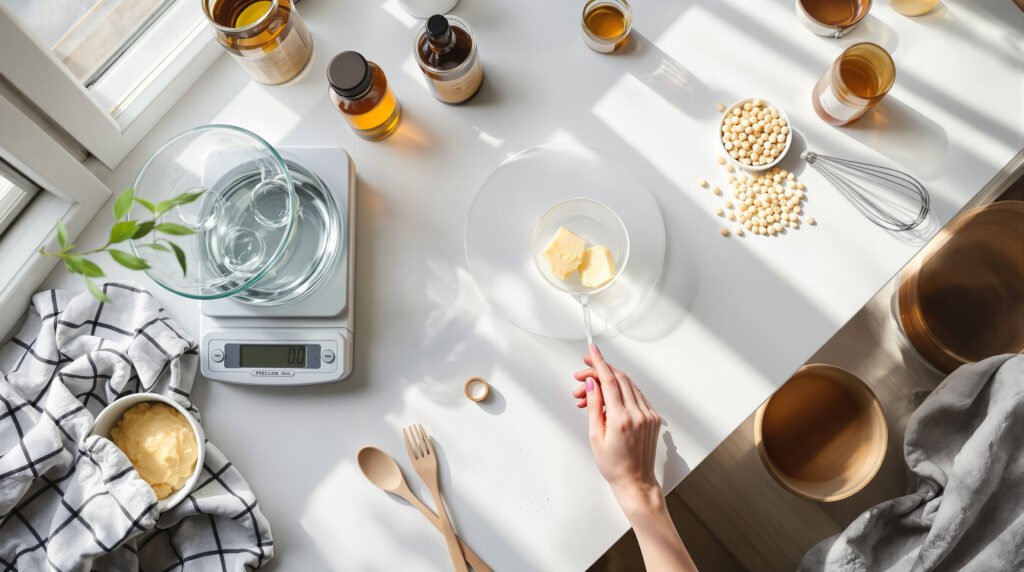
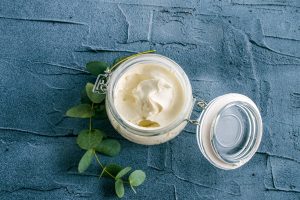
Making your own hemp cream at home is simpler than most cosmetics tutorials suggest. At its core, you need a fat phase, a water phase and an emulsifier that stably binds both together. Add one or two nourishing additives and safe preservation. The effort for a 100-milliliter tube is around 30 minutes, with material costs ranging between eight and fifteen euros depending on ingredient quality. Those who make it regularly benefit from cheaper bulk packages of raw materials. For the first attempts, a mini apothecary scale with one-hundredth-gram resolution, a water bath pot, a heat-resistant beaker and a simple immersion blender suffice.
At the heart of the fat phase is cold-pressed organic hemp seed oil. It is typically supplemented with shea butter as a nourishing consistency agent and beeswax or cetyl alcohol as a stabilizer. The water phase consists of distilled or at least boiled water, optionally hydrosols like rose or chamomile water. For the emulsifier, Emulsan has proven itself for beginners, a complex of plant-derived fatty alcohols that is easy to process at home. Those wanting to work to natural cosmetics standards opt for Olivem 1000 or Lamecream. A detailed guide to the variant with pure CBD extract is found in our earlier article making CBD skin cream yourself, which this guide expands with broader context and current EU law.
Basic Recipe: Hemp Cream for 100 Milliliters
For the fat phase, weigh out 15 grams of hemp seed oil, 8 grams of shea butter and 4 grams of emulsifier and melt in a heat-resistant beaker in a water bath at approximately 70 degrees Celsius. In parallel, warm 70 grams of distilled water to the same temperature in a second beaker. Once both phases reach the same temperature, slowly pour the water phase into the fat phase while stirring constantly. Using a small mixer or immersion blender, beat the mixture for 30 to 60 seconds until a stable, white emulsion forms. As the cream cools to around 40 degrees, add 2 grams of vitamin E (tocopherol) as an antioxidant and 0.6 grams of preservative (such as Geogard 221 or Cosgard). Optionally, incorporate 5 to 10 drops of essential lavender or rosewood oil, provided the skin tolerates fragrances.
The result is a creamy, medium-rich day care suitable for face, neck and hands. Those preferring a firmer salve replace part of the water phase with additional shea butter and beeswax, omit the emulsifier and get a water-free, very long-lasting hemp salve. This is particularly suitable for dry patches, lips and stressed hands in winter. For a light summer lotion, increase the water phase to 80 grams and halve the shea butter, then the cream flows much thinner. All variations should be filled into clean, ideally sterilized jars or airless dispensers after preparation and labeled with the date.
Hygiene, Preservation and Shelf Life
Homemade cosmetics are just as susceptible to microbes as industrial products, often even more so. Those just starting out regularly underestimate two points: equipment cleanliness and the necessity of preservation. All beakers, stirrers and jars should be rinsed with boiling water and disinfected with high-proof alcohol before preparation. The water phase must be bacteria-free, so use distilled water or freshly boiled and cooled tap water. Bottled drinking water is unsuitable because it typically already contains low microbial loads.
Preservation is not optional once water is involved. Without it, a cream in a warm bathroom becomes moldy within days without visible signs. Proven preservatives for home cosmetics are Geogard 221, Cosgard or Leucidal, all dosable between 0.5 and 1 percent of the total quantity. Beeswax is considered slightly antibacterial but does not replace preservation in water-containing creams. Vitamin E protects fats from oxidation but has no antimicrobial effect. Properly preserved, homemade hemp cream keeps for around three to six months, ideally stored cool, dark and removed with a clean spatula.
Buying Hemp Cosmetics or Making Your Own: What Really Matters
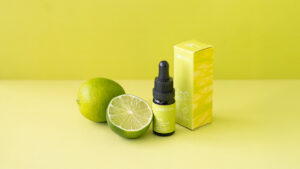
Not everyone has time to stir their own skincare over a water bath. For retail purchases, it helps to have some criteria in mind. A first look goes to the INCI list. If Cannabis Sativa Seed Oil ranks high, hemp seed oil is a significant component. If Cannabidiol or Hemp Extract appears with a percentage indication, it’s genuine CBD cosmetics. Conversely, if mineral oils (Paraffinum Liquidum), silicones (Dimethicone) or a long list of synthetic fragrances appear, the product has little to do with natural cosmetics, even if the hemp leaf on the packaging suggests otherwise. Certifications like Natrue, Cosmos or BDIH provide additional assurance.
The second factor is hemp origin and quality. Hemp seed oil from European cultivation, ideally in organic quality, is typically more transparently documented than cheap imports. For CBD products, checking the Certificate of Analysis, which many reputable manufacturers link online, is worthwhile. It shows the actual cannabinoid content, possible contaminants and the THC residual value. If this is below the 0.00025 percent recommended by SCCS, the product is compatible with the current EU safety standard. Those wanting to understand the arc from plant cultivation through industry to end product will find the overarching connections in our cornerstone article hemp and industry.
Sustainability, Packaging and Animal Welfare
Hemp cosmetics are frequently advertised with sustainability, but only partially fulfill this promise by themselves. Hemp as a plant is undemanding, grows even on poorer soils, requires little pesticide use and binds large amounts of carbon while growing. This clearly speaks in favor of the raw material side. On the product side, however, packaging, supply chain and energy balance also matter. A hemp cream in an elaborate glass bottle, packaged three times over and with intercontinental supply chains, often performs worse ecologically than a simple refill system from regional production. Those wanting to think consistently about sustainability combine European raw materials, organic certification, plastic-free packaging and short distances.
Animal testing has been banned in the EU for cosmetics since 2013, which also applies to hemp products. Hemp cosmetics are not automatically vegan, as beeswax and honey are popular components in many DIY recipes and industrial salves. Those wanting to formulate completely vegan replace beeswax with carnauba wax or candelilla wax and avoid lanolin and honey. Even in home preparation, looking at certified organic raw materials is worthwhile, because hemp seed oil as a pressing residue from food industry often gets parallel processing and quality can be very different there.
Hemp Cosmetics in the Market: Trends 2026
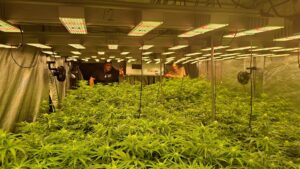
The market for hemp and CBD cosmetics has been growing double-digits for years. Market research data from various European beauty associations see a worldwide turnover in the area of several billion euros for 2026, with particular momentum in Germany, Austria and Switzerland. Drivers are the increasing acceptance of cannabis as a therapeutic agent in medicine, growing interest in plant-based, transparent care and regulatory clarification through the SCCS opinion. Drugstore chains like dm and Rossmann have expanded their ranges in recent years, classical pharmacy brands are launching their own hemp lines, and small natural cosmetics manufacturers are positioning themselves with artisanal authenticity.
On the product side, three trends are particularly visible. First, the combination of CBD with classical dermatological active ingredients like niacinamide, bakuchiol or hyaluronic acid is gaining importance. Second, pure hemp seed oil lines are emerging that deliberately distance themselves from the CBD world and focus on the fatty acid profile. Third, body butters, salves and massage creams with higher cannabinoid content are being positioned as wellness products for athletes and patients with chronic complaints. Those wanting to understand industry development in broader context will find useful comparison points in the cornerstone on hemp food and in our article on hemp textiles from other hemp industry sectors.
Frequently Asked Questions About Hemp Cosmetics and Hemp Cream
Does Hemp Cream Get You High?
No, hemp cream does not get you high. Hemp seed oil contains virtually no THC, and CBD products are also not psychoactive. For an intoxicating effect to occur through the skin, a very high THC concentration in a suitable delivery system would need to be applied over a large area for an extended time. The permitted residual amounts in the EU are so far below this that even daily application causes no intoxicating effect whatsoever. Hemp cosmetics are thus clearly to be classified as care products.
Does Hemp Cream Help with Atopic Dermatitis?
Hemp cream can stabilize the skin barrier in atopic dermatitis and relieve itching. However, it does not replace medical therapy. Sensible is a fragrance-free, ideally minimalist formulation with a high proportion of hemp seed oil, supplemented with CBD in the low percentage range. Before regular use, consultation with the treating dermatologist is recommended, especially if topical corticosteroids or calcineurin inhibitors are being used in parallel.
How Long Does Homemade Hemp Cream Last?
A properly preserved, hygienically made hemp cream lasts three to six months, even longer with cool and dark storage. Water-free hemp salves without an open water phase survive up to twelve months, provided no contaminants are introduced. For removal, a clean spatula should be used instead of fingers so no germs get into the jar. If the cream shows color changes, rancid smell or mold formation, it should be discarded immediately.
What Is the Difference Between Hemp Cream and CBD Cream?
A classical hemp cream contains hemp seed oil as a care active ingredient, extracted from the plant’s seeds, without significant cannabinoids. A CBD cream contains additionally or mainly isolated or full-spectrum CBD from flowers and leaves. CBD acts as an inflammation modulator and soothes, hemp seed oil nourishes the lipid barrier. Combining both covers two mechanisms of action. For genuine CBD cream, stating the cannabidiol content on the package is essential.
Which Emulsifier Is Suitable for Home Cosmetics with Hemp?
For beginners, Emulsan is a robust, easy-to-process emulsifier. Those wanting to work to natural cosmetics standards opt for Olivem 1000, Montanov 68 or Lamecream, all from plant-based raw materials. It is important to observe the respective processing temperature, the recommended dosage of two to six percent of the total quantity and the choice of matching water and fat phases. For pure salves without water content, no emulsifier is needed; there an oil-wax mixture of hemp seed oil, shea butter and beeswax or a vegan wax suffices.
Is CBD Cosmetics Legal in the EU?
Nutzt du bereits Kosmetik mit Hanf oder CBD?
CBD from hemp is in principle allowed in cosmetics in the EU, provided the requirements of EU Cosmetics Regulation 1223/2009 are met. The SCCS opinion of 2025 sets a preliminary safety standard of a maximum of 0.19 percent CBD in dermal and oral cosmetics and a THC residual value of at most 0.00025 percent. Manufacturers must have their products safety evaluated, document them and may only market them with permissible claims. Medical statements such as disease cure are not permitted.
Branchen-Update
News, Analysen und Reportagen — mehrmals im Monat direkt in dein Postfach.
Folge uns