Anyone processing cannabis in the kitchen will eventually encounter a technical term that initially sounds complicated. Decarboxylation determines whether a homemade edible actually works or remains ineffective. Fresh and dried flowers contain hardly any active THC, but rather its acidic precursor THCA. Only through controlled heat does this acid transform into psychoactive THC. This article explains why this step is so central, which temperatures have proven effective, and how decarboxylation can be reliably achieved in a home oven.
📑 Inhaltsverzeichnis
- What happens chemically during decarboxylation
- The right temperature and time for decarboxylation
- Decarboxylation in the oven step by step
- Gentle alternatives: Sous-vide and mason jar
- From decarboxylation to edible: Butter and oil
- Common mistakes when decarboxylating
- Frequently asked questions
- 💬 Fragen? Frag den Hanf-Buddy!
What happens chemically during decarboxylation
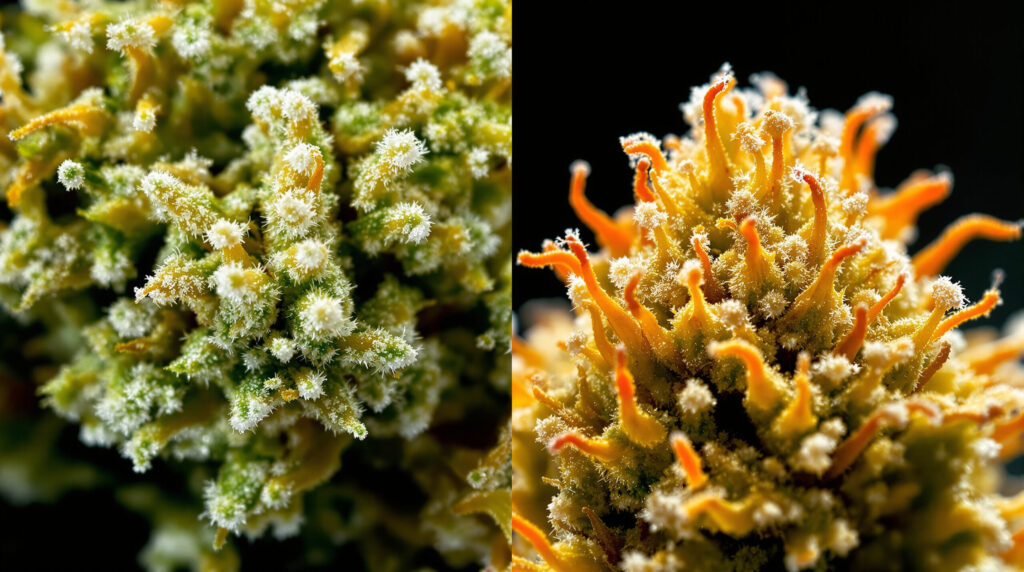
From a pharmacological perspective, the raw cannabis flower is disappointing. It contains predominantly tetrahydrocannabinolic acid, or THCA, and only traces of intoxicating THC. THCA carries a so-called carboxyl group, a compound made of carbon and oxygen. This group blocks binding to the receptors of the endocannabinoid system. As long as it is present, the psychoactive effect remains absent.
During decarboxylation, heat splits off precisely this carboxyl group. It escapes as carbon dioxide and water, and the molecule transforms into active THC. The name describes the process literally, meaning nothing more than the separation of a carboxyl group. The same principle applies to CBD. This cannabinoid also exists in the plant as an acid called CBDA and is only converted into its active form through heat.


When smoking or vaporizing, decarboxylation happens automatically because the flame or vaporizer provides high temperatures. In the kitchen, this step is missing. If you stir unheated flowers directly into a batter, you get baked goods with THCA instead of THC. Learn more about this characteristic of raw plant material in our article on whether eating cannabis raw makes sense. This is precisely why decarboxylation is the crucial first step of any recipe.
The right temperature and time for decarboxylation
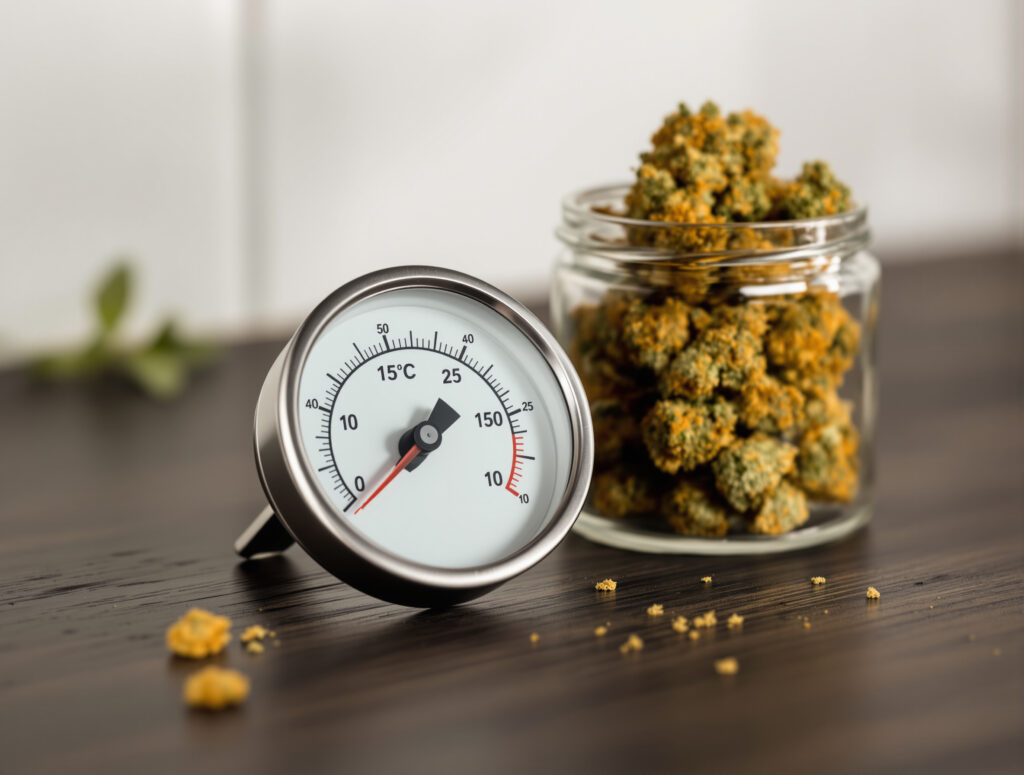
Decarboxylation follows simple logic. Higher temperatures accelerate the conversion but jeopardize delicate aromatic compounds. In practice, a range between 110 and 120 degrees Celsius has become established. At around 115 degrees, most of the acid converts into active THC within 30 to 45 minutes. At just 100 degrees, the process takes significantly longer, often up to an hour.
If it gets too hot, the balance tips. Above about 140 degrees, the newly formed THC itself begins to break down. It transforms into cannabinol, or CBN, a cannabinoid with rather sedating and weaker effects. Those who think they can save time with full oven heat ultimately lose potency. The reaction follows first-order kinetics, meaning temperature and duration together determine the outcome.
A second factor is terpenes. These volatile compounds shape the aroma and flavor of each variety and evaporate already at moderate temperatures. The hotter and longer the flowers remain in the oven, the more aroma is lost. Those who value the full character of their strain choose the lower temperature and accept the somewhat longer duration. Our article on terpenes as underappreciated active compounds explores the role terpenes play beyond flavor.
Decarboxylation in the oven step by step
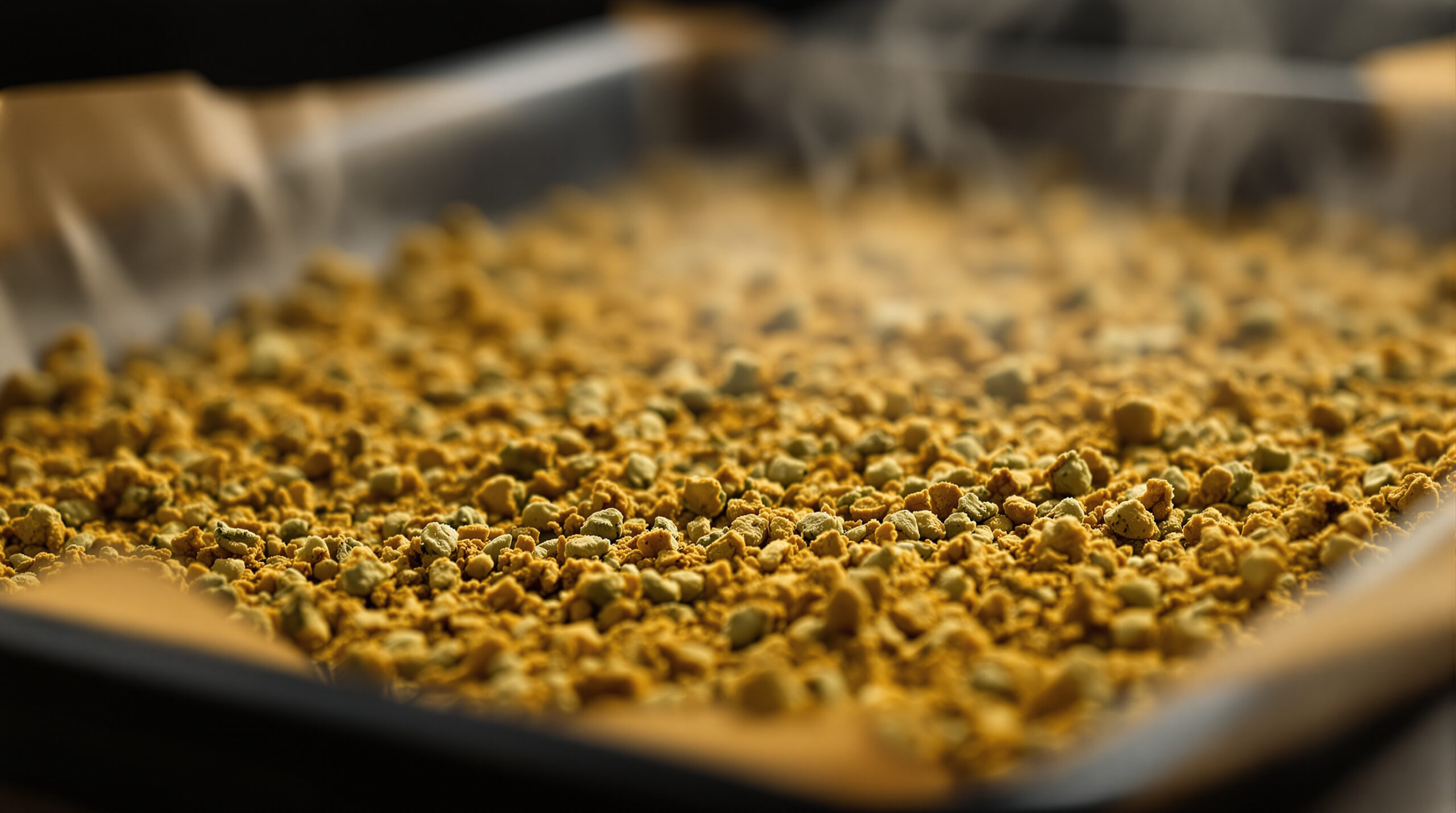
The oven is the simplest and most accessible method because every household has one. First, dried flowers are coarsely ground, ideally with your fingers or a grinder. The material shouldn’t be too fine, as otherwise small particles may burn. Next, distribute the cannabis loosely on a baking sheet lined with parchment paper, creating a thin and even layer.
The oven is preheated to 115 degrees Celsius, ideally with top and bottom heat rather than convection, since a strong fan can stir up light plant material. The baking sheet goes into the middle rack for 30 to 45 minutes. After halfway through, it’s worthwhile to gently turn the material or shake the sheet slightly so the heat works evenly. The flowers will change color from green to a light golden brown, a good sign of ongoing conversion.
A common problem is the inaccurate temperature display of many household ovens. A simple oven thermometer provides certainty here, as deviations of 20 degrees are not uncommon. After cooling, the decarboxylated cannabis is ready for further processing. It can now be dissolved in fat, such as for butter or oil, or incorporated directly into recipes.
Gentle alternatives: Sous-vide and mason jar
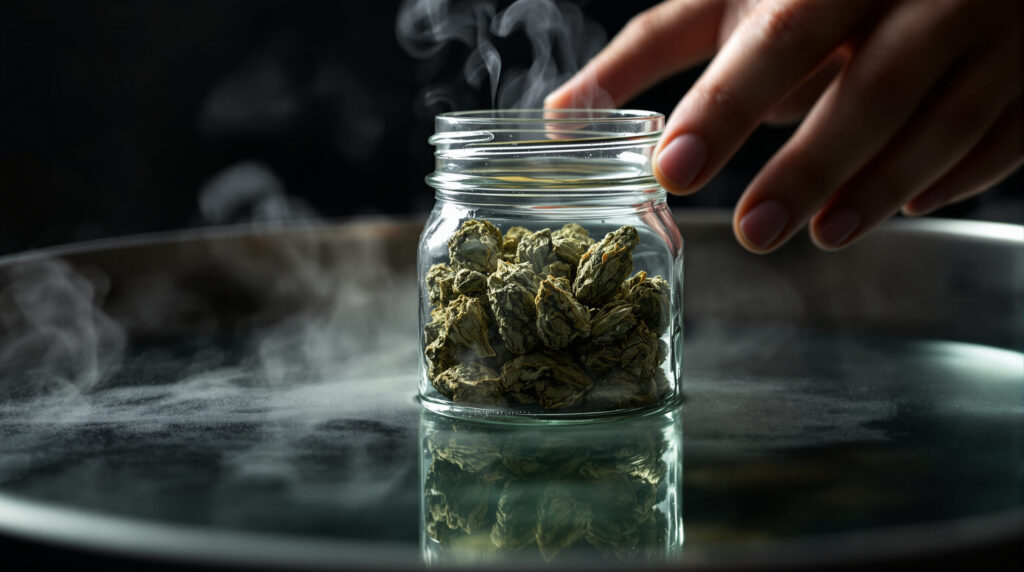
The open oven has two disadvantages. It fills the apartment with intense odor and lets some of the terpenes evaporate unused. For those wanting to avoid both, the sous-vide method is the choice. Here, flowers go into a vacuum-sealed bag, which is placed in a water bath heated to around 95 degrees. Over approximately 90 minutes, the conversion takes place without aromatic compounds escaping because the bag remains sealed.
The mason jar method follows similar logic. Here, the cannabis is placed in a sealable jar and the jar is put in the oven. The jar largely retains the volatile compounds and noticeably reduces odor. It’s important to let the jar cool completely before opening it, so that condensed active compounds can resettle on the material. Both procedures are considered flavor-preserving and discreet.
Which method is right depends on your goal. For maximum potency yield, the classic oven suffices. Those wanting to preserve the strain’s characteristic flavor and limit household odor are better off with a water bath or jar. In all cases, the basic principle remains identical, as temperature and time are what matter, not the vessel.
From decarboxylation to edible: Butter and oil
Decarboxylated cannabis only develops its effects in the body when fat-soluble cannabinoids are bound to a carrier fat. Therefore, decarboxylation is almost always followed by infusion in butter or plant oil. The activated material is extracted in the fat over several hours at low temperature. THC and CBD dissolve from the plant material and accumulate in the fat, which can then be used for baked goods, sauces, or beverages.
It’s important not to heat the infusion too much. Since the material is already decarboxylated, heat now serves only to extract the active compounds. Temperatures around 70 to 90 degrees suffice. Those who overheat the fat risk renewed breakdown of THC to CBN and waste potency. Our article on cannabis butter offers detailed instructions, while our text on making cannabis oil yourself covers the oil-based variant.
Dosing remains the biggest challenge with homemade edibles. Because the active compound can distribute unevenly in the fat, the strength of individual portions varies considerably. Thorough stirring and the most accurate possible quantity control help. Those wanting to delve deeper into the world of edible preparations will find numerous further ideas in our overview of cannabis cooking.
Common mistakes when decarboxylating
The most common mistake is too high a temperature. Out of impatience, many set the oven to 180 or 200 degrees and in doing so burn not only the terpenes but also break down active THC again. The result is an edible with significantly weaker effects than expected. Patience with moderate heat pays off.
A second mistake concerns layer thickness. If material lies too thickly on top of each other, heat reaches the lower layers only unevenly. Part remains inactive while another part burns. A thin layer and occasional stirring solve the problem. The inaccuracy of many home ovens is also underestimated, which is why a thermometer is no luxury.
Finally, some skip the step entirely and add raw flowers directly to the batter. The result tastes like cannabis but barely works because the THCA wasn’t converted. Those wanting to deepen their understanding of activation basics will find them in our detailed article on decarboxylizing cannabis. With some care regarding temperature, time, and layer thickness, the most important step of any recipe succeeds reliably.
Frequently asked questions
At what temperature is cannabis best decarboxylated?
A range between 110 and 120 degrees Celsius has proven effective. At around 115 degrees, most THCA converts into active THC within 30 to 45 minutes. Higher temperatures accelerate the process but destroy terpenes and break down already-formed THC again.
How long must cannabis be decarboxylated in the oven?
At 115 degrees, 30 to 45 minutes is usually sufficient. At lower temperatures around 100 degrees, the process can take up to an hour. After halfway through, the material should be turned so the heat works evenly.
Can cannabis be used in edibles without decarboxylation?
It’s possible but not sensible. Without heating, the cannabinoid remains as THCA and develops no intoxicating effect. The finished edible will taste like cannabis but won’t produce a high. For a noticeable effect, decarboxylation is essential.
Does decarboxylation in the oven smell strong?
Yes, the open oven method produces a noticeable cannabis odor. Those wanting to avoid it use the sous-vide method in a vacuum-sealed bag or a sealed mason jar. Both procedures largely retain volatile aromatic compounds and reduce odor.
Are active compounds lost during decarboxylation?
Decarboxylierst du Cannabis vor dem Kochen im Ofen?
At correct temperature, losses remain minimal. It becomes problematic only with excessive heat, as above about 140 degrees THC increasingly breaks down into the weaker CBN. Some terpenes also evaporate. Moderate temperatures and brief oven monitoring keep losses small.






Branchen-Update
News, Analysen und Reportagen — mehrmals im Monat direkt in dein Postfach.
Folge uns