The question of whether cannabis helps or hinders athletic performance is as old as the first fitness magazines and as controversial as few other topics at the intersection of recreation and performance. Since cannabis legalization in Germany, it has been discussed more openly, but the answers have not become any clearer. This article focuses on a single axis: Does cannabis enhance or impair performance in sports? Serious research provides a series of clear findings that vary by sport, method of consumption, and timing. Those who understand the mechanisms can make an informed decision rather than relying on anecdotes.
📑 Inhaltsverzeichnis
- Acute Effects on Reaction Time, Coordination, and Maximum Strength
- Heart Rate, Blood Pressure, and the Economics of Endurance
- The Endocannabinoid System: Why Sport Creates a Natural High Without a Joint
- Sports Compared: Where Cannabis Slows You Down and Where It Barely Matters
- CBD and Recovery: The Other Chapter of the Performance Question
- What Studies Really Measure and Where Placebo Takes Hold
- Frequently Asked Questions
- 💬 Fragen? Frag den Hanf-Buddy!
A comprehensive overview of the entire subject matter, from competition rules to muscle building to yoga, is offered by our detailed guide to cannabis and sport. This article deliberately zooms in on the narrower performance aspect and explains what the research landscape reveals about concrete performance parameters.
Acute Effects on Reaction Time, Coordination, and Maximum Strength

THC binds to CB1 receptors in the central nervous system and thus in brain regions responsible for reaction speed, eye-hand coordination, and attentional switching. In controlled laboratory tests, simple reaction time measurably increases after inhalation, often in the range of ten to thirty percent. Complex choice-reaction tasks, in which subjects must distinguish between multiple stimuli, also slow down under THC’s influence. For disciplines requiring rapid decision-making, this represents a direct performance loss.


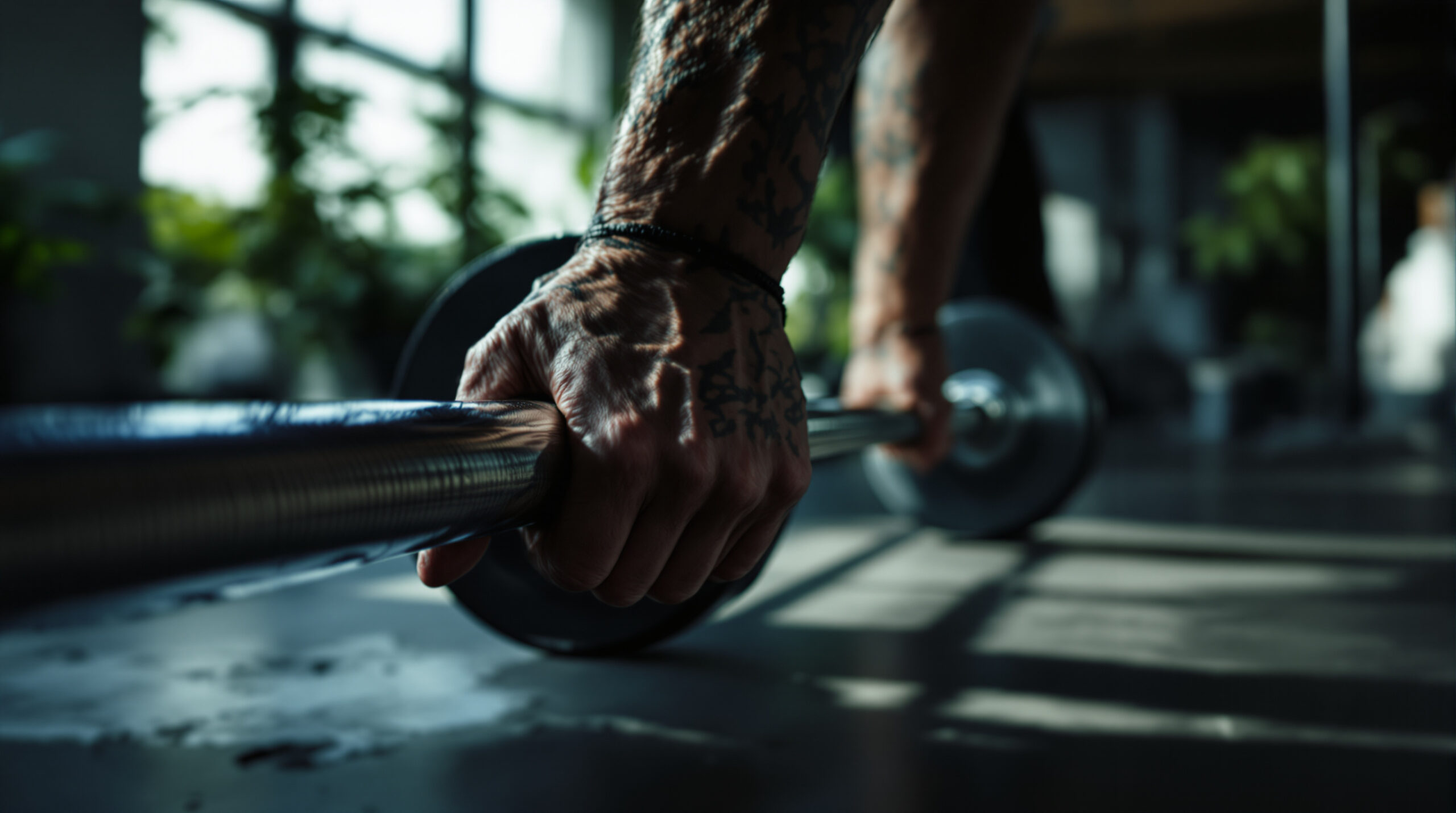
More interesting is the research on maximum strength. A frequently cited study from the University of Northern Colorado in 2022 found no significant difference in weight lifted during acute THC dosing before bench press. Subjects did not lift less, but consistently perceived the exercise as more strenuous. This discrepancy is physiologically intriguing: the training stimulus remains comparable, but mental effort increases. Those who understand sport as a disciplinary ritual and overcome their own resistance with each repetition lose, with THC, the edge that makes intensive sessions possible in the first place.
Another observation concerns fine motor control. Tasks such as aiming, balancing, or executing precise movement angles are performed worse under acute THC influence. In sports that place such demands at the center—archery, sport shooting, golf, or tennis—the performance brake is not only measurable but also practically relevant. In strength training with standardized movements like squats or deadlifts, it has less impact, though injury risk from impaired coordination still increases.
Heart Rate, Blood Pressure, and the Economics of Endurance
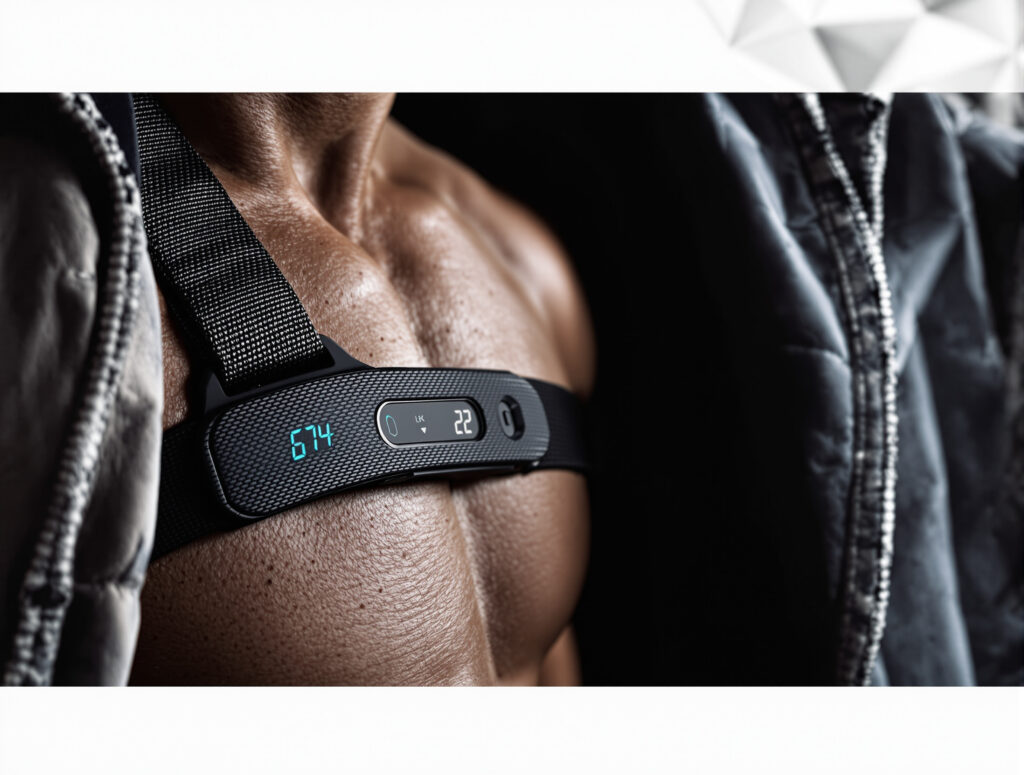
A reliably measurable effect of THC is the cardiovascular response. Immediately after inhalation, resting heart rate often increases by twenty to fifty beats per minute, with systolic blood pressure rising by a few millimeters of mercury. Those who exercise in this state begin their training with an already elevated exertion heart rate and work within a less favorable physiological window. Aerobic sessions reach lactate-producing zones more quickly, and anaerobic stimuli can be sustained for shorter periods than in non-intoxicated conditions.
The subjective impression of becoming winded faster or sweating more heavily is therefore not imaginary. Cardio sessions under THC feel more strenuous without actual performance increasing. Since training control via heart rate zones becomes unreliable with this overlay, the effect of the training plan also shifts. A zone-based endurance program loses its precision when resting and exercise values are altered by consumption. For ambitious recreational athletes who control their sessions by watts or heart rate, this is a clear argument against acute THC consumption before training.
With pre-existing conditions, the performance argument becomes a safety issue. People with cardiac arrhythmias, unexplained high blood pressure, or a family history of sudden cardiac events combine a joint before exercise with two stressors whose interaction is poorly studied. Even without acute prior history, temporal separation of consumption and exertion is the safer option.
The Endocannabinoid System: Why Sport Creates a Natural High Without a Joint

The famous runner’s high was long attributed to endorphins. A study from the Hamburg-Eppendorf University Medical Center corrected this picture: endorphins are too large to cross the blood-brain barrier and barely explain the euphoric feeling after extended endurance exertion. The central role is played by anandamide, an endogenous endocannabinoid chemically similar to THC. Anandamide binds to the same CB1 receptors activated by cannabis. In this sense, sport is a built-in mechanism for activating the body’s own cannabinoid system.
This yields a central point in the performance discussion: the body produces during aerobic exertion of moderate intensity the very substances that many consumers want to supply externally. Those who regularly complete endurance sessions experience a clean, well-controllable cannabinoid boost that elevates mood and reduces pain perception. External THC can overlay, alter, or dampen this endogenous effect. In some cases it intensifies the experience; in others it leads to heaviness, lethargy, or dizziness.
A second point concerns tolerance. Regular consumers downregulate their CB1 receptors. This adaptation also dampens the effect of the body’s own endocannabinoids and can measurably weaken sport’s natural reward system. Breaks from THC consumption restore sensitivity and lead many athletes to noticeably more intense training without any change to their program. Those who have not trained in a while and are starting to exercise again benefit especially clearly from a several-week consumption break.
Sports Compared: Where Cannabis Slows You Down and Where It Barely Matters
The question of whether cannabis enhances or impairs performance cannot be answered across the board but depends heavily on the sport. Precision disciplines like sport shooting, archery, darts, or billiards are sensitive to any change in fine motor control and attention. Here, acute THC consumption is practically always a disadvantage. Technical team and racquet sports like tennis, table tennis, basketball, or volleyball also show predominantly negative effects. Reaction time, anticipation, and rapid decision-making are precisely the areas where THC has the strongest impact.
In endurance sports, the picture is more nuanced. A California survey with hundreds of recreational runners found that many consumers reported a subjectively more positive training experience, without objective parameters like mile times or watt values showing measurable improvement. A deeper example is provided by our article Cannabis before sport: Better mood and more enjoyment. The emotional enhancement explains why some people experience their sessions as more pleasant, but this is not true performance improvement—rather a different weighting of subjective impressions.
In strength training, acute maximum strength remains largely stable, though injury risk from complex compound movements increases due to reduced coordination. In movement-oriented practice like yoga, mobility work, or easy cycling, consumers report deeper body awareness, more conscious breathing, and reduced susceptibility to rumination. Here cannabis acts less as a performance enhancer than as an altered framework in which movement is experienced differently.
CBD and Recovery: The Other Chapter of the Performance Question
Those who think about performance holistically look not only at the moment of exertion but also at recovery. The focus shifts here from psychoactive THC to non-intoxicating CBD. A 2025 meta-analysis published in the Journal of the International Society of Sports Nutrition with eight studies and over three hundred subjects found a decline in inflammatory markers of twelve to eighteen percent at a daily dose of approximately one hundred fifty milligrams of CBD. Subjective pain perception after intense training dropped by around twenty-two percent, and sleep quality improved measurably.
Better recovery is essentially the only seriously documented way in which a cannabis plant substance can deliver performance enhancement over time. Those who recover faster can perform the next training session sooner, apply intense stimuli more frequently, and actually improve over weeks and months. A detailed overview of indications, dosages, and research findings is provided in our article Cannabis for sports injuries, which details regenerative applications.
It is important to distinguish this from the acute performance question. CBD is not a stimulant, not an ergogenic, and not a strength booster before a set. Those who use it as such will be disappointed. As a tool for nighttime recovery, pain modulation after hard sessions, or sleep hygiene during intense training blocks, it is a serious component. Professional athletes in American football, MMA, and endurance sports have used it in this way for years, as documented in our article Athletes rely on cannabis after training.
What Studies Really Measure and Where Placebo Takes Hold
The research landscape on cannabis and sport has methodological peculiarities that should be considered in interpretation. Many studies rely on self-reports, which represents substantial bias toward expected outcomes. Those hoping for a better run from a joint will remember it as better, even if their heart rate data tells a different story. A summary assessment of quantitative consumption data is provided by our report Study: Cannabis consumption and physical activity, which examines the relationship between regular consumption and physical activity levels at the population level.
There is also the problem of subject selection. Studies working with experienced consumers find different effects than those with cannabis-naive participants. With tolerance development, cognitive impairments are smaller; in first-time users they are much larger. A comparison only makes sense when consumption status, strain, method of consumption, and timing relative to measurement are controlled. This is rarely the case in reality, which explains the heterogeneity of results.
For competition situations, the WADA threshold of one hundred fifty nanograms of THC-carboxylic acid per milliliter of urine is the practically relevant cutoff. Those competing in organized sports should strictly avoid THC consumption on competition day and in the days before, as the detection window for metabolites can extend from several days to weeks depending on consumption pattern. CBD has been prohibited since 2018 no longer, though full-spectrum products may contain unintended THC contamination and lead to a positive test. Tested isolates and broad-spectrum products with lab documentation significantly reduce this risk.
Frequently Asked Questions
Does cannabis before training make you faster or more enduring?
No. Acute THC consumption before exercise increases heart rate, slows reaction time, and increases subjective perception of effort. Objective parameters such as mile times or watt values remain the same or decline. The frequently reported „better“ running experience is based on altered perception, not real performance improvement.
Does cannabis lower maximum strength in the gym?
Acute maximum strength remains largely stable under THC, as shown by several bench press studies. However, subjective perception of effort increases, and injury risk from complex compound movements grows due to reduced coordination. For serious strength training, acute consumption before a session is no performance gain but an avoidable burden.
Which sports are most sensitive to acute cannabis use?
Precision sports like sport shooting, archery, golf, or darts suffer the most because fine motor control and focus are affected. Technical team and racquet sports like tennis, basketball, or volleyball lose noticeably in reaction and anticipation. Endurance sport is less sensitive, though the training effect is still diminished by elevated heart rate and unreliable heart rate zones.
What role does CBD play in performance and recovery?
CBD is neither an acute performance enhancer nor a pre-set booster. As a recovery tool, it can reduce inflammatory markers, dampen subjective pain perception, and improve sleep quality. Over weeks and months, this can translate into an indirect performance gain because the next intense session is possible sooner and in better condition.
What is the THC threshold in competition?
Hast du selbst schon Cannabis vor dem Sport konsumiert?
The World Anti-Doping Agency has set an analytical threshold of one hundred fifty nanograms of THC-carboxylic acid per milliliter of urine since 2013. Only values above this threshold constitute a violation. The 2026 prohibited list has not changed this approach. Outside of competition, cannabis is permitted, but because of the long detection window for metabolites, adequate washout before competitions is still strongly recommended.







Branchen-Update
News, Analysen und Reportagen — mehrmals im Monat direkt in dein Postfach.
Folge uns