
Cannabis und Schlaf gelten in der öffentlichen Wahrnehmung als enge Verbündete. Wer abends einen Joint raucht oder einige Tropfen CBD-Öl nimmt, schläft schneller ein, schläft tiefer und wacht erholt auf. So lautet zumindest das Versprechen, das sich seit Jahren durch Foren, Apotheken-Beratungen und Erfahrungsberichte zieht. Die wissenschaftliche Datenlage zeichnet ein präziseres und an manchen Stellen unbequemes Bild. Sie zeigt, dass Cannabis den Schlaf tatsächlich beeinflusst, jedoch nicht immer in die Richtung, die Konsumierende erwarten.
📑 Inhaltsverzeichnis
- Cannabis and Sleep: What Happens in the Brain
- How THC, CBD, and CBN Change Sleep Phases
- Studies on Cannabis and Sleep: Data from 2024 and 2025
- Tolerance, REM Rebound, and Side Effects
- Cannabis and Sleep in Practice: Dose, Timing, and Safety
- Frequently Asked Questions About Cannabis and Sleep
- 💬 Fragen? Frag den Hanf-Buddy!
In Deutschland berichtet rund ein Drittel der Patienten, die eine Cannabistherapie beginnen, von Schlafproblemen als Hauptindikation. Gleichzeitig erscheinen jährlich Dutzende neuer Studien, die mit Polysomnographie und EEG genau messen, was Cannabinoide im schlafenden Gehirn anrichten. Dieser Artikel ordnet die aktuelle Evidenz und beantwortet die Frage, was Cannabis und Schlaf wirklich miteinander zu tun haben.
Cannabis and Sleep: What Happens in the Brain

Sleep is not a passive state, but a highly structured process. The brain alternates several times per night between light sleep, deep sleep, and REM sleep, the phase with the most intense dreams. Each of these phases serves its own purpose. Deep sleep consolidates memory and promotes physical regeneration. REM sleep processes emotions and is closely linked to learning performance.


Cannabinoids intervene in this rhythm via the body’s endocannabinoid system. THC binds directly to the CB1 receptor, which is particularly abundant in the sleep-regulating hypothalamus and prefrontal cortex. The system controls not only pain and appetite, but also modulates the stability of sleep phases. CB1 signaling is necessary for NREM sequences to proceed uninterrupted. A detailed introduction to these mechanisms is provided in our overview, where we explain the endocannabinoid system.
When THC docks onto the CB1 receptor, it alters the activity of nerve cells that organize the transition between sleep phases. This explains why after consumption the time to fall asleep often shortens, but the sleep architecture underneath simultaneously shifts. Those who evaluate cannabis and sleep only through subjective experience regularly overlook this second effect.
How THC, CBD, and CBN Change Sleep Phases
THC works in a dose-dependent manner. Low doses between 2.5 and 15 milligrams in the evening typically show only minimal changes in sleep architecture in studies. They can ease falling asleep without significantly shifting the phase distribution. Only from about 20 milligrams of THC does REM sleep statistically noticeably shrink. At doses from 30 milligrams, the effect is pronounced.
A randomized pilot study published in 2026 in the journal „Journal of Sleep Research“ tested a single capsule containing 10 milligrams of THC and 200 milligrams of CBD in insomnia patients. Already on the first night, REM sleep dropped by an average of 34 minutes, and the time until the first REM phase extended by approximately one hour. Subjectively, however, participants reported sleeping better. This discrepancy between measurement and perception runs through almost the entire literature.
CBD is not psychotropic and barely binds directly to cannabinoid receptors. Its sleep effect occurs indirectly. In several controlled studies, CBD reduces anxiety, rumination, and physical tension. This makes falling asleep easier and deep sleep can lengthen. Review articles describe CBD as a substance that can favor slow-wave sleep components, especially at higher doses from 25 milligrams. We have compiled practical recommendations for controlled use in the article on cannabis oil for sleep disorders.
Cannabinol, or CBN, is marketed in many sleep products as „the sleep-promoting cannabinoid.“ The scientific basis is thinner than the marketing suggests. Animal studies show that CBN and its active metabolite actually influence sleep architecture. However, solid human data on sedative effects are largely lacking. We have comprehensively reviewed the state of medical research in the article on the medical benefits of CBN.
Terpenes and the ratio of THC to CBD play an additional role. Myrcene-rich Indica strains are considered more relaxing and are preferably used in practice in the evening. A strictly scientific distinction between sedating Indica and activating Sativa phenotypes cannot be derived from the data. The subjective effect arises from the complex interplay of cannabinoid profile, terpene profile, and individual pharmacology.
Studies on Cannabis and Sleep: Data from 2024 and 2025

The latest wave of systematic reviews and meta-analyses now allows for reliable statements across several hundred subjects. A meta-analysis of over 60 individual studies published in 2025 shows that cannabis use near bedtime is associated with increased wake times after sleep onset. The so-called „wake after sleep onset“ phase extends by an average of 16.6 minutes. Sleep efficiency, or the proportion of time actually spent sleeping in bed, decreases by nearly four percent. Light sleep N1 stages show a slight increase.
With chronic use, these changes become more entrenched. A cross-sectional study published in 2026 in the journal „Sleep“ by Oxford University Press examined polysomnography data from a sleep medicine clinic. Regular users showed measurably reduced deep sleep duration, combined with more fragmented sleep architecture. In other words: those who use cannabis daily sleep objectively more restlessly, even if they feel well-rested in the morning.
On the therapeutic side, the German IMPACT study provides a relevant observation. 94 patients with chronic pain and accompanying sleep disorders received a balanced cannabis extract in a 10:10 ratio of THC and CBD for twelve weeks. 65 percent reported a significant improvement in sleep quality, 44 percent reported relevant pain relief. The average adjustment phase to optimal dosing took about four weeks.
Real-world care data supplement the picture. The British initiative „Project Twenty 21“ evaluated changes in sleep quality in several thousand patients with prescribed medical cannabis in 2025. Across all diagnostic clusters, self-reported sleep scores improved significantly. At the same time, the authors emphasize that subjective improvement does not necessarily coincide with objectively measurable normalization of sleep architecture. Those who want to know more about the German care reality will find important context in the article about dosing practices with medical cannabis regarding high THC concentrations and their side effects.
Tolerance, REM Rebound, and Side Effects
One of the most important and frequently underestimated facts about cannabis and sleep concerns tolerance. With regular use, CB1 receptors adapt to the constant presence of THC and respond less sensitively. The sleep-promoting effect of the initial dose fades, the necessary amount increases, and simultaneously the unwanted effects on sleep quality grow.
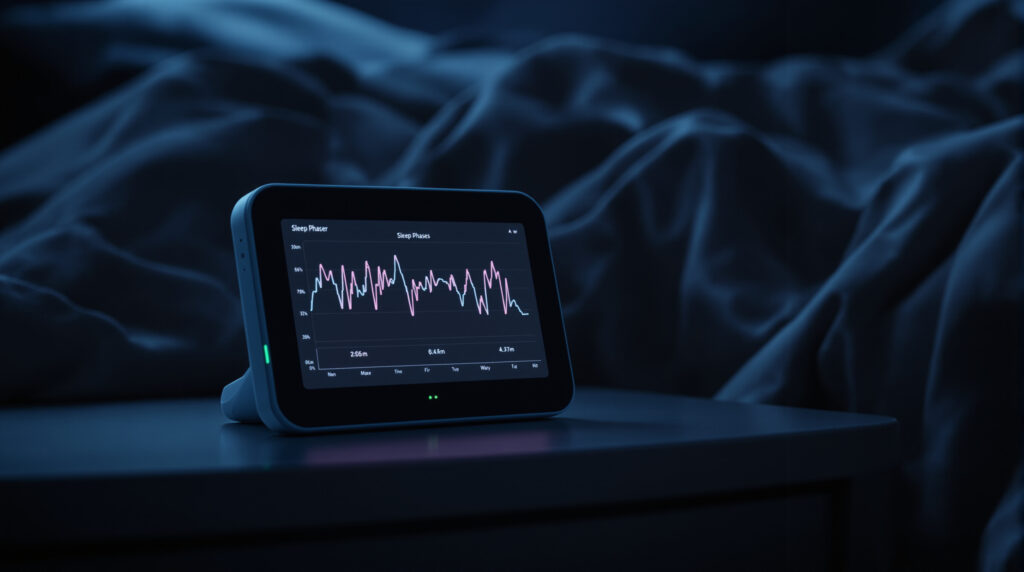
Upon discontinuation, REM rebound follows. Because REM sleep was chronically suppressed during use, the brain catches up on these phases in the first nights. The result is unusually long and very vivid dreams, often accompanied by nightmares, increased sweating, and nighttime awakening. Up to 76 percent of regular users report pronounced sleep disturbances during the first weeks of withdrawal in one review. Sleep architecture typically normalizes within a few weeks thereafter.
Additional side effects are dose-dependent. Dry mouth, mild daytime drowsiness, and concentration problems occur in about 40 percent of patients in the IMPACT study. These effects are typically mild and rarely lead to treatment discontinuation. More critical is the interaction with other sedating substances such as benzodiazepines, Z-drugs, or alcohol. Here the effect can add up and result in pronounced morning sedation.
In individuals with pre-existing conditions such as obstructive sleep apnea, severe depression, or predisposition to psychosis, cannabis is not a neutral sleep aid. Studies suggest that THC may alter breathing regulation during sleep. Medical clarification before use is not a luxury but a minimum standard.
Cannabis and Sleep in Practice: Dose, Timing, and Safety
From the sum of studies, some practical guidelines can be derived without crossing into medical recommendation. First, the principle „start low, go slow“ applies. Low initial doses under ten milligrams of THC in the evening show the most favorable balance between sleep aid and intact sleep architecture in research. With CBD, many studies begin with 25 milligrams and increase in 25-milligram increments every few days.
Second, timing is crucial. Orally consumed cannabis works slower and longer than inhaled. Capsules or oils should be taken 60 to 90 minutes before bedtime so that peak effectiveness coincides with falling asleep. Inhaled cannabis works within minutes, but the effect wears off after two to three hours. Those who wake again in the second half of the night typically benefit more from an oral dosage form.
Third, strain selection should match the desired direction of effect. Indica-dominant strains with high myrcene content are frequently used in patient care in the evening because they are subjectively considered relaxing. A concrete description of this effect direction is found in our strain profile of the Shiskaberry strain, which is often cited as a reference for deeply relaxing Indica genetics.
Fourth, regular check-ins are important. Those who use cannabis for sleep regulation should honestly assess every few months whether the original effect still exists or whether tolerance already has begun to set in. Breaks of a few days can resensitize the CB1 receptor. In physician-supervised therapy, this so-called „tolerance break“ is an established tool.
Frequently Asked Questions About Cannabis and Sleep
Does Cannabis Really Help You Fall Asleep?
At low doses, THC measurably shortens sleep onset time for many people. This is the effect that users perceive most strongly subjectively. Behind faster sleep onset, however, can lurk an altered sleep architecture, especially reduced REM proportion. The sleep aid is thus real, but the price is potentially less dream sleep.
Which Strain is Best for Sleep?
From patient care experience, Indica-dominant strains with balanced THC and CBD content and high myrcene content are considered favorable. Strictly scientifically, no universally best strain can be named because the endocannabinoid system responds individually differently. In practice, cautiously trying several strains over a week each proves effective.
Does THC Permanently Shorten REM Sleep?
With chronic use, the REM proportion remains measurably reduced over months. After discontinuation, sleep architecture typically recovers within two to six weeks. During this phase, REM rebound appears with particularly intense dreams. Permanently structural damage to the REM system has not been documented to date.
Is CBD Better Than THC for Sleep Problems?
CBD is not necessarily more effective, but works differently by profile. It doesn’t get you high, has a favorable side effect profile, and works mainly through anxiety and stress reduction. Those who sleep poorly mainly due to rumination and inner restlessness often benefit more from CBD. In pronounced insomnias with sleep maintenance difficulty, combined THC and CBD preparations show the most pronounced effects in research.
What Helps Against Sleep Disturbances After Cannabis Withdrawal?
The REM rebound after discontinuation is unpleasant but time-limited. Sleep hygiene, regular sleep schedules, physical activity during the day, and consistent light hygiene in the evening noticeably shorten the phase. With significant distress, physician-guided transition concepts can be worthwhile. Self-medication with alcohol or benzodiazepines is not a solution because they further destabilize sleep architecture.
Can CBN Solve the Sleep Problems That Many Products Promise?
Nutzt du Cannabis gezielt zum Einschlafen oder bei Schlafproblemen?
CBN is frequently positioned in advertising as a „sleep cannabinoid.“ Robust human studies on sedative effects are still lacking. Animal models and individual pilot investigations provide hints but do not replace controlled clinical trials. CBN is an interesting cannabinoid, but not yet an established sleep aid.







Branchen-Update
News, Analysen und Reportagen — mehrmals im Monat direkt in dein Postfach.
Folge uns