Wenige Bereiche der Cannabis-Welt haben sich in den vergangenen zehn Jahren so radikal verändert wie die Welt der Konzentrate. Aus dem klassischen Haschisch, das seit Jahrhunderten in Marokko, Afghanistan und Indien gepresst wird, ist ein hochtechnischer Industriezweig geworden, der von Edelstahlkesseln, Vakuumöfen und Pharma-Standards geprägt ist. Gleichzeitig erlebt die handwerkliche Tradition mit Bubble Hash, Charas und Live Rosin eine Renaissance, getragen von einer Connaisseur-Szene, die Reinheit und Aroma höher gewichtet als reine Wirkstoffstärke.
📑 Inhaltsverzeichnis
- What Are Cannabis Concentrates? Trichomes as the Key
- Solvent-Free Methods: Sieve, Pressure, Ice Water
- Solvent-Based Methods: BHO, Ethanol, CO₂
- Consumption Forms: Dabbing, Vaporizers, Edibles, Tinctures
- Legal Situation in Germany: What the KCanG Allows and Prohibits
- Quality, Safety, and Market Trends in 2026
- Frequently Asked Questions
- 💬 Fragen? Frag den Hanf-Buddy!
This guide brings clarity to the field. It explains what technically distinguishes a cannabis concentrate from a flower, which processes work with and without solvents, how dabbing and vaporizer consumption have transformed the market, and where the boundaries of German law lie since the Consumption Cannabis Act (KCanG) came into effect. Whether you have questions about rosin, BHO, RSO, or supercritical CO₂, you’ll find the structured overview here that forum fragments and manufacturer blogs rarely provide.
A preliminary note that cannot be emphasized often enough under German conditions: The private manufacture of cannabis concentrates is explicitly prohibited under §2 paragraph 1 number 4 KCanG, even if produced solely for personal use. The penalty ranges up to three years imprisonment. This text describes processes not as instructions, but as journalistic contextualization of a market operating in the space between tradition, pharmaceuticals, the black market, and political regulation.


What Are Cannabis Concentrates? Trichomes as the Key
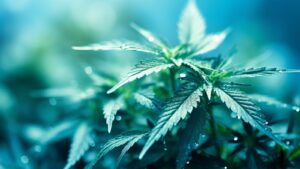
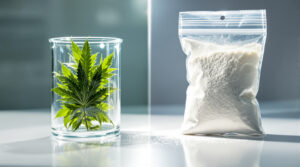
Every cannabis concentrate, whether hand-pressed charas or pharmaceutical CBD distillate, begins at the same point: with trichomes. These mushroom-shaped resin glands are found primarily on the female flowers and bracts of the cannabis plant and produce the entire spectrum of cannabinoids, terpenes, and flavonoids that account for the pharmacological effects. A cannabis flower contains between 15 and 25 percent tetrahydrocannabinol (THC), a high-quality concentrate reaches 50 to 90 percent, and a chromatographically isolated distillate up to 99 percent.
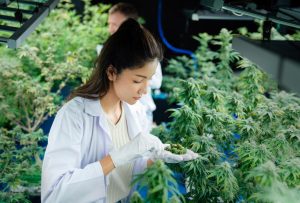
The jump in active compound density is so dramatic because all plant material is removed. Ideally, only the contents of the trichome heads remain. This makes concentrates interesting for medical applications requiring reproducible, plant-material-free dosing, and simultaneously for recreational consumers who appreciate compact formats, intense aroma, and clean consumption. Medical cannabinoid extraction has therefore experienced an innovation boom in recent years that goes far beyond classical procedures.
Technically, a concentrate does not necessarily differ from an extract in terms of terminology. However, industry usage has established a distinction: solvent-free end products like Bubble Hash or Rosin are referred to as concentrates, while extracts often refer to solvent-based final forms like Shatter, Live Resin, or Distillate. This distinction isn’t clean, since Rosin is also an extract in the scientific sense. In this guide, we therefore retain the overarching term concentrate when referring to the form, and speak of extraction when referring to the process.
Solvent-Free Methods: Sieve, Pressure, Ice Water
The oldest concentrate production methods work without a single gram of solvent. They use mechanical friction, targeted cold, or pressure to separate trichomes from plant material. The result is products that today often exceed solvent-based methods in purity and aroma authenticity. Artisanal tradition provides the lineages of Charas, Dry Sift, Bubble Hash, and since 2017 Rosin in its various forms.
Charas, Dry Sift, and Kief
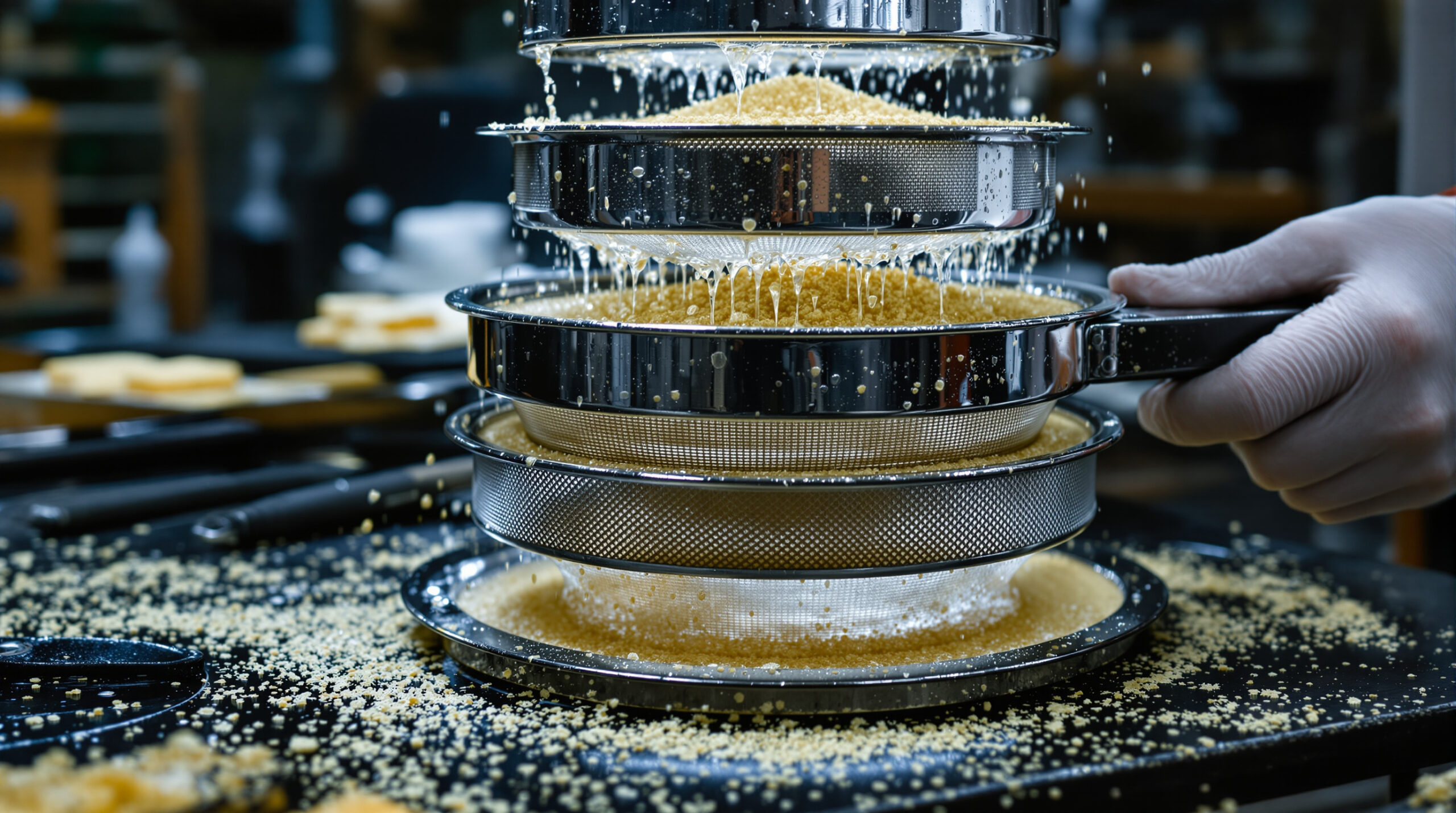
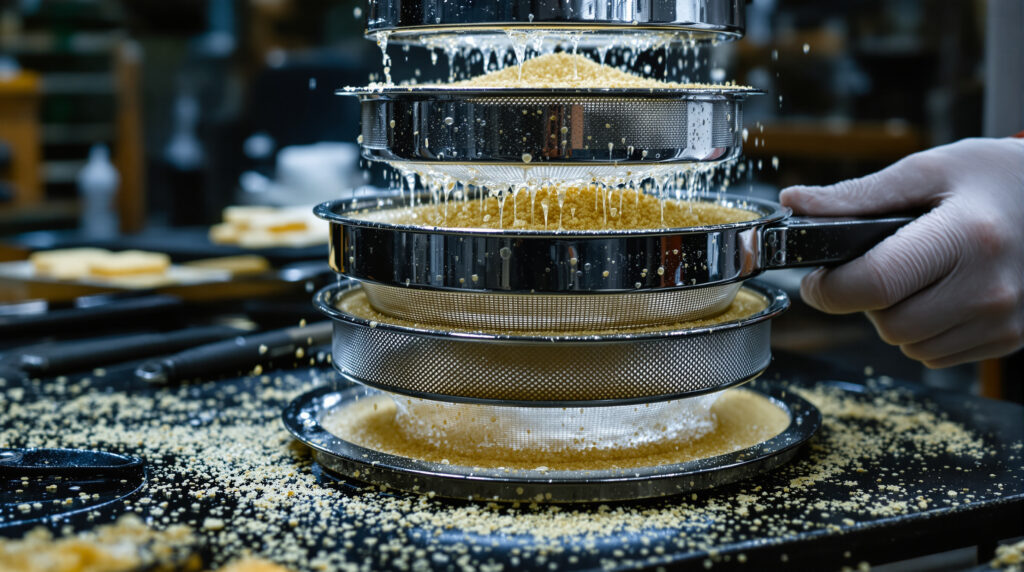
Charas, the hand hashish of the Indian subcontinent, is created by patiently rubbing fresh flowers between the palms. The resin adheres to the skin and is rolled into dark balls. Dry Sift Hash, by contrast, represents the Moroccan and Lebanese school: dried flowers are beaten over increasingly fine sieves, and the falling blonde powder, known as kief, is the purest form of dry plant resin. Pressed and slightly warmed, it becomes classic pressed hash. A detailed account of this tradition is provided in our feature piece From Sieve to Plate, which traces the artisanal steps from harvest field to pressed block in detail.
Bubble Hash and Ice-O-Lator
Perhaps the most important innovation of the late nineties was the ice water method, popularized by Dutch cultivator Mila Jansen with the Ice-O-Lator. Fresh or frozen flowers are rinsed with ice water through a system of tiered microsieves; the cold makes trichome heads brittle, they break off and are collected in sieves with mesh sizes between 220 and 25 micrometers. The result, called Bubble Hash, can be classified in star ratings, from three-star press material to six or seven-star full-melt, which vaporizes without residue on a sieve. The method is considered a gentle step between artisanal hash and industrial extraction, a classification discussed in detail in our article on cold water extraction.
Rosin: Pressure and Heat as a Style Revolution
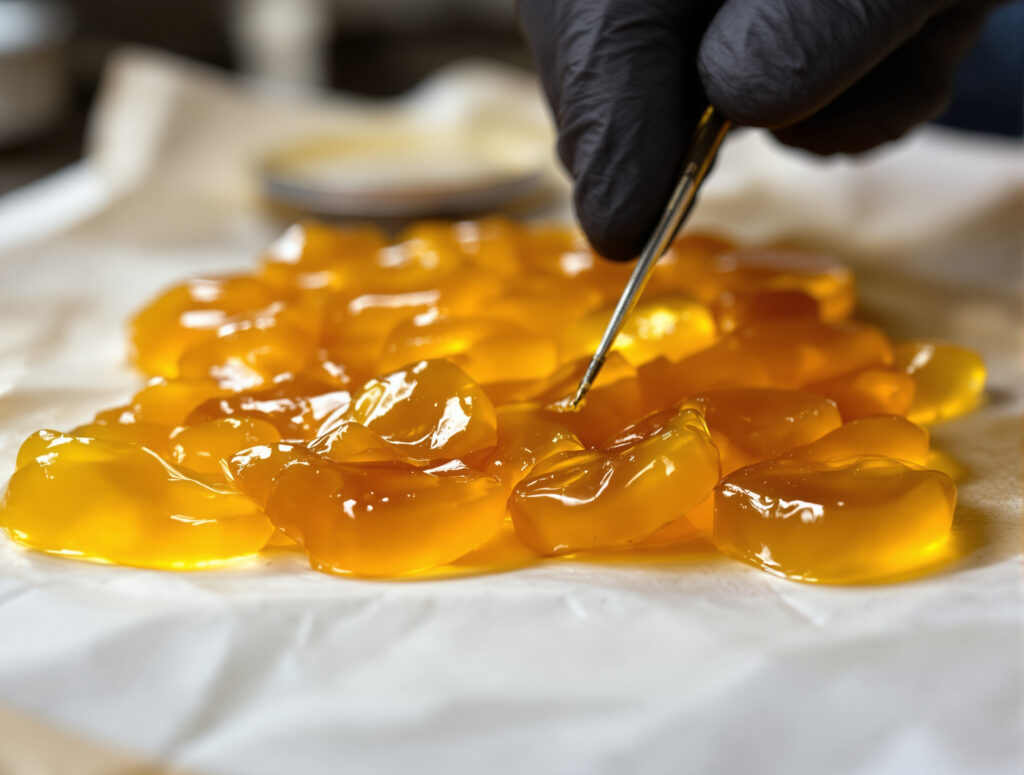
Since around 2015, Rosin has developed into the style-defining solventless method. A rosin press between two heated plates is sufficient to extract resin from flower material. The parameters are more finely calibrated than they initially appear: plate temperatures between 85 and 110 degrees Celsius for flowers, between 65 and 105 degrees for hash, plus pressure values between a few hundred and approximately 1500 PSI. Go higher and you risk pressing out plant impurities. Stay below 80 degrees and you extract too little.
The premium class is called Live Rosin: freshly harvested material is immediately deep frozen, Bubble Hash is first produced from it, and this is then pressed into Rosin. This way, volatile terpenes are preserved that would have long since dissipated in dried flowers. Live Rosin is today the premium segment of solventless concentrates. It’s important to clearly distinguish it from Live Resin: Live Rosin is solvent-free, Live Resin is not. The confusion of both terms is one of the most common errors in German-language discussions.
Solvent-Based Methods: BHO, Ethanol, CO₂
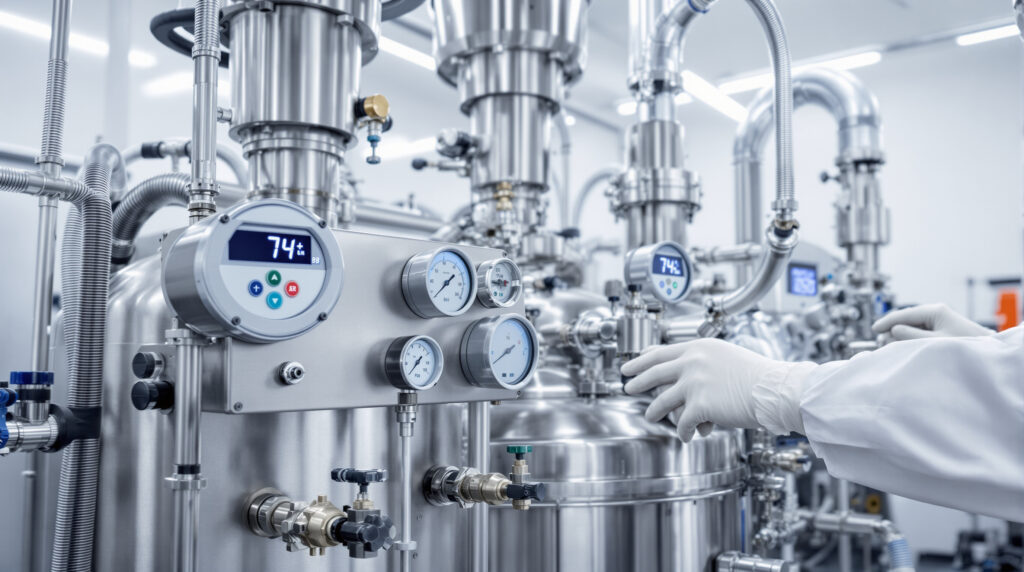
Where maximum yield, highest purity, or pharmaceutical reproducibility is required, solvents come into play. Cannabinoids are nonpolar and dissolve well in butane, propane, ethanol, or in the supercritical state of carbon dioxide. These methods are efficient, but technically demanding and not without risk, especially with volatile hydrocarbons.
BHO and PHO: Shatter, Wax, Crumble
Butane Hash Oil, or BHO for short, is the umbrella term for concentrates extracted with liquid butane. Depending on processing conditions, crystal-clear Shatter, soft Budder, crumbly Crumble, or sugary Sugar Wax result. THC content regularly reaches 70 to 90 percent. PHO refers to the analogous method with propane, which produces slightly softer end products. A technical deep dive is provided in our article on BHO extraction, which explains construction, risks, and purification.
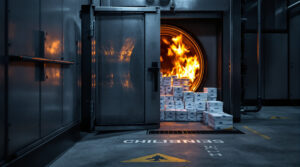
The risks are real: butane is highly flammable, an open flame or spark is enough to trigger an explosion. In the US, fire statistics have regularly recorded apartment fires from improper BHO extraction for years. Additionally, there are residues in the final product: if you don’t completely remove the solvent in a vacuum oven, you inhale vaporized butane when consuming. In legal markets, regulatory authorities therefore set maximum values for residual solvents, which are verified by gas chromatography.
Live Resin: Freshness Instead of Dryness
Live Resin uses the same solvents as BHO but begins with freshly harvested, immediately deep-frozen plant material. This preserves the terpene profile much more completely than in dried and cured flowers. The end products often appear as sauce-like concentrates with crystalline cannabinoid components suspended in a terpene-rich syrup. In premium North American markets, Live Resin is today a standard format for vape cartridges.
Ethanol Extraction and RSO
Ethanol is the solvent of choice when large quantities of plant material are processed on an industrial scale. The alcohol efficiently dissolves cannabinoids, can subsequently be removed via rotary evaporator, and is comparatively uncritical in handling compared to butane. A well-known variant is RSO, named after Canadian activist Rick Simpson, a dark, highly concentrated full-spectrum oil that has a fixed place in the patient community. Common CBD extraction methods also frequently use ethanol, especially in processing industrial hemp biomass into full-spectrum oils.
Supercritical CO₂: The Pharma Standard
When the end product is to land in a pharmacy, there is rarely a way around supercritical carbon dioxide. Above 31 degrees Celsius and 74 bar, CO₂ enters a supercritical state in which it simultaneously exhibits the properties of a liquid and a gas. It dissolves cannabinoids about as well as butane but leaves no residues whatsoever, since it simply escapes as a gas after extraction. Large facilities operate under ISO 22000 and according to GMP standards, with reproducible pressure and temperature curves that can selectively pull terpenes first and then cannabinoids.
The disadvantage is investment costs: an industrial CO₂ facility quickly costs six figures, and operation requires trained personnel. In return, the process delivers the cleanest full-spectrum extracts for medicinal cannabis and CBD products. For a deeper dive, we offer a technical description at supercritical CO₂ extraction.
Distillate and Isolates
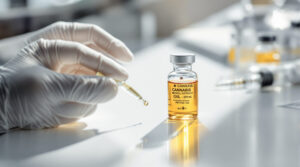
To remove the last impurities from a crude extract, one proceeds via vacuum distillation or column chromatography. This produces distillates with 90 to 95 percent cannabinoid content and crystalline isolates with purities above 99 percent. These formats form the basis of many vape cartridges, pharmaceutical products, and standardized edibles. However, they are also flavorless and aromatically dead, since terpenes and secondary plant constituents have been removed. Those seeking the full entourage effect therefore turn to full-spectrum concentrates.
Consumption Forms: Dabbing, Vaporizers, Edibles, Tinctures
Concentrates require different consumption forms than flowers. If someone wanted to burn a gram of Shatter like a joint mixture, they would waste the material and unnecessarily burden their lungs. In practice, four consumption routes have become established.
Dabbing is the most intense route. A small amount of concentrate is vaporized on a quartz, titanium, or ceramic plate heated to 175 to 230 degrees Celsius and inhaled through a water pipe system. The result is an extremely rapid, intense onset of effects that regularly leads to overwhelmed experiences with inexperienced users. Possible risks from excessively high heating and resulting pyrolysis products are also discussed. A differentiated perspective is offered in our article Cannabis Dabbing and the Lungs.
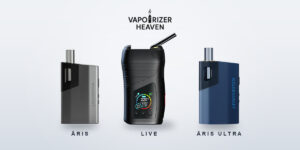
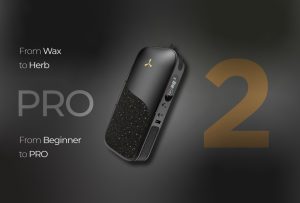
Vaporizers with concentrate attachments are the controlled variant. Devices like the Volcano Hybrid or specialized concentrate vaporizers work with precise temperature curves ranging between 160 and 220 degrees depending on consumption goals. Our overview piece on vaporizer temperature for cannabis details which substances are released at which temperatures.
Edibles and tinctures require an additional step: cannabinoids must be decarboxylated, meaning converted through heating from their acidic precursors THCA and CBDA into the active forms THC and CBD. Distillates and RSO are already decarboxylated and can be dissolved directly in cooking oil, chocolate, or carrier alcohol. Vape pen cartridges, finally, are the urban mass market format, typically working with distillate that is reformulated with purified terpenes. In legal US markets, this segment is now larger than the traditional flower market.
Legal Situation in Germany: What the KCanG Allows and Prohibits
With the Consumption Cannabis Act, in effect since April 1, 2024, Germany has decriminalized the possession and private cultivation of cannabis within narrow limits. Adults with residence or habitual residence in Germany may simultaneously cultivate up to three plants at home and store up to 50 grams of dried cannabis. In public spaces, 25 grams are permitted. What is explicitly not allowed is the further processing of one’s own harvest into concentrates or edibles.
§2 paragraph 1 number 4 KCanG explicitly names the manufacture of cannabis-containing products as prohibited handling. §34 KCanG provides for a sentence of up to three years imprisonment or a fine for this. Even someone who exclusively uses a Bubble Hash bag or rosin press for personal use operates on the same legal level as a commercial manufacturer. This distinction is intentional in the law: the legislator wanted to decriminalize consumption as such but not elevate the processing of active compounds to a private tinkerer’s right.
Three legal routes remain. First, the medical: anyone with a cannabis prescription receives standardized full-spectrum extracts, dronabinol solutions, or finished pharmaceutical products like Sativex and Epidyolex from the pharmacy. Second, scientific: research facilities can obtain permits from the responsible federal authority for extractions for study purposes. Third, industrial: CBD product manufacturers work on the basis of certified industrial hemp, which may be grown according to the EU variety catalog with less than 0.3 percent THC. Cannabis Social Clubs under §11 KCanG may explicitly not manufacture concentrates, but only distribute dried flowers and cuttings to their members.
For the German market, this means: if as a consumer you want to encounter concentrates, you have three realistic options. A medical prescription, a stay in legalized foreign markets such as the Netherlands, Spain, Switzerland in the pilot project, or the USA, or the black market with all associated risks regarding purity and pesticide contamination.
Quality, Safety, and Market Trends in 2026
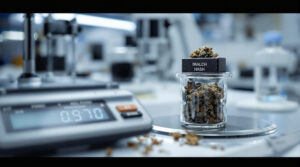
Anyone buying a concentrate in legal markets should be able to read the lab test certificate. Usually tested are the cannabinoid profile, terpene profile, residual solvents, pesticide residues, microbial contamination such as mold and yeast, and heavy metals. Reputable manufacturers provide results as a Certificate of Analysis. In Germany, strict EU GMP certification requirements apply to medicinal cannabis and its extracts, which importers from Canada, Portugal, Israel, or Australia must meet.
Three trends shape 2026. First, the solventless wave: Live Rosin and six-star Bubble Hashes have taken over the premium segment in the US and are slowly seeping into Europe through premium strain collections. Second, mini-verticals: manufacturers grow their own genetics, harvest fresh, freeze immediately, and control the entire value chain from cutting to end consumer. Third, convergence with the pharmaceutical industry: standardized full-spectrum extracts for patient-individualized therapies are the growth field in Germany, driven by growing prescription numbers since cannabis was removed from the Narcotics Act.
Those observing the field further will see how procedures and terminology continue to differentiate. Diamonds, sauce, Hashishene profiles, Cold Cure Rosin, and solventless vape cartridges are keywords that will play a role in the premium segment in the coming years. Trichomes remain the starting point where everything begins, no matter how high-tech the final process becomes.
An open question concerns the starting quality. Even the most elaborate Live Rosin process cannot make a top product from mediocre flowers. Genetics, the growing cycle, and harvest timing determine the terpene profile and trichome density that will later be extracted. In legal markets, we have therefore observed increasing specialization in so-called hash plant strains for several years—varieties whose trichomes are particularly washable or pressable and whose aroma profiles become especially clear in concentrated form. For the German medicinal market, such differentiations are still a thing of the future, since imports follow a regulatory logic that weighs active compound content and microbial purity more heavily than sensory subtleties.
It is also remarkable what is not happening. Despite billion-dollar investments, no process has succeeded in transferring the complete aroma profile of a fresh cannabis flower to a stable form without losses. Even Live Rosin loses traces of its most volatile terpenes during pressing. A piece of artisanal magic that preserves the trichomes in living plant tissue apparently cannot be fully replicated under industrial conditions. This gap between plant and concentrate is among the most interesting open questions for botany, food technology, and pharmacy in the coming years.
Frequently Asked Questions
What is the difference between Live Rosin and Live Resin?
Both start with freshly harvested, deep-frozen cannabis and thus preserve the full terpene profile. The decisive difference lies in the process: Live Rosin is solvent-free and uses pressure and heat via the detour of Bubble Hash. Live Resin uses volatile solvents like butane or propane. Live Rosin is therefore considered the purer product in the connoisseur scene and the more expensive one in the premium segment.
How high is the THC content of cannabis concentrates?
Bubble Hash and Rosin typically range from 50 to 80 percent THC. BHO concentrates like Shatter and Wax reach 70 to 90 percent. Distillates come in at 90 to 95 percent, crystalline THC isolates up to 99 percent. By comparison, modern cannabis flowers contain 15 to 25 percent THC. The significantly higher active compound density requires correspondingly smaller doses, otherwise unpleasant overdose experiences follow.
Is the manufacture of hashish legal in Germany?
No. Even though the Consumption Cannabis Act permits home cultivation of up to three plants, further processing into hashish, rosin, edibles, or tinctures is explicitly prohibited. §2 KCanG names the manufacture of cannabis-containing products as impermissible handling, §34 KCanG provides for imprisonment of up to three years. The rule applies even for purely private amounts without any intention to sell.
What is dabbing and how harmful is it?
Dabbing is the vaporization of small amounts of cannabis concentrate on a highly heated surface, usually a quartz or titanium plate in a water pipe. The effect sets in within seconds and is significantly more intense than smoking a flower. Study data and experience reports suggest that excessively high plate temperatures above 350 degrees Celsius can release problematic pyrolysis products. With low-temperature dabs below 230 degrees, the process is considered comparatively lung-friendly, but does not replace differentiated health risk assessment.
Which extraction method provides the highest purity?
Hast du schon mal Cannabis-Konzentrate konsumiert?
For pure full-spectrum extracts without solvent residues, supercritical CO₂ extraction is the pharmaceutical reference method. It delivers reproducible results under GMP conditions and is used for medicinal cannabis and high-quality CBD products. When it comes to isolated cannabinoids with over 99 percent purity, manufacturers combine CO₂ extraction with subsequent vacuum distillation or column chromatography. In the solventless sector, six-star Bubble Hash pressed into Live Rosin achieves the highest practical purity without any chemical processing.

Branchen-Update
News, Analysen und Reportagen — mehrmals im Monat direkt in dein Postfach.
Folge uns