Since June 9, 2026, Exilby has been approved as the first cannabis-based pharmaceutical against chronic back pain in Germany. With this, begins the less visible but decisive part of market entry: price formation. How much such a medication ultimately costs depends not solely on the manufacturer. It is determined by an established procedure between pharmaceutical companies, the Joint Federal Committee, and statutory health insurers.
📑 Inhaltsverzeichnis
First Free Pricing, Then Negotiated Reimbursement Amount
In Germany, newly approved pharmaceuticals follow a two-stage system. In the first six months after market entry, the manufacturer may set the selling price freely. The only requirement is listing with the Information Center for Pharmaceutical Specialties (IFA), which assigns a pharmaceutical central number to each product.
From the seventh month onward, a different mechanism takes effect. A negotiated reimbursement amount then replaces the freely set price. The manufacturer and the GKV-Spitzenverband—the umbrella organization of statutory health insurers—negotiate this amount. Pharmacy markups and value-added tax are then added to the pure reimbursement amount before the final price is determined at the pharmacy.


The AMNOG Procedure and Benefit Assessment
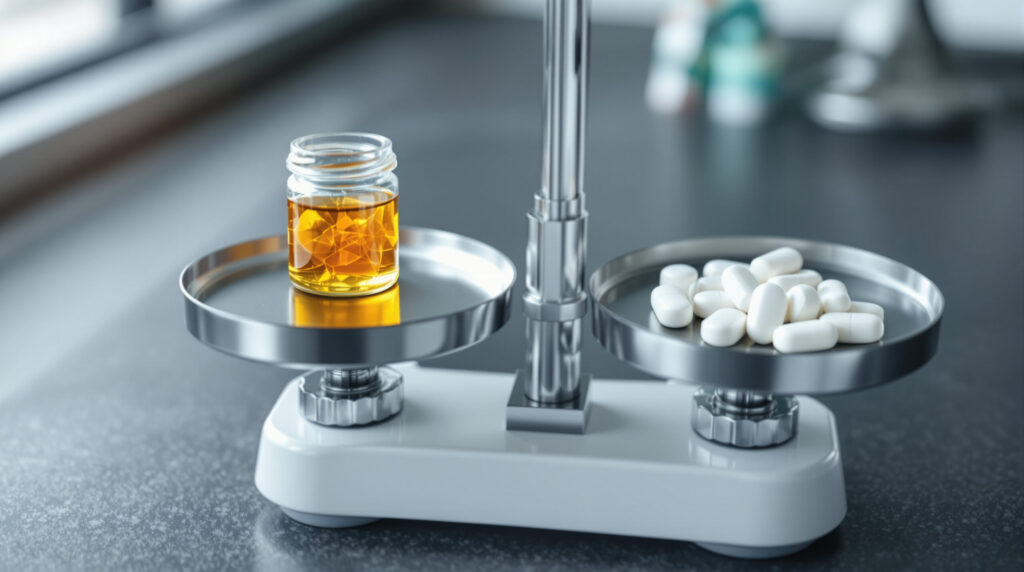
The cornerstone of price formation is the Pharmaceutical Market Restructuring Act (AMNOG). Since 2011, it has regulated how the added benefit of a new medication is assessed. The Joint Federal Committee, the supreme decision-making body of self-governance in the healthcare system, is responsible for this. It examines the benefit against an established comparative therapy.
This very comparative therapy is often the lever for the subsequent price. Depending on what a new medication is compared to, the certified added benefit is greater or smaller. Industry expert Franziska Katterbach sums up the principle: AMNOG rewards demonstrated patient benefit, not innovation itself. If manufacturers and insurers cannot agree, an arbitration board decides on the reimbursement amount. This procedure is not a special path for cannabis but applies to all patent-protected pharmaceuticals.
For cannabis-based pain medications, the assessment has a special twist. If the committee classifies a product as an effective alternative to opioids, it affects not only the price but also physician prescribing. Earlier evidence suggested that medicinal cannabis use could alter the prescription of traditional pain medications, as our report on the economic consequences for opioid pharmaceuticals demonstrates.
What the Exilby Case Shows for the Industry

How these rules work in practice can be seen in the current example. Following Exilby’s approval, the Munich-based manufacturer Vertanical now faces price negotiations. Phase 3 data demonstrate the product as therapeutically superior to opioids with fewer side effects. Market entry in Germany is expected for August or September 2026.
For the manufacturer, more than just the German market is at stake. A reimbursement amount negotiated in Germany acts as an international reference price and can influence market entry in other countries. Company CEO Clemens Fischer therefore emphasized that the company needs a price that justifies its investments and does not complicate the planned US market entry. This tension between cost recovery and reimbursement eligibility characterizes every AMNOG negotiation.
What Patients and Insurers Gain
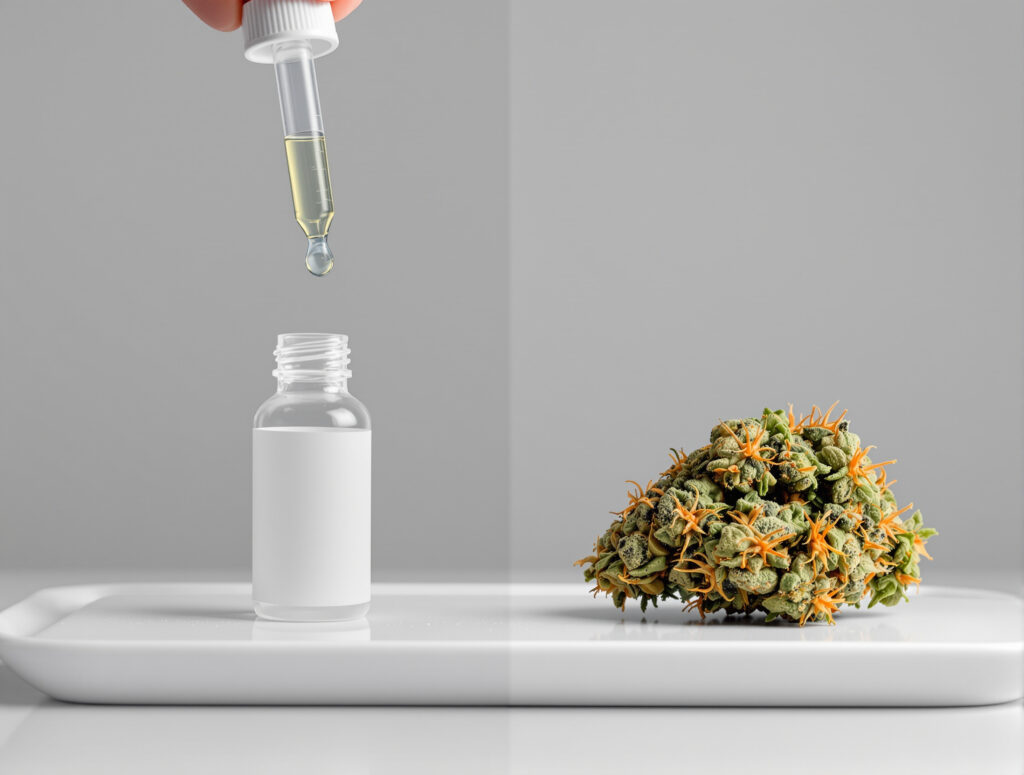
The debate over prices coincides with a strained situation in cost coverage. While the Bundestag discusses the possible end of insurance reimbursement for cannabis flowers, reimbursement of pharmaceuticals follows a clearly defined path. For patients, this makes a difference: an approved pharmaceutical with a negotiated reimbursement amount is easier for insurers to calculate than providing flowers.
The financing of flower therapy in particular has been under pressure for months since a finance commission demanded the end of statutory health insurance coverage for cannabis flowers. How quickly prices can shift in the market became evident when medicinal cannabis became more expensive in summer. A clearly approved pharmaceutical with fixed reimbursement could mean more reliable care for some pain patients in the future.
Frequently Asked Questions
Who sets the price of a cannabis pharmaceutical in Germany?
The manufacturer sets the price freely during the first six months. Afterward, the pharmaceutical company and the GKV-Spitzenverband negotiate a reimbursement amount. If no agreement is reached, an arbitration board decides.
What is the AMNOG procedure?
AMNOG is the Pharmaceutical Market Restructuring Act of 2011. It determines how the added benefit of a new medication is assessed. The Joint Federal Committee evaluates the benefit against an established comparative therapy, and this result forms the basis for the negotiated price.
How long can a manufacturer set prices freely?
Free pricing applies only in the first six months after market entry. From the seventh month onward, the negotiated reimbursement amount applies to all statutory insurance patients.
Do health insurers cover the costs of cannabis pharmaceuticals?
With an approved pharmaceutical, reimbursement depends on the AMNOG procedure and the negotiated amount. This differs from cannabis flowers on prescription, whose cost coverage is currently politically controversial.
How does a pharmaceutical differ from cannabis flowers on prescription?
A pharmaceutical undergoes an approval process and contains standardized active ingredient amounts. Cannabis flowers, by contrast, are prescribed as non-approved compounded medications. This results in different pathways for pricing and reimbursement.
Sollten Cannabis-Arzneimittel bei gleichem Nutzen günstiger sein als Opioide?
Sources: krautinvest.de (Price formation cannabis pharmaceuticals, 25.06.2026), Joint Federal Committee (AMNOG benefit assessment), GKV-Spitzenverband.




Branchen-Update
News, Analysen und Reportagen — mehrmals im Monat direkt in dein Postfach.
Folge uns