Hardly any native plant carries as dense a cloud of narratives as mugwort. Artemisia vulgaris flourishes along roadsides, railway embankments, and dumpsites, inconspicuous and mostly overlooked. Yet in ethnobotany, the grayish-green herb is regarded as a threshold plant: as incense against bad dreams, as a companion for lucid dreaming, as a sacred plant of shamans. It quickly creates the impression that a legal high grows at the roadside. This article separates the cultural aura from pharmacological reality and soberly asks what mugwort actually does to the human psyche.
📑 Inhaltsverzeichnis
- Mugwort and its effect on the psyche: where the myth comes from
- Thujone in mugwort: the alleged active ingredient fact-checked
- Dream herb and lucid dreaming: what’s behind the effect on the psyche
- Real applications: moxa, digestion, and the sober balance
- Frequently Asked Questions
- 💬 Fragen? Frag den Hanf-Buddy!
Mugwort and its effect on the psyche: where the myth comes from
The reputation of mugwort as a psychoactive plant draws from two sources that are rarely cleanly separated. One is historical-cultural, the other chemical. Already in Germanic and Celtic regions, Artemisia vulgaris was considered a protective herb against spirits and illness, worn at the belt or burned on Midsummer’s night. The German name probably refers to this practice of „adding“ (Beifügen). Over centuries, the plant became condensed into a symbol of the threshold between waking consciousness and dream, and today this symbol is often misunderstood as a pharmacological claim.
We have already explored the detailed cultural-historical side in our article on mugwort as an ancient ritual and magical plant. Here we focus on the other source: the active ingredient thujone. Because mugwort is related to wormwood and wormwood is the main ingredient of the notorious absinthe, the reputation of the green fairy, so to speak, transfers to the quiet wayside herb. Yet this transfer barely withstands closer scrutiny.


Thujone in mugwort: the alleged active ingredient fact-checked

Mugwort contains only about 0.3 percent essential oil, and within it, alongside camphor and linalool, are found small amounts of the monoterpene thujone. This substance is precisely the core of the psychoactive narrative. Thujone acts as an antagonist at the inhibitory GABA-A receptor in the brain. In simplified terms, it throttles the natural brake of the nervous system, which at high doses can lead to excitation, convulsions, and in extreme cases to hallucinations. Pharmacologists have shown that this blockade can be reversed by diazepam, a clear indication of the site of action on the GABA system.
However, dosage is decisive. Toxicologically relevant effects only occur at quantities that are practically impossible to achieve with dried mugwort. The plant’s essential oil contains thujone in significantly lower concentration than the closely related wormwood, and the composition also varies greatly depending on location, climate, and harvest time. To achieve a noticeable central nervous effect, one would have to consume amounts that would already cause nausea due to the intense bitter compounds and gastrointestinal irritation. The popular equation of mugwort equals legal high simply doesn’t add up pharmacologically.
How far the thujone narrative can lead astray is shown by absinthe itself. For a long time, thujone was considered the cause of so-called absinthism with hallucinations and decline. Later analyses of historical bottles revealed, however, that old absinthe contained hardly more thujone than today’s regulated products. The real culprit was the extremely high alcohol content. This correction is also instructive for mugwort, as it shows how stubbornly a chemical myth persists, even when the data have long since contradicted it.
Dream herb and lucid dreaming: what’s behind the effect on the psyche

The most popular application remains: mugwort as a dream herb. In European and Asian tradition, Artemisia vulgaris is smoked, drunk as a tea, or placed in a sachet under the pillow to make dreams clearer and more intense and to facilitate remembering them in the morning. Users report emotionally denser, sometimes more bizarre dream imagery and better dream recall. Animal experimental evidence suggests that Artemisia species can influence REM sleep behavior, yet reliable clinical studies in humans are largely lacking.
Differentiation is called for here. An effect on dream intensity is not the same as a psychoactive effect during waking hours. Someone who drinks mugwort tea in the evening and recalls vivid dreams in the morning experiences not a high, but at best a subtle shift in sleep architecture, possibly enhanced by the ritual attention one now pays to one’s own sleep. Experienced lucid dreamers themselves emphasize that such herbs provide no guarantee and cannot replace established techniques like keeping a dream journal. The plant is a companion, not a switch.
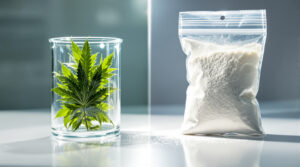
A comparison with cannabis is also worthwhile at this point, because both plants are often lumped together in popular discourse. While the cannabinoids of hemp trigger clearly defined central nervous effects via the endocannabinoid system, mugwort lacks a comparable mechanism of action in psychoactive quantities. How profoundly real psychoactive substances alter experience is shown in our article on the influence cannabis has on the psyche. The contrast makes clear how cautious one should be in assessing mugwort’s mental effects.
Real applications: moxa, digestion, and the sober balance
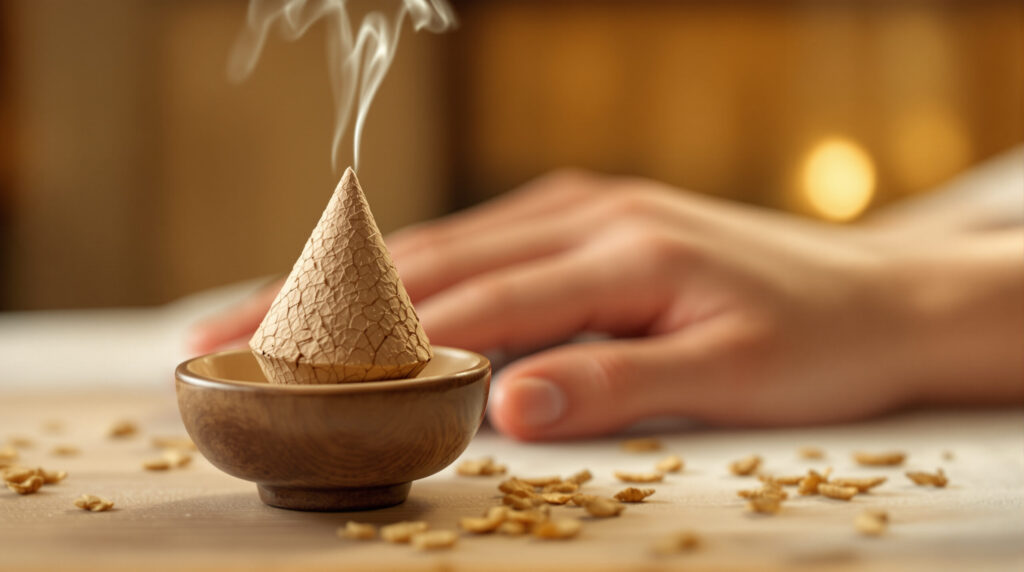
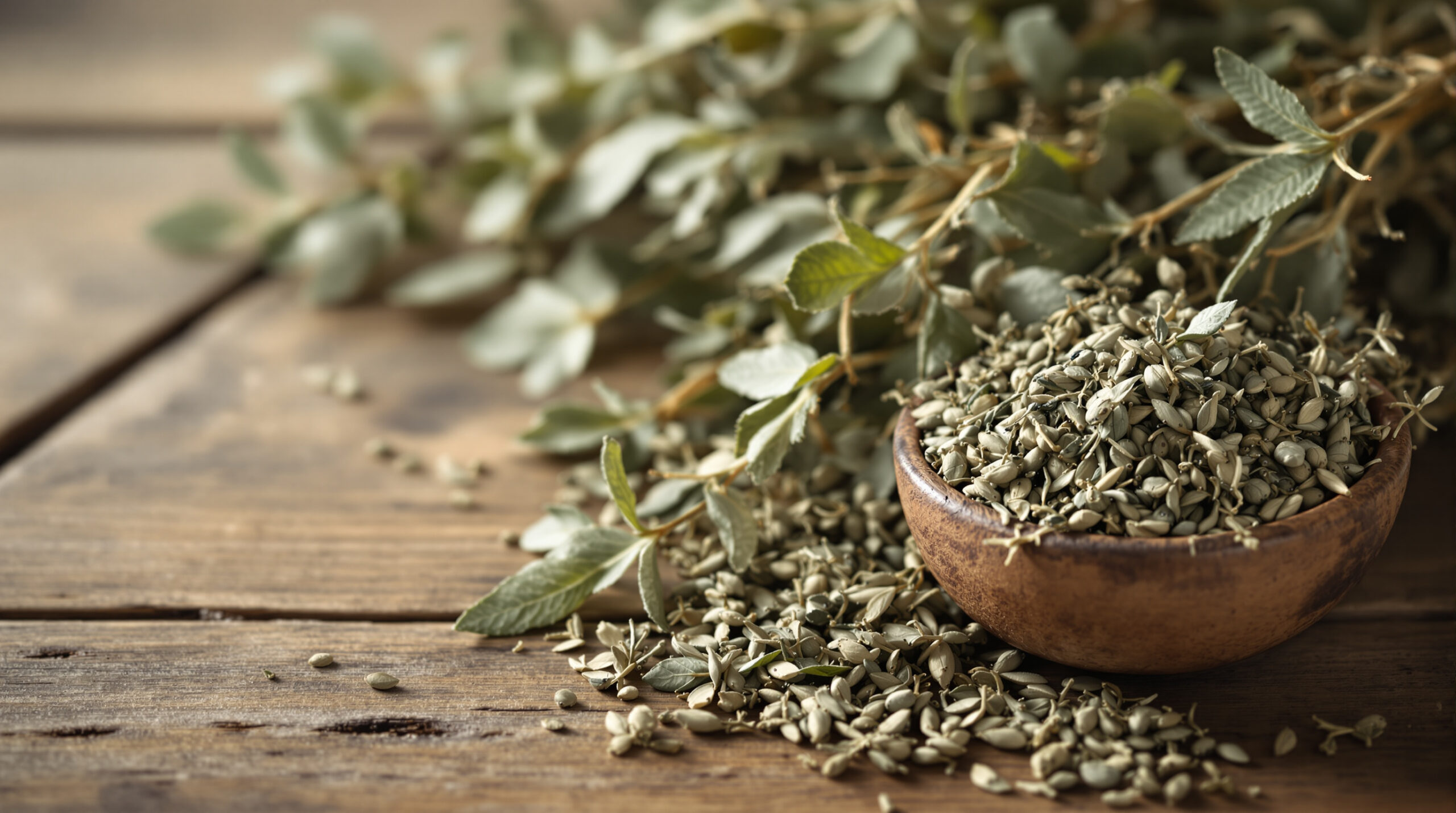
Beyond the psychoactive aura, mugwort possesses solid, well-documented applications. In European folk medicine, it is a classic bitter herb that stimulates appetite and supports the digestion of fatty foods, which is why it traditionally accompanies roast goose. In Traditional Chinese Medicine, it plays a central role as a moxa herb: dried leaves are processed into moxa cones and burned over acupuncture points to regulate energy flow and relieve tension through penetrating heat. Users frequently describe a relaxing, almost meditative effect.
This calming effect on the psyche is real, but is based not on an intoxicating substance but on heat, ritual, and physical relaxation. This is an important distinction, as it explains the reported effects without needing to claim a pharmacological high. Those wishing to explore the topic of thujone-containing plants further will find in our profile on the Western red cedar as a thujone-containing hedge plant a revealing comparison showing that thujone content alone does not make a high.
For all the fascination, an honest accounting also includes a word about safety. Thujone is not pharmacologically harmless, which is why highly dosed, concentrated, or prolonged applications are inadvisable. Essential mugwort oil should never be taken undiluted, and during pregnancy the plant is taboo anyway because of its traditional uterine-stimulating properties. Those who use mugwort as a mild bitter or dream herb move within a safe framework. Those expecting a high will only be disappointed, or in the worst case become ill through overdose.
Frequently Asked Questions
Does mugwort have a psychoactive effect on the psyche?
Not in the sense of a high. The contained substance thujone can indeed act on the brain’s GABA system, but the amounts in dried mugwort are far too small for that. Reported effects such as calming or more intense dreams are more likely based on heat, ritual, and a subtle shift in sleep rather than on an intoxicating substance.
Does mugwort create more intense dreams?
Many users report more vivid and better-remembered dreams, for example after a cup of tea in the evening or an herb sachet under the pillow. Animal experiments suggest an influence on REM sleep, but reliable clinical studies in humans are lacking. There is no guarantee for lucid dreaming; the plant at best provides support.
Is consuming mugwort dangerous?
In usual amounts as tea, spice, or incense, mugwort is considered safe. It becomes problematic with highly dosed or concentrated essential oil, as thujone in large quantities can be toxic and trigger convulsions. Pregnant women should avoid mugwort because it is traditionally attributed a uterine-stimulating effect.
How does mugwort differ from wormwood and absinthe?
Mugwort and wormwood are related Artemisia species, but wormwood contains significantly more thujone and is the basis of absinthe. Absinthe’s notorious reputation was based less on thujone than on its very high alcohol content. For alcoholic beverages made from Artemisia species, the EU sets a maximum thujone limit of 35 milligrams per kilogram.
Can you achieve a legal high with mugwort?
Hast du schon einmal Beifuß bewusst verwendet oder ausprobiert?
No, this is a widespread misconception. To achieve a central nervous effect via thujone would require amounts that would cause nausea from the strong bitter compounds long before any high could occur. Those seeking a legal psychoactive effect will not find it in mugwort.







Branchen-Update
News, Analysen und Reportagen — mehrmals im Monat direkt in dein Postfach.
Folge uns