
The Core Problem: No Clear Connection Between Symptoms and Product Selection
From a medical perspective, several factors should be considered when selecting cannabis-based medications:
📑 Inhaltsverzeichnis
- The Core Problem: No Clear Connection Between Symptoms and Product Selection
- Telemedicine Between Efficiency and Information Gaps
- A New Approach: The Berlin Cannabis Profile System (BCPS®)
- Core Components of the System
- Developed in Berlin – Usable Nationwide
- Why Standardization in a Dynamic Market Is Crucial
- Safety and Clarity Instead of Promises
- Perspective for Telemedicine in Germany
- Conclusion
- A Market with Growth – But Without Structure
- The Core Problem: No Clear Connection Between Symptoms and Product Selection
- Telemedicine Between Efficiency and Information Gaps
- A New Approach: The Berlin Cannabis Profile System (BCPS®)
- Core Components of the System
- Developed in Berlin – Usable Nationwide
- Why Standardization in a Dynamic Market Is Crucial
- Safety and Clarity Instead of Promises
- Perspective for Telemedicine in Germany
- Conclusion
- 💬 Fragen? Frag den Hanf-Buddy!
- THC and CBD content
- Ratio of cannabinoids
- Terpene profile
- Expected direction of action (e.g., sedating, activating)
- Time of day for application
- Individual symptomatology
In practice, however, orientation is often dominated by strain names or pure THC percentages. These terms have grown historically, are marketing-driven, and are not medically standardized. Even identical strain names can have different effect profiles depending on the producer and batch.
This creates uncertainty for patients. For physicians, it means additional need for explanation. And for pharmacies, it complicates reproducible supply.


Telemedicine Between Efficiency and Information Gaps
Telemedicine services enable rapid medical review and prescription issuance. They contribute significantly to making medical cannabis accessible nationwide. At the same time, digitalization creates a new challenge: product decisions are often made on digital platforms with extensive but unstructured selection options.
When platforms list thousands of flowers without providing clear medical systematization, the responsibility for selection is implicitly shifted to patients. However, they rarely have the pharmacological background knowledge to make informed decisions.
A gap emerges here between medical indication and actual product.
A New Approach: The Berlin Cannabis Profile System (BCPS®)
Against this background, a structured approach was developed in Berlin: the Berlin Cannabis Profile System (BCPS®)
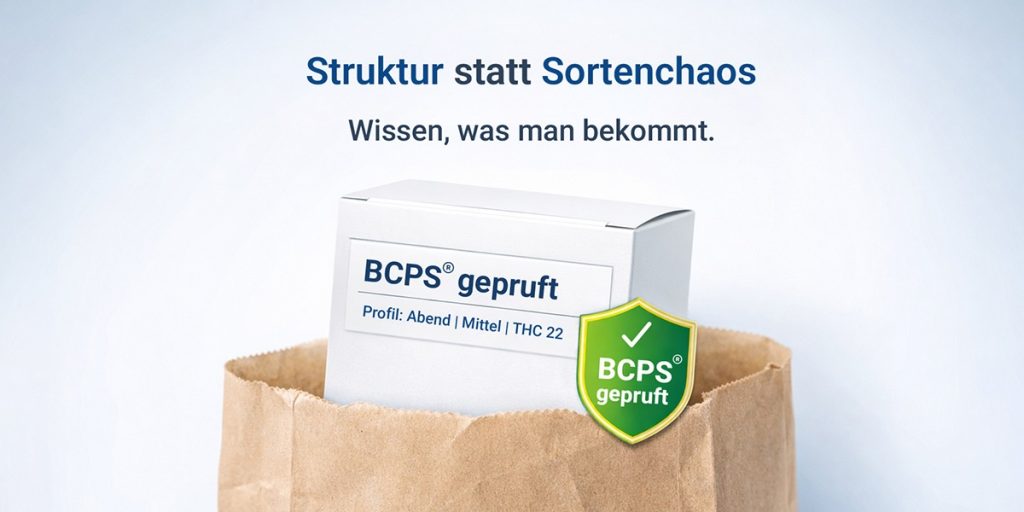
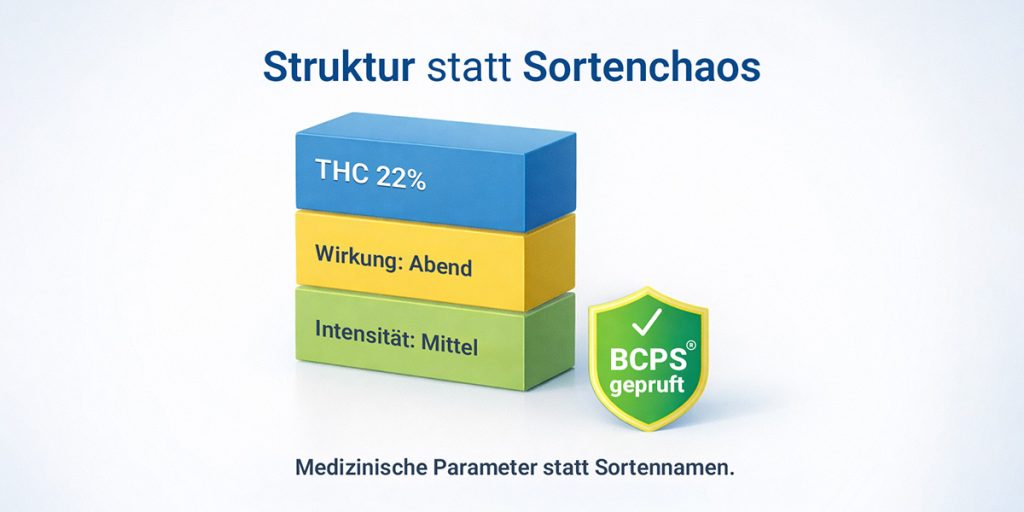
The core idea is simple but far-reaching: instead of focusing on strain names, medically relevant parameters are systematically recorded and converted into clearly defined profiles. The goal is a traceable assignment between symptomatology and product characteristics.
Core Components of the System
The system takes into account, among other things:
- Direction of action
- Intensity
- Cannabinoid ratio
- Time of application
- Availability
This creates a standardized descriptive level that works independently of marketing designations. For medical decisions, the name of a flower is no longer primarily relevant, but rather its effect profile.
Developed in Berlin – Usable Nationwide
The conceptual development of BCPS® took place in Berlin. However, its application is not regionally limited. Prescriptions issued on the basis of the system are valid nationwide and can be filled at any cannabis pharmacy in Germany. Delivery also takes place nationwide to any authorized address.
The system therefore does not understand itself as a local project, but as a model for structured supply throughout the country.
Why Standardization in a Dynamic Market Is Crucial
Pharmaceutical supply depends on reproducibility and transparency. With conventional medications, active ingredient, dosage, and indication are clearly defined. In the cannabis field, however, the product landscape is highly fragmented.
A profile system like BCPS® addresses several challenges simultaneously:
- Orientation: Patients receive understandable criteria instead of purely marketing-based designations.
- Communication: Medical consultation can be oriented towards defined parameters.
- Comparability: Different products can be classified based on medical characteristics.
- Supply security: If availability changes, a profile can be equivalently replaced without losing the therapeutic objective.
This creates a bridge between individual symptomatology and concrete product.
Safety and Clarity Instead of Promises
It is important to note one thing clearly: a profile system replaces neither medical diagnosis nor individual therapeutic decisions. It makes no promise of cure and defines no guaranteed effects.
Rather, it creates transparency at the product level. It organizes existing information systematically and makes it useful for medical decision-making processes.
In a sensitive supply area like medical cannabis, clarity also means safety – for patients as well as for medical professionals.
Perspective for Telemedicine in Germany
Telemedicine will play a central role in future healthcare provision. However, for digital processes to remain medically responsible, they need understandable structures.
A standardized profile system can serve as a link here: between medical indication, digital product presentation, and pharmaceutical dispensing.
Instead of a barely manageable variety of strains, an ordered decision-making basis is created. This can help strengthen the quality of telemedicine cannabis supply sustainably.
Conclusion
Medical cannabis supply in Germany is at a turning point. Access has become easier – but as product variety grows, so does the need for structure.
The Berlin Cannabis Profile System (BCPS®) addresses exactly this: it replaces marketing-driven strain names with medically relevant parameters and thus creates a clearer connection between need and product.
In combination with legally compliant digital access via a cannabis prescription, such an approach can help strengthen transparency, safety, and supply quality nationwide.
Standardization in this context does not mean restriction – but orientation.
A Market with Growth – But Without Structure
Medical cannabis supply has expanded significantly in recent years. With liberalized prescription options and increasing use of telemedicine services, access for patients has become easier. However, a structural problem has become apparent: transparency and medical orientation are not keeping pace with market dynamics.
On large platforms today, thousands of product designations can be found, often with international strain names, varying THC levels, and sometimes significantly different batches. For medical laypeople, it is hardly comprehensible which flowers might be suitable for which indication – or how products actually differ beyond their THC values.
The result is a supply situation where supply and demand are not systematically linked to one another.
The Core Problem: No Clear Connection Between Symptoms and Product Selection
From a medical perspective, several factors should be considered when selecting cannabis-based medications:
- THC and CBD content
- Ratio of cannabinoids
- Terpene profile
- Expected direction of action (e.g., sedating, activating)
- Time of day for application
- Individual symptomatology
In practice, however, orientation is often dominated by strain names or pure THC percentages. These terms have grown historically, are marketing-driven, and are not medically standardized. Even identical strain names can have different effect profiles depending on the producer and batch.
This creates uncertainty for patients. For physicians, it means additional need for explanation. And for pharmacies, it complicates reproducible supply.
Telemedicine Between Efficiency and Information Gaps
Telemedicine services enable rapid medical review and prescription issuance. They contribute significantly to making medical cannabis accessible nationwide. At the same time, digitalization creates a new challenge: product decisions are often made on digital platforms with extensive but unstructured selection options.
When platforms list thousands of flowers without providing clear medical systematization, the responsibility for selection is implicitly shifted to patients. However, they rarely have the pharmacological background knowledge to make informed decisions.
A gap emerges here between medical indication and actual product.
A New Approach: The Berlin Cannabis Profile System (BCPS®)
Against this background, a structured approach was developed in Berlin: the Berlin Cannabis Profile System (BCPS®)
The core idea is simple but far-reaching: instead of focusing on strain names, medically relevant parameters are systematically recorded and converted into clearly defined profiles. The goal is a traceable assignment between symptomatology and product characteristics.
Core Components of the System
The system takes into account, among other things:
- Direction of action
- Intensity
- Cannabinoid ratio
- Time of application
- Availability
This creates a standardized descriptive level that works independently of marketing designations. For medical decisions, the name of a flower is no longer primarily relevant, but rather its effect profile.
Developed in Berlin – Usable Nationwide
The conceptual development of BCPS® took place in Berlin. However, its application is not regionally limited. Prescriptions issued on the basis of the system are valid nationwide and can be filled at any cannabis pharmacy in Germany. Delivery also takes place nationwide to any authorized address.
The system therefore does not understand itself as a local project, but as a model for structured supply throughout the country.
Why Standardization in a Dynamic Market Is Crucial
Pharmaceutical supply depends on reproducibility and transparency. With conventional medications, active ingredient, dosage, and indication are clearly defined. In the cannabis field, however, the product landscape is highly fragmented.
A profile system like BCPS® addresses several challenges simultaneously:
- Orientation: Patients receive understandable criteria instead of purely marketing-based designations.
- Communication: Medical consultation can be oriented towards defined parameters.
- Comparability: Different products can be classified based on medical characteristics.
- Supply security: If availability changes, a profile can be equivalently replaced without losing the therapeutic objective.
This creates a bridge between individual symptomatology and concrete product.
Safety and Clarity Instead of Promises
It is important to note one thing clearly: a profile system replaces neither medical diagnosis nor individual therapeutic decisions. It makes no promise of cure and defines no guaranteed effects.
Rather, it creates transparency at the product level. It organizes existing information systematically and makes it useful for medical decision-making processes.
In a sensitive supply area like medical cannabis, clarity also means safety – for patients as well as for medical professionals.
Perspective for Telemedicine in Germany
Telemedicine will play a central role in future healthcare provision. However, for digital processes to remain medically responsible, they need understandable structures.
A standardized profile system can serve as a link here: between medical indication, digital product presentation, and pharmaceutical dispensing.
Instead of a barely manageable variety of strains, an ordered decision-making basis is created. This can help strengthen the quality of telemedicine cannabis supply sustainably.
Conclusion
Medical cannabis supply in Germany is at a turning point. Access has become easier – but as product variety grows, so does the need for structure.
The Berlin Cannabis Profile System (BCPS®) addresses exactly this: it replaces marketing-driven strain names with medically relevant parameters and thus creates a clearer connection between need and product.
In combination with legally compliant digital access via a cannabis prescription, such an approach can help strengthen transparency, safety, and supply quality nationwide.
Wie wählst du deine medizinischen Cannabisblüten aus?
Standardization in this context does not mean restriction – but orientation.





Branchen-Update
News, Analysen und Reportagen — mehrmals im Monat direkt in dein Postfach.