Responsibility, Practice and Meaningful Standards Following Legalization
By Ulrich Dahmen (Safety Professional, Fire Safety Officer)
📑 Inhaltsverzeichnis
The Cannabis Act (CanG) has been in effect since April 1, 2024; regulations for cultivation associations took effect on July 1, 2024. Community-based cannabis cultivation is now legal. Cannabis Social Clubs (CSCs) are emerging nationwide, shifting cultivation from the illegal market into a regulated framework—under state supervision and within the statutory accident insurance system.
Workplace Safety
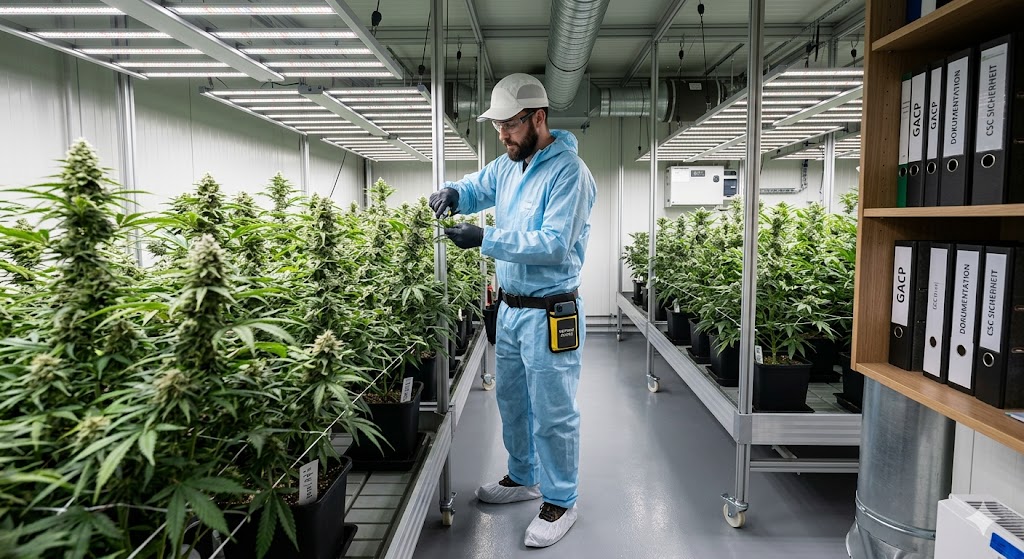
What is often underestimated: CSCs do not legally operate in a protected space exempt from regulations. Those who organize cultivation, deploy members, and distribute cannabis bear responsibility for workplace and product safety. CSCs are fully subject to occupational safety law.


The Board Has Employer-Like Duties
Once staff are employed, the same duties apply as in commercial operations. Additionally, associations must assess hazards and implement appropriate protective measures even for volunteers and insured members. A club board assumes an employer-like role—regardless of whether activities are paid or voluntary. This creates clear obligations such as:
- Hazard assessments for each activity
- Operating instructions for each activity
- Training before commencing work and at least annually
- Provision of suitable personal protective equipment (PPE)
- First aid kit and emergency response organization (trained first aiders required)
During inspections or following accidents, these points are typically reviewed. Missing documentation can have liability consequences.
Practical Example: PPE in the Cultivation Room
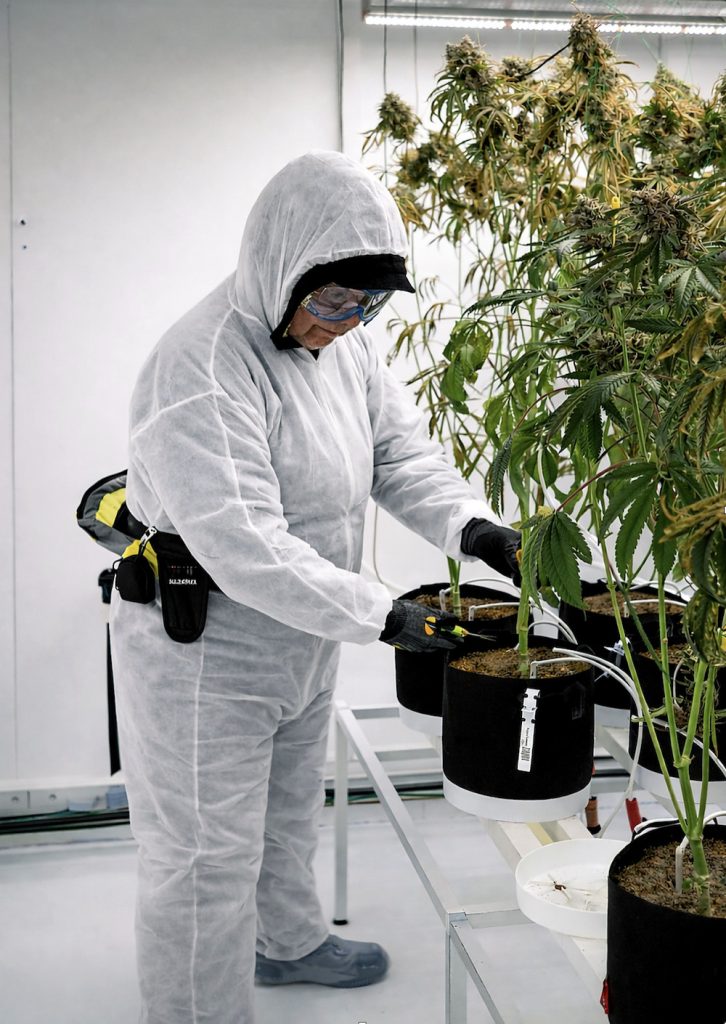
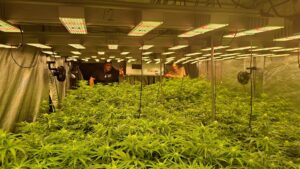
Examples of possible PPE measures (dependent on hazard assessment) from a CSC with multiple successful harvests:
- Disposable coveralls: protects staff and plants from contamination
- Bump cap with shield: prevents head injuries from equipment (low-hanging lights) and glare
- Safety glasses (over prescription glasses) per EN 170: when lights emit UV components and for mechanical hazards
- Cut-resistant gloves: protection during cutting work only when the activity permits and hygiene/grip are maintained
- Tool holder on belt: prevents scissors from falling
- Lone worker measures per DGUV guidelines: (dead man’s switch app runs on mobile phone in yellow belt pouch)
- Safety shoes with shoe covers: protection against impact injuries and hygiene (slip- and water-resistant)
Important: This PPE always results from the specific hazard assessment. Each facility and each activity requires its own evaluation.
Why GACP Makes Sense for CSCs
GACP (Good Agricultural and Collection Practices) and GMP (Good Manufacturing Practice) are not legally mandatory for CSCs—but represent a sensible self-control standard aligned with protective objectives. GACP applies to medical cannabis under EU guidelines. CSCs voluntarily adopt these standards.
- Legal security: Documented processes demonstrate to authorities that cultivation and processing are conducted in a controlled manner.
- Product safety: Standardized procedures reduce risks from mold, pesticides, heavy metals, and microbial contamination.
- Differentiation from illegal markets: GACP demonstrates that CSCs operate professionally and responsibly.
- Operational advantages: Clear SOPs mean fewer failed batches and better training for new members.
- Future-proofing: GACP forms the foundation for future collaborations.
What the Cannabis Act Actually Requires
CSC cannabis is not legally classified as food or medicine, but rather as consumption cannabis for community self-supply. There is no statutory HACCP/GMP requirement—but self-control aligned with the CanG’s protective objectives: member health protection, contamination prevention, and traceability. In practice, authorities therefore expect a GACP-oriented self-control system.
Infobox – Minimum Documentation for CSCs
- ✔ Hazard assessment
- ✔ Operating instructions
- ✔ Hygiene and cleaning plan
- ✔ Pest monitoring
- ✔ Batch and traceability system
- ✔ Training records
Infobox – Common Misconceptions
- ✗ „Volunteering = no workplace safety required“
✔ Associations are also subject to occupational safety duties - ✗ „HACCP is mandatory for CSCs“
✔ CanG defines protective objectives, not a specific system - ✗ „GACP applies only to pharmaceutical companies“
✔ GACP is voluntary but professionally sound
Conclusion
A CSC board bears responsibility for workplace and product safety. Occupational safety, hygiene, and quality assurance are not bureaucratic burdens but the foundation of stable and credible club operations. Professional structures protect members, staff—and the association itself.





Wie wichtig ist dir Arbeitsschutz in Cannabis Social Clubs?
Branchen-Update
News, Analysen und Reportagen — mehrmals im Monat direkt in dein Postfach.
Folge uns