A pilot study from Johns Hopkins University School of Medicine directly compared oral THC to psilocybin under the exact conditions typically used in psychedelic research. The findings sound more dramatic than they actually are, though they’re interesting for reasons the headlines often miss.
📑 Inhaltsverzeichnis
How the Study Was Designed
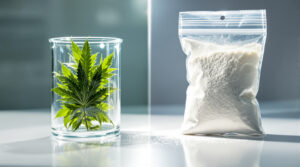
Four healthy adults aged 31 to 47—three women and one man—received placebo, 25 mg psilocybin, and 25 mg Δ9-THC in a double-blind, placebo-controlled crossover design. Two participants also received 50 mg THC. The THC was administered either as synthetic dronabinol or as whole-plant distillate containing 89.9% THC.
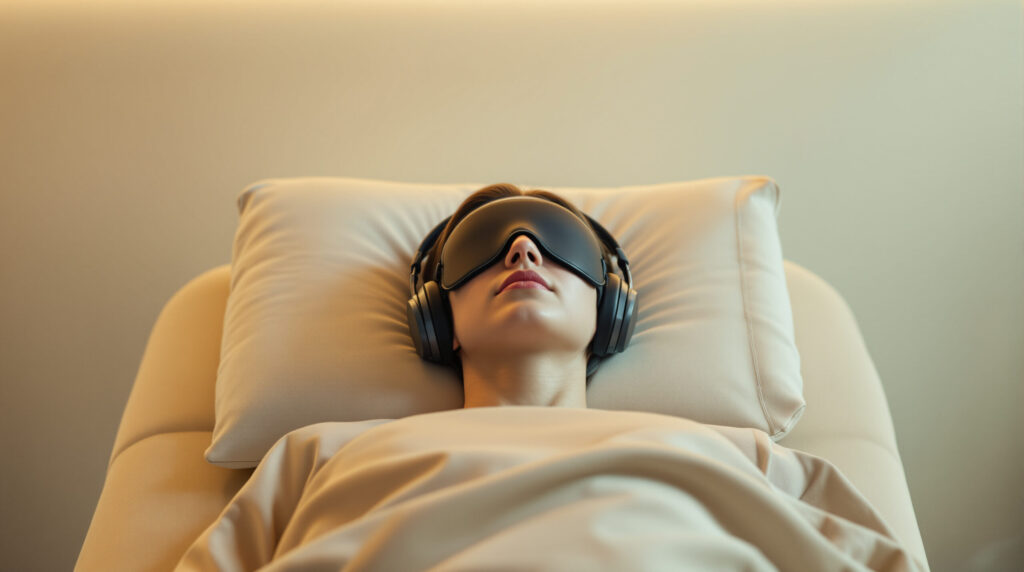
The setting was crucial. Participants lay on a couch, wore eye masks, listened to music, and were instructed to turn their attention inward. This is the standard protocol for psychedelic studies. After each session, both participants and facilitators were asked to guess which substance had been administered. The work appeared on August 27, 2026, in Psychopharmacology, with the study registered since January 2025.


What the Results Showed
At 25 mg, THC in both delivery forms produced subjective experiences similar to those reported with 25 mg psilocybin. The synthetic dronabinol was identified as a classical hallucinogen by both a psychedelic-experienced and a psychedelic-naive participant. The higher 50 mg distillate dose, by contrast, was mostly described as sedating or dissociative, with only moderate psychedelic qualities.
At the same dose, the distillate felt subjectively more potent than synthetic dronabinol. All participants reliably identified placebo and actual psilocybin. Prior psychedelic experience did not, according to the researchers, help participants distinguish between THC and psilocybin.
The Real Significance Lies in Methodology
Psychedelic research faces a persistent methodological problem known as functional unblinding. When people receive psilocybin, they notice. When they receive an inert placebo, they notice that too. This effectively breaks the blinding, and expectation effects distort results. This is precisely where this study contributes. A comparison compound that also produces noticeable effects could preserve blinding. Based on these preliminary data, a carefully selected THC dose might fulfill that role.
This is a methodological statement, not a pharmacological equivalence claim. The authors are not arguing that cannabis is a psychedelic. They demonstrate that subjective experiences can overlap under optimized conditions. For Germany, this has practical significance now that the first legal psilocybin applications have begun.
What the Study Explicitly Does Not Show
Four people do not constitute a sample from which generalizations can be drawn. The work is declared a brief report with preliminary data, and the researchers themselves identify sample size as a central limitation. There’s also the funding source: the Wana Brand Foundation, which traces back to the CEO of a cannabis company. This doesn’t invalidate the data, but belongs in any critical assessment. We’ve seen how quickly thin evidence becomes a marketing claim, as demonstrated by discussions of CBD and sexuality. More robust findings come from studies with large datasets, such as the US analysis of medical cannabis and work absence.
Why 25 Milligrams Is an Extremely High Dose
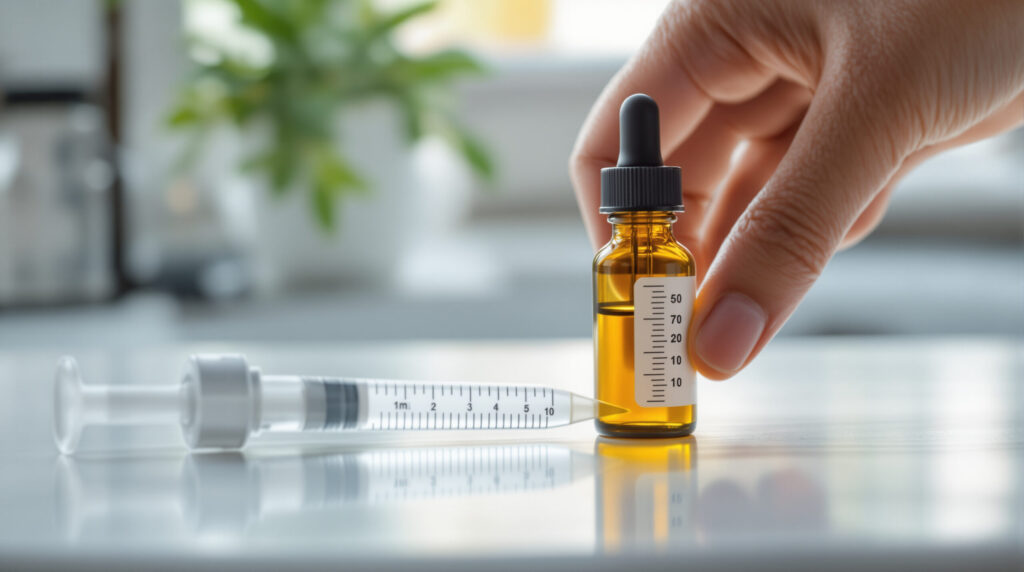
This context is typically absent from international reporting. In clinical practice, dronabinol is usually started at 2.5 to 5 mg daily and increased gradually. The study’s 25 mg dose sits far above a typical starting dose, and it was administered in a clinical setting with professional supervision. Anyone tempted to conduct self-experiments with edibles based on these findings will very likely end up not in a mystical experience, but in a very unpleasant night. We’ve described what can happen in our article on cannabis overdose and greenout.
Frequently Asked Questions
Does this study show THC is a psychedelic according to this research?
No. The study only demonstrates that subjective experience under 25 mg oral THC can resemble that under 25 mg psilocybin when the setting matches a psychedelic session. Pharmacologically, these two substances act through entirely different receptor systems.
How meaningful is a study with four participants?
Very limited. A sample size of four allows no statistical generalization and no statements about frequency or prevalence. Such pilot studies serve to test a study design and formulate hypotheses for larger investigations. The researchers themselves frame their work precisely this way.
Why do psychedelic studies need an active comparison compound at all?
Because an inert placebo doesn’t maintain blinding. Participants immediately know whether they received an active substance, and this certainty influences results. An active comparison with noticeable effects is meant to reduce this bias.
Does whole-plant distillate work differently than synthetic dronabinol?
In this pilot study, the distillate at the same THC dose was described as subjectively more potent. With four people, this is not evidence of an entourage effect, but it aligns with observations discussed for years. Reliable answers require substantially larger studies.
What dronabinol dose is typical in therapy?
Dosing is individualized and usually begins around 2.5 to 5 mg daily, with gradual increases according to medical direction. Dosage must remain under the care of a treating physician and cannot be extrapolated from study doses.
Hast du schon mal Cannabis in einem bewusst psychedelischen Setting konsumiert?
Source: Barrett, Wolinsky, Daily, Ciancio, Arthur, and Vandrey, „Pilot study comparing the effects of high dose THC to high dose psilocybin and placebo in the set and setting of a classic psychedelic therapy session,“ Psychopharmacology, published online August 27, 2026, DOI 10.1007/s00213-026-07138-0, Study Registration NCT06772753.




Branchen-Update
News, Analysen und Reportagen — mehrmals im Monat direkt in dein Postfach.