• Kolumnen
    • Interviews
  • Hanf Allgemein
    • Gesellschaft & Soziales
  • Drogenkunde
    • Safer Use
    • Pflanzliche Drogen
  • Produkte
  • Strain Reviews
  • Print Magazin
  • Tools
Mittwoch, August 12, 2026
Hanf Magazin
  • News
  • Medizin
    • Cannabinoide
    • Erkrankungen
    • Cannabis bei Tieren
    • Erfahrungsberichte
  • Recht & Politik
    • Deutschland
    • Österreich
    • Schweiz
    • International
    • Rechtslage DE
    • Rechtslage International
  • Wissenschaft
    • Studien
    • Forschung
  • Growing
    • Indoor-Growing
    • Outdoor-Growing
    • Strains & Reviews
    • Equipment
  • Nutzhanf
    • Baustoffe
    • Rohstoffe
    • Lebensmittel
    • Kleidung
    • Kosmetika
  • Wirtschaft
  • Konsum & Lifestyle
    • Rauchen
    • Vaporisieren
    • Essen & Rezepte
    • Kultur & Szene
    • Termine & Events
No Result
View All Result
  • News
  • Medizin
    • Cannabinoide
    • Erkrankungen
    • Cannabis bei Tieren
    • Erfahrungsberichte
  • Recht & Politik
    • Deutschland
    • Österreich
    • Schweiz
    • International
    • Rechtslage DE
    • Rechtslage International
  • Wissenschaft
    • Studien
    • Forschung
  • Growing
    • Indoor-Growing
    • Outdoor-Growing
    • Strains & Reviews
    • Equipment
  • Nutzhanf
    • Baustoffe
    • Rohstoffe
    • Lebensmittel
    • Kleidung
    • Kosmetika
  • Wirtschaft
  • Konsum & Lifestyle
    • Rauchen
    • Vaporisieren
    • Essen & Rezepte
    • Kultur & Szene
    • Termine & Events
No Result
View All Result
Hanf Magazin
No Result
View All Result
Home Marihuana Growing Indoor-Growing für Anfänger & Profis

No-Till Growing: Cultivating Cannabis Without Disturbing the Soil

von Jonas Reuter
11.07.2026
in Indoor-Growing für Anfänger & Profis
Lesezeit: 7 Minuten
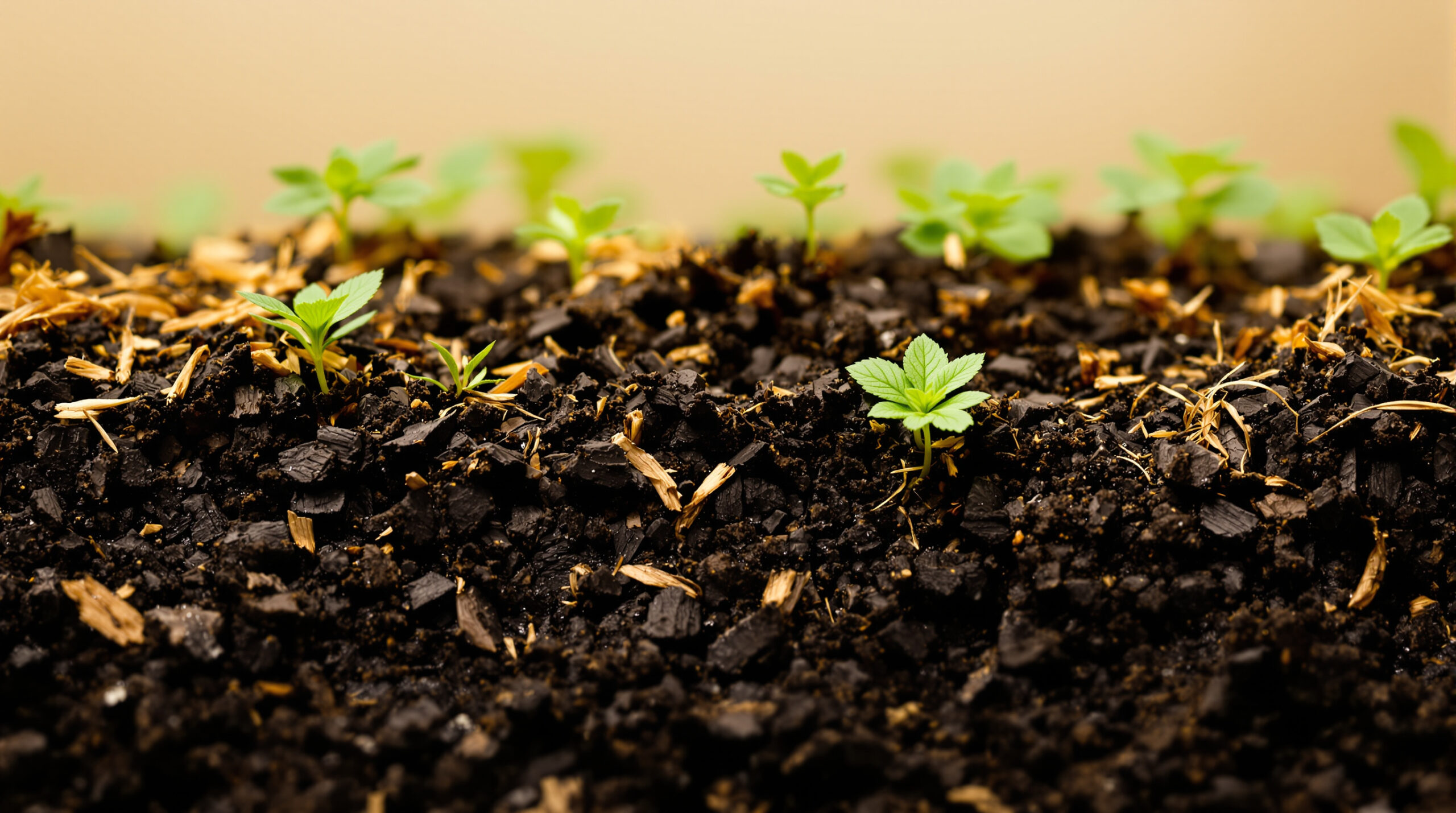
Lebendiger Boden mit Mulchschicht, Mykorrhiza und Deckfrucht-Bewuchs
⏱ 9 Min. Lesezeit·1.760 Wörter
Teilen:WhatsAppFacebookXLinkedInE-Mail
🌐 This article was automatically translated from German. Browse all English articles

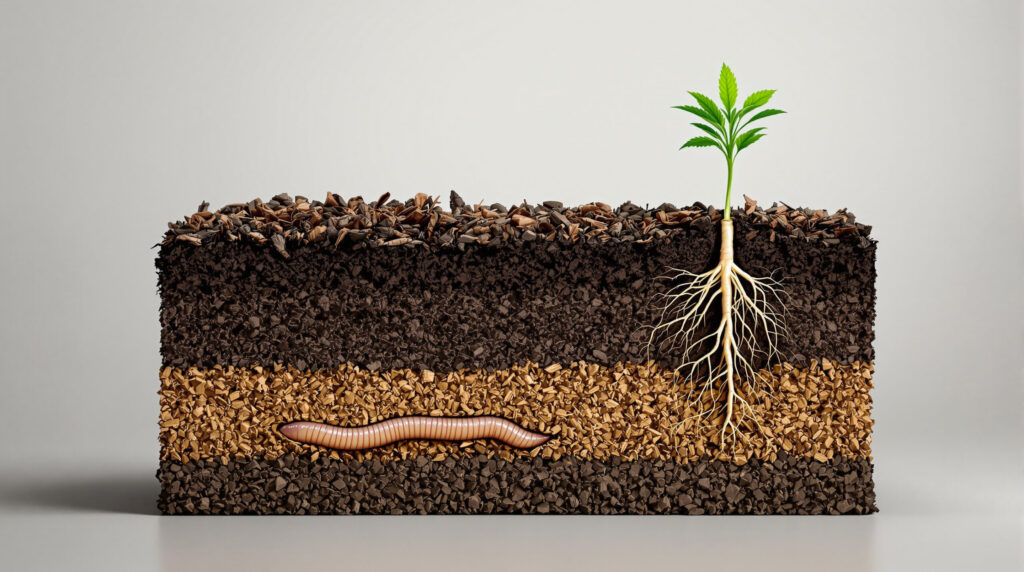
Wer den Boden in Ruhe lässt, erntet oft die besseren Blüten. Dieser scheinbar widersprüchliche Gedanke steht im Zentrum des No-Till-Anbaus, einer Methode, bei der Cannabis über viele Erntezyklen im selben, ungestörten Substrat wächst. Statt die Erde nach jeder Ernte auszukippen, umzugraben und neu anzumischen, bleibt der Boden als lebendiges System erhalten. Mikroorganismen, Pilze und Regenwürmer übernehmen die Arbeit, die im konventionellen Anbau dem Dünger und der Schaufel zufällt. Für Homegrower, die nachhaltiger und aromatischer produzieren wollen, ist No-Till Growing zu einer der spannendsten Entwicklungen der letzten Jahre geworden.

📑 Inhaltsverzeichnis

  1. What No-Till Growing Means for Cannabis Cultivation
  2. Why Tilling Damages Soil
  3. The Building Blocks of a No-Till System
  4. Mulch, Cover Crops, and Top-Dressing as Nutrient Sources
  5. Reusing Soil Over Multiple Cycles
  6. Limitations and Common Mistakes in No-Till Cultivation
  7. Frequently Asked Questions
  8. 💬 Fragen? Frag den Hanf-Buddy!

No-Till bedeutet wörtlich übersetzt so viel wie „kein Pflügen“ und stammt ursprünglich aus der regenerativen Landwirtschaft. Übertragen auf den Cannabisanbau beschreibt der Begriff eine Haltung, die den Boden nicht als austauschbares Trägermaterial versteht, sondern als eigenständigen Organismus. Dieser Artikel erklärt, wie ein No-Till-System funktioniert, warum das Umgraben mehr schadet als nützt und worauf du achten musst, wenn du deinen Boden über Jahre hinweg immer wieder verwenden willst.

What No-Till Growing Means for Cannabis Cultivation

At its core, No-Till Growing pursues a simple goal. The soil should be disturbed as little as possible so that stable soil life can develop. In a classic grow, the substrate is disposed of after each round or at least thoroughly mixed. Exactly this intervention destroys the fine structures that have formed. With the No-Till approach, however, the soil remains in place, often in large pots or fixed beds, and is maintained from above rather than churned from below.


GanjaFarmerGanjaFarmer

The method is closely related to the concept of living soil but is often confused with it. Living soil describes the biological quality of the substrate—the diversity of bacteria, fungi, and microorganisms. No-Till, on the other hand, describes the practice of leaving this living soil undisturbed. Both approaches complement each other, because a rich soil microbiome only reaches its full potential when it can grow uninterrupted over many months. For those who want to dive deeper into substrate basics, you’ll find details in our comprehensive Living Soil guide.

The principle can be illustrated by comparing it to a forest floor. Nobody tills a forest, yet trees thrive there for decades. Falling leaves, dying roots, and animal waste create a constant nutrient source recycled by countless organisms. No-Till cultivation mimics this exact cycle on a miniature scale. The grower provides the starting material and lets nature do the rest.

Why Tilling Damages Soil
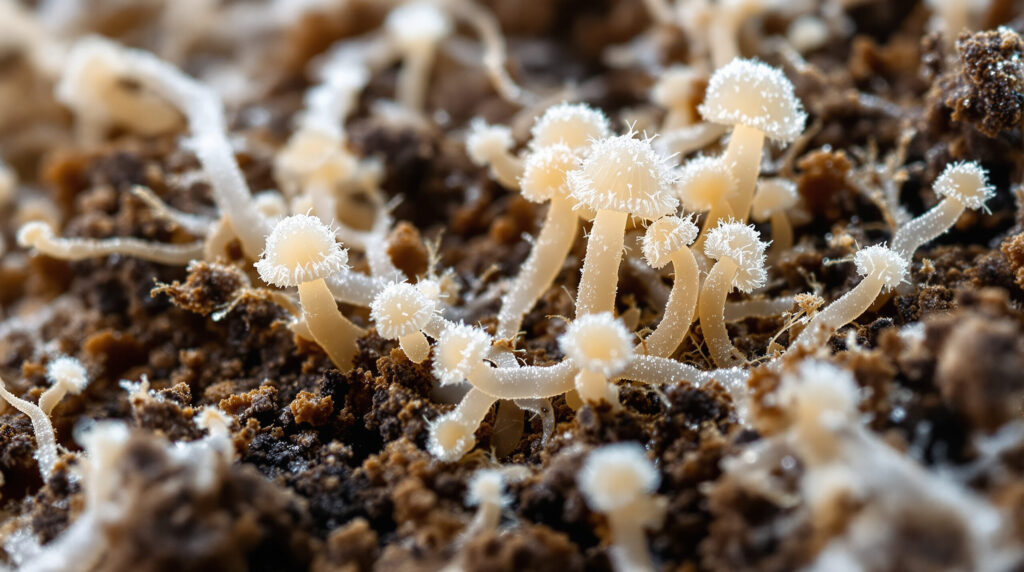
Mycorrhizal fungal network on cannabis roots under the microscope

To understand why No-Till works, you need to look at the soil food web. In healthy substrate, bacteria, fungi, nematodes, and earthworms exist in a finely balanced equilibrium. Particularly important are mycorrhizal fungi, which form a symbiosis with cannabis plant roots. Their delicate filaments extend the root system many times over and supply the plant with water and hard-to-reach nutrients. In return, the fungus receives sugars from photosynthesis.

Every time soil is tilled or replaced, this fungal network is destroyed. The laboriously built networks are shattered, bacterial colonies are disrupted, and earthworm habitats are eliminated. The soil must then reorganize itself from scratch, which can take weeks. During this time, the plant has significantly less biological support available. Those who constantly till keep their substrate in a perpetual state of recovery.

There’s another aspect that extends beyond a single grow cycle. Undisturbed soil stores carbon and releases fewer climate-damaging gases than constantly moved earth. Sustainability is thus no mere byproduct but a central argument for the method. A No-Till bed that runs for years consumes barely any fresh substrate and produces almost no waste. For many growers, this is precisely the appeal, as our article on cannabis cultivation according to permaculture principles demonstrates.

The Building Blocks of a No-Till System

A functioning No-Till system begins with a sufficiently large container. Because the soil must provide enough buffer for moisture, nutrients, and roots over many cycles, experienced growers recommend volumes starting at around sixty liters per plant. Smaller pots are possible but forgive few mistakes, since the living system can quickly fall out of balance. Many therefore opt for fixed beds or large fabric pots where the soil remains permanently.

The foundation is a living substrate made of compost, a structure-giving component like coco fiber or peat, plus aeration material like perlite or rice hulls. Add worm castings, rock dust, and organic supplements like kelp or alfalfa meal. Ideally, this mixture should rest and mature for several weeks before the first plant arrives. During this time, microorganisms settle and begin unlocking the nutrients contained in the mix. How to manage such soil without any liquid fertilizer is detailed in our article on low-maintenance living soil cultivation.

An often underestimated building block is earthworms. They eat their way through dead roots and organic matter, leaving behind nutrient-rich castings directly in the bed. This way, the system produces part of its own fertilizer and requires less external supplementation. The worms are complemented by a whole range of other soil organisms, from predatory mites to springtails, which maintain microbial balance and make life difficult for pests.

Mulch, Cover Crops, and Top-Dressing as Nutrient Sources
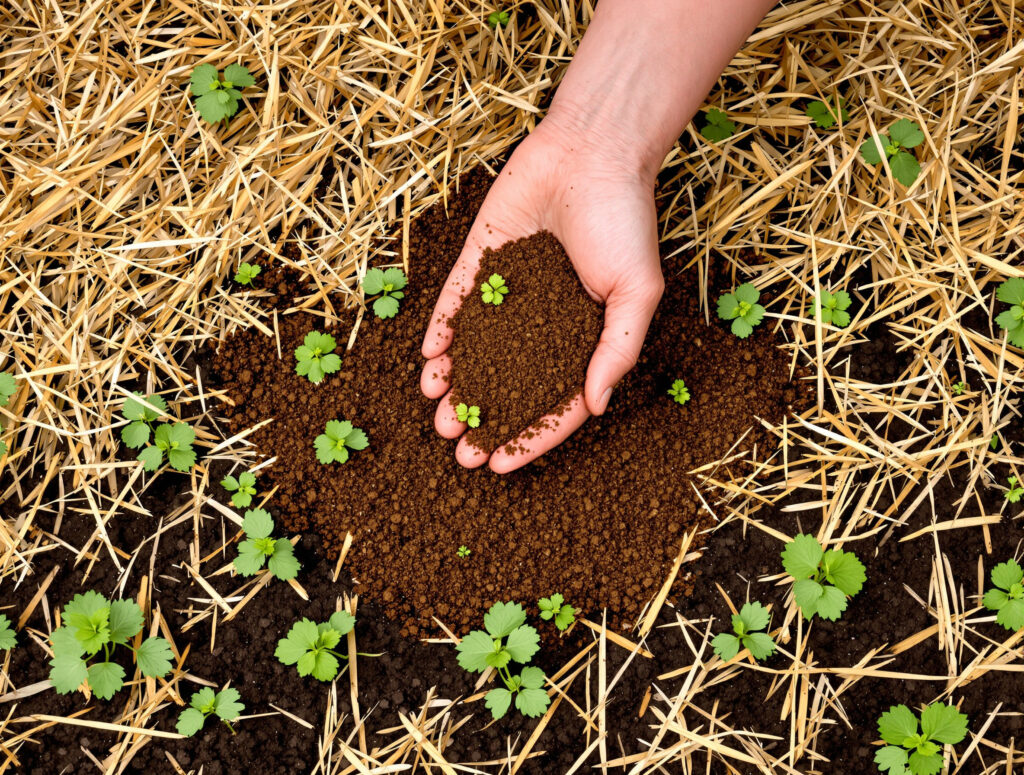
Hand distributes worm castings as top-dressing over mulch layer with cover crops

Since nothing is buried in a No-Till system, nutrient supply occurs exclusively from above. The most important technique for this is top-dressing. The grower spreads a thin layer of compost, worm castings, or organic meals on the soil surface. Microorganisms gradually pull these materials into the soil and convert them into plant-available nutrients. Because this process is slow, overfertilization is barely possible, and the plant receives consistent nutrition.

A protective mulch layer covers the surface permanently. It retains soil moisture, protects the top layer from drying out, and provides microorganisms with a protected habitat. Suitable materials include straw, shredded leaves, or plant residue cuttings. The mulch decomposes slowly and itself becomes another nutrient source, just like the leaf litter on a forest floor.

The system becomes particularly elegant through cover crops—low companion plants that grow between cannabis plants. Clover, alfalfa, and other legumes fix nitrogen from the air and release it into the soil. Their roots naturally loosen the substrate while their foliage serves as a living mulch layer. After cutting back, the aboveground parts decay and feed the soil life again. This creates a largely closed loop where participants nourish each other.

💬 Hanf-Buddy — dein Cannabis-Experte
🌿 Fragen zu diesem Thema? Schreib einfach los — ich helfe dir!
📬 Gefällt dir der Austausch? Trag optional deine E-Mail ein — dann schicken wir dir passende Artikel & Neues aus dem Magazin. Kein Muss, du kannst einfach weiterchatten.

Bitte verifiziere deine E-Mail. Wir haben dir einen 6-stelligen Code geschickt.

Danke für den Chat! 😊 Abonniere unseren Newsletter für mehr:

Zum Newsletter

Reusing Soil Over Multiple Cycles

Cross-section of a mature No-Till soil with old root channels and fresh root growth

Perhaps the greatest advantage of No-Till cultivation becomes apparent over time. After harvest, the plant is not ripped out with its root ball but cut just above soil level. The root system remains in the substrate where it slowly decomposes and leaves fine channels for water, air, and new roots. These old root pathways are a valuable gift for the next crop because they naturally aerate the soil.

With each cycle, the soil becomes richer rather than poorer, provided that extracted nutrients are consistently replaced through top-dressing and cover crops. Experienced No-Till growers report that their beds run noticeably more smoothly after several rounds and require less attention. The one-time setup investment pays off in the long term because recurring costs for fresh substrate and liquid fertilizer nearly disappear. A well-maintained bed can remain productive for years.

For many growers, alongside sustainability, it’s the harvest quality that makes the decisive argument. A mature, biologically active soil delivers a broad spectrum of macro and micronutrients that should be reflected in the finished product. Method advocates report fuller terpene profiles and more rounded aromas. How this organic approach compares head-to-head is explored in our article on living soil versus hydroponics.

Limitations and Common Mistakes in No-Till Cultivation

As convincing as the method sounds, it’s not foolproof. The most common mistake concerns nutrient balance. When you harvest flowers over multiple cycles, you remove large quantities of nutrients from the soil that simple top-dressing sometimes can’t replace quickly enough. Some growers find that yields decline after a few cycles if they underfeed. Careful observation of plants and a well-thought-out feeding plan are therefore essential.

The initial setup also demands patience. A freshly established No-Till bed doesn’t run smoothly for the first few weeks because soil life must first establish itself. Those expecting maximum yields immediately will be disappointed. The method rewards patience, not quick turnarounds. There’s also the space requirement—large beds and pots take up significantly more area than a compact grow with small containers. In very cramped tents, No-Till reaches practical limits.

Finally, the system demands different thinking. Instead of fertilizing individual plants, the No-Till grower tends an entire ecosystem. Mistakes like overly dry soil, a disrupted mulch layer, or neglected soil life take longer to punish but have more lasting consequences than with mineral cultivation. Those willing to embrace this mindset will be rewarded with a robust and low-maintenance system. In many regions, small-scale home cultivation has become legal, making No-Till attractive to many home gardeners.

Frequently Asked Questions

What is the difference between No-Till and Living Soil?

Living soil describes the biological quality of the substrate—a soil full of bacteria, fungi, and microorganisms. No-Till describes the practice of not tilling or replacing this living soil. The two concepts are closely intertwined, because a living soil only reaches its full potential when it can grow undisturbed over many months.

How large should the pot be for No-Till growing?

Experienced growers recommend a volume starting at around sixty liters per plant; many even work with fixed beds. The large container gives living soil enough buffer for moisture and nutrients. Smaller pots are possible but forgive significantly fewer mistakes and require more frequent monitoring.

Do I still need to fertilize with No-Till cultivation?

You can largely dispense with conventional liquid fertilizers, but complete abstinence from nutrient supply is not feasible. Nutrients return to the soil through top-dressing with compost and organic meals, as well as through cover crops and mulch. Since the plant removes nutrients with each harvest, you must consistently replace them from above over time.

What role do earthworms play in a No-Till system?

Earthworms are indispensable for a No-Till bed. They consume dead roots and organic matter, leaving behind high-quality castings directly in the soil. This way, the system produces part of its own fertilizer and requires less external supplementation. At the same time, worms aerate the soil and keep it permeable.

Who should consider No-Till growing?

📊 Deine Meinung zählt

Verwendest du dein Substrat nach der Ernte mehrfach weiter?

✓
Danke für deine Stimme!

No-Till is especially worthwhile for growers who plan long-term, want to work sustainably, and have enough space for larger beds. Those planning only a single quick cycle or growing in a very small tent are often better served by other methods. The method rewards patience and thinking in cycles rather than individual harvests.


Kannabia
HE Abverkauf
Dr. Mang
MedCanOneStop
avaay ZOIKS – Sidebar Left 300×250
Khalifa Genetics
S&B VEAZY Launch 160×600 (ex-Crafty1)
S&B VEAZY Launch 160×600 (ex-Crafty2)
S&B VEAZY Launch 160×600 (ex-Plenty1)
S&B VEAZY Launch 160×600 (ex-Combi)
S&B VEAZY Launch 160×600 (ex-Plenty2)
Royal Queen Seeds #1

Das könnte dich auch interessieren

  • → Die richtige Marihuanalagerung zum Qualitätserhalt
  • → Vegetationsphase bei Cannabis: Wie lange sie dauert und worauf es ankommt
  • → Welcher Hanfdünger ist gut für den Marihuanaanbau?

Branchen-Update

News, Analysen und Reportagen — mehrmals im Monat direkt in dein Postfach.

Folge uns
Was dich auch interessieren könnte...

Cannabissamen und bewurzelte Stecklinge auf Keramikteller, Tageslicht

Woher bekomme ich 2026 legal Stecklinge und Samen?

12. August 2026
Junge Cannabis-Pflanze in der Vegetationsphase unter LED-Beleuchtung

Vegetationsphase bei Cannabis: Wie lange sie dauert und worauf es ankommt

9. August 2026
InstagramYouTubeFacebookLinkedIn
Tags: BodenlebenCannabis AnbauHomegrowKompostLiving SoilNachhaltigkeitökologischer Anbau

Related Posts

Gefaltete Hanfkleidung auf Holzoberfläche in natürlichem Licht
Kleidung aus Hanf

Hanf-Stoffe pflegen: Waschen, Trocknen und Haltbarkeit

von Jonas Reuter
11. August 2026
Junge Cannabis-Pflanze in der Vegetationsphase unter LED-Beleuchtung
Indoor-Growing für Anfänger & Profis

Vegetationsphase bei Cannabis: Wie lange sie dauert und worauf es ankommt

von Jonas Reuter
9. August 2026
🛠️ Tool-Tipp
⏸️Tolerance-Break-Rechner
Pausenlänge für CB1-Resensibilisierung
→ Alle 10 Tools im Werkzeugkasten

Folge uns bei:

  • 38.8k Fans
  • 52.8k Followers
  • 3.5k Followers
  • 573 Followers
📰

Seit 2015

📝

4751+ Artikel

👥

180.000+ Leser/Monat

🏆

DACH #1 Cannabis-Magazin

Über uns

Hanf Magazin ist das führende deutschsprachige Fachmagazin für Cannabis — von der Pflanze bis zur Politik, von der Medizin bis zum Genuss.

Instagram Facebook LinkedIn

Themen

Cannabis News Medizin & Forschung Growing & Anbau Strain Reviews Nutzhanf & Rohstoffe Konsum & Rezepte Recht & Politik Wissenschaft & Studien

Beliebte Artikel

Hanfparade 2026: 200 statt 4.000 Teilnehmer beim Auftakt in BerlinWie vaporisiere ich richtig?Warum Vaporisieren gesünder istWas ist Cannabidiol?Kiffen in der Schwangerschaft?

Branchen-Update

Cannabis-News direkt in dein Postfach.

Für Unternehmen

Werben auf Hanf Magazin Mediadaten HM Ventures Jobs & Karriere Tools & Rechner

Weitere Themen

  • Kolumnen
  • Hanf Allgemein
  • Drogenkunde
  • Produkte
  • Strain Reviews
  • Print Magazin
  • Tools

© 2026 Hanf Magazin

Impressum Datenschutz AGB Kontakt Presse
WhatsAppFacebookXE-Mail
No Result
View All Result
  • News
  • Medizin
    • Cannabinoide
    • Erkrankungen
    • Cannabis bei Tieren
    • Erfahrungsberichte
  • Recht & Politik
    • Deutschland
    • Österreich
    • Schweiz
    • International
    • Rechtslage DE
    • Rechtslage International
  • Wissenschaft
    • Studien
    • Forschung
  • Growing
    • Indoor-Growing
    • Outdoor-Growing
    • Strains & Reviews
    • Equipment
  • Nutzhanf
    • Baustoffe
    • Rohstoffe
    • Lebensmittel
    • Kleidung
    • Kosmetika
  • Wirtschaft
  • Konsum & Lifestyle
    • Rauchen
    • Vaporisieren
    • Essen & Rezepte
    • Kultur & Szene
    • Termine & Events
  • Kolumnen
  • Interviews
  • Hanf Allgemein
  • Gesellschaft & Soziales
  • Drogenkunde
  • Safer Use
  • Pflanzliche Drogen
  • Produkte
  • Strain Reviews
  • Print Magazin
  • Tools

©2026 Hanf Magazin

Datenschutz-Einstellung

Wir nutzen Cookies auf hanf-magazin.com. Einige von ihnen sind essenziell notwendig, andere helfen unsere Website und deine Nutzer-Erfahrungen zu verbessern. Wenn Sie unter 16 Jahre alt sind und Ihre Zustimmung zu freiwilligen Diensten geben möchten, müssen Sie Ihre Erziehungsberechtigten um Erlaubnis bitten. Wir verwenden Cookies und andere Technologien auf unserer Website. Einige von ihnen sind essenziell, während andere uns helfen, diese Website und Ihre Erfahrung zu verbessern. Personenbezogene Daten können verarbeitet werden (z. B. IP-Adressen), z. B. für personalisierte Anzeigen und Inhalte oder Anzeigen- und Inhaltsmessung. Weitere Informationen über die Verwendung Ihrer Daten finden Sie in unserer Datenschutzerklärung. Sie können Ihre Auswahl jederzeit unter Einstellungen widerrufen oder anpassen.

  • Essenziell
  • Marketing
  • Externe Medien

Alle akzeptieren

Nur essenzielle Cookies akzeptieren

Individuelle Datenschutzeinstellungen

Cookie-Details Datenschutzerklärung Impressum

Datenschutzeinstellungen Datenschutzeinstellungen

Wenn Sie unter 16 Jahre alt sind und Ihre Zustimmung zu freiwilligen Diensten geben möchten, müssen Sie Ihre Erziehungsberechtigten um Erlaubnis bitten. Wir verwenden Cookies und andere Technologien auf unserer Website. Einige von ihnen sind essenziell, während andere uns helfen, diese Website und Ihre Erfahrung zu verbessern. Personenbezogene Daten können verarbeitet werden (z. B. IP-Adressen), z. B. für personalisierte Anzeigen und Inhalte oder Anzeigen- und Inhaltsmessung. Weitere Informationen über die Verwendung Ihrer Daten finden Sie in unserer Datenschutzerklärung. Hier finden Sie eine Übersicht über alle verwendeten Cookies. Sie können Ihre Einwilligung zu ganzen Kategorien geben oder sich weitere Informationen anzeigen lassen und so nur bestimmte Cookies auswählen.

Alle akzeptieren Speichern Nur essenzielle Cookies akzeptieren

Zurück

Datenschutzeinstellungen

Essenzielle Cookies ermöglichen grundlegende Funktionen und sind für die einwandfreie Funktion der Website erforderlich.

Cookie-Informationen anzeigen Cookie-Informationen ausblenden

Name
AnbieterEigentümer dieser Website, Impressum
ZweckSpeichert die Einstellungen der Besucher, die in der Cookie Box von Borlabs Cookie ausgewählt wurden.
Cookie Nameborlabs-cookie
Cookie Laufzeit1 Jahr

Marketing-Cookies werden von Drittanbietern oder Publishern verwendet, um personalisierte Werbung anzuzeigen. Sie tun dies, indem sie Besucher über Websites hinweg verfolgen.

Cookie-Informationen anzeigen Cookie-Informationen ausblenden

Akzeptieren
Name
AnbieterGoogle Ireland Limited, Gordon House, Barrow Street, Dublin 4, Ireland
ZweckCookie von Google für Website-Analysen. Erzeugt statistische Daten darüber, wie der Besucher die Website nutzt.
Datenschutzerklärung https://policies.google.com/privacy?hl=de
Cookie Name_ga,_gat,_gid
Cookie Laufzeit2 Jahre

Inhalte von Videoplattformen und Social-Media-Plattformen werden standardmäßig blockiert. Wenn Cookies von externen Medien akzeptiert werden, bedarf der Zugriff auf diese Inhalte keiner manuellen Einwilligung mehr.

Cookie-Informationen anzeigen Cookie-Informationen ausblenden

Akzeptieren
Name
AnbieterMeta Platforms Ireland Limited, 4 Grand Canal Square, Dublin 2, Ireland
ZweckWird verwendet, um Facebook-Inhalte zu entsperren.
Datenschutzerklärung https://www.facebook.com/privacy/explanation
Host(s).facebook.com
Akzeptieren
Name
AnbieterSoundcloud
ZweckWird verwendet, um Soundcloud Inhalte zu entsperren.
Datenschutzerklärung https://soundcloud.com/pages/privacy
Host(s)soundcloud.com
Akzeptieren
Name
AnbieterMeta Platforms Ireland Limited, 4 Grand Canal Square, Dublin 2, Ireland
ZweckWird verwendet, um Instagram-Inhalte zu entsperren.
Datenschutzerklärung https://help.instagram.com/519522125107875/?maybe_redirect_pol=0
Host(s).instagram.com
Cookie Namepigeon_state
Cookie LaufzeitSitzung

Datenschutzerklärung Impressum

HE Abverkauf
Dr. Mang
MedCanOneStop
avaay ZOIKS – Sidebar Left 300×250
Khalifa Genetics
S&B VEAZY Launch 160×600 (ex-Plenty2)
Royal Queen Seeds #1

Mehr aus Indoor-Growing für Anfänger & Profis

  • Vegetationsphase bei Cannabis: Wie lange sie dauert und worauf es ankommt

    Vegetationsphase bei Cannabis: Wie lange sie dauert und worauf es ankommt

    09.08.2026 — Jonas Reuter
  • Die richtige Topfgröße für Cannabis: Guide für jede Wachstumsphase

    Die richtige Topfgröße für Cannabis: Guide für jede Wachstumsphase

    30.07.2026 — Jonas Reuter
  • Growbox oder Growzelt? Größe, Ausstattung und was wirklich zählt

    Growbox oder Growzelt? Größe, Ausstattung und was wirklich zählt

    17.07.2026 — Jonas Reuter
  • Lila Cannabisblätter: Anthocyane, Kältestress und wann die Färbung ein Warnsignal ist

    Lila Cannabisblätter: Anthocyane, Kältestress und wann die Färbung ein Warnsignal ist

    14.07.2026 — Jonas Reuter
  • Ab wann riechen Cannabispflanzen? Geruch über den gesamten Grow

    Ab wann riechen Cannabispflanzen? Geruch über den gesamten Grow

    13.07.2026 — Jonas Reuter

Beliebte Artikel

  • Wolkenkraft-Vaporizer im Überblick: ÄRIS, ÄRIS Ultra und LIVE

    Wolkenkraft-Vaporizer im Überblick: ÄRIS, ÄRIS Ultra und LIVE

    12.08.2026 — Jonas Reuter
  • ARGE CANNA scheitert in Brüssel: EU sieht Österreichs Blütenverbot nicht als Rechtsbruch

    ARGE CANNA scheitert in Brüssel: EU sieht Österreichs Blütenverbot nicht als Rechtsbruch

    01.08.2026 — Christian Schäfer
  • Hanfparade 2026: 200 statt 4.000 Teilnehmer beim Auftakt in Berlin

    Hanfparade 2026: 200 statt 4.000 Teilnehmer beim Auftakt in Berlin

    12.08.2026 — Leo Hartmann
  • KCanG in der Praxis: erste Eigenernte-Abgabe am Berliner Hauptbahnhof

    KCanG in der Praxis: erste Eigenernte-Abgabe am Berliner Hauptbahnhof

    30.07.2026 — Mara König
  • THC gegen Albträume: Berliner Studie zeigt Wirkung bei PTBS

    THC gegen Albträume: Berliner Studie zeigt Wirkung bei PTBS

    10.08.2026 — Mara König

Aktuelle News

  • 632 Kilogramm Medizin im Müllofen: Der Düsseldorfer Cannabis-Fall

    632 Kilogramm Medizin im Müllofen: Der Düsseldorfer Cannabis-Fall

    18.07.2026 — Leo Hartmann
  • Bayern blockiert Cannabis-Anbau: Hanfverband und CSC Inntal klagen

    Bayern blockiert Cannabis-Anbau: Hanfverband und CSC Inntal klagen

    13.06.2026 — Christian Schäfer
  • VER-01 von Vertanical: FDA-Breakthrough-Status für Cannabis-Schmerzmittel aus München

    VER-01 von Vertanical: FDA-Breakthrough-Status für Cannabis-Schmerzmittel aus München

    05.06.2026 — Leo Hartmann
  • Alsdorfer Lunte: Unter 2 Euro pro Gramm, MwSt-Klage, KI im Backend

    Alsdorfer Lunte: Unter 2 Euro pro Gramm, MwSt-Klage, KI im Backend

    03.06.2026 — Christian Schäfer
  • Schweizer Cannabis-Regulierung: IG Hanf fordert Tempo statt Verzögerung

    Schweizer Cannabis-Regulierung: IG Hanf fordert Tempo statt Verzögerung

    13.05.2026 — Christian Schäfer
  • DIW-Studie: Cannabis bleibt stabil – Kokain ist auf das Vierfache gestiegen

    DIW-Studie: Cannabis bleibt stabil – Kokain ist auf das Vierfache gestiegen

    12.05.2026 — Christian Schäfer
  • 9 Jahre CBD VITAL: Erkenntnisse aus über 1 Million Kundenstimmen

    9 Jahre CBD VITAL: Erkenntnisse aus über 1 Million Kundenstimmen

    05.05.2026 — Lucas Nestler
  • Cannabis-Medizin 2026: Bilanz vom dritten Circle of Experts in Paderborn

    Cannabis-Medizin 2026: Bilanz vom dritten Circle of Experts in Paderborn

    03.05.2026 — Mara König

Produktvorstellungen

  • Wolkenkraft-Vaporizer im Überblick: ÄRIS, ÄRIS Ultra und LIVE

    Wolkenkraft-Vaporizer im Überblick: ÄRIS, ÄRIS Ultra und LIVE

    12.08.2026 — Jonas Reuter
  • Wenn Aktivkohle auf Tip-Gefühl trifft

    Wenn Aktivkohle auf Tip-Gefühl trifft

    03.02.2026 — Christian Schäfer
  • AirVape Legacy Pro 2 – Der Klassiker neu definiert

    AirVape Legacy Pro 2 – Der Klassiker neu definiert

    29.10.2025 — Dieter Klaus Glasmann
  • Der Begleiter für dein Wohlbefinden - Hanfosan CBD-Öl 10 %

    Der Begleiter für dein Wohlbefinden - Hanfosan CBD-Öl 10 %

    09.07.2025 — Dieter Klaus Glasmann
  • Kontrolle über Körper und Geist - Renact REST und RELIEF

    Kontrolle über Körper und Geist - Renact REST und RELIEF

    06.06.2025 — Dieter Klaus Glasmann
🇩🇪 Deutsch 🇬🇧 English ✓ 🇪🇸 Español 🇫🇷 Français 🇧🇷 Português 🇮🇹 Italiano 🇵🇱 Polski 🇹🇷 Türkçe 🇳🇱 Nederlands 🇨🇿 Čeština 🇯🇵 日本語 🇰🇷 한국어 🇷🇺 Русский 🇸🇦 العربية 🇹🇭 ไทย 🇮🇳 हिन्दी